Independent comparisons. We may earn from shop links. Our editors compare products independently. Some links go to shops, and we may earn a commission. More info
Top pick: Uzman-Versand DN70 flat-roof gully Best value: Horizontal bottle gully 305 x 155 mm – About £33.44 for a shallow body, score 73 and 4.3 from 22 reviews. A low invert, not the lowest price. Updated 23 October 2026.
A rain gully takes rainwater from a downpipe or a yard into buried drainage. In UK houses that is usually a 110 mm bottle gully: a trapped pot, a removable grid, and an outlet into PVC-U pipe. You buy one when a shoe, a wall connection or a flat roof needs a defined pot. You tell a suitable rain gully by the inlet, the outlet size, whether the insert still lifts out, and the height of the body. A shoe over an open grid needs a single inlet. A downpipe tight to the wall needs a back inlet. A 110 mm plain end means the socket is on the pipe or a coupler. A DN70 spigot is a roof outlet, not that pipe. The grid should finish flush with the paving, and the top of a ground gully should sit at least 150 mm below the damp-proof course. Foul connections need a trap. A ground grid is not a cover a car should cross. Inlet, outlet and trap are set out in the [rain gully buying guide](/hub/diy-supplies/rain-gully/sub/rain-gully-buying-guide).
A rain gully takes rainwater from a downpipe or a yard into buried drainage. In UK houses that is usually a 110 mm bottle gully: a trapped pot, a removable grid, and an outlet into PVC-U pipe.
A rain gully takes rainwater from a downpipe or a yard into buried drainage. In UK houses that is usually a 110 mm bottle gully: a trapped pot, a removable grid, and an outlet into PVC-U pipe. You buy one when a shoe, a wall connection or a flat roof needs a defined pot. You tell a suitable rain gully by the inlet, the outlet size, whether the insert still lifts out, and the height of the body. A shoe over an open grid needs a single inlet. A downpipe tight to the wall needs a back inlet. A 110 mm plain end means the socket is on the pipe or a coupler. A DN70 spigot is a roof outlet, not that pipe. The grid should finish flush with the paving, and the top of a ground gully should sit at least 150 mm below the damp-proof course. Foul connections need a trap. A ground grid is not a cover a car should cross. Inlet, outlet and trap are set out in the [rain gully buying guide](/hub/diy-supplies/rain-gully/sub/rain-gully-buying-guide).
A rain gully takes rainwater from a downpipe or a yard into buried drainage. In UK houses that is usually a 110 mm bottle gully: a trapped pot, a removable grid, and an outlet into PVC-U pipe. You buy one when a shoe, a wall connection or a flat roof needs a defined pot. You tell a suitable rain gully by the inlet, the outlet size, whether the insert still lifts out, and the height of the body. A shoe over an open grid needs a single inlet. A downpipe tight to the wall needs a back inlet. A 110 mm plain end means the socket is on the pipe or a coupler.
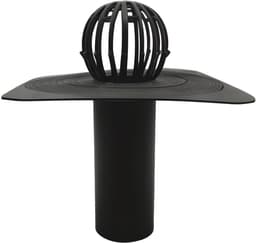
Uzman-Versand Dachablauf DN70 is a hard-PVC flat-roof gully at £43.36, weighing 470 g, with a leaf catcher and listed dimensions of 32 × 32 × 25 cm. The amazon.co.uk line is 4.5 from 23 reviews. The review texts in the file are from Germany, Belgium and France, so that star line is not British shopper opinion. The bullets place the gully between the substrate and the roof sheet and mention sealing with universal adhesive. One of those non-UK reviews says the outlet had to be adapted before bonding, and another says the quality was not good enough to install. No flow rate is printed, DN70 is not 110 mm underground pipe, and a leaf catcher is not an overflow.
Pros
DN70 hard-PVC roof outlet with a leaf catcher in the box
Bullets name balconies, garages, carports and flat roofs
Weight 470 g and size 32 × 32 × 25 cm are printed
Cons
Review texts in the file are not from the UK
No flow rate, and one buyer adapted the outlet before bonding
Universal adhesive is not tied to a named membrane
Not a 110 mm yard bottle gully
Best for: You are weathering a small flat roof, balcony, carport or garage roof, and the membrane maker accepts hard PVC with the adhesive you will use.
Less suitable: You need a buried 110 mm bottle, a UK review sample, or a parapet roof that relies on this single outlet.
Across 48 amazon.co.uk reviews, the UK Plastics single-inlet bottle gully is 4.4 at £12.47, with a 110 mm plain-ended outlet and a circular grid whose diameter is not printed. Nine UK texts in the file talk about a price below a builders’ merchant and a fit under a rainwater pipe used as a water trap. One buyer said the inside and outside diameters were way off and returned it, while another said the item was dimensionally correct, so this file does not settle the fit. A further review says the plastic seemed thinner or more flexible than similar gullies and could crack if it is forced. The listing says the gully is roddable and does not name BS 4660 or a load. It is the top pick on the shelf score in this set, which is a star-and-review index, not a test of the trap.
Pros
110 mm plain-ended single inlet at £12.47
4.4 from 48 amazon.co.uk reviews, the largest count here
UK reviews describe a water trap under a rainwater pipe
Listing says it is roddable, with a circular grid included
Cons
Grid diameter is not printed
One return for diameters, against a review that called them correct
Plastic described as thinner, with a crack risk if it is forced
No British Standard named on the listing
Best for: You are dropping a downpipe shoe onto an open grid, and you can check the plain end against your 110 mm pipe before any concrete goes in.
Less suitable: You need a printed grid size, a back inlet, a shallow body, or a grid a car will cross.
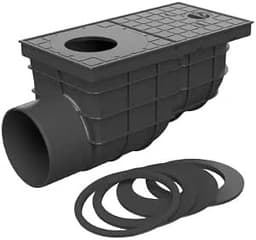
This horizontal bottle gully is a 305 × 155 mm polypropylene body at £33.44, with a 110 mm horizontal outlet and sealing rings stated for 80, 90, 100, 110 and 125 mm. The seller prints 400 L/min and an odour-sealing dry flap, and the amazon.co.uk line is 4.3 from 22 reviews. Two UK reviews say a normal bottle gully was too tall for the foundations or the drain, and the flap is described as limiting smell on that shallow run. Five UK texts in the file do not report a leak, a crack or a missing ring. The bullets say load class K3 and 300 kg, which is the seller’s light-duty line and not a BS EN 124 class you can drive on. It is the best value here when a tall pot will not reach the invert, because a £12.47 gully that cannot be set is a second purchase, and you still get no named brand and no rodding claim.
Pros
Low 305 × 155 mm body where a tall bottle will not fit
Dry flap, rings stated for 80–125 mm, and a stated 400 L/min
4.3 from 22 reviews, with UK texts about a shallow drain
Polypropylene, described as UV resistant, at 858 g
Cons
K3 / 300 kg is not a class you can drive a car across
Rodding is not stated
£33.44 against the £12.47 single-inlet pot when a tall bottle already fits
Brand is not printed on the listing
Best for: The drain is too shallow for a tall bottle, the cover stays off a vehicle path, and you want the rings and the dry flap in one box.
Less suitable: A normal bottle already fits the invert, or a car will cross the cover.
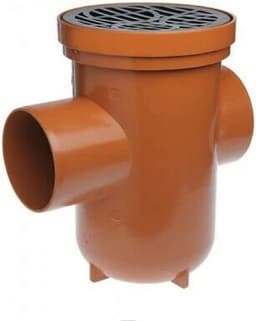
The UK Plastics back-inlet bottle gully is £12.99, with a 110 mm plain-ended outlet and a circular grid the bullets size at 180 mm. The amazon.co.uk line is 4.3 from 17 reviews, and the file holds three UK texts. Those texts mention a fit, a price about half a builders’ merchant, and a gully you can rod. One buyer said an unused second port needs a blanking plug, which that buyer priced at about £5, and the bullets do not list a plug. No British Standard and no water-seal depth are printed. The 180 mm figure is the grid, not the 110 mm outlet.
Pros
Back inlet plus a grid the bullets size at 180 mm
£12.99, with 4.3 from 17 amazon.co.uk reviews
Listing says you can rod it
One UK review described a fit at about half a merchant price
Cons
Blanking plug is not in the bullets; one review priced one at about £5
Only three UK review texts in the file
No standard and no seal depth printed
Best for: The downpipe is piped into the body at the wall, and you will blank any socket you leave unused.
Less suitable: The pipe already ends in a shoe above the grid, or you need a plug confirmed in the box before you order.
Yes. The bullets say a circular grid of 180 mm is included.
Is a blanking plug listed in the box?
The bullets do not mention a plug. One UK review said an unused second port needs a blanking plug.
Can you rod it?
The listing describes it as rodable. It does not describe the internal dip tube.
How we compared
Shelf prices, stars and review notes are the amazon.co.uk snapshot already stored for these four listings, dated 22 October 2026. This is not a lab test, a Kitemark check or a flow test of a pot. Each score is one rounded sum. Stars contribute (amazon.co.uk stars / 5) × 70. The review sample contributes min(review count, 50) / 50 × 30. Nothing is added for a Best Sellers Rank, a printed flow or a named standard. The highest score, 90, is the top pick. Best value is a separate award for a shallow invert, not the lowest unit price. Review text from outside the UK does not change the listing count, and it is not British shopper opinion.
1
Star line
70%
The amazon.co.uk star line is divided by 5 and multiplied by 70. A 4.4 contributes 61.6 before it is added to the sample and rounded. Stars are not a trap test, and they are not BS 4660.
2
Review sample
30%
The amazon.co.uk review count is capped at 50, divided by 50 and multiplied by 30. A count of 48 contributes 28.8. A thinner sample cannot match a larger one on stars alone. Text from outside the UK is not treated as a British review.
Independent review
Last updated: 23 October 2026
8 sources checked
Rain gully buying guide
You are choosing the pot that takes rain off a downpipe, a yard or a flat roof. The four amazon.co.uk listings captured here are not the same object: a 110 mm single-inlet bottle, a 110 mm back inlet, a low horizontal body, and a DN70 roof outlet. Shelf prices run from about £12.47 to about £43.36. The top pick is the single-inlet bottle when a shoe drops onto an open grid and you can check the plain end before any concrete.
What is a rain gully?
A rain gully is the pot that takes rain from a downpipe, a yard or a roof into buried drainage. In a UK house the usual yard fitting is a 110 mm bottle gully: a trapped body, a grid you can lift, and an outlet into PVC-U pipe. A single-inlet bottle takes water from a shoe onto an open grid. A back inlet takes a downpipe that sits tight to the wall, and the plug is removed rather than the body being drilled. A horizontal low body is the same job when the invert is too shallow for a tall bottle.
Best for
A downpipe shoe onto an open 110 mm grid
A shallow invert, a wall inlet, or a small flat roof
Not ideal for
A grate, a hopper or a spare grid
A driveway, or a parapet roof with only one outlet
Mistakes to avoid
1
Buying only a grid
A grate, a hopper or a spare grid is not a trapped pot. You still need the inlet, the outlet size and a body you can lift after the paving is down.
2
Concreting the seal shut
The grid should finish flush, not proud and not low. Concrete stays out of the ring seal. An unused back inlet needs a plug. Do not drill the body to make one.
3
Treating DN70 as 110 mm
A roof spigot is not underground 110 mm pipe, and a leaf catcher is not an overflow. Do not send roof water into a foul-only sewer because the pot was cheap.
What to weigh up
Inlet, outlet and trap
High
The inlet decides the body. A shoe over an open grid needs a single-inlet bottle. A downpipe tight to the wall needs a back inlet. The plug comes out of that socket. You do not drill the body. Trade parts include a plug. A listing that prints a back inlet and a grid, and does not mention a plug, still needs one if a socket stays unused. The outlet is next. 110 mm is the domestic underground size. A plain-ended gully means the socket is on the pipe or a coupler, not on the pot.
Height, load and roof duty
High
The grid finishes flush with the paving. A merchant install note puts the top of a ground gully at least 150 mm below the damp-proof course. If the invert is too shallow for a normal bottle, look at a low horizontal body instead of raising the patio. Rings stated for 80 to 125 mm and a dry flap are what that shallow body is for. A dry flap is not a measured water seal. Rodding may not be stated on a low body, so do not assume you can rod it. Load is separate.
Which option suits you?
Three typical situations, each with a recommendation from this comparison.
🏠
Pot under a downpipe shoe
You are replacing a pot under a downpipe shoe, and you can check the plain end against your 110 mm pipe before any concrete goes in. The UK Plastics single-inlet bottle is the top pick at about £12.47, with 4.4 from 48 reviews. The grid diameter is not printed. One UK review returned it over the diameters, and another said they were correct.
The downpipe is piped into the body at the wall, so you need a back inlet and a plug for any socket you leave unused. The UK Plastics back-inlet bottle is about £12.99, with a 180 mm grid in the bullets and 4.3 from 17 reviews. The bullets do not list a blanking plug.
You are weathering a small flat roof, balcony, carport or garage roof, and the membrane maker accepts hard PVC with the adhesive you will use. The Uzman-Versand DN70 gully is about £43.36, with a leaf catcher. The review texts in the file are not from the UK. A leaf catcher is not an overflow.
Which rain gully is the top pick in this comparison?
The top pick is the UK Plastics single-inlet bottle gully at about £12.47. It scores 90, the highest here: 4.4 from 48 amazon.co.uk reviews, for a 110 mm plain-ended single inlet. The score is a star-and-sample index, not a lab test. The grid diameter is not printed. One UK review returned it over the diameters, and another said they were correct. Skip it for a back inlet, a shallow body, or a grid a car will cross.
How much does a rain gully cost on amazon.co.uk?
On this amazon.co.uk capture the single-inlet bottle is about £12.47 and the back inlet is about £12.99. The horizontal gully is about £33.44. The DN70 roof gully is about £43.36. Other UK pages the same day, not these listings, put a no-name 110 mm bottle at about £8 to £15 including VAT, as a rule of thumb. Best value is the shallow body, because a pot that cannot reach the invert means a second purchase.
What should I check before I buy a rain gully?
Check where the water may go, then the inlet, then the outlet. A shoe needs an open grid. A downpipe tight to the wall needs a back inlet, and a plug if a socket stays unused. 110 mm is the usual underground size. A plain end needs the socket on the pipe or a coupler. The grid must still lift after concreting, and the top should sit at least 150 mm below the damp-proof course.
When do I need a back inlet instead of an open bottle?
Use a single-inlet bottle when the downpipe ends in a shoe above the grid. Use a back inlet when the pipe enters the body at the wall. Trade parts include a plug for that socket. The back-inlet listing in this set prints a 180 mm circular grid and says it is roddable. The bullets do not mention a blanking plug. One UK review said an unused second port needs one. Do not drill the body to make an inlet.
Is a flat-roof gully the same as a yard bottle?
No. A yard bottle is a 110 mm underground pot. The roof listing is a hard-PVC DN70 outlet with a leaf catcher, set in the roof, at about £43.36. The amazon.co.uk line is 4.5 from 23 reviews, and the review texts in the file are not from the UK. A leaf catcher is not an overflow. A parapet roof needs two outlets, or one outlet plus an overflow you will notice. DN70 is not 110 mm pipe.
Where should rainwater from a gully go?
In England, Approved Document H sends rainwater to a soakaway or other infiltration, then a watercourse, then a sewer, unless you store it for reuse. Keep rain off the foul sewer where a separate surface-water sewer is available. Scotland uses Technical Handbook 3.6, including a 5 m soakaway set-off. Do not use the English order there. The channel above the downpipe is covered in the gutter comparison. A gully is not proof the outfall complies.
When should I call a professional?
Call a professional for a new public-sewer connection, a flat roof whose membrane will not suit hard PVC and a universal adhesive, an invert that cannot sit 150 mm below the damp-proof course, or a blockage that remains after the pot is cleaned. Do not drive on these grids, enter a chamber, or dig before you have checked for services. A proud grid or an open back inlet is a fitting mistake.
Our verdict
The top pick is the UK Plastics single-inlet bottle gully at about £12.47. It scores 90, the highest in this set: 4.4 from 48 amazon.co.uk reviews, the largest review count here, for a 110 mm plain-ended single inlet. It is not a lab test. The grid diameter is not printed. One UK review returned it because the diameters were way off, and another said the dimensions were correct. Skip it when you need a printed grid size, a back inlet, a shallow body, or a grid a car will cross. Best value is the horizontal bottle gully at about £33.44, score 73, with 4.3 from 22 reviews. UK reviews say it fitted where a normal bottle was too tall. The seller prints 400 L/min, rings for 80–125 mm and a dry flap. K3 / 300 kg is the seller’s line, not a BS EN 124 vehicle class. The back inlet is about £12.99 and scores 70, but a blanking plug is not in the bullets. The DN70 roof gully scores 77 at about £43.36, and the review texts in the file are not from the UK.
Peter F. is the editor for DIY & tools at productscompared.co.uk. Comparisons in this category are checked against amazon.co.uk listings, review evidence and public UK sources.
Updated: 23 October 2026
8 sources checked
Guides to rain gullies
Guides on what to look for, how to use a product, and common mistakes.
This page contains affiliate links to amazon.co.uk (tag pcuk26-21). If you buy through them, we may earn a commission at no extra cost to you. Prices, stars and review counts are the amazon.co.uk figures already stored for this set. This is not a laboratory test of flow, grid load or a water seal.