Independent comparisons. We may earn from shop links. More info

How to install a bottle gully

Updated: 23 October 2026

The gully is in the boot, the patio slabs are stacked, and the expensive mistake is a grid you cannot lift once the concrete has cured. How to install a bottle gully, for a 110 mm pot in the ground, is a sequence: know the fall and the services, make the joint before the hole hides it, set the grid flush, and keep concrete out of the seal. The four listings and prices are on the [rain gully comparison](/hub/diy-supplies/rain-gully). A qualifying purchase can earn a commission at no extra cost to you. FloPlast, Speedy Plastics and Brett Martin supply the fitting notes. There is no timed fit in a lab. Updated 22 October 2026.

The gully is in the boot, the patio slabs are stacked, and the expensive mistake is a grid you cannot lift once the concrete has cured.

Our top picks

On this page

Before you dig

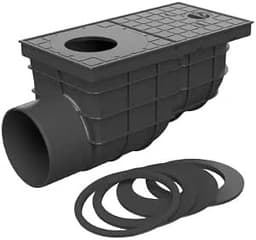
Mark the fall before you dig. Speedy Plastics uses about 1:80 on a 110 mm bottle-gully install. That is their site figure, not a law copied from Approved Document H. Look up buried services before the spade goes in. Both UK Plastics gullies, at £12.47 and £12.99, are plain ended. Dry-fit the outlet to a coupler while the parts are on the paving. FloPlast lubricates the ring of its own access bend out of the ground. The £33.44 horizontal gully has its own rings, so do not set it to a tall-bottle depth. If the top cannot sit at least 150 mm below the damp-proof course, stop. That figure is a merchant note.

Level and concrete

Set the grid flush with the paving. Proud, and water misses the openings. Low, and the pot holds silt. Speedy Plastics says not to pave over the grate, because you still have to lift it. Check the level against the slabs before the concrete stiffens. Concrete steadies the body and must not enter the ring seal. FloPlast says so for its own system. Keep the mix off the bottle, stop the surround at the feet, and backfill the rest with granular material. Leave the grid in while the surround goes off, then lift it and clean the pot. K3 / 300 kg on the horizontal listing is not a reason to concrete it into a driveway.

Shoe, back inlet and rodding

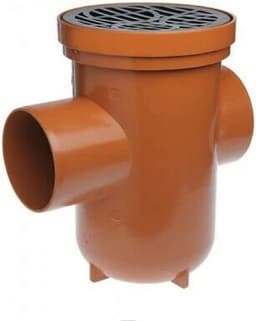
A shoe puts the water through the grid. Brett Martin puts the shoe into an open gully, and an adaptor into a back inlet when the pipe meets the wall. If the shoe misses, a hard shower splashes onto the slab. Do not drill a single-inlet body to invent a back inlet. That choice is on bottle gully vs back inlet. A spare back-inlet socket needs a blanking plug, and the £12.99 bullets do not list one. FloPlast’s own baffle turns anti-clockwise. The UK Plastics listings say the pots are roddable and do not describe that turn, so look at the insert you have.

When to stop

Stop for a new public-sewer connection, a chamber you would enter, or an invert that only works if you bridge the damp-proof course. Stop if the pipe is foul and you are not sure the pot is a trap. Approved Document H talks about a 25 mm seal in sanitary pipework. None of these listings prints that depth. The DN70 roof outlet is a different job. Use the flat roof gully page if the water is on a deck. Scotland does not use England’s surface-water order, and a new soakaway there starts at 5 metres from the building.

Common questions

Does the grid sit flush or slightly low?
Set it flush with the finished paving. A low grid holds silt and a puddle. A proud grid trips you and lets water run past the openings. Speedy Plastics also says not to pave across the grate, because you still have to lift it. Check the level against the slabs around the hole, and do it while you can still move the body.
Where does the concrete stop?
It stops before the ring seal and before the bottle that has to lift out. FloPlast says concrete must not enter the ring seal. Other fitting notes keep the mix off the bottle and limit it to steadying the feet. If the surround locks the insert, you will break the patio to rod the pot. Brush droppings out of the neck before the mix cures.
What is a downpipe shoe for?
It turns the last of the downpipe so the water falls through the grid. Brett Martin describes the shoe into an open gully, as against an adaptor into a back inlet when the pipe is connected at the wall. If the shoe misses the grate, a heavy shower splashes onto the paving. Line the shoe up before you fix the final slab.
How do I rod a bottle gully?
Lift the grid, then lift the bottle or baffle if that insert is meant to come out, and clear the silt from the open neck. FloPlast’s own baffle turns anti-clockwise. The UK Plastics pages say you can rod the pot and do not describe that turn, so look at the part you have. If the drain is still blocked once the pot is clean, the obstruction is downstream.
What if the outlet is plain ended?
You need a coupler or a socketed pipe. The single-inlet and back-inlet UK Plastics gullies are both plain ended at 110 mm. Pushing a plain end into another plain end will not hold. Dry-fit the joint, with the seal lubricated if the coupler calls for it, before the body is trapped in the hole. The horizontal listing brings its own rings for 80–125 mm.
When should I not dig?
Do not dig until you have checked for buried services, and do not carry on if the gully cannot sit at least 150 mm below the damp-proof course. Do not open a public sewer connection yourself, and do not enter a chamber. If the pipe might be foul, or you were about to copy an English soakaway sketch in Scotland, get advice first. A replacement on an existing private surface-water run is the job this sequence is for.

Related pages

Sources

Public UK sources and the amazon.co.uk listings compared on this page. Scoring method dated 22 October 2026. Updated 23 October 2026.

  1. Approved Document H (England), 2015 (retrieved 22 October 2026)
  2. Scottish Technical Handbook 3.6 (retrieved 22 October 2026)
  3. FloPlast underground drainage (retrieved 22 October 2026)
  4. FloPlast underground drainage FAQs (retrieved 22 October 2026)
  5. Harmer roof brochure (retrieved 22 October 2026)
  6. Northern Ireland roof drainage (retrieved 22 October 2026)
  7. Brett Martin rainwater FAQ (retrieved 22 October 2026)
  8. NHBC Standards 2025, chapter 5.3 (retrieved 22 October 2026)