Independent comparisons. We may earn from shop links. More info

Herb fertiliser comparison 2026

The best herb fertilisers, compared.

Top pick: Baby Bio Herb Food, pack of 2 Best value: Baby Bio Herb Food, pack of 2 – Lowest liquid unit price, about £1.71 per 100 ml on the stated 350 ml, at about £5.98. The ratio is printed as 1:X. Updated October 2026.

A herb fertiliser is a feed you buy for culinary herbs in a pot, a balcony box or a small bed, not a lawn food or an all-purpose granule that only mentions herbs in passing. In the UK it is usually for basil, parsley, mint or chives on a windowsill, and sometimes for woody herbs that need less food, not more. You recognise a usable pack by a dose you can follow, a plant or a place on the label, and an interval you can keep while the plant is growing. Liquids are concentrates you dilute into the watering. Sticks are pushed into the compost for the weeks the pack states. A pot needs that feed more than open ground, which often needs one light dose or none. Do not add it on top of a fresh compost that already says it feeds for months. An organic-farming line on the bottle is not an organic-food certificate for herbs you sell. Pots, beds and which herbs are hungry are set out in the [herb fertiliser buying guide](/hub/fertiliser-soil-and-bark-mulch/herb-fertiliser/sub/herb-fertiliser-buying-guide).

A herb fertiliser is a feed you buy for culinary herbs in a pot, a balcony box or a small bed, not a lawn food or an all-purpose granule that only mentions herbs in passing.

Baby Bio Herb Food, pack of 2

Best overall

Baby Bio Herb Food, pack of 2
3.5/10∼ £6

14 products checked · 47 hrs invested · +12,600 readers

4 of 4: Best herb fertilisers compared

Swipe for more

1-2 of 4
Best overall
Baby Bio Herb Food, pack of 2
Baby Bio Herb Food, 2 x 175 ml
Substral Naturen herb sticks, 30
Neudorff biotrissol culinary herbs, 250 ml
3.5/10
6.9/10
6.2/10
2.2/10
∼ £6
∼ £11
∼ £12
∼ £8
5.0(1)
4.4(62)
3.5(6)
–
View offer
View offer
View offer
View offer

Personal buying guide

Question 1 of 2

What must the listing show?

The best herb fertilisers in detail

Baby Bio Herb Food, pack of 2

Rank 1

Baby Bio Herb Food, pack of 2

Our view

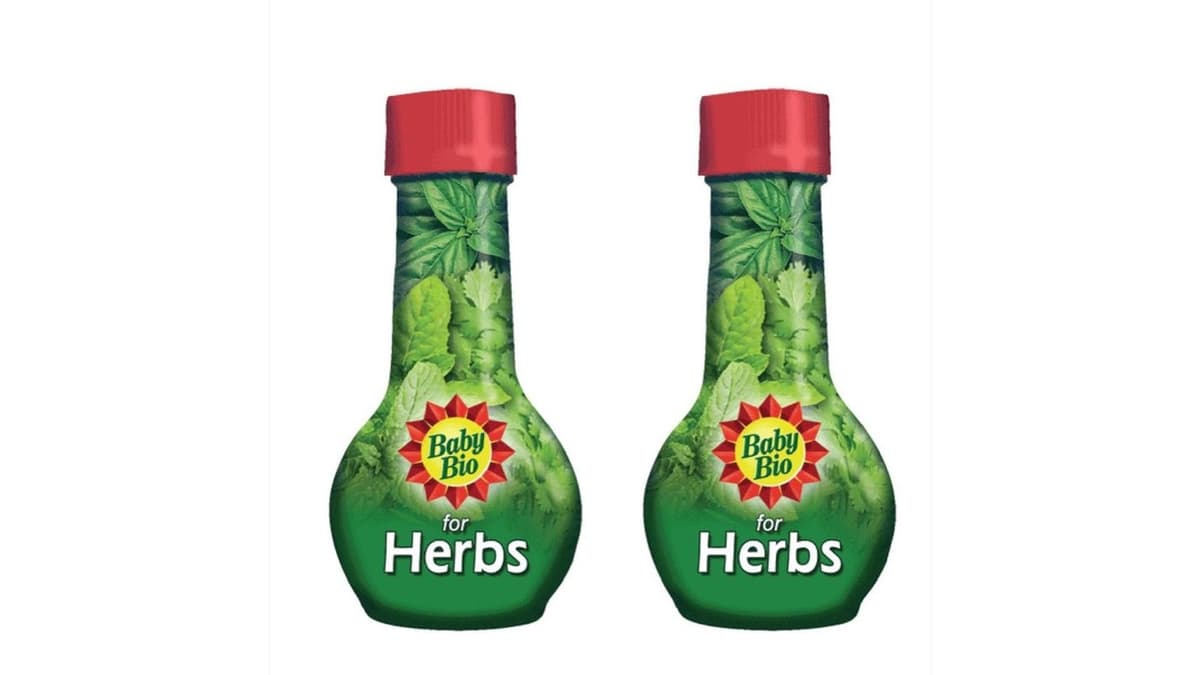
Baby Bio Herb Food in this pack is two 175 ml bottles, 350 ml in the volume field, at about £5.98, and the bullets say to mix it into watering every two weeks for herbs indoors and in the garden. SBM Life Science is the manufacturer, and the Herb Fertilisers rank on the listing is 2, which is a sales position rather than a trial result. The star line is 5.0 from 1 review and the listing has no review text, so there is no UK comment to set against that rank. The mixing-ratio field is printed as 1:X, so this listing does not give a drop count or a cap dose. The bullets say a balanced formula suitable for all herbs, and they do not name basil or parsley. At about £1.71 per 100 ml of the stated 350 ml it is the lowest liquid unit price in this set, which is why it carries the best value mark on shelf price. That saving only helps if the bottle in your hand prints a strength this amazon.co.uk listing does not.

Pros

  • Two 175 ml bottles, with 350 ml in the volume field, at about £5.98
  • Bullets give a two-week interval for indoor and garden herbs
  • About £1.71 per 100 ml, the lowest liquid unit price in this set
  • Herb Fertilisers rank 2 on this listing, a sales position

Cons

  • Mixing ratio is printed as 1:X, so the listing has no usable dose
  • 5.0 from 1 review, and no review text on the listing
  • No organic claim, and no named herb such as basil or parsley

Best for: A herb you already feed every fortnight, if you will read the dose on the bottle itself rather than on this listing.

Less suitable: Anyone who needs a drop count from the amazon.co.uk page, or a UK review sample larger than one blank star line.

Specifications

Model
Baby Bio Herb Food, pack of 2
Brand
Baby Bio
Price
∼£6
Customer rating
5.0/5(1)
Apply
Mix into water
Dose
Ratio 1:X
Interval
Every 2 weeks
Pack
2 x 175 ml
Herbs
All herbs
Place
Indoor and garden

Common questions

How do you use this Baby Bio pack?

The bullets say mix it into your usual watering once every two weeks. The mixing-ratio field is printed as 1:X, so this listing does not give a drop count or a cap dose.

Does the listing say it is for indoor herbs?

The title and the specific-use line say indoor and garden herb cultivation. The bullets say a balanced formula suitable for all herbs. They do not name basil or parsley.

What do the saved reviews say?

The star line is 5.0 from 1 review. The listing has no review text, so there is no praise or complaint to quote.

Baby Bio Herb Food, 2 x 175 ml

Rank 2

Baby Bio Herb Food, 2 x 175 ml

∼£11

Our view

Baby Bio Herb Food, 2 x 175 ml, prints a dose you can mix: 5–10 drops in 0.5 litre of water, or half a capful in 1 litre, poured on, at about £10.50 for a title pack of 2 x 175 ml. The amazon.co.uk line on this listing is 4.4 from 62 reviews, and ten of the saved texts are from the United Kingdom. Several of those texts say herbs grew, or that the pack was as described. One UK reviewer says potted basil died and sage wilted after use as directed, while rosemary was unchanged, so the average does not mean every pot was fine. Another says the two bottles in the pack did not look or smell the same. This listing does not state how often to feed, and the liquid-volume field says 175 ml while the title and the unit count point to 350 ml. It is the top pick here for someone who will measure, because the dose and a real UK review sample are both on the page, not because 4.4 is a laboratory result.

Pros

  • Printed dose: 5–10 drops per 0.5 litre, or half a capful per litre
  • 4.4 from 62 reviews, with ten UK texts on the listing
  • Several UK texts say herbs grew or the pack matched the description
  • Title states 2 x 175 ml, and the unit count says 350 ml

Cons

  • One UK review reports dead basil and wilted sage after use as directed
  • One review says the two bottles did not look or smell the same
  • No feeding interval on this listing
  • Liquid-volume field says 175 ml, which clashes with the 2 x 175 ml title

Best for: A cook who will measure a liquid for pot herbs and wants UK review texts on the same amazon.co.uk listing.

Less suitable: Anyone who needs a printed fortnight on this page, an organic-farming line, or a species name such as basil in the bullets.

Specifications

Model
Baby Bio Herb Food, 2 x 175 ml
Brand
Baby Bio
Price
∼£11
Customer rating
4.4/5(62)
Apply
Pour on
Dose
5–10 drops / 0.5 L
Pack
2 x 175 ml
Herbs
Herbs

Common questions

What dose does this listing print?

The mixing-ratio line says 5–10 drops to 0.5 litre (1 pint) of water, or half a capful to 1 litre (2 pints). The application line says pour onto plants. The listing does not state how often.

Does the listing say the feed is organic?

The question is on the page and is not answered. There is no organic claim in the saved listing.

What do the UK reviews mention?

Ten UK texts are saved. Several say herbs grew or that the pack was as described. One says potted basil died and sage wilted after use as directed. One says the two bottles in the pack did not look or smell the same.

Substral Naturen herb sticks, 30

Rank 3

Substral Naturen herb sticks, 30

∼£12

Our view

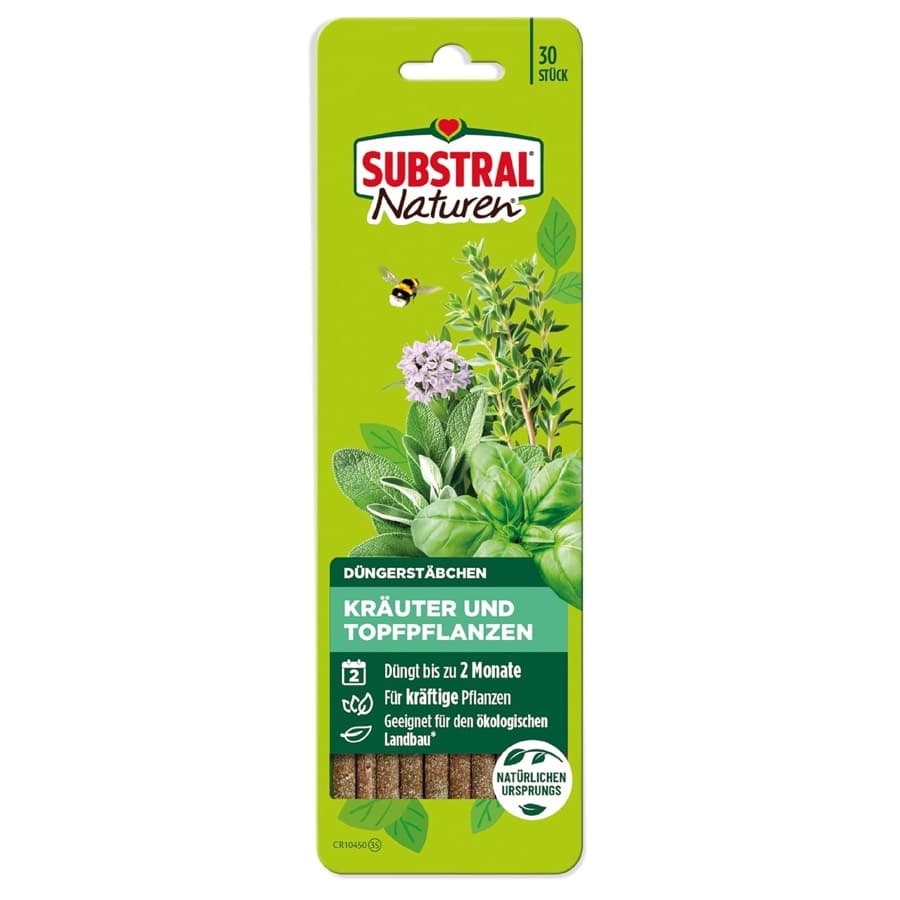
Substral Naturen herb sticks are a pack of 30 at about £12.40, and the listing tells you to push in 1–5 sticks depending on pot size, or 2 per plant in a balcony box, then repeat every two months. The bullets say the supply lasts up to two months, and they name basil and parsley as well as other indoor plants and balcony boxes. Evergreen Garden Care is the manufacturer, the country of origin is given as Germany, and the pack is printed as chloride-free and suitable for organic farming. The star line is 3.5 from 6 reviews, but the three saved texts are marked Reviewed in Germany, and two of them say no growth was visible. Open-ground beds are not stated on the listing. At a listed weight of 40 g it is the only stick form in this set, which suits someone who will not mix a bottle, though those German comments are not a UK track record.

Pros

  • 1–5 sticks by pot size, or 2 sticks per plant in a balcony box
  • Repeat every two months, with up to two months stated on the listing
  • Basil and parsley named, for indoor plants and balcony boxes
  • Printed as suitable for organic farming and chloride-free

Cons

  • 3.5 from 6 reviews, and the saved texts are Reviewed in Germany
  • Two of those texts say no growth was visible
  • About £12.40 is the highest shelf price in this set
  • Open-ground beds are not stated

Best for: An indoor or balcony pot of basil or parsley when you want a two-month stick count instead of mixing a liquid.

Less suitable: Anyone who needs UK review texts, a woody herb that should be fed lightly, or a bed in open ground.

Specifications

Model
Substral Naturen herb sticks, 30
Brand
Substral
Price
∼£12
Customer rating
3.5/5(6)
Apply
Push in
Dose
1–5, 2 per box
Interval
Every 2 months
Pack
30 sticks
Herbs
Basil, parsley
Place
Indoor, balcony
Organic
Suitable organic

Common questions

How many sticks does the listing tell you to use?

Depending on pot size, 1–5 sticks. A balcony box is 2 per plant. Repeat every 2 months. The listing says the supply lasts up to 2 months.

Which plants are named?

The bullets say herbs and pot plants, and name basil, parsley, indoor plants and balcony boxes. Open-ground beds are not stated.

Are the saved reviews from the UK?

The star line is 3.5 from 6. The three saved texts are marked Reviewed in Germany. Two say no growth was visible. They are not UK reviews.

Neudorff biotrissol culinary herbs, 250 ml

Rank 4

Neudorff biotrissol culinary herbs, 250 ml

Our view

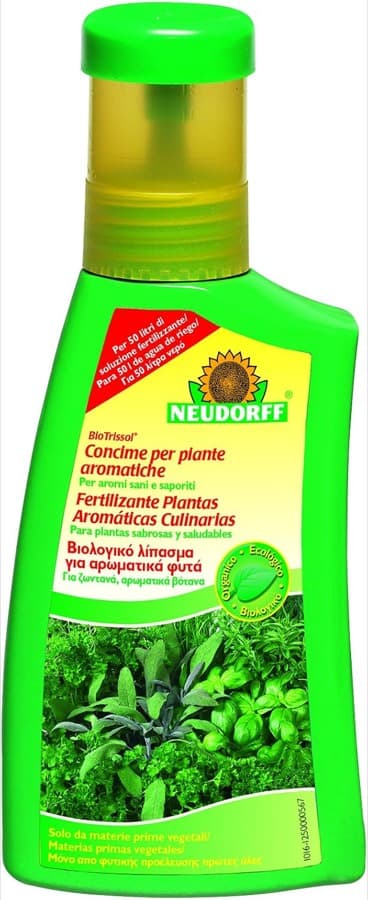
Neudorff biotrissol culinary herbs is a 250 ml liquid at about £7.81, and the bullets say it is 100 percent vegetable raw materials, certified in organic farming, and safe for pets. The title says culinary herbs and does not name basil, parsley or any other species. The listing has no NPK, no dose and no interval, and the questions about indoor use and child safety appear on the page without an answer. There is no customer-review line and no review text, so the low score is that gap, not a batch of one-star complaints. The volume field is 0.25 L, which matches the 250 ml title, and the item weight is 325 g. It is the listing to open if you want those organic-farming and pet lines in the bullets, and a weak one if you need millilitres per litre before the parcel arrives.

Pros

  • 250 ml liquid at about £7.81, and the volume field says 0.25 L
  • Bullets say certified in organic farming and 100 percent vegetable raw materials
  • Safe for pets, as printed on the listing
  • Title is aimed at culinary herbs rather than a general garden feed

Cons

  • No dose, interval or NPK on the amazon.co.uk listing
  • No star line and no review text
  • Indoor use and child safety are asked on the page and not answered
  • No control-body code, such as a Soil Association mark, on the listing

Best for: A buyer who wants the organic-farming and pet lines printed on the listing, and who will read the bottle for the dose.

Less suitable: Anyone who needs a dilution from the amazon.co.uk page, a UK review sample, or an organic-food certificate for herbs they sell.

Specifications

Model
Neudorff biotrissol culinary herbs, 250 ml
Brand
Neudorff
Price
∼£8
Pack
250 ml
Herbs
Culinary herbs
Organic
Certified organic

Common questions

What does the listing say is in the bottle?

The bullets say a liquid, 250 ml, 100 percent vegetable raw materials, certified in organic farming, and safe for pets. No NPK, dose or interval is on the listing.

Can you use it indoors, and is it child-safe?

Both questions are on the listing and are not answered. The title says culinary herbs and does not name a species. Do not treat an unanswered question as a yes.

Is there a star rating on the listing?

No. There is no customer-review line and no review text. That gap is not a one-star result.

How we compared

Four amazon.co.uk listings were scored from the stored pages and the review texts already on file. Shelf date 20 October 2026. There is no laboratory test. The highest score is the top pick. The best value is the lowest shelf price per 100 ml among liquids, using the volume stated for that pack. Sticks are left out of that sum. The weights below sum to 100.

1

UK buyer evidence

40%

Stars count only with review texts from the United Kingdom on that listing. A line of 5.0 from 1 review and no text scores low. Texts marked Reviewed in Germany are not a UK sample. No customer-review line is a gap, not a one-star result. A sample of 4.4 from 62 with ten UK texts is reduced where a review reports dead basil and wilted sage after directed use, and where the two bottles did not match.

2

Followable instruction

35%

A drop or cap dose with no interval on that listing scores higher than an interval whose ratio field is 1:X. A stick count, a balcony-box rate and a two-month repeat score high. No dose and no interval scores low.

3

Named plants and place

15%

Basil and parsley, indoors and in balcony boxes, score higher than a line that only says all herbs, or a title that only says culinary herbs. An empty place field scores lower.

4

Listing consistency

10%

A volume field that matches the title scores higher. A liquid-volume field of 175 ml against a title of 2 x 175 ml is a deduction.

Independent review
Last updated: October 2026
8 sources checked

Herb fertiliser buying guide

Match the dose and the herb before you match the star line. Liquids you dilute and sticks you push in are not one job. Prices below are amazon.co.uk shelf prices on 20 October 2026. This is not a laboratory test.

What to match before you buy

A herb fertiliser, for a UK pot or balcony box, is a feed sold for culinary herbs. It is not a lawn food, a shrub foliar, a spreader or an all-purpose granule that mentions herbs only in passing. Shoppers are mostly people keeping basil, parsley, mint or chives in a pot, plus a smaller group with woody herbs who usually need less food, not more. Quality is a printed dose, a named plant and an honest organic wording. A star score on its own is not that check.

Best for

  • A pot of basil, parsley, mint or chives when you will measure a liquid
  • A balcony box when you want a stick count for about two months
  • A buyer who wants an organic-farming line and will read the bottle for the dose

Not ideal for

  • Woody herbs such as rosemary if you copy a basil fortnight
  • Anyone who needs a drop count from the lower-priced listing
  • Anyone treating German stick reviews, or one blank 5.0, as a UK track record

Mistakes to avoid

  1. 1

    Using a basil fortnight on rosemary

    Basil, parsley, chives and mint use more food in a pot. Rosemary, thyme, sage and oregano are easily overfed, and extra nitrogen is linked to softer, less aromatic growth.

  2. 2

    Trusting a star line you cannot place

    A 5.0 from 1 review with no text is not a UK track record. Texts marked Reviewed in Germany are not British opinion. A sales rank is not a trial.

  3. 3

    Reading organic as an organic-food certificate

    A fertiliser input claim is not a certificate for herbs you sell. None of these listings shows a Soil Association code. GOV.UK says organic words on food need a certified control body.

What to weigh up

Form and a dose you can follow

High

Liquids are concentrates you dilute. One Baby Bio listing prints 5–10 drops per 0.5 litre, or half a capful per litre, and does not state an interval. The other says every two weeks and prints the ratio as 1:X. Neudorff's 250 ml listing has no dose and no interval. Sticks are pushed in: 1–5 by pot size, or 2 per plant in a balcony box, then every two months. A line that says spray is not an instruction to apply concentrate neat. Do not feed dry or sodden compost, and do not feed a wilted plant.

Plant, place, and the organic line

High

Name the herb and the place before you match the price. Pots need a feed. Open ground often needs one light dose or none. Do not feed on top of a fresh compost that already says it feeds for months. Start container feeds about six weeks after potting, and stop after September, unless the label is stricter. An organic-farming line, and a pet line, mean only what that listing prints.

Which option suits you?

Three typical situations, each with a recommendation from this comparison.

Windowsill basil or parsley

You keep basil, parsley, mint or chives in a pot and you will measure a liquid during active growth. Baby Bio Herb Food, 2 x 175 ml, is the top pick at about £10.50. The listing prints 5–10 drops per 0.5 litre, or half a capful per litre. amazon.co.uk shows 4.4 from 62 reviews, with ten UK texts. One of those texts reports dead basil and wilted sage after use as directed. This listing does not state how often to feed.

Balcony pots, no mixing

You will forget a bottle, and the pot is in the 1–5 stick range. Substral Naturen herb sticks, 30, are about £12.40. The listing says 1–5 sticks by pot size, or 2 per plant in a balcony box, repeated every two months, and it names basil and parsley. The saved reviews are marked Reviewed in Germany. Open-ground beds are not stated.

Organic-farming wording

You want the organic-farming and pet lines printed on the listing, and you will read the bottle for the dose. Neudorff biotrissol culinary herbs, 250 ml, is about £7.81. The bullets say certified in organic farming, 100 percent vegetable raw materials, and safe for pets. The listing has no dose, no interval and no star line. There is no Soil Association code on the listing.

Common questions about herb fertilisers

Which herb fertiliser is the top pick in 2026?
The top pick is Baby Bio Herb Food, 2 x 175 ml, at about £10.50. It scored highest because the listing prints 5–10 drops per 0.5 litre, or half a capful per litre, and amazon.co.uk shows 4.4 from 62 reviews with ten UK texts. The listing does not say how often to feed. One UK review says potted basil died and sage wilted after use as directed. Choose it if you will measure a liquid for pot herbs. It is not a laboratory or a taste test.
Which pack is the best value?
The best value is Baby Bio Herb Food, pack of two, at about £5.98. On the stated 350 ml that is about £1.71 per 100 ml, the lowest liquid unit price here. Sticks are left out of that sum. The bullets say mix it into watering every two weeks, but the ratio is printed as 1:X, so there is no drop count. The star line is 5.0 from 1 review with no text. The price only helps if the bottle prints a strength this listing does not.
Should you buy a liquid or sticks?
Buy a liquid if you will measure a dilution. The top pick prints a drop and cap dose and has UK review texts, but no interval. The lower-priced twin pack prints a two-week interval and a ratio of 1:X. Buy sticks if you will not mix a bottle. Substral Naturen, 30 sticks, at about £12.40, says 1–5 by pot size, or 2 per balcony-box plant, every two months, and names basil and parsley. The saved stick reviews are marked Reviewed in Germany. They are not UK reviews.
How often should you feed herbs in a pot?
RHS guidance is to start container feeds about six weeks after potting, and not to fertilise after September, unless the label is stricter. A Mediterranean herb in a pot may take a liquid every two or three weeks after a couple of months. Do not feed a wilted plant, and do not feed dry or sodden compost. Do not add a herb fertiliser on top of a fresh compost that already says it feeds for months. Pots need you. Open ground often needs one light dose or none.
Do rosemary and thyme need the same feed as basil?
No. Basil, parsley, chives and mint use more food in a pot. Rosemary, thyme, sage and oregano are easily overfed, and extra nitrogen is linked to softer, less aromatic growth. A basil fortnight is the wrong interval for those woody herbs. The stick listing names basil and parsley, not rosemary. The liquid titles say herbs or culinary herbs and do not name a woody species. Feed woody herbs lightly, or not at all if the compost is fresh.
Does an organic line mean the herbs are organic food?
No. A fertiliser input claim is not an organic-food certificate. GOV.UK says organic words on food need a certified control body. Neudorff's bullets say certified in organic farming, 100 percent vegetable raw materials, and safe for pets. They do not show a Soil Association code, and the listing has no dose. Substral says suitable for organic farming and chloride-free. Neither Baby Bio listing claims organic. If you sell herbs as organic food, ask a UK control body.
What if a pet eats the feed or someone swallows it?
Call a professional. If someone swallows the product or gets it in an eye, use NHS 111 and the label. If a pet eats sticks or drinks concentrate, call a vet. Safe for pets is printed on the Neudorff listing only. Do not treat that bullet as a dose a pet can drink. One UK review of the top pick reports dead basil and wilted sage after use as directed. That is one report, not a measured cause. This comparison did not test plants, pets or people in a laboratory.
Is a herb fertiliser the same as a houseplant feed?
No. A herb fertiliser is sold for culinary or pot herbs you may eat. A houseplant feed is a different plant and a different dose. Use the fertiliser for houseplants comparison if the pot is not a herb. Wash cut herbs before eating as ordinary kitchen practice. Do not quote a German review, or a 5.0 from one blank review, as a UK track record. Do not read a sales rank as a trial result.

Our verdict

The top pick is Baby Bio Herb Food, 2 x 175 ml, at about £10.50, because the listing prints a drop and cap dose and the page has ten UK review texts beside 4.4 from 62 reviews. It still has no feeding interval, and one UK review reports dead basil and wilted sage after use as directed. The best value is Baby Bio Herb Food, pack of two, at about £5.98, about £1.71 per 100 ml on the stated 350 ml. The ratio field is 1:X, so that price only helps if the bottle prints a strength. The 30 sticks name basil and parsley. The 250 ml liquid prints the organic-farming and pet lines and no dose. None of these scores is a laboratory test or a taste test.

Best overall
Baby Bio Herb Food, pack of 2

Baby Bio Herb Food, pack of 2

View offer
Best value
Baby Bio Herb Food, pack of 2

Baby Bio Herb Food, pack of 2

Lowest liquid unit price, about £1.71 per 100 ml on the stated 350 ml, at about £5.98. The ratio is printed as 1:X.

View offer

Editorial

Peter F. - DIY & tools editor
DIY & tools editor
FertilisersHerb foodamazon.co.uk listings

Peter F. is the editor for DIY & tools at productscompared.co.uk. Comparisons in this category are checked against amazon.co.uk listings, review evidence and public UK sources.

Updated: October 2026
8 sources checked

Guides to herb fertilisers

Guides on what to look for, how to use a product, and common mistakes.

Related comparisons

Sources

Public UK sources from the research digest, used for this page in October 2026. Prices, stars and review counts are from the four amazon.co.uk listings captured on 20 October 2026. An organic-farming line is not an organic-food certificate. Texts marked Reviewed in Germany are not UK reviews. This is not a laboratory test or a taste test.

  1. RHS, Growing herbs in containers (retrieved 20 October 2026)
  2. RHS, How to feed plants (retrieved 20 October 2026)
  3. RHS, Mediterranean herbs in a pot (retrieved 20 October 2026)
  4. GOV.UK, Manufacturing and marketing fertilisers (retrieved 20 October 2026)
  5. The Fertilisers Regulations 1991 (retrieved 20 October 2026)
  6. GOV.UK, Organic food labelling (retrieved 20 October 2026)
  7. Plantura, Feeding herbs (retrieved 20 October 2026)
  8. BBC Gardeners' World, feeding pots (retrieved 20 October 2026)

Expert source (DIY & tools): Lee Burkhill (Garden Ninja) (external profile) – public expert commentary used as a research source, not as a contributor to our pages.

This page contains affiliate links to amazon.co.uk (tag pcuk26-21). If you buy through them, we may earn a commission at no extra cost to you. Prices, stars and review counts are from the listings. This is not a laboratory test.