Best herb fertiliser if you will measure a drop dose
The best herb fertiliser in this set is not the listing with the lone 5.0, and it is not the one Amazon ranks second in Herb Fertilisers. It is the bottle that tells you how much to put in the watering can, for someone who will measure, with UK reviews you can actually read. This page is from Peter F., the DIY and tools editor, on 20 October 2026. Prices and stars come from the four amazon.co.uk listings on the [herb fertiliser comparison](/hub/fertiliser-soil-and-bark-mulch/herb-fertiliser). A qualifying purchase can earn a commission at no extra cost to you. If you are still deciding whether a pot needs any feed, use the [herb fertiliser buying guide](/hub/fertiliser-soil-and-bark-mulch/herb-fertiliser/sub/herb-fertiliser-buying-guide) first.
The best herb fertiliser in this set is not the listing with the lone 5.0, and it is not the one Amazon ranks second in Herb Fertilisers.
The best herb fertiliser in this set is not the listing with the lone 5.0, and it is not the one Amazon ranks second in Herb Fertilisers. It is the bottle that tells you how much to put in the watering can, for someone who will measure, with UK reviews you can actually read. This page is from Peter F., the DIY and tools editor, on 20 October 2026. Prices and stars come from the four amazon.co.uk listings on the herb fertiliser comparison. A qualifying purchase can earn a commission at no extra cost to you. If you are still deciding whether a pot needs any feed, use the herb fertiliser buying guide first.
Our top picks
| Badge | Product | Dose on the listing | Interval | Review sample | Note | Price | Offer |
|---|---|---|---|---|---|---|---|
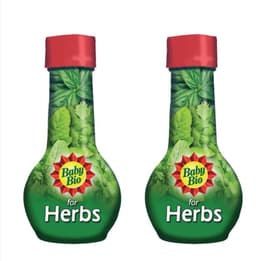
| Best overall |  Baby Bio Baby Bio Herb Food, pack of 2 | Ratio printed as 1:X | Every 2 weeks | 5.0 from 1, no text | 3.5 | about £5.98 | View offer |
 Baby Bio Baby Bio Herb Food, 2 x 175 ml | 5–10 drops per 0.5 litre | Not stated | 4.4 from 62, ten UK texts | 6.9 | about £10.50 | View offer | |
| Alternative |  Substral Substral Naturen herb sticks, 30 | 1–5, or 2 per balcony plant | Every 2 months | 3.5 from 6, texts in Germany | 6.2 | about £12.40 | View offer |


On this page
What best means in this set
Baby Bio with a printed dose
Sticks and the organic-input liquid
The about £5.98 pack and the empty 5.0
Common questions
Which listing is the sensible default if I will measure?
Who should buy sticks instead?
Is Neudorff the organic pick, and what is missing?
Does rank 2 in Herb Fertilisers mean better?
Can I call any of these a test winner?
Related pages
Sources
Public UK sources from the research digest, used for this page in October 2026. Prices, stars and review counts are from the four amazon.co.uk listings captured on 20 October 2026. An organic-farming line is not an organic-food certificate. Texts marked Reviewed in Germany are not UK reviews. This is not a laboratory test or a taste test.
- RHS, Growing herbs in containers (retrieved 20 October 2026)
- RHS, How to feed plants (retrieved 20 October 2026)
- RHS, Mediterranean herbs in a pot (retrieved 20 October 2026)
- GOV.UK, Manufacturing and marketing fertilisers (retrieved 20 October 2026)
- The Fertilisers Regulations 1991 (retrieved 20 October 2026)
- GOV.UK, Organic food labelling (retrieved 20 October 2026)
- Plantura, Feeding herbs (retrieved 20 October 2026)
- BBC Gardeners' World, feeding pots (retrieved 20 October 2026)