Liquid herb feed or fertiliser sticks for herb pots
You are choosing between a watering can and a pack of sticks for a balcony box, and a liquid herb feed or fertiliser sticks is that choice: measure each time, or push a dose in for about two months. This page is from Peter F., the DIY and tools editor, on 20 October 2026. It uses the four amazon.co.uk listings on the [herb fertiliser comparison](/hub/fertiliser-soil-and-bark-mulch/herb-fertiliser). Whether you need a feed at all, and how woody herbs differ, stays on the [herb fertiliser buying guide](/hub/fertiliser-soil-and-bark-mulch/herb-fertiliser/sub/herb-fertiliser-buying-guide). A qualifying purchase can earn a commission at no extra cost to you. Use a liquid if you harvest hard and want to stop next week.
You are choosing between a watering can and a pack of sticks for a balcony box, and a liquid herb feed or fertiliser sticks is that choice: measure each time, or push a dose in for about two months.
You are choosing between a watering can and a pack of sticks for a balcony box, and a liquid herb feed or fertiliser sticks is that choice: measure each time, or push a dose in for about two months. This page is from Peter F., the DIY and tools editor, on 20 October 2026. It uses the four amazon.co.uk listings on the herb fertiliser comparison. Whether you need a feed at all, and how woody herbs differ, stays on the herb fertiliser buying guide. A qualifying purchase can earn a commission at no extra cost to you. Use a liquid if you harvest hard and want to stop next week.
Our top picks
| Badge | Product | Form | Dose on the listing | How long it runs | Note | Price | Offer |
|---|---|---|---|---|---|---|---|
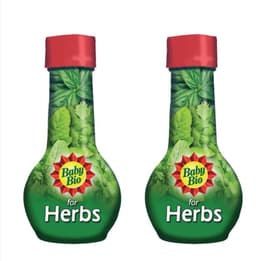
| Best overall |  Baby Bio Baby Bio Herb Food, pack of 2 | Liquid | Ratio printed as 1:X | Every 2 weeks | 3.5 | about £5.98 | View offer |
 Baby Bio Baby Bio Herb Food, 2 x 175 ml | Liquid | 5–10 drops per 0.5 litre | Interval not stated | 6.9 | about £10.50 | View offer | |
| Alternative |  Substral Substral Naturen herb sticks, 30 | Sticks | 1–5, or 2 per balcony plant | Up to 2 months | 6.2 | about £12.40 | View offer |


On this page
What changes when you pick a form
Liquid herb feeds in this set
Herb sticks in this set
When to pick which
Common questions
Are sticks easier than a liquid?
Can sticks burn a small herb pot?
Which form can I stop quickly if leaves look scorched?
Is a liquid always more expensive across a summer?
Do sticks suit rosemary?
What if the compost already contains slow-release feed?
Related pages
Sources
Public UK sources from the research digest, used for this page in October 2026. Prices, stars and review counts are from the four amazon.co.uk listings captured on 20 October 2026. An organic-farming line is not an organic-food certificate. Texts marked Reviewed in Germany are not UK reviews. This is not a laboratory test or a taste test.
- RHS, Growing herbs in containers (retrieved 20 October 2026)
- RHS, How to feed plants (retrieved 20 October 2026)
- RHS, Mediterranean herbs in a pot (retrieved 20 October 2026)
- GOV.UK, Manufacturing and marketing fertilisers (retrieved 20 October 2026)
- The Fertilisers Regulations 1991 (retrieved 20 October 2026)
- GOV.UK, Organic food labelling (retrieved 20 October 2026)
- Plantura, Feeding herbs (retrieved 20 October 2026)
- BBC Gardeners' World, feeding pots (retrieved 20 October 2026)