Independent comparisons. We may earn from shop links. Our editors compare products independently. Some links go to shops, and we may earn a commission. More info
Top pick: Baby Bio citrus food 175 ml x 2 – Highest star-scale score: 5.0 from 4 reviews, year-round claim on the bullets, about £7.98. No saved texts and no printed dose. Best value: Westland citrus tree feed 200 ml – Lowest shelf price among scored citrus packs, about £6.76, with 4.5 from 1,456 reviews and a measuring doser. No NPK printed. Updated October 2026.
Citrus fertiliser is a pot-plant feed for lemon, orange, lime, kumquat and calamondin in the United Kingdom. You usually buy a small high-street liquid for a container. Sticks and granules are sold too. You tell a suitable pack by the citrus job on the label, the form you will use, and a dose the label prints.
The Royal Horticultural Society treats citrus as hungry container plants that need a specialist feed all year, with a higher-nitrogen summer rhythm and a more balanced winter feed. Follow that split only when the label claims two seasons. Dilute liquid, ready foliar spray, push-in sticks and scatter granules are different jobs. Foliar spray is a top-up, not a replacement for a root drench. Read nitrogen, potassium and micronutrients only when the listing prints them. Iron, magnesium, manganese and zinc are traces a tomato feed often skips. That choice is set out on the [citrus fertiliser or tomato feed](/hub/fertiliser-soil-and-bark-mulch/citrus-fertiliser/sub/citrus-fertiliser-or-tomato-feed) page. GOV.UK says no product mark is required on fertilisers in Great Britain. Northern Ireland still uses CE.
Citrus fertiliser is a pot-plant feed for lemon, orange, lime, kumquat and calamondin in the United Kingdom. You usually buy a small high-street liquid for a container. Sticks and granules are sold too.
Citrus fertiliser is a pot-plant feed for lemon, orange, lime, kumquat and calamondin in the United Kingdom. You usually buy a small high-street liquid for a container. Sticks and granules are sold too. You tell a suitable pack by the citrus job on the label, the form you will use, and a dose the label prints.
The Royal Horticultural Society treats citrus as hungry container plants that need a specialist feed all year, with a higher-nitrogen summer rhythm and a more balanced winter feed. Follow that split only when the label claims two seasons. Dilute liquid, ready foliar spray, push-in sticks and scatter granules are different jobs. Foliar spray is a top-up, not a replacement for a root drench. Read nitrogen, potassium and micronutrients only when the listing prints them. Iron, magnesium, manganese and zinc are traces a tomato feed often skips. That choice is set out on the [citrus fertiliser or tomato feed](/hub/fertiliser-soil-and-bark-mulch/citrus-fertiliser/sub/citrus-fertiliser-or-tomato-feed) page. GOV.UK says no product mark is required on fertilisers in Great Britain. Northern Ireland still uses CE.
Citrus fertiliser is a pot-plant feed for lemon, orange, lime, kumquat and calamondin in the United Kingdom. You usually buy a small high-street liquid for a container. Sticks and granules are sold too. You tell a suitable pack by the citrus job on the label, the form you will use, and a dose the label prints. The Royal Horticultural Society treats citrus as hungry container plants that need a specialist feed all year, with a higher-nitrogen summer rhythm and a more balanced winter feed. Follow that split only when the label claims two seasons.
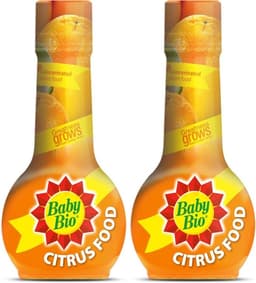
Baby Bio citrus food 175 ml × 2 is about £7.98. The bullets call it a year-round feed and say there is no need for separate summer and winter bottles. amazon.co.uk shows 5.0 from 4 reviews, the highest star line in this set. No review texts were saved. No drop or millilitre dose is printed, and no NPK is printed. The top-pick badge is that star-scale score, not a laboratory ranking and not proof this twin pack outperforms the Baby Bio listing with 353 reviews. Buy it if you wanted the year-round wording at the lower twin-pack price. Skip it if you needed a printed dose or a United Kingdom review file.
Pros
Two 175 ml bottles at about £7.98
Year-round claim on the bullets
Cons
No NPK printed
No review texts saved
No printed drop dose
Best for: A buyer who wanted the year-round Baby Bio claim as a twin pack and accepted a four-review sample with no texts.
Less suitable: Anyone who needed a printed drop dose, an NPK, or a United Kingdom review file.
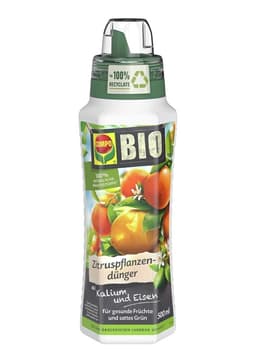
COMPO Bio citrus liquid 500 ml is an organic-labelled concentrate at about £10.03. The item type prints NPK 3.1 + 0.5 + 4.1 and the mixing field is 1:10. amazon.co.uk shows 4.7 from 6,891 reviews. The 50 saved texts are from Germany, France, Italy, Spain and Belgium, not a United Kingdom survey. A bullet mentions extra potassium and use shortly before harvest. One German text calls the pourer messy. No UK certifier is named behind the Bio wording. It is the printed-analysis liquid in this set if you will dilute 1:10 and accept an EU review file, not a UK organic certificate.
Pros
500 ml at about £10.03
NPK 3.1 + 0.5 + 4.1 printed
Extra potassium on a bullet
Cons
Saved reviews are EU, not United Kingdom
Pourer called messy in one German text
No UK certifier named
Best for: Someone who wanted a 500 ml citrus liquid with a printed NPK and will dilute 1:10.
Less suitable: Anyone who needed United Kingdom review texts or a named UK organic certifier.
Miracle-Gro Shake n Feed citrus 4.5 lb is a citrus, avocado and mango granule at about £71.54, the dearest sticker in this set. amazon.co.uk shows 4.7 from 3,851 reviews. The 50 saved texts are marked United States, not a United Kingdom survey. The bullets say shake onto soil within the branch spread every 3 months, avoid trunks and foliage, work into the top 1–3 inches, then water. The mixing field is 13:7:13. The title does not print N-P-K words. Unit-count and liquid-volume fields clash with a 4.5 lb bag. Skip it for one conservatory lemon. It is a US-style grove bag at an import price.
Pros
Citrus, avocado and mango named
3-month claim and shake-on method on the bullets
Cons
About £71.54 in this set
No United Kingdom review texts
Unit and liquid-volume fields clash with a 4.5 lb bag
Best for: Outdoor citrus, avocado or mango when you will shake granules every 3 months and accepted a £71 import.
Less suitable: One conservatory lemon, a weekly watering-can routine, or anyone who needed United Kingdom review texts.
Baby Bio citrus food 175 ml × 2 with 353 reviews is a separate ASIN from the twin pack at about £7.98. This listing is about £11.99. amazon.co.uk shows 4.6 from 353 reviews, with 47 United Kingdom texts, the second-deepest UK file in this set. Those texts mention orange, lemon, kumquat and mandarin. One United Kingdom review quotes 5–10 drops per half litre or one pint. The card itself prints no official dilution. The model field says NPK 8.6, which is not a three-number analysis. The unit-count field prints 175 ml on a two-bottle title. It is the Baby Bio row with a UK review file if you will count drops. It is not the cheaper twin pack and not a printed millilitre rate.
Pros
47 United Kingdom review texts
Used on orange, lemon, kumquat and mandarin in those texts
Cons
About £11.99 versus the other twin pack at about £7.98
Unit count 175 ml on a two-bottle title
No official dilution on the card
Best for: Orange, lemon, kumquat or mandarin in pots when you will count drops and wanted the deeper Baby Bio review file.
Less suitable: Anyone who wanted the cheaper twin pack, a printed millilitre rate, or a three-number NPK.
Cultivers organic citrus 1 kg is organic-labelled microgranules at about £15.53, naming lemon, orange and grapefruit. amazon.co.uk shows 4.6 from 29 reviews, with one United Kingdom text saved. A bullet prints NPK +74% M and the mixing field is 1:0:0, so there is no usable analysis. The instruction is to spread on the label dose and keep granules away from the trunk. No certifier is named behind the 100% organic line. It is a mid-size granule if you will follow the pack chart and keep a trunk gap, not a printed NPK liquid.
Pros
1 kg at about £15.53
Lemon, orange and grapefruit named
Cons
No usable NPK
Only one United Kingdom review text
Mixing field 1:0:0
Best for: A lemon, orange or grapefruit in a pot when you will spread granules away from the trunk.
Less suitable: Anyone who needed a usable three-number NPK or a deep United Kingdom review file.
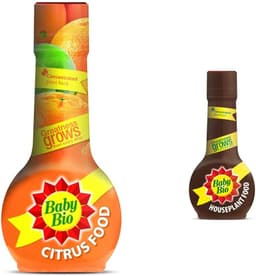
The Baby Bio bundle pairs a citrus concentrate with original house plant food at about £11.08. Product 1 bullets say there is no need for a separate summer and winter citrus feed. amazon.co.uk shows 4.6 from 3 reviews, and no texts were saved. Millilitre sizes are not printed, and no NPK is printed. The listing asks about outdoor plants while the bullets only name the house or conservatory. It is a two-bottle order if you wanted citrus and houseplant food together. Skip it if you needed a printed volume or a review sample.
Pros
Citrus concentrate included in the bundle
Year-round citrus wording on product 1
Cons
No millilitre sizes printed
No review texts saved
No NPK
Best for: A house or conservatory with citrus and other houseplants, when you wanted both bottles in one order.
Less suitable: Anyone who needed printed millilitre sizes, an outdoor-only feed, or a review sample.
Jobe's Organics fruit and citrus 4 lb is a granule at about £36.79, with 3-5-5 printed on the title and bullets. amazon.co.uk shows 4.5 from 4,659 reviews. The saved texts are from the United States and Canada, not the United Kingdom. Several of those texts call the smell strong or like manure, and one warns against indoor use. The OMRI listed and USDA organic line is a US scheme, not a UK certificate. Reviews describe scattering granules and mixing them into the top inches of soil. It is an import granule for an outdoor fruit tree if you can live with the smell and the price, not a 200 ml conservatory bottle.
Pros
3-5-5 printed
OMRI and USDA wording on the listing
Cons
About £36.79 in this set
No United Kingdom review texts
Strong smell in several indoor texts
Best for: An outdoor fruit or citrus tree when you will scatter 3-5-5 granules and accepted a US review file.
Less suitable: A conservatory lemon, anyone sensitive to manure smell indoors, or a shopper who wanted a UK organic mark.
Westland citrus tree feed 200 ml is a United Kingdom liquid you dilute with the measuring doser, at about £6.76. amazon.co.uk shows 4.5 from 1,456 reviews, with 50 United Kingdom texts, the deepest UK sample in this set. Those texts often mention greener lemon and orange leaves and the doser. One describes a pre-pour mixed into 1 litre of water. The mixing field is 1:900. No NPK is printed. Recurring complaints are the small 200 ml pack, a spout that failed on one bottle, and one review title that says it killed a lemon tree without stating a dose. It is the best value here for a named citrus drench with a UK review file, not a printed analysis and not a winter-only powder.
Pros
200 ml UK liquid at about £6.76
4.5 from 1,456 with 50 United Kingdom texts
Measuring doser on the bullets
Cons
No NPK printed on the listing
200 ml called small in reviews
One plant-death title without a stated dose
Best for: One conservatory lemon or orange when you will use the doser and wanted the cheapest UK-reviewed liquid in this set.
Less suitable: Anyone who needed a printed NPK, a 500 ml bottle, or a winter-only powder.
No. The listing does not print an NPK. The bullets mention essential nutrients and trace elements without numbers.
How do you apply the 200 ml concentrate?
The bullets name a measuring doser. The mixing field is 1:900. One United Kingdom review describes a pre-pour mixed into 1 litre of water.
What do the saved reviews say?
Fifty United Kingdom texts. Recurring praise is greener lemon and orange leaves and the doser. Criticisms include a small 200 ml pack, a spout that failed on one bottle, and one title that says it killed a lemon tree.
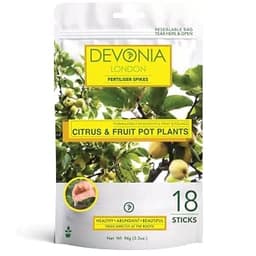
Devonia citrus and fruit sticks 18 is a push-in feed for indoor and outdoor pots at about £7.99. The bullets say the sticks last up to 12 weeks and to replace them on that interval. amazon.co.uk shows 4.5 from 2 reviews, and no texts were saved. The brand field is Generic. The manufacturer is Devonia London and the country of origin is Germany. No usable NPK is printed. The mixing field shows 1:1:1. The unit-count field prints 18.0 gram against an 18-stick title. It is the no-measure row if you will push sticks below the soil line and still water as usual, not a weekly watering-can drench.
Pros
18 sticks at about £7.99
Indoor and outdoor pots named on the bullets
Cons
Brand field Generic
No review texts saved
Unit count 18.0 gram versus 18 sticks
Best for: Indoor or outdoor citrus pots when you will push sticks below the soil line and will not measure a weekly jug.
Less suitable: Anyone who wanted a named UK brand, a printed NPK, or a watering-can concentrate.
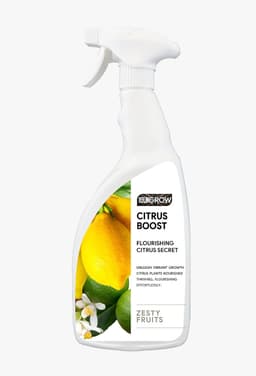
UK GROW citrus foliar spray 300 ml is a ready-to-use spray at about £9.99. The listing is filed under hydroponic nutrients. It tells you to spray leaves and branches. There is no root-drench instruction. amazon.co.uk shows 4.2 from 6 reviews, with two United Kingdom texts that mention a lemon looking healthier. No NPK is printed. A bullet about organic plant extracts and pest resistance is manufacturer copy, not a test. It is a leaf-and-branch top-up if you already feed at the roots, not a replacement for a watering-can concentrate.
Pros
300 ml ready spray at about £9.99
Two United Kingdom texts mention a lemon looking healthier
Cons
No NPK
Pest-and-disease line is listing copy
Only two saved texts
Best for: A citrus pot that already has a root feed, when you wanted a ready leaf-and-branch spray.
Less suitable: Anyone treating foliar spray as the only feed, or who needed a printed NPK drench.
yanzisura citrus concentrate 100 ml is a generic citrus concentrate at about £4.89, naming oranges, lemons, mandarins and limes. The card has no customer-reviews line, so the score is 0. No NPK and no dilution ratio are printed. One bullet also calls it a leaf spray. The country of origin is China. The title spelling is Citruse Focus / Citruse Trees. It is the cheapest sticker in this set only if you will accept a bottle with no stars, no texts and no rate. It is not a named UK high-street feed.
Pros
100 ml at about £4.89
Citrus types named on the title
Cons
No star line
No review texts
No NPK or dilution printed
Best for: A buyer who only wanted the lowest sticker and will wait for a printed ratio on the pack.
Less suitable: Anyone who needed a star line, a dilution, or a named United Kingdom brand.
No. The card has no customer-reviews line, so there is no star rating and no review count.
What dilution is printed?
None. The listing does not print a dilution ratio. One bullet also calls it a leaf spray.
Which plants does the title name?
Oranges, lemons, mandarins and limes. The title spelling is Citruse Focus / Citruse Trees.
How we compared
Eleven amazon.co.uk listings were scored from the stored pages. Shelf date 21 October 2026. There is no laboratory test. The score on each row is the amazon.co.uk star rating multiplied by 20, so 5.0 becomes 100 and a missing star line stays 0. Royal Horticultural Society pages are context for the summer and winter calendar. They are not a score for these packs. The top pick is the highest of those scores. The best value is the lowest shelf price among packs with a score above 0 and a usable citrus job. The 100 ml bottle with no star line is left out of that value pick. The top pick is 5.0 from 4 reviews and has no saved texts. The best-value liquid has no NPK on the card. Neither badge is a feeding trial. The weights below sum to 100. They explain the two badges. They do not replace the star-scale score.
1
Amazon star line
70%
The number beside each product is the amazon.co.uk star rating times 20. Nothing else changes that number. 5.0 from 4 reviews becomes 100. A missing star line stays 0. A large count on EU or US texts is not a United Kingdom survey.
2
Shelf price for the value badge
30%
The best value is the lowest shelf price among packs with a score above 0 and a usable citrus job. The 100 ml bottle with no star line is excluded. This rule names the badge. It does not change the star score.
Independent review
Last updated: October 2026
7 sources checked
Citrus fertiliser buying guide
Match the citrus job, the form and a printed dose before you match the star line. Prices on this page are amazon.co.uk shelf prices on 21 October 2026. This is not a laboratory test.
What to match before you buy
Citrus fertiliser in the United Kingdom is a feed for lemon, orange, lime, kumquat and calamondin in pots. Quality is a citrus-named formula with a dose you can follow and, where the listing prints them, nitrogen, potassium and micronutrients. Iron, magnesium, manganese and zinc are the traces a tomato feed often skips. The usual UK buy is a small liquid. Sticks and granules are sold as well. Bags measured in pounds appear at import prices.
Match the job on the title first.
Best for
A conservatory lemon or orange that needs a named citrus liquid
A pot where you want a printed NPK and will dilute 1:10
An outdoor fruit tree if you will scatter granules and accept a non-UK review file
Not ideal for
A shopper who needs a UK organic certificate from these organic-labelled packs
Anyone treating a foliar spray as the only feed
A 100 ml bottle with no star line and no printed dilution
Mistakes to avoid
1
Doubling the dose for yellow leaves
The Royal Horticultural Society lists wet or dry roots, draughts, cold and hunger as causes of yellowing. A yellow leaf is not a reason to double the dose.
2
Using tomato feed for years
Mottled yellow between the veins can follow a tomato feed that skips iron, magnesium, manganese and zinc. Use a citrus-named formula when you need those traces or a printed analysis the tomato bottle does not show.
3
Summer strength in a cool winter
A weekly summer dose in a dark, cool room, granules against the trunk, and foliar spray as the only feed are separate mistakes. Ask a professional about black soft roots, or scale and mite that survive home treatment. If you suspect poisoning, take the pack to a doctor or a vet.
What to weigh up
Named job and form
High
The title has to name citrus, or citrus plus fruit. Dilute liquid, ready foliar spray, 12-week sticks and scatter granules are different jobs. Foliar spray does not replace a root drench. A boxwood product is the wrong aisle.
Season, analysis and where the reviews were written
High
Follow a summer and winter split only when the label claims it. A year-round bullet is a different product. Print an NPK only when the card shows one. Westland and the 100 ml bottle have none. COMPO prints 3.1 + 0.5 + 4.1, Jobe's prints 3-5-5, and the Miracle-Gro mixing field is 13:7:13. COMPO's saved texts are EU. Jobe's and Miracle-Gro texts are United States. Westland and one Baby Bio twin pack have United Kingdom texts.
Which option suits you?
Three typical situations, each with a recommendation from this comparison.
🍋
A conservatory lemon before frost
You move one pot indoors and want a named citrus bottle. Baby Bio citrus food 175 ml × 2 is the top pick at about £7.98 because the bullets say year-round, with 5.0 from 4 reviews and no saved texts. Westland 200 ml at about £6.76 is the best value if you want the doser and 50 United Kingdom texts. Neither card prints an NPK.
A seed orange on a windowsill needs a method more than a 4 lb import. Westland citrus tree feed 200 ml at about £6.76 is the UK-reviewed liquid in this set, 4.5 from 1,456 reviews. Water first, empty the saucer, and do not double the dose because a leaf is yellow. The Royal Horticultural Society lists wet roots, dry roots, draughts, cold and hunger as causes of yellowing.
COMPO Bio 500 ml at about £10.03 prints NPK 3.1 + 0.5 + 4.1 and Bio wording, with no UK certifier named. The 6,891-review star line sits on EU texts. Jobe's Organics prints OMRI and USDA wording, which is a US scheme, at about £36.79. Cultivers says 100% organic and names no certifier. None of those lines is a UK organic certificate.
The top pick is Baby Bio citrus food 175 ml × 2 at about £7.98. It has the highest score because amazon.co.uk shows 5.0 from 4 reviews, and the bullets call it a year-round feed with no separate summer and winter bottles. No review texts were saved, and the card prints no drop dose and no NPK. That score is the star line multiplied by 20. It is not a feeding trial, and it does not show that this twin pack outperforms the Baby Bio listing with 353 reviews.
Which citrus fertiliser is the best value?
The best value is Westland citrus tree feed 200 ml at about £6.76. It is the lowest shelf price among packs with a score above 0 and a named citrus job. amazon.co.uk shows 4.5 from 1,456 reviews, and 50 of the saved texts are from the United Kingdom. The bullets include a measuring doser and the mixing field is 1:900. No NPK is printed. The 100 ml bottle at about £4.89 has no star line, so it is not this value pick.
Can you use tomato feed on a citrus tree?
Tomato feed can keep a citrus pot going for a while, but it is a stopgap. Citrus listings that print an analysis often include potassium and micronutrients such as iron, magnesium, manganese and zinc, which a tomato feed often skips. The Royal Horticultural Society treats citrus as hungry container plants that need a specialist feed all year. Yellow mottling between the veins is a reason to check the formula, not to assume any feed is the same.
Do citrus plants need a different feed in winter?
The Royal Horticultural Society describes a higher-nitrogen summer rhythm and a more balanced winter feed for citrus in containers. Use that split only when the product claims two seasons. Baby Bio citrus food 175 ml × 2 at about £7.98 says it is a year-round feed and that you do not need separate summer and winter bottles. The other Baby Bio twin pack does not print that season line. A weekly summer-strength dose in a dark, cool winter is a common mistake.
Is a foliar spray enough on its own?
No. A ready foliar spray is a top-up for leaves and branches, not a replacement for a root drench. UK GROW 300 ml at about £9.99 tells you to spray leaves and branches, and the card has no root-drench instruction. It is 4.2 from 6 reviews, with two United Kingdom texts. No NPK is printed. A bullet about pest resistance is listing copy, not a result you should treat as fact. Feed at the roots as well when your main fertiliser says to.
Does an organic label mean a UK certificate?
Not on these cards. COMPO Bio prints organic or Bio wording and NPK 3.1 + 0.5 + 4.1, and it does not name a UK certifier. Its saved review texts are from the EU, not a United Kingdom survey. Jobe's Organics prints OMRI and USDA organic wording, which is a United States scheme. Cultivers says 100% organic and natural and names no certifier. Do not read those lines as a UK organic certificate.
Why are the leaves yellow if you already feed?
Yellow leaves are not a reason to double the dose. The Royal Horticultural Society lists wet or dry roots, draughts, cold and hunger as causes of yellowing on citrus. Overwatering is common on a windowsill. Granules against the trunk, foliar spray as the only feed, and a summer-strength weekly dose in winter are separate mistakes. If a tree has black, soft roots, ask a professional. If you suspect poisoning, take the pack to a doctor or a vet.
Does a citrus fertiliser sold in Great Britain need a UKCA mark?
No. GOV.UK says no product mark is required on fertilisers in Great Britain. Sellers use the Fertilisers Regulations 1991 or the UK fertiliser route. Northern Ireland still uses CE. A missing UKCA mark does not make a Great Britain bottle illegal. A fruit tree in the ground is a different comparison: see the fruit tree fertiliser comparison. The Consumer Rights Act 2015 covers a short pack or a broken doser.
Our verdict
The top pick is Baby Bio citrus food 175 ml × 2 at about £7.98. The score is 5.0 from 4 amazon.co.uk reviews, the highest star line in this set, and the bullets call it a year-round feed with no separate summer and winter bottles. There are no saved review texts, no printed drop dose and no NPK. That badge is the star-scale score, not a feeding trial and not proof it outperforms the Baby Bio listing with 353 reviews. The best value is Westland citrus tree feed 200 ml at about £6.76, the lowest shelf price among packs with a score above 0 and a usable citrus job. It is 4.5 from 1,456 reviews, with 50 United Kingdom texts, a measuring doser and a mixing field of 1:900. No NPK is printed. The 100 ml bottle at about £4.89 has no star line, so it is not the best value. None of these scores is a laboratory test.
Best overall
Baby Bio citrus food 175 ml x 2
Highest star-scale score: 5.0 from 4 reviews, year-round claim on the bullets, about £7.98. No saved texts and no printed dose.
Peter F. is the editor for DIY & tools at productscompared.co.uk. Comparisons in this category are checked against amazon.co.uk listings, review evidence and public UK sources.
Updated: October 2026
7 sources checked
Guides to citrus fertilisers
Guides on what to look for, how to use a product, and common mistakes.
Public UK sources used for this page in October 2026. Prices, stars and review counts are from the eleven amazon.co.uk listings captured on 21 October 2026. A year-round line, an NPK and an organic wording are listing claims. OMRI and USDA are US schemes. This is not a laboratory test and not a feeding trial.
This page contains affiliate links to amazon.co.uk (tag pcuk26-21). If you buy through them, we may earn a commission at no extra cost to you. Prices, stars and review counts are from the listings. This is not a laboratory test.