


Pot on tap water
Your blue hydrangea turned pink in multipurpose compost on mains water. You will dose the soil from spring, and you will use ericaceous compost and rainwater where you can. The named colourant is the pack with a written history.
The best blue fertilisers, compared.
Top pick: Aluminium sulphate blue hydrangea fertiliser, 14×20 cm Best value: Vitax Hydrangea Feed, 1 kg, pack of 2 – Highest value part that is not the top pick: 2 kg at about £11.98, with 4.4 from 1,741 reviews, as a feed rather than a proven colour change. Updated October 2026.


Blue fertiliser, in a UK search, is a hydrangea colourant. Iron and aluminium salts let responsive pink mophead and lacecap flowers turn blue or mauve. It is not a general plant food, a lawn feed, or a dye for petals. The Royal Horticultural Society limits that shift to macrophylla (mophead and lacecap), involucrata and serrata. White, red and green cultivars stay as they are. Blue cultivars hold blue in acid soil around pH 4.5 to 5. On amazon.co.uk, quality is a named pack with a printed dose and a real review history, not the lowest price per gram. The season is April to September, and the powder goes on the soil, not the leaves. Whether your plant can change at all is the first check in the [blue fertiliser buying guide](/hub/fertiliser-soil-and-bark-mulch/blue-fertiliser/sub/blue-fertiliser-buying-guide). If the label says white, panicle, or a fixed pink, stop.
Blue fertiliser, in a UK search, is a hydrangea colourant. Iron and aluminium salts let responsive pink mophead and lacecap flowers turn blue or mauve. It is not a general plant food, a lawn feed, or a dye for petals.

28 products checked · 56 hrs invested · +21,400 readers
Swipe for more
1-2 of 8


Personal buying guide
Question 1 of 2
What do you want the pack to do?
This generic pack at £5.59 states aluminium sulphate for blue hydrangeas, in a 14 by 20 cm pack weighing 109 g. The star line is 5.0 out of 5 from 3 ratings, and the saved listing has no written reviews, so those stars do not describe a flower, a fault, or a dose. It says add the product to the soil or around the base and water it in. It also names azaleas, rhododendrons, camellias and other ericaceous plants. No percentage and no mixing ratio are printed. Country of origin is China. Three silent ratings are not a reason to treat a 109 g pack as equal to a colourant with 1,244 written-up reviews.
Pros
Cons
Best for: You only need a listing that names aluminium sulphate and you will not rely on the star line.
Less suitable: You want buyer reports of blue flowers, or a pack large enough for a weekly programme.
Specifications
Common questions
Which plants does the listing name besides hydrangeas?
Azaleas, rhododendrons, camellias and other ericaceous species.
Are there written reviews?
The star line is 5.0 from 3 ratings. The saved listing has no review text, so there is nothing to say about results or faults.
The Topline bundle at £16.99 pairs 1 litre of Westland hydrangea liquid feed with the 500 g colourant, and it is rated 4.5 out of 5 from 74 reviews. The colourant line matches the single tub: pink varieties towards blue, darker pink towards mauve blue, with better results described on acid soil, or ericaceous compost or a double rate if the soil is alkaline. The feed is described for planting and a spring top dressing, and the liquid for weekly use in pots or in the ground. Most comments only say the parcel arrived and that it did the job. One buyer used each product once and then worried that leaves and flowers were turning brown and crispy, without being able to separate the cause. Another found powder flowing from a damaged pack. You pay about £10 more than the colourant tub alone, and this review sample does not itself show a colour change.
Pros
Cons
Best for: You want the Westland colourant and a hydrangea liquid feed in the same order.
Less suitable: You only need the colourant, or you want a large set of reviews about colour rather than delivery.
Specifications
Common questions
Is this only a liquid fertiliser?
No. The listing is a bundle: 1 litre of hydrangea liquid plant food and 500 g of hydrangea colourant. The item form field says granules, liquid.
What does the listing say about alkaline soil?
Best colourant results are described on acid soils. On alkaline soil it says use ericaceous compost or double the application rate.
What problems show up in the reviews?
One buyer worried that leaves and flowers turned brown and crispy after using each product once. Another reported powder leaking from a damaged package. Most other comments are brief.
Vitax Hydrangea Feed, two 1 kg packs at £11.98, is the best value in this set as a feed: 4.4 out of 5 from 1,741 reviews, with magnesium and iron, worked into the soil at planting and as a spring top dressing. Buyers report larger flower heads and shrubs that bloomed again after a year with few flowers. Some also saw flowers move towards blue or blue-purple. The listing does not state an aluminium analysis, so it is not sold as a colourant. One buyer who wanted a pink hydrangea was unhappy when it turned blue. Bags that felt well under 1 kg, torn packs leaking granules, and slow results are recurring complaints. Overfeeding killed young plants in one account; older plants were less affected.
Pros
Cons
Best for: You want more flower on an established hydrangea and can accept a possible colour shift.
Less suitable: You need a named colourant with a stated aluminium salt, or you must keep a pink cultivar pink.
Specifications
Common questions
Does the listing say this turns hydrangeas blue?
No. It is sold as hydrangea feed with magnesium and iron for flowering. It does not state an aluminium content. Some reviewers report a shift towards blue or purple, and one did not want a pink plant to turn blue.
Is it described as pet friendly?
The listing says keep it out of reach of children and animals, follow the label, and wear gloves. It does not say the product is pet friendly.
What do buyers complain about?
Bags that felt under 1 kg, torn packs leaking granules, no change yet, and young plants killed when the buyer overfed them.
The Westland Hydrangea Colourant, 500 g at £6.99, is the top pick in this set: a named colourant rated 4.2 out of 5 from 1,244 amazon.co.uk reviews. Buyers who water it in at the base from spring, as the first flowers form, report pale or reverted-pink plants moving back towards blue, including shrubs that had gone pink on tap water. The listing says pale pink hydrangeas go blue and dark pink ones go mauve blue. It does not say white flowers change. Reviewers describe a powder in a cardboard tube with a blue lid, although the item-form field says liquid, and crushed tubes with leaking powder come up often. One buyer said the suggested amount nearly killed a plant and left poor leaf colour on another. Colour can settle at purple rather than a clear blue, and a single late watering often shows nothing.
Pros
Cons
Best for: You have a pink or reverted-pink mophead or lacecap and will dose the soil from spring, not the leaves.
Less suitable: The plant is white, a panicle, or a pink you want to keep, or you will try one late watering and stop.
Specifications
Common questions
Does this listing say it changes white hydrangeas?
No. The bullets say it changes pale pink hydrangeas to blue and dark pink hydrangeas to mauve blue. They do not say white flowers change.
Is the pack a liquid?
The item form field says liquid. Reviewers describe a powder in a cardboard tube with a blue plastic lid, used on the soil or dissolved in water.
What do buyers report goes wrong?
Repeated points are a crushed tube and leaking powder, no change after one late application, a purple rather than blue result, and leaf damage when the stated amount was used on a small plant.
This generic two-piece listing at £3.49 puts aluminium sulfate and 100 g in the title, while the item weight is 119 g. The text says sprinkle 30 ml on the soil and mix with water afterwards. It names hydrangeas, ornamental shrubs, clay or sandy soils, and pots. There is no star line and no review text in the saved listing, and no percentage of aluminium sulphate. A question on the listing asks whether it is safe for pets; the bullets do not answer it. The dose is a volume, not a gram rate, and no interval is given. It is the cheapest pack in this set, with nothing in the reviews to show a blue flower.
Pros
Cons
Best for: You already know the salt and the rate from another label, and you are only comparing the shelf price.
Less suitable: You want a reviewed colourant, a gram dose, or any written result from a UK buyer.
Specifications
Common questions
Does the listing include a pet-safety answer?
No. A question asks if it is safe for pets. The bullets do not answer it.
What dose does the listing give?
It says sprinkle thirty millilitres on the soil and mix with water afterwards. It does not give a gram rate or how often to repeat it.
This generic hydrangea blue fertiliser is £4.77. The title says 100 g and the item weight is 119 g. It describes balancing soil pH for blue hydrangeas and says sprinkle 30 ml, then mix with water. It does not name aluminium sulphate or give a percentage. The saved listing has no reviews and no star line. It also names ornamental shrubs, clay or sandy soils, and patio containers. You cannot tell from the listing how the 100 g title relates to the 119 g weight, or how 30 ml compares with a 50 g rate on a named colourant. Form and included components both say refer to description.
Pros
Cons
Best for: You are checking whether a no-brand blue-fertiliser title prints a salt before you pay.
Less suitable: You need a named analysis, a review of flower colour, or a weekly gram rate.
Specifications
Common questions
Does the listing name aluminium sulphate?
No. It calls the product a hydrangea blue fertiliser and a soil acidifier. It does not state aluminium sulphate or a percentage.
Where does the listing say you can use it?
Gardens, landscapes and patio containers, on hydrangeas and ornamental shrubs, including clay or sandy soils.
The Fyrdyn hydrangea blue fertiliser is £5.41, with a listed weight of 119 g and no reviews in the saved listing. It is described as a soil acidifier for blue hydrangeas, with a claim of faster pH adjustment, and it says dilute before use: sprinkle 30 ml and add water. Aluminium is not named, and no interval is given. It also mentions ornamental shrubs in clay or sandy soils. A question asks whether it changes the colour of other flowers; the bullets do not say that. The brand name is on the listing. The review history is not. Form and included components say refer to description.
Pros
Cons
Best for: You are comparing branded generics and will reject any pack that hides the salt.
Less suitable: You want evidence that a Fyrdyn pack changed a UK hydrangea, or a printed analysis.
Specifications
Common questions
Does the listing say it changes the colour of other flowers?
No. A question asks that. The bullets talk about blue hydrangeas, acid-loving plants and ornamental shrubs. They do not say other flowers change colour.
How often should it be applied?
The listing gives 30 ml per application and says to dilute it. It does not state an interval.
This generic aluminium sulfate listing is £6.26, close to the £6.99 Westland tub, with a listed weight of 119 g and no reviews. The title says it turns hydrangeas blue by speeding soil acidification. The instruction is to dilute it, sprinkle 30 ml, and water afterwards. It names clay and sandy soils, not every soil, and it prints no percentage. Included components say refer to description. At this price you are next to a named 500 g colourant that has 1,244 reviews, and this pack does not show one. Country of origin is China. There is no interval and no gram rate to compare with 50 g.
Pros
Cons
Best for: You have already decided the salt and only wanted to see whether this title prints it.
Less suitable: You are choosing a first colourant and the price is already in the same band as Westland 500 g.
Specifications
Common questions
Does the listing say it works on all soil types?
No. It names clay and sandy soils. It does not say every soil type.
Is a composition percentage given?
No. The title says aluminium sulfate. Included components are 'refer to description', and no percentage is printed.
Shelf prices, stars and review counts are the amazon.co.uk listings in this comparison. There is no laboratory test. The score is 0 to 100 from four parts, then a deduction of 30 when a listing has fewer than 10 reviews. Eight products are on this page. Westland Hydrangea Colourant scores 91 and is the top pick. Vitax Hydrangea Feed scores 82 and is the best value for feeding, not for a proven colour change.
Star rating
40%Amazon stars out of 5, scaled to 40 points. A listing with no star line scores 0 on this part.
Review sample
25%1,000 or more reviews score 25. Fifty or more score 12. Ten or more score 6. Fewer than 10 score 2. No reviews score 0.
Fit as a colourant
25%A named colourant whose reviews discuss a colour shift scores highest. A hydrangea feed without an aluminium line scores lower. A generic title with no reviews scores lowest.
Value in this set
10%The named 500 g colourant at £6.99 with 1,000 or more reviews scores 9. The 2 kg feed at £11.98 scores 8. The bundle scores 4. Unreviewed generics score 3, 2 or 1.
Buy the plant and the product type before you buy the star line. A colourant, a hydrangea feed and a bundle are not one list. Prices are the amazon.co.uk listings in this comparison, from £3.49 to £16.99. This is not a laboratory test. White, panicle and fixed-pink plants are outside what any of these packs can do.
Blue fertiliser is the name UK shoppers use for a hydrangea colourant. The salts are iron and aluminium. Responsive pink mophead and lacecap flowers can turn blue or mauve. It is not a general plant food, a lawn feed, or a dye you put on the petals. The Royal Horticultural Society limits that shift to Hydrangea macrophylla (mophead and lacecap), Hydrangea involucrata and Hydrangea serrata. White, red and green cultivars stay as they are. Blue cultivars hold blue in acid soil around pH 4.5 to 5.

The RHS limits a blue or mauve shift to mophead and lacecap Hydrangea macrophylla, Hydrangea involucrata and Hydrangea serrata. White, red, green, panicle and fixed-pink cultivars stay as they are.
The Westland season is April to September, on the soil, with a weekly rate after the first 50 g per square metre. Buyers who applied it once, late, often saw no change. Mauve rather than a clear blue is a reported result.
Westland 500 g is the colourant. Vitax is a magnesium and iron feed and does not state aluminium. Ericaceous compost is the growing medium. Pouring the solution on the leaves, or over-dosing a young plant, is a separate mistake.
Can the plant change at all? The Royal Horticultural Society limits a blue or mauve shift to Hydrangea macrophylla (mophead and lacecap), Hydrangea involucrata and Hydrangea serrata. White, red and green cultivars stay as they are. Blue cultivars hold blue in acid soil around pH 4.5 to 5. If the label says white, panicle, Annabelle or a fixed pink, no product in this set will recolour it. Name the listing next. Westland Hydrangea Colourant, 500 g at £6.99, is the colourant.
The Westland manufacturer page gives 50 g per square metre into the soil, then 50 g in 5 litres of water every seven days under the shrub, from April to September. On alkaline soil, use ericaceous compost or double that rate. The amazon.co.uk listing for the 500 g tub does not print that how-to line. Reviewers describe powder in a cardboard tube, although the item-form field says liquid. The powder goes on the soil, not the leaves.
Three typical situations, each with a recommendation from this comparison.
Your blue hydrangea turned pink in multipurpose compost on mains water. You will dose the soil from spring, and you will use ericaceous compost and rainwater where you can. The named colourant is the pack with a written history.
You have an established shrub and you want more flower, and you can accept a possible shift towards blue. Vitax is sold as magnesium and iron. It is not a stated aluminium colourant.
You are looking at a generic tub under £6 next to the £6.99 Westland colourant. The generics in this set have no written reviews. The named 500 g tub is the pack to buy if colour is the job.
Westland Hydrangea Colourant, 500 g, scores 91 and is the top pick: a named colourant at about £6.99 with 4.2 from 1,244 reviews. Vitax Hydrangea Feed, 2 kg at about £11.98, scores 82 and is the best value for feeding. It is not a proven colourant, because the listing does not state aluminium. The £16.99 bundle adds a liquid feed to the colourant, and its 74 reviews are too thin to show a colour result. Unreviewed generics, including a 5.0 from three silent ratings, do not replace that named tub. None of these scores is a laboratory test.
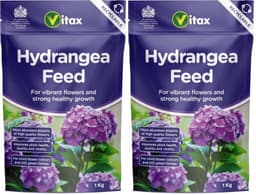
Vitax Hydrangea Feed, 1 kg, pack of 2
Highest value part that is not the top pick: 2 kg at about £11.98, with 4.4 from 1,741 reviews, as a feed rather than a proven colour change.
Editorial

Peter F. is the editor for DIY & tools at productscompared.co.uk. Comparisons in this category are checked against amazon.co.uk listings, review evidence and public UK sources.
Guides on what to look for, how to use a product, and common mistakes.
Public UK and maker sources from the research digest, used for this page in October 2026. Prices, stars and review counts are the amazon.co.uk listings in that digest. The Westland dose and the 93% aluminium sulphate figure are from the manufacturer pages, not from the amazon bullets. A 5.0 from three ratings has no review text.
Expert source (DIY & tools): Lee Burkhill (Garden Ninja) (external profile) – public expert commentary used as a research source, not as a contributor to our pages.
This page contains affiliate links to amazon.co.uk (tag pcuk26-21). If you buy through them, we may earn a commission at no extra cost to you. Prices, stars and review counts are from the listings. This is not a laboratory test.