




Indoor slate
You want a non-drying mineral oil for slate or a board, and you will check the bottle. Brandon Bespoke, 500 ml, is about £11.95, with 4.7 from 1,538 reviews. The title says food safe. It does not cure.
The best stone oils, compared.
Top pick: Osmo 620 stone and terracotta oil 0.75 L Best value: Lubrisolve mineral oil 2 litres – Lowest price per litre among the mineral oils here, about £16.99 for 2 litres, with slate and stone named and 4.6 from 155 reviews. Updated October 2026.

Stone oil on amazon.co.uk is not one finish. Most of these twelve listings are non-drying mineral oil for wooden boards, also named for slate or stone. Osmo 620 is a thin exterior oil for absorbent stone and terracotta. Linseed and tung oil harden in the air, so piled cloths can self-heat. A nano spray and a honing oil answer different jobs. If food will touch the surface, the bottle in your hand and the listing must agree. Assimilated Regulation 1935/2004, as the Food Standards Agency explains it, is the general duty, not a badge on the tin. A stored UK review of says the bottle read for external use only while the listing said food safe. Read the label before the oil goes near a board or a slate worktop. The split by chemistry is in the [stone oil buying guide](/hub/paints-and-varnishes/stone-oil/sub/stone-oil-buying-guide). Materialix boiled linseed is a drying timber oil whose bullets do not name stone.
Stone oil on amazon.co.uk is not one finish. Most of these twelve listings are non-drying mineral oil for wooden boards, also named for slate or stone. Osmo 620 is a thin exterior oil for absorbent stone and terracotta.
42 products checked · 57 hrs invested · +16,800 readers
Swipe for more
1-2 of 12


Personal buying guide
Question 1 of 2
What are you treating?
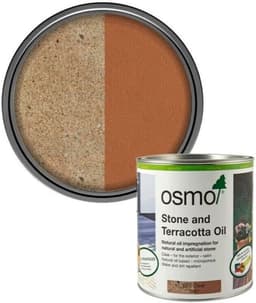
Osmo 620 is the clearest specialist option here for exterior absorbent stone and terracotta. The 0.75-litre tin gives a clear satin finish, while the manufacturer’s UK guidance calls for very thin coats and removal of all unabsorbed oil. UK reviewers report successful use on sandstone steps, terracotta patios and tiled porches. One reviewer also found that oil pooled in pitted stone and dried as white patches, which makes careful wipe-off essential. Its 5.0 rating looks impressive but comes from only 14 reviews, so it should not outweigh surface suitability. Use it outside on absorbent stone, not as a default treatment for an indoor slate worktop.
Pros
Cons
Best for: Exterior absorbent stone, sandstone steps and terracotta patios after a successful test patch.
Less suitable: Indoor food worktops, polished stone or surfaces that do not absorb oil.
Specifications
Common questions
Does the amazon.co.uk file state coverage?
No. There is no bullet block and no coverage figure. The title has 620 and 0.75 litre. Osmo UK states about 32 m² per litre on smooth surfaces. That figure is not your stone.
What did UK reviewers use it on?
Sandstone steps, a terracotta patio and a tiled porch. Pooled oil left white areas on pitted stone.
Does the file answer the limestone question?
The page asks. The stored amazon.co.uk file does not answer.
Materialix packages 500 ml of food-grade mineral oil as two 250 ml bottles, which is convenient for storage and controlled use. The listing names stone and slate alongside wood, bamboo and stainless steel, and the 4.7 rating is backed by 6,096 reviews. UK reviewers describe applying it with a cloth and waiting between coats, although one disputes the listing’s odourless description. At £17.90, it is more expensive per litre than Lubrisolve and the single 500 ml Brandon Bespoke bottle. The listing also warns never to overheat the oil because its vapours are highly flammable; this is different from the self-heating rag risk of linseed oil. It is a strong choice when two smaller bottles are more useful than the cheapest bulk pack.
Pros
Cons
Best for: Indoor slate, stone or board maintenance where split bottles are convenient.
Less suitable: The lowest-cost bulk purchase or a surface requiring a cured exterior coating.
Specifications
Common questions
What is in the pack?
Two 250 ml bottles, listed at £17.90.
Does every review call it odourless?
No. The listing says odourless. One stored UK review said it had an odour.
What is the safety line?
Never overheat the oil. Vapours are highly flammable. Keep away from fire.
Brandon Bespoke combines a useful 500 ml size with a listing that names wood, worktops, slate and stone. At £11.95, it is cheaper than the other 500 ml mineral oils here, while its 4.7 rating is backed by 1,538 reviews. The non-drying oil is straightforward to apply sparingly and buff, making it a sensible maintenance treatment where the worktop supplier permits mineral oil. It will deepen the surface appearance but will not become a hard, stain-proof sealer. One stored UK review also highlights a swallow warning and the lack of a child-resistant lid, so storage deserves care. This is our top pick for a versatile mid-sized mineral oil, subject to checking the bottle label against the intended food-contact use.
Pros
Cons
Best for: Indoor slate, stone and wooden worktops where the supplier and bottle label permit mineral oil.
Less suitable: Homes unable to store the bottle securely or surfaces requiring a cured exterior finish.
Specifications
Common questions
Does a stored review mention a swallow warning?
Yes. One UK review quotes a seek-medical-advice line and notes no child-resistant lid.
What is the material field?
The specification block says Wood. The title says mineral oil. Wood is stored as listed, not as the contents.
Does the title name slate?
Yes. The title names wood, slate and stone, and says food safe.
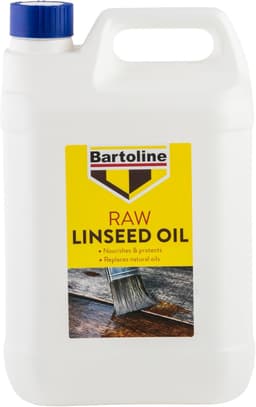
Bartoline provides 5 litres of raw linseed oil for £27.29, or about £5.46 per litre, for large timber, terracotta and stone-floor projects. The maker’s guidance calls for two or three coats with about 24 hours between them and roughly a week for drying, so this is not a quick weekend wipe-over. Its 4.7 rating from 536 reviews is strong, although one UK reviewer reports a fishy smell. The product information names stone floors and terracotta but does not provide a food-contact declaration for a kitchen worktop. Used cloths can self-heat as the oil oxidises and must be handled according to the fire-safety warning. It is a good-value floor oil when you accept the drying time, smell and cloth routine.
Pros
Cons
Best for: Large compatible stone-floor, terracotta or outdoor timber projects.
Less suitable: Indoor food worktops, small jobs or projects that need rapid drying.
Specifications
Common questions
Does the listing mention cloth fires?
Yes. A bullet says dispose of application cloths to prevent fire hazards.
Is stone named?
Yes. The title names stone, and the bullets name stone floors such as terracotta.
Why is the stored weight odd?
The file stores 484 g for a 5 litre pack. That cannot be the oil mass. It is kept as listed.
Materialix boiled linseed oil is a 1-litre drying oil aimed mainly at worktops, blocks, furniture and outdoor wood. The listing claims around 18 hours to dry and five to ten days to harden, which makes the time commitment much clearer than on many bottles here. Its 4.7 rating from 433 reviews is reassuring, but UK reviewers mention a strong smell and a tin that is awkward to pour. Crucially for this comparison, the stored bullets do not name stone or slate. The food-contact claim refers to a cited laboratory standard, but the certificate is not in the stored evidence. Choose it for compatible timber only after reading the delivered label, and manage used cloths as a drying-oil fire risk.
Pros
Cons
Best for: Compatible wooden worktops, blocks, furniture or outdoor timber where a drying finish is wanted.
Less suitable: Stone or slate unless the manufacturer separately confirms suitability.
Specifications
Common questions
Does this listing name stone or slate?
No. The bullets name wood: boards, blocks, worktops, furniture and outdoor timber.
What dry time is claimed?
Around 18 hours to dry and 5 to 10 days to harden, and about 12 to 15 square metres per litre.
What did UK reviewers dislike?
A strong smell, a tin that is hard to pour, and uncertainty about how long the finish lasts.
Grain Guard is a practical 500 ml mineral oil for small indoor slate, wood or bamboo jobs where the bottle in hand confirms the intended use. The listing describes it as colourless, unscented and suitable for food-preparation surfaces, and application is simply by cloth. Because mineral oil does not cure, it can deepen the appearance without becoming a hard protective sealer. Its 4.7 rating is encouraging, although 80 reviews provide less evidence than the established Brandon Bespoke and Materialix listings. At £13.99 it also costs more per litre than the 2-litre Lubrisolve pack. Choose it for a manageable bottle rather than for outdoor weather protection.
Pros
Cons
Best for: Small indoor slate, chopping-board and bamboo maintenance jobs where the label matches the surface.
Less suitable: Exterior paving, non-absorbent stone or anyone wanting a cured sealer.
Specifications
Common questions
Does this listing say the oil is unscented?
Yes. Scent is stored as unscented, and the bullets say odourless and tasteless.
Does the listing name stone?
The bullets name slate as well as wood, bamboo and stainless steel.
Is a cure time given?
The bullets say there is no curing time. They do not give a drying hour.
Lansky honing oil belongs on sharpening stones, not on slate worktops, patios or masonry. The 120 ml bottle is designed for Lansky sharpeners and Arkansas bench stones, where a few drops help carry away sharpening debris. Its 4.6 rating from 3,600 reviews is substantial evidence for that narrow job, but it says nothing about performance as a decorative stone finish. UK reviewers say a little goes a long way, although some consider the volume expensive and one found the cap awkward. There is no stored food-contact or outdoor-finish claim. Buy it with a compatible oil stone and ignore it for every worktop or paving project in this comparison.
Pros
Cons
Best for: Lubricating compatible Lansky and Arkansas sharpening stones.
Less suitable: Slate worktops, stone floors, patios or any decorative sealing job.
Specifications
Common questions
Can this oil a slate worktop?
The bullets do not say that. They limit it to Lansky sharpeners and Arkansas bench stones.
Does the file say it includes a dropper?
The page asks. The stored bullets do not say.
What do UK reviewers say about the bottle?
A little goes a long way. Some call the volume expensive. One review says the cap is awkward.
Brandon Bespoke tung oil is a drying oil for buyers who want a matt finish rather than the permanently non-drying behaviour of mineral oil. Its listing names wood, slate and stone and allows indoor or outdoor use, while reviews describe several coats with overnight waits. The 4.6 rating from 394 reviews gives a reasonable evidence base. Application requires more patience than a wipe-and-buff mineral oil, and the coverage figures in the listing contradict each other, so they should not guide quantity. One UK reviewer still noticed the smell in a camper three weeks later. Treat used cloths with the same care as other oxidising drying oils and test the surface before committing.
Pros
Cons
Best for: A compatible wood or stone surface where a matt drying-oil finish is wanted.
Less suitable: Quick maintenance, poorly ventilated rooms or anyone wanting a non-drying food-surface oil.
Specifications
Common questions
What coverage does the listing give?
The raw field says about 15 sqm and 160 sqm in the same line. Those figures disagree, so neither is used as a rate.
Did reviewers mention smell?
Yes. One UK review still smelt it in a camper three weeks later.
Does the listing name slate?
Yes. The title says wood, slate and stone, with a matt finish.
Lubrisolve supplies 2 litres of colourless mineral oil for £16.99, making it the best value among the comparable mineral oils in this set at about £8.50 per litre. The listing names slate and stone as well as boards, blocks and utensils, and states that the oil is suitable for direct food contact. A UK reviewer describes rubbing it in, leaving it overnight and wiping off the excess, which suits a non-drying maintenance oil. Its 4.6 rating from 155 reviews is credible, though not as deep a review base as Brandon Bespoke’s 500 ml bottle. The large pack is economical only if you will use it before it becomes workshop clutter. It does not cure or replace a specified impregnating sealer.
Pros
Cons
Best for: Regular maintenance of compatible slate, stone, boards or utensils where a large pack is useful.
Less suitable: A single small surface or exterior stone needing a weather-resistant treatment.
Specifications
Common questions
Does this listing name slate?
Yes. The title and bullets name slate and stone as well as wooden boards.
What size is the pack?
2 litres, listed at £16.99, stored weight 1.75 kg.
Is a scent listed?
The bullets say colourless, odourless and tasteless.
DD teck is a 100 ml mineral-oil bottle for trying a small board, worktop or slate area without buying much surplus. The listing describes it as transparent and odourless and cites BP/USP standards alongside a food-safe claim. A UK reviewer reports using only a tiny quantity on a board, which supports the value of the small bottle for occasional maintenance. At £5.99, however, it works out at about £60 per litre and is poor value for a large stone surface. Its 4.6 rating is based on only 28 reviews, so the evidence base is modest. The broad lubrication and rust-protection claims also make checking the exact label for your intended food surface important.
Pros
Cons
Best for: A small trial patch or occasional maintenance where 100 ml is enough.
Less suitable: Large worktops, floors or buyers seeking the lowest cost per litre.
Specifications
Common questions
How much is in the bottle?
100 ml, listed at £5.99.
Do the bullets only mention boards?
No. They also name lubrication, rust protection, leather, adhesive removal and stainless steel.
What do the stored reviews cover?
Seven UK reviews: a small dose on boards and shine on a black sink. No defect is described.
Ourons is a small 100 ml bottle of white mineral oil aimed at chopping boards, blocks and utensils. It has a 4.5 rating from 427 reviews and a low £5.99 purchase price, but that becomes about £60 per litre. More importantly, a stored UK reviewer says the bottle was marked for external use only even though the listing called the oil food safe. That conflict is a reason to inspect the delivered label before the oil goes near any food-preparation surface. Stone and slate are not named in the stored bullets, which further weakens its fit for this comparison. The bottle may suit a tiny board-care job only when the physical label clearly supports that use.
Pros
Cons
Best for: A very small board-care job only if the delivered label confirms the intended use.
Less suitable: Slate worktops or any food-contact use when the label does not agree with the listing.
Specifications
Common questions
Do the listing and the bottle agree?
Not in the stored evidence. The listing says food safe. A UK review says the bottle said for external use only.
What size is it?
100 ml, listed at £5.99. Reviewers call the bottle small.
Is stone in the bullets?
No. Bullets name boards and utensils. Stone worktops are not listed.
Nano Z is a 400 ml water-based spray sealer rather than a stone oil, so it answers a different need from the mineral, linseed and tung products here. Its listing names stone, concrete, marble, limestone, granite and terracotta and describes an invisible water- and oil-repellent coating. That breadth may appeal when you want a spray treatment rather than colour-deepening oil. However, the stored evidence includes only one UK-labelled review body among nine, so most of the available comments do not represent UK experience. The 3.6 rating from 32 reviews is also the weakest rating in this set. It is worth considering only after a test patch and after checking that the surface supplier permits this type of sealer.
Pros
Cons
Best for: Buyers specifically seeking a water-repellent spray for a compatible masonry surface.
Less suitable: Food-preparation surfaces or shoppers looking for a traditional oil finish.
Specifications
Common questions
Is this a stone oil?
No. The listing describes a water-based hydrophobic and oleophobic nano coating.
Are the stored reviews from the UK?
One of nine stored bodies is labelled United Kingdom. Eight are labelled United States.
Does the listing name limestone?
Yes. Limestone is in the title and in the surface list.
We compared 12 stone-oil listings on amazon.co.uk. Shelf prices, stars and review counts are the UK lines in the mid-October 2026 extracts. Each score is an editorial figure from 0 to 100 using the weights below. It is not a laboratory test, and it is not the star rating multiplied by 20. A seller’s food-safe line is not treated as our own certification. Awards apply only inside this set. The right liquid still depends on the surface.
Job fit
30%Up to 30 points for how clearly the oil type and the named surfaces match a real job: indoor slate, a food board, exterior absorbent stone, a drying timber finish, a water-repellent spray, or a sharpening stone.
Review evidence
30%Up to 30 points from the amazon.co.uk star line and review count, and from whether stored UK comments support the listing. A very small sample is marked down. United States review bodies are not treated as UK experience.
Value
20%Up to 20 points from shelf price, pack size and price per litre where the listing gives a volume. A low ticket price on 100 ml is not scored as if it were a cheap litre.
Practical limits
20%Up to 20 points for drying behaviour, food-contact wording, odour notes and repeated complaints. A listing that conflicts with the bottle label, or that is the wrong chemistry for the job, is marked down.
Stone oil on these twelve amazon.co.uk listings is not one product. Mineral oil, raw linseed, boiled linseed, tung oil, Osmo 620, a water-based spray and honing oil sit in the same search and do different jobs. Read the surface, whether the liquid cures, and whether the bottle agrees with any food-contact line before you read the stars. Prices below are the mid-October 2026 extracts. Nothing here is a laboratory ranking.
Stone oil, on these amazon.co.uk listings, is a name shoppers use for several different liquids. Most bottles are non-drying mineral oil for wooden boards, with slate or stone also in the title. Osmo 620 is a thin exterior oil for absorbent stone and terracotta. Bartoline raw linseed and Brandon Bespoke tung oil harden in the air. Materialix boiled linseed is a drying timber oil whose bullets do not name stone. Nano Z is a water-based spray. Lansky is honing oil for a sharpening stone.

Osmo UK asks for two thin coats and for unabsorbed oil to be wiped off. A UK review links oil left in pitted stone to white marks. Mineral oil is also wiped off after it has soaked. A flooded coat is not a stronger finish.
Ourons is listed as food safe, and a stored UK review says the bottle read for external use only. Bartoline is not food safe because a reviewer said so. Read the label in your hand. Regulation 1935/2004 is the general duty, not a badge on every tin.
Linseed and tung oil oxidise, and piled cloths can ignite. Spread them, soak them, or keep them under water in a metal tin, outdoors. Mineral oil does not oxidise that way. Do not overheat mineral oil: Materialix warns that the vapour is highly flammable.
Name the job before the brand. Indoor slate or a food board, outdoor absorbent stone, a drying timber finish, a water-repellent spray and a sharpening stone are five jobs. Brandon Bespoke mineral oil is the top pick for the first of those because 1,538 reviews support a 500 ml bottle whose title names wood, slate and stone. It is the wrong tin if you need a cured patio oil. Osmo 620 is the exterior specialist, and 14 ratings do not outweigh a surface that will not absorb oil.
Price per litre sorts the shelf better than the ticket price. DD teck and Ourons are about £5.99 for 100 ml, about £60 a litre. Lubrisolve at about £16.99 for 2 litres is about £8.50 a litre, which is why it is the best value among the mineral oils. Bartoline at about £27.29 for 5 litres is about £5.46 a litre, and it is raw linseed for floors, not a worktop conditioner. Osmo at about £26 buys 0.75 litre of exterior oil. The maker’s 32 m² figure is for smooth surfaces, not your patio.
Three typical situations, each with a recommendation from this comparison.
You want a non-drying mineral oil for slate or a board, and you will check the bottle. Brandon Bespoke, 500 ml, is about £11.95, with 4.7 from 1,538 reviews. The title says food safe. It does not cure.
You are oiling sandstone or terracotta outside, and you will wipe off the excess. Osmo 620, 0.75 litre, is about £26, with 5.0 from 14 reviews. Non-absorbent stone is out. It is not the indoor worktop tin.
You will use a large pack on boards, slate or stone. Lubrisolve, 2 litres, is about £16.99, about £8.50 a litre, with 4.6 from 155 reviews. The food-contact line is the seller’s claim. It does not cure.
The top pick is Brandon Bespoke mineral oil, 500 ml, at about £11.95. It has the highest editorial score in this set, with 4.7 from 1,538 reviews, and the title names wood, slate and stone. It does not cure, and one UK review notes a swallow warning. The best value is Lubrisolve mineral oil, 2 litres, at about £16.99, about £8.50 a litre, the lowest price per litre among the mineral oils here. Use Osmo 620 on exterior absorbent stone, and do not treat honing oil or a nano spray as a worktop oil.
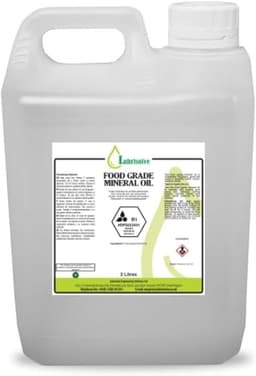
Lubrisolve mineral oil 2 litres
Lowest price per litre among the mineral oils here, about £16.99 for 2 litres, with slate and stone named and 4.6 from 155 reviews.
Editorial

Peter F. is the editor for DIY & tools at productscompared.co.uk. Comparisons in this category are checked against amazon.co.uk listings, review evidence and public UK sources.
Guides on what to look for, how to use a product, and common mistakes.
Public UK sources used for the food-contact, VOC, labelling and cloth-safety points on this page. Prices, stars and review counts are from the amazon.co.uk listings in the mid-October 2026 extracts.
This page contains affiliate links to amazon.co.uk with the tag pcuk26-21. If you buy through them, we may earn a commission at no extra cost to you. Prices, stars and review counts are the amazon.co.uk listing lines in the mid-October 2026 extracts. We did not run a laboratory test.