Independent comparisons. We may earn from shop links. More info

Slate worktop oil: when to oil and when to stop

Updated: October 2026

You may want slate worktop oil because the surface looks pale, dries with water marks or no longer has the depth of colour you remember. Before reaching for a mineral-oil bottle, check the fabricator's care sheet and identify the finish already on the stone. Slate varies in density, texture and treatment, so a product that improves one honed worktop can sit greasy on another. The [stone oil comparison](/hub/paints-and-varnishes/stone-oil) shows which stored listings name slate, but the supplier's specification decides whether oil belongs on your kitchen surface at all.

You may want slate worktop oil because the surface looks pale, dries with water marks or no longer has the depth of colour you remember.

Our top picks

On this page

Ask the supplier before you oil

A warranted worktop may require a particular cleaner, impregnating sealer or maintenance product. Follow that instruction ahead of an Amazon title, even when a listing calls its bottle suitable for slate. Finish and porosity matter. Honed, brushed and cleft slate can behave differently, while polished or previously sealed stone may absorb very little. Once the care sheet allows oil, place a small drop on an offcut or hidden area and watch whether it absorbs evenly. Do not respond to a drop that sits on top by using a heavier coat. A non-absorbent or already treated surface needs a different care method, and unabsorbed oil will remain as a film. If you cannot identify an existing treatment, ask the fabricator or a stone-care professional before mixing systems. The stone oil buying guide can then help match the approved chemistry.

What mineral oil does on indoor slate

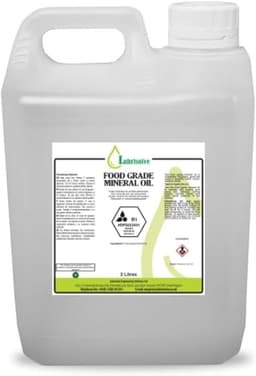
Mineral oil is non-drying. On compatible slate it can deepen colour and leave the surface looking richer, but it does not oxidise into a hard cured finish. That makes it a maintenance treatment rather than an impregnating sealer, and it may need renewal as cleaning and use remove the visible effect. Several stored mineral-oil listings name slate or stone. The large Lubrisolve pack is best value only when you have repeated uses for it. Brandon Bespoke is easier to justify for one worktop. Those comparisons still do not prove that either oil suits your particular slab. Apply a permitted mineral oil sparingly with a clean cloth, let the surface take up what it can and buff away the excess according to the bottle. If the finish stays greasy or patchy, stop. Adding more cannot convert a non-drying oil into a stain-proof sealer.

Check food-contact wording on the delivered bottle

A kitchen worktop may contact food even when you normally use chopping boards. The listing and the delivered label therefore need to agree that the product suits the intended food-contact use. UK food-contact duties are not replaced by the general phrase "food grade", and the same bottle can still carry storage and aspiration warnings. Ourons shows why a physical-label check matters. Its Amazon listing calls the white mineral oil food safe, but one stored UK reviewer says the bottle stated "for external use only". Do not resolve that conflict by trusting the higher-profile claim or the 4.5 rating. If the received bottle does not clearly support the use, keep it off the worktop and contact the seller or manufacturer. Grain Guard, Lubrisolve, Brandon Bespoke, DD teck and Materialix each carry food-contact language in their stored listings, but you should still inspect the delivered product. A food-contact claim means suitability for a defined use; it does not mean the contents are harmless to swallow. Bartoline's raw linseed sheet names stone floors and terracotta, not an indoor food worktop. Read mineral oil or linseed oil for stone before substituting one chemistry for the other.

What to skip on a kitchen slate

Osmo 620 is described for exterior absorbent stone and terracotta. Its £26 tin and 5.0 rating from 14 reviews do not turn it into an indoor kitchen treatment, and the manufacturer excludes non-absorbent stone. A UK review also describes white marks where excess collected in pits, reinforcing the need to keep this exterior system with its stated job. Raw linseed, boiled linseed and tung oil are drying oils. They bring longer waiting periods, oxidation and a self-heating risk from piled used cloths. Unless the worktop manufacturer specifies one of them and confirms the food-contact conditions, they are not substitutes for an approved mineral-oil maintenance routine. Nano Z is a water-based spray sealer, not an oil. Lansky is honing oil for sharpening stones; "stone" in that context means the tool beneath a blade, not the kitchen surface. If oil is approved, follow the chemistry-specific steps in how to apply stone oil, including a restrained test coat and complete removal of excess.

Common questions

Should every slate worktop be oiled?
No. Slate density, finish and existing treatment vary, and some fabricators specify only cleaning or a particular sealer. Follow the care sheet first. Use oil only when the supplier allows it and a discreet test shows even absorption and an acceptable colour change.
Which mineral oils in the comparison name slate?
The stored listings for Lubrisolve, Brandon Bespoke, Grain Guard, DD teck and Materialix name slate or stone. Their pack sizes, prices and evidence differ, but none overrides the worktop supplier’s instructions or the wording on the delivered bottle.
Is mineral oil the same as a stone sealer?
No. Mineral oil is a non-drying maintenance treatment that can deepen colour. It does not cure into a hard film and is not equivalent to an impregnating sealer designed to slow the entry of water or stains.
Can I use Osmo 620 on indoor slate?
The manufacturer positions Osmo 620 for exterior absorbent stone and terracotta, not as the default indoor food-worktop treatment. Keep it off non-absorbent stone and follow the worktop fabricator’s specified indoor system.
How should I clean a slate worktop?
Use a mild pH-neutral cleaner approved by the supplier, rinse as directed and dry the surface. Avoid routine vinegar, abrasive pads and unapproved waxes. Chopping boards and trivets reduce avoidable scratches, food staining and heat exposure.
When should I call the fabricator?
Contact the fabricator when the worktop is under warranty, the existing treatment is unknown, a test drop does not absorb, or the surface becomes persistently patchy or greasy. Seek NHS 111 or emergency help as appropriate after swallowing or eye exposure rather than relying on worktop-care advice.

Related pages

Sources

Public UK sources used for the food-contact, VOC, labelling and cloth-safety points on this page. Prices, stars and review counts are from the amazon.co.uk listings in the mid-October 2026 extracts.

  1. Osmo UK — Stone and terracotta oil, exterior (retrieved 17 October 2026)
  2. Osmo UK — Stone and terracotta oil product information (retrieved 17 October 2026)
  3. Bartoline raw linseed oil safety data sheet (retrieved 17 October 2026)
  4. East Sussex Fire and Rescue Service — The fire hazards of linseed oil (retrieved 17 October 2026)
  5. Northamptonshire Fire and Rescue Service — Oil-cloth combustion warning, 2020 (retrieved 17 October 2026)
  6. Food Standards Agency — Food contact materials authorisation guidance (retrieved 17 October 2026)
  7. SI 2012/1715 — VOC in paints, varnishes and vehicle refinishing products (retrieved 17 October 2026)
  8. Health and Safety Executive — GB CLP (retrieved 17 October 2026)