





Regular electronics repair
You want 0.8 mm lead-free wire with the longest UK file in this set. The TOWOT reel is about £3.99, Sn99.3 Cu0.7, 4.5 from 2,572 reviews. The title says 25 g and the stored weight says 30 g. It is not fume-free.
The best solder wires, compared.
Top pick: XLTXWD 6-piece leaded solder Best value: Yiapinn 20 g lead-free solder – Cheapest named Sn99.3 Cu0.7 reel in the set, about £3.79 for 20 g at 0.8 mm, with 4.5 from 1,702 reviews. Updated October 2026.

Solder here means flux-cored wire you feed into a heated joint, not an iron, a station or a tub of paste. On amazon.co.uk the nine listings are mostly lead-free in 0.6 mm or 0.8 mm, plus a 1.0 mm reel, two leaded packs and one thin file. Match the alloy to the job before the price. Leaded 60/40 can melt on a weak iron, and it is the wrong default for drinking-water copper and for many electrical products on the GB market. Rosin fume is still a issue on lead-free wire. No listing here quotes a BS EN certificate. The [solder buying guide](/hub/soldering-and-welding/solder/sub/solder-buying-guide) puts alloy, diameter and spool size in order. It is not the iron, not a station, not paste on its own, and not a desoldering pump. The usual electronics reel is tin with a rosin core.
Solder here means flux-cored wire you feed into a heated joint, not an iron, a station or a tub of paste.

32 products checked · 54 hrs invested · +16,400 readers
Swipe for more
1-2 of 9


Personal buying guide
Question 1 of 2
What are you joining?
XLTXWD sells a six-piece 0.8 mm leaded set for about £8.39. The display score is the highest in the set because the star line is 5.0, and that line is one UK review, so it is not evidence and it does not take the top pick. The review mentions good melting and smaller reels than expected, which matters when you work out pence per gram against a lead-free 100 g spool. Leaded wire can wet faster on a low-wattage iron. It is unsuitable for potable plumbing, and lead is restricted in many electrical products placed on the GB market under RoHS. Wash your hands if you use it. Flux core is blank in the stored fields, so stubborn joints may need flux from a separate tin. Skip it if a school or an employer requires lead-free wire.
Pros
Cons
Best for: Controlled hobby use where leaded wire is explicitly allowed.
Less suitable: School electronics without a risk assessment, RoHS assemblies, or plumbing.
Specifications
Common questions
Why is a 5.0 not the top pick?
One review cannot carry a badge. The scoring method ignores a star line under about 10 ratings when it assigns the top pick. The TOWOT reel has 2,572 reviews on a named lead-free alloy.
Can I use this leaded pack on a water pipe?
No. Lead solder is restricted on wholesome drinking-water fittings in England and Wales and in Scotland. Use a lead-free process for that copper. This pack is an electronics hobby listing.
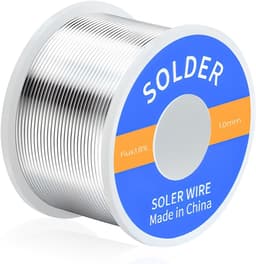
GALAMAX lists 1.0 mm lead-free rosin-cored wire at 100 g for about £9.99, with 4.6 from 165 UK reviews, one of the stronger star lines among the thicker reels. Buyers mention good flow in hobby use. The result still depends on the iron. The 1.0 mm gauge moves more metal per feed, which helps speaker tags and chunky connectors and can bridge fine pitch if you feed too much. The alloy is lead-free on the listing without the Sn99.3 Cu0.7 string the TOWOT and Yiapinn rows use, so there is no alloy bonus of that kind. Plan an IPA wipe if residue matters. A lead-free label is not a plumbing certificate. The title spelling is rough, which fits generic sourcing rather than a standards sheet.
Pros
Cons
Best for: Heavier electrical joints, connectors and practice boards at 1.0 mm.
Less suitable: Fine-pitch SMD, a 0.6 mm-only board, or drinking-water copper.
Specifications
Common questions
When is 1.0 mm the wrong wire?
On fine SMD pads and dense pitch, where it bridges. Use 0.6 mm or 0.8 mm there. Use 1.0 mm on lugs and larger electrical joints, where 0.8 mm feels slow.
Is the GALAMAX alloy Sn99.3 Cu0.7?
The stored alloy line says lead-free, not Sn99.3 Cu0.7. Do not write the tighter name into a repair note unless the reel label shows it.
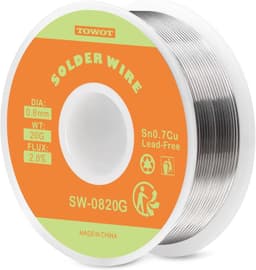
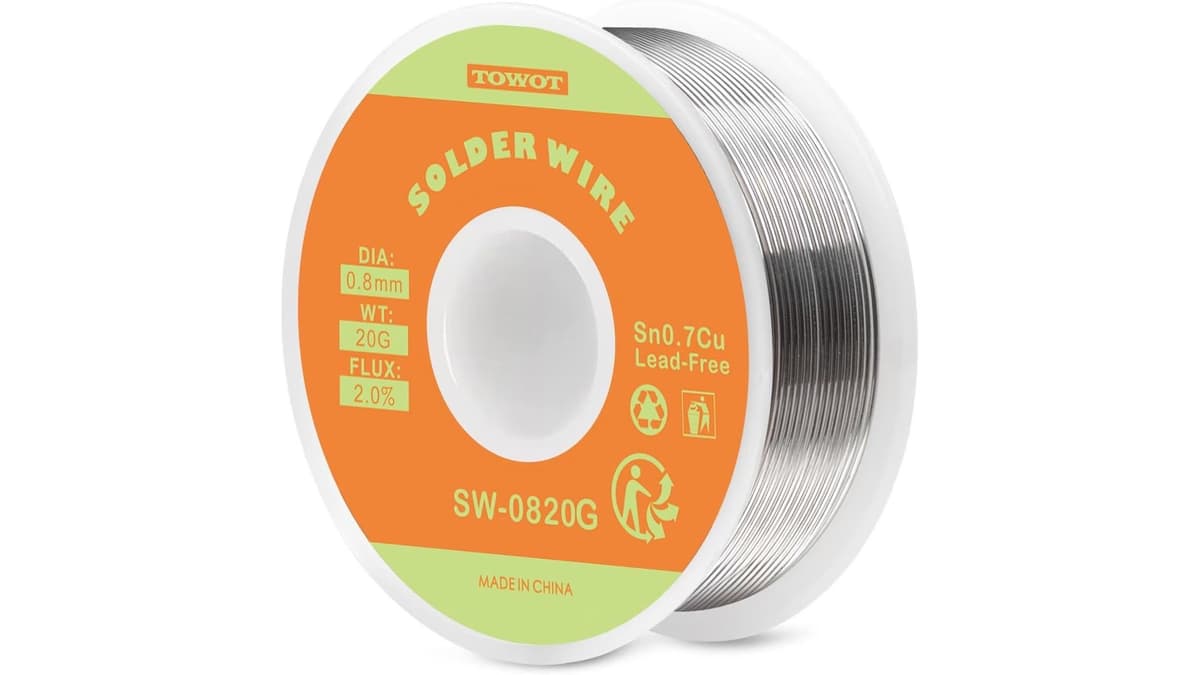
With 4.5 from 2,572 amazon.co.uk ratings, the TOWOT reel has the deepest review file in this set. UK buyers mention quick melting and smooth flow on small electrical joints. The listing states Sn99.3 Cu0.7 at 0.8 mm with 2.0% flux. The title says 25 g and the stored net weight says 30 g, and a few reviews say the spool feels light against the weight line, so weigh it if the grams matter. It sits between a 20 g pocket reel and a 100 g spool, at about £3.99. Lead-free rosin fume still needs ventilation. HSE guidance on rosin flux is not cancelled by a lead-free label. Pair it with a clean, tinned bit and enough heat, or the joint looks dull even when the wire is fine. It is the top pick for general lead-free electronics at 0.8 mm, not because a lab certified the alloy.
Pros
Cons
Best for: Regular hobby and light repair on lead-free electronics at 0.8 mm.
Less suitable: Very fine SMD pads, a 100 g-only bench, or a leaded-only policy.
Specifications
Common questions
Is the TOWOT reel 25 g or 30 g?
The title says 25 g. The stored comparison field says 30 g. A few reviews say the spool feels light. Treat both figures as listing lines and check the label on the reel you receive.
Does lead-free mean no fumes?
No. The core is rosin at 2.0% on this listing. Rosin flux fume is a COSHH concern at work even when the alloy has no lead. Ventilate, and keep your head out of the plume.
The owootecc reel is 0.6 mm Sn99.3 Cu0.7 lead-free wire at about £14.99, with 4.5 from 2,363 UK reviews. That file is its own line, not the Yiapinn cluster. Reviewers describe long rolls and reliable joints on through-hole work, which matches a thinner wire that feeds less metal per touch. Fine wire feels fiddly on large lugs. The title says 100 g and the stored net-weight field is blank, so confirm the grams on the live page before you plan a club stock. You still need ventilation. A 0.6 mm core does not reduce rosin fume. It is the fine-wire option with a long review file, at a higher price per reel than the Yiapinn 0.6 mm 100 g row.
Pros
Cons
Best for: Tighter PCB work where 0.8 mm bridges pads.
Less suitable: Heavy lugs, or the lowest pence per gram.
Specifications
Common questions
Why does the table say 100 g if the weight field was blank?
The product title says net weight 100 g. The stored comparison field for net weight is empty. Confirm the line on the amazon.co.uk page before you count stock.
How does it differ from the Yiapinn 0.6 mm reel?
Both claim Sn99.3 Cu0.7 rosin core at 0.6 mm. This reel is about £14.99 with 2,363 reviews of its own. The Yiapinn 100 g reel is about £11.89 on a shared 1,702-review line.
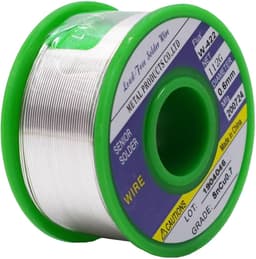
Across 1,702 amazon.co.uk reviews this Yiapinn reel, model HJ-JH-331, is the cheapest named Sn99.3 Cu0.7 entry in the capture, at about £3.79 for 20 g of 0.8 mm rosin-cored wire. UK buyers often describe it as enough for occasional console, LED and audio-cable repairs when the iron is clean and hot enough for lead-free alloy. Several reviewers say they have not opened the spool and are judging the packaging, or a similar reel they used before, so wetting on your board can differ from the star line. The same 1,702-review line appears on other Yiapinn diameters in this set, so do not read it as three independent samples. The 20 g net weight is why it is the best value pocket reel, and why a weekly bench will reorder. The alloy name is a listing claim, not a supplier certificate.
Pros
Cons
Best for: Occasional through-hole repairs with an iron you already maintain.
Less suitable: A club bench that wants 100 g, fine-pitch SMD only, or drinking-water copper.
Specifications
Common questions
Why is the 20 g Yiapinn the best value and not the top pick?
It is the lowest price for named Sn99.3 Cu0.7, at about £3.79. The TOWOT reel has a longer review file, 2,572 against 1,702, and a stated 2.0% flux. Both are 0.8 mm and 4.5 stars. The badge follows review depth for the top pick and pence per gram for value.
Are the 1,702 reviews only this spool?
The same 4.5 from 1,702 appears on other Yiapinn rows in this capture, including the 50 g and the 100 g 0.6 mm reels. Treat it as a shared brand line, not as three separate tests.
Yiapinn model SW-SnCu0.7 combines 0.6 mm Sn99.3 Cu0.7 rosin core with a stored net weight of 99.8 g at about £11.89. The star line is the familiar 4.5 from 1,702 reviews seen across this brand cluster, so fewer comments speak only to 0.6 mm and bridge avoidance. Your technique still dominates. The 99.8 g figure is close to the 100 g marketing line. A quick scale check is worth it if you track inventory. Use local exhaust or a window. A bulk reel means more sessions, not safer fumes. It is the lower-priced 0.6 mm stock in this set if you accept a shared review file.
Pros
Cons
Best for: Fine lead-free wire in a larger spool for regular hobby repair.
Less suitable: 1.0 mm lug work only, a first reel on a weak iron, or plumbing.
Specifications
Common questions
Is 99.8 g the same as 100 g?
The stored field says 99.8 g and the title says 100 g. That is close for a hobby reel. Weigh it if you are splitting stock for a club.
Will 0.6 mm stop bridges?
It feeds less metal than 0.8 mm, which helps on tight pads. It does not fix a dirty tip or a joint you have not heated. On a large lug it feels slow.
This Yiapinn reel, model Solder-122SnCu0.7, shares 4.5 from 1,702 UK reviews with the 20 g sibling and ships 50 g of 0.8 mm Sn99.3 Cu0.7 rosin-cored wire for about £6.39. That middle spool suits weekly hobby work without a 100 g roll. UK comments repeat price and quality themes, with some unopened spools in the count. Flow should be in the same family as the £3.79 pocket reel, though the weight line on the title can differ from the net grams. Doubling the spool does not halve the fume. Check the lead-free wording before you write it into a RoHS repair note. There is no batch certificate in the capture.
Pros
Cons
Best for: Weekly hobby soldering at 0.8 mm, with fewer reorders than 20 g.
Less suitable: A board that needs 0.6 mm only, or the single lowest price per joint.
Specifications
Common questions
Is the 50 g Yiapinn a different wire from the 20 g reel?
The stored alloy, diameter and flux match: Sn99.3 Cu0.7, 0.8 mm, rosin core. The net weight is 50 g at about £6.39 against 20 g at about £3.79. The review line is shared.
Does a bigger spool need less ventilation?
No. More wire means more sessions. Rosin fume is the same class of fume. Use extraction or a clear airflow, and do not breathe the plume.
This LXLX reel sits at 3.4 from only three amazon.co.uk reviews, so the star line is thin beside the thousand-review reels. First impressions mention a handy hobby spool and low smoke, which fits a drawer backup rather than club stock. The listing states lead-free 0.8 mm rosin core at 20 g. The alloy is less specific than Sn99.3 Cu0.7. Until more UK buyers report flow and residue, treat it as a budget experiment. If your iron already struggles with lead-free wire, a weak batch shows up as a grainy joint faster here than on a higher-review reel. Do not use 3.4 from three reviews as proof of quality.
Pros
Cons
Best for: A spare pocket reel when you accept thin review evidence.
Less suitable: A RoHS repair you must document, a teaching group, or daily bench stock.
Specifications
Common questions
Is the LXLX reel cheaper than the Yiapinn 20 g?
Yes, at about £3.19 against about £3.79. The Yiapinn page names Sn99.3 Cu0.7 and has 1,702 reviews. This page says lead-free and has three reviews. The price gap is not a reason to skip the alloy line.
What diameter is stated?
0.8 mm, rosin core, 20 g, lead-free. That is the stored listing. It is not a named Sn99.3 Cu0.7 reel.
DXPETA's eight-roll 60/40 tin-lead pack at about £8.39 scores 2.2 from 13 UK reviews, and the negative themes dominate. Buyers call it poor, cite melting that fails, and question what arrived against the photos. The listing claims 0.8 mm rosin core and the stored net weight is about 10 g for the whole pack, which is very little metal once you divide by eight. Unrelated included-component lines undermine the listing. If you need 60/40 for a hobby job where leaded wire is allowed, a known single spool is a safer buy than this pack. Do not use it on drinking water or on a RoHS-scope board. It is the bottom of this set on score.
Pros
Cons
Best for: Not a default. Only if you accept a high chance the wire will not flow.
Less suitable: Any repair you care about, RoHS electronics, or a beginner who needs reliable flow.
Specifications
Common questions
Why is the eight-roll pack poor value?
About £8.39 for a stored total of about 10 g is a high price per gram, and 2.2 from 13 reviews includes melt failures. Eight rolls do not mean eight useful spools.
Is 60/40 legal on a circuit board at home?
A hobby bench is not the same as placing electrical equipment on the GB market. UK RoHS restricts lead in many products. If you are repairing something in scope, use lead-free wire unless you know an exemption applies. Do not use 60/40 on drinking-water copper.
Nine amazon.co.uk solder-wire listings were scored for this page. Weights sum to 100. Stars are scaled from the listing, then adjusted for review depth, whether the alloy and diameter are stated, review notes on melt and residue, and pence per gram inside the same family. There was no IPC wetting test and no BS EN certificate in the capture. A line under about 10 reviews is not trusted for a badge. The top pick is the TOWOT reel. The best value is the Yiapinn 20 g reel.
Amazon star line
35%Scaled from the amazon.co.uk rating. A 4.5 is a high base. A 5.0 from one review does not become the top pick.
Review depth
20%More UK ratings reduce noise. Counts under about 50 cap the bonus. Under about 10 ratings, the star line is not used for a badge.
Job fit
20%Lead-free Sn99.3 Cu0.7 for electronics, a stated diameter, a rosin core and a net weight on the listing. A vague lead-free line gets no alloy bonus.
Review notes
15%Melt speed, flow, spitting, residue and whether the iron could keep up. A reel that will not melt is marked down. Themes are from the stored reviews.
Price band
10%Pence per gram inside the same diameter and alloy. A 20 g pocket reel can be the best value without being the largest spool.
The checks run in this order: alloy, diameter, flux, spool size, then the iron and the fume, then price. The table is nine wire listings. Two soldering-iron kits were removed from this batch before scoring. No reel was lab-tested to a BS EN certificate.
Solder in this comparison is flux-cored wire you feed into a joint that the iron has already heated. It is not the iron, not a station, not paste on its own, and not a desoldering pump. The usual electronics reel is tin with a rosin core. On amazon.co.uk the nine rows that survived a category check are small lead-free spools of Sn99.3 Cu0.7, one thicker lead-free reel, two leaded packs and one budget reel with three reviews. Alloy comes first.
Leaded wire is restricted on wholesome water and in many electrical products placed on the GB market. Match the alloy before the price.
The GALAMAX reel fills a lug. On a dense PCB it bridges. Drop to 0.6 mm or 0.8 mm.
The iron heats the pad and the lead. Then you feed solder. A lead-free label does not remove the fume.
Electronics repair wants lead-free wire. The named Sn99.3 Cu0.7 rows are the TOWOT, the Yiapinn 20 g, 50 g and 0.6 mm reels, and the owootecc 0.6 mm reel. The GALAMAX 1.0 mm and the LXLX 20 g rows say lead-free without that string. The XLTXWD six-pack is leaded. The DXPETA pack is 60/40 and has 2.2 from 13 reviews. ISO 9453 and BS EN 29453 are how a supplier names alloys. A retail listing that does not quote a certificate has not been treated as tested. 0.8 mm is the general row.
Rosin core is stated on eight of the nine rows. The XLTXWD flux cell is blank. TOWOT states 2.0% flux. Residue can still need a wipe. No listing here is a fume-free product. HSE INDG249 is the workplace note on rosin fume and local exhaust. Net weight is the value check. Yiapinn 20 g at about £3.79 is the best value pocket reel. TOWOT is about £3.99 with a 25 g title and a 30 g stored field. Yiapinn 50 g is about £6.39. GALAMAX is 100 g at about £9.99.
Three typical situations, each with a recommendation from this comparison.
You want 0.8 mm lead-free wire with the longest UK file in this set. The TOWOT reel is about £3.99, Sn99.3 Cu0.7, 4.5 from 2,572 reviews. The title says 25 g and the stored weight says 30 g. It is not fume-free.
You want the cheapest named Sn99.3 Cu0.7 reel. The Yiapinn 20 g spool is about £3.79 at 0.8 mm, with 4.5 from 1,702 reviews shared with other Yiapinn rows. You will reorder if you tin heavy connectors.
You bridge with 0.8 mm and want 0.6 mm in a larger spool. The Yiapinn 100 g reel is about £11.89, Sn99.3 Cu0.7, on the same 1,702-review cluster. The owootecc 0.6 mm reel is about £14.99 with its own 2,363 reviews.
The top pick is the TOWOT 0.8 mm Sn99.3 Cu0.7 reel at about £3.99, with 4.5 from 2,572 reviews, a rosin core and 2.0% flux stated. The title says 25 g and the stored net weight says 30 g, and a few reviews say the spool feels light. The best value is the Yiapinn 20 g reel at about £3.79, the same alloy and diameter, with 4.5 from 1,702 reviews that also appear on other Yiapinn rows. A 5.0 from one review on a leaded six-pack is not the top pick. A 2.2 from 13 reviews on an eight-roll 60/40 pack is a reason to leave that row.

Yiapinn 20 g lead-free solder
Cheapest named Sn99.3 Cu0.7 reel in the set, about £3.79 for 20 g at 0.8 mm, with 4.5 from 1,702 reviews.
Editorial

Peter F. is the editor for DIY & tools at productscompared.co.uk. Comparisons in this category are checked against amazon.co.uk listings, review evidence and public UK sources.
Guides on what to look for, how to use a product, and common mistakes.
Sources taken from the research digest. The digest also points at the stored amazon.co.uk listings of 20 October 2026. Those are the product rows, not an extra public article.
This article contains affiliate links. If you buy through these links we may earn a small commission, at no extra cost to you. Prices, stars and review counts come from stored amazon.co.uk listings. We did not run a lab test.