







Wildlife gardener
You want common nettle, Urtica dioica, in the sun, not dead-nettle. DAMAVAND PRO is the top pick: a perennial title, 1,300 seeds, about £3.11. Surface-sow it. The care text that says 1 inch deep fights the light the seed needs.
The best nettle seeds, compared.
Top pick: DAMAVAND PRO Urtica dioica 1300 seeds – Highest score at 70: Urtica dioica, perennial, and 1,300 seeds agree, at about £3.11, with a stored review that plants grew. Best value: Generic Urtica dioica 1200 seeds – Lowest price for a named perennial Urtica dioica title, at about £2.85. The count fields do not agree, so the score stays at 56. Updated 21.10.2026.


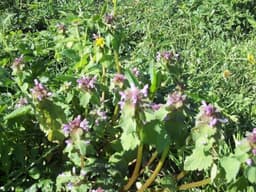
Nettle seeds are sowing packets, not dried seed you eat and not a tincture. Most are common stinging nettle, dioica, a native perennial that spreads by rhizomes, stolons and seed. One packet is small nettle, urens, an annual that frost ends. Buyers are wildlife gardeners, allotment cooks, and people who need a patch they can contain. The decision is the Latin name, a count or weight you can compare, and a card that keeps fine seed on the surface in the light. A line that says plant an inch deep fights that. Surface sowing is set out in [how to sow nettle seeds](/hub/herb-seeds/nettle-seeds/sub/nettle-seeds-how-to-sow). This page reads listings and public UK sources. Stems are often 1–1.5 m, and up to about 2 m on rich soil. Most roots sit in the top 20 cm, and chopped pieces can regrow. Small nettle, urens, is an annual, often under 60 cm, with male and female flowers on the same plant. Frost ends it, so it does not build the same rhizome mat. Red dead-nettle, purpureum, is a mint-family annual about 20–25 cm, with pink-purple flowers and no sting. It is not a foodplant for peacock or small tortoiseshell caterpillars.
Nettle seeds are sowing packets, not dried seed you eat and not a tincture. Most are common stinging nettle, dioica, a native perennial that spreads by rhizomes, stolons and seed.

31 products checked · 47 hrs invested · +16,200 readers
Swipe for more
1-2 of 9


Personal buying guide
Question 1 of 2
Which plant do you want?
DAMAVAND PRO lists 1,300 seeds of Urtica dioica at £3.11, and the amazon.co.uk line is 5.0 from 3 reviews. The title calls it a native UK perennial for wildlife gardens, tea, and foraging, and the bullets say the seed is untreated and GMO free, which is not an organic certificate. One stored review says the seed was nicely packaged and the plants grew; another buyer had not yet confirmed plants, so three reviews are not a germination rate. The care text tells you to plant 1 inch deep and 6 inches apart, which fights the surface-sowing line on the Buy4seeds cards in this set, and the height field prints 30 cm. Sun is full sun in one attribute and shaded or semi-shaded in the bullets. In this comparison it is the top pick on a score of 70 because the species, the perennial line, and the seed count agree, and the price sits in the entry band, though you should leave the seed in the light rather than follow that inch-deep line. Rank reads 27,155 in Garden and 96 in Herb Seeds.
Pros
Cons
Best for: You want a named common-nettle packet at an entry price and you will surface-sow despite the care text.
Less suitable: You need a printed do-not-bury line on the card, or you want small nettle or red dead-nettle.
Specifications
Common questions
Which plant is in this packet?
The listing names Urtica dioica and calls it a perennial. That is common stinging nettle, not small nettle and not red dead-nettle.
How many seeds are stated, and what does it cost?
The listing states 1,300 seeds at £3.11 on amazon.co.uk. GMO free on the bullets is not an organic certificate.
What sowing note is on the listing?
It says sow directly outdoors or in trays. The care text also says plant 1 inch deep and 6 inches apart. Leave the seed in the light rather than follow that inch.
Buy4seeds lists 800 seeds of Urtica dioica at £8.99, with 5.0 from 1 review and no review text on the listing. The card is the clearest sowing note in this set: March to June, surface sow, do not bury, 21 °C, full sun to partial shade, and nitrogen-rich moist soil that drains. It also states a perennial, a 70 cm height, and green flowers from late spring to late summer. The title calls it an insecticide herb, and a listing question about wildlife has no answer in the extract. At £8.99 you pay the top shelf price here for fewer stated seeds than the £3.11 DAMAVAND PRO packet, and one star with no words is not a germination record. The score is 64 because the label matches a perennial common nettle you can surface-sow, while the review line does not show what arrived. Rank reads 202,087 in Garden and 718 in Herb Seeds.
Pros
Cons
Best for: You want the surface-sow wording printed on the packet and you accept a single star with no text.
Less suitable: You want a written UK review, or you are choosing mainly on price.
Specifications
Common questions
Which plant is in this packet?
The listing names Urtica dioica and perennial. The title also calls it a stinging nettle and an insecticide herb. That insecticide line is a claim on the page, not a method tested here.
How many seeds are stated, and what does it cost?
The listing states 800 seeds at £8.99 on amazon.co.uk. That is fewer stated seeds than the cheaper DAMAVAND PRO and generic common-nettle packets.
What sowing note is on the listing?
March to June, surface sow, do not bury, at 21 °C. Sun is full sun to partial shade, on nitrogen-rich moist soil that drains.
SemiSauvage lists 1,000 wild nettle seeds at £4.03, with 4.8 from 12 reviews, and the extracted title does not give a Latin name, a life cycle, or a sowing line. Bullets say the seed is non-hybrid, reproducible, and free from chemical treatment, and that the seller is near the Auvergne volcanoes. Written reviews in the extract are from Spain and France: matching the promise, good quality, received in good condition, and one report of very good growth. There is no UK germination comment in the extract, and listing questions about pots and full sun have no answer. The product-type field reads Légumes. The score is 41 because the star line is high for a thin write-up that does not name the species, and you cannot tell common nettle from small nettle on the title. Rank reads 138,294 in Garden and 517 in Herb Seeds.
Pros
Cons
Best for: You already know which nettle you are growing and you only need an untreated wild-nettle count.
Less suitable: You need the species on the packet, or a review written from the UK.
Specifications
Common questions
Which plant is in this packet?
The title says wild nettle and does not print a Latin name. You cannot tell Urtica dioica from Urtica urens on that title. Life cycle is not stated.
How many seeds are stated, and what does it cost?
The listing states 1,000 seeds at £4.03 on amazon.co.uk. Bullets say the seed is non-hybrid and free from chemical treatment. That is not an organic certificate.
Where are the written reviews from?
The written reviews in the extract are from Spain and France. There is no UK germination comment in that extract. The star line is still the amazon.co.uk figure, 4.8 from 12.
Just Seed lists red dead-nettle, Lamium purpureum, as 100 seeds at £3.40, with 4.0 from 11 reviews. That is a mint-family plant, not Urtica, and the listing does not say it stings. The listing says the packets carry growing information, Defra registered 7291, and organic registration AP23164, which are numbers printed on the listing and not a register check in this comparison. Stored praise says the seeds were good, plants grew, the price was fair, and a tortoise ate the plants; one buyer got nothing after four indoor and outdoor attempts. The height field is 22 cm, moisture says moderate watering, and the colour field is red. The score is 52 because the packet is an honest dead-nettle listing with a small review sample, and it is not a substitute for the stinging species peacock and small tortoiseshell caterpillars use. Rank reads 97,604 in Garden and 1,515 in Outdoor Flowers.
Pros
Cons
Best for: You want red dead-nettle as a short bee flower and you already know it does not sting.
Less suitable: You want Urtica dioica for a wildlife patch or for leaves you can treat as nettle.
Specifications
Common questions
Which plant is in this packet?
The listing names Lamium purpureum, red dead-nettle, as 100 seeds. It is a mint-family plant. It does not sting, and it is not Urtica.
Is it organic?
The material feature says organic, and the listing prints organic registration AP23164 and Defra registration 7291. Those numbers are listing text, not a register check made here.
Will peacock caterpillars eat it?
No. Red dead-nettle is not a foodplant for peacock or small tortoiseshell caterpillars. Those caterpillars use stinging nettle.
SAFLAX lists organic nettle as 2,000 seeds of Urtica dioica at £4.55, and the amazon.co.uk line is 3.9 from 134 reviews, the largest sample in this set. The title says organic and the material field says organic; the card also calls the plant an annual, which is the wrong life cycle for common nettle. Stored praise includes a UK reviewer who reported no problems, germination for some buyers including the following year, a resent parcel, and a comment that the quantity looked good. The criticism repeats: nothing germinated, very slow or low germination, a seed count said to be far below 2,000, paperwork in Chinese, and instructions followed with still no plants. Potting instructions are mentioned, but the full text is not in the extract, and the height field is 60 cm. The score is 46 because the review sample is real and the species is named, while the annual line and the empty-tray theme keep it off the top of this set. Rank reads 298,188 in Garden and 6,827 in Vegetable Seeds.
Pros
Cons
Best for: You want the organic wording on a named common-nettle title and you will read the 134-review sample before you rely on the count.
Less suitable: You want a perennial line on the card, or a packet whose reviews are not dominated by empty trays.
Specifications
Common questions
Which plant is in this packet?
The title names Urtica dioica and says organic. The same card calls the plant an annual. Common nettle is a perennial, so that annual line is a listing error, not the botany.
How many seeds are stated, and what does it cost?
The listing states 2,000 seeds at £4.55. Buyers dispute that count. A printed 2,000 is not 2,000 plants, and 3.9 from 134 reviews includes many empty-tray reports.
What sowing note is on the listing?
Detailed potting instructions are named on the card. The full text is not in the listing extract. The height field is 60 cm.
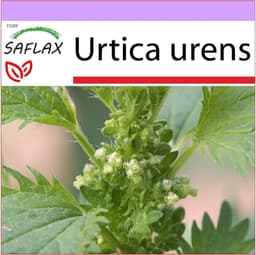
SAFLAX dog nettle is 150 seeds of Urtica urens at £4.55, with 3.7 from 47 reviews. The listing calls it an annual, smaller and more tender than Urtica dioica, and says it stings more, with both a 10 to 60 cm range and a 60 cm height field. Potting instructions are stated, though the full text is not in the extract, and the material field says natural rather than organic. Praise in the comparison includes prompt arrival, a UK buyer who said the seed looked fine but had not sown it, a recommendation, and a fast padded envelope with a clear French instruction sheet. Several buyers reported that none of the 150 seeds grew, called the quality miserable, or said culture was harder than for wild nettles. The score is 60 because the species and the annual line match small nettle, and the review sample is large enough to show the misses, so this is a species choice rather than a safer tray than the common-nettle rows. Rank reads 312,135 in Garden and 1,044 in Herb Seeds.
Pros
Cons
Best for: You want an annual stinging nettle that frost can end, and you accept a mixed 47-review sample.
Less suitable: You want a perennial wildlife patch, or a packet whose buyers mostly report seedlings.
Specifications
Common questions
Which plant is in this packet?
The listing names Urtica urens, dog nettle, and calls it an annual. That matches small nettle. It is not Urtica dioica.
How many seeds are stated, and what does it cost?
The listing states 150 seeds at £4.55 on amazon.co.uk. The material field says natural, not organic.
Does the listing say it stings more than common nettle?
Yes. That wording is on the listing. It is not a measured comparison, and several buyers reported that none of the 150 seeds grew.
This generic listing, with Nika seeds in the manufacturer field, is the cheapest named Urtica dioica packet in this comparison at £2.85, and the title says 1,200 seeds and perennial. The same page prints a unit count of 120 and a number of items of 300, so you cannot tell which figure is in the bag. The stored reviews include two short praise lines, on time and a great price, and one criticism that a buyer got 2 plants from the packet, against 3.3 from 5 reviews. The listing says there are no sowing instructions, and questions about full sun and indoor growing have no answer in the listing extract. Seed is described as a labelled ziplock, the height field is 70 cm, and the uses named on the page run from culinary to dye, which is a claim list rather than a method. It is the best value pick on a score of 56 because £2.85 is the low price for a perennial common-nettle title, though the count clash and the two-plant report are why it is not the top pick. Rank reads 66,159 in Garden and 1,847 in Flower Seeds.
Pros
Cons
Best for: You want the lowest shelf price for a named perennial common nettle and you can sow without a printed card.
Less suitable: You need one agreed seed count, or sowing steps on the listing.
Specifications
Common questions
Which plant is in this packet?
The title names Urtica dioica and perennial. The manufacturer field says Nika seeds. The brand line on the page is generic.
How many seeds are stated, and what does it cost?
The title says 1,200 seeds at £2.85. The same listing also prints a unit count of 120 and a number of items of 300. Those three figures do not agree.
What sowing note is on the listing?
The listing says there are no sowing instructions. Questions about full sun and indoor growing have no answer in the extract.
Buy4seeds’ 1,200-seed Urtica dioica packet is also £8.99, and this capture uses the same image URL as the 800-seed listing. The sowing block matches that sibling: March to June, surface sow, do not bury, 21 °C, full sun to partial shade, 70 cm, and nitrogen-rich soil that drains. The star line is 1.0 from 1 review, with no text, so you cannot read why that mark was left. Organic is not stated, and a wildlife question on the listing has no answer in the extract. You pay the same £8.99 for a higher claimed count and a worse star, without a written reason. The score is 54 after a deduction for the shared image and that unexplained 1.0. Rank reads 360,577 in Garden and 1,216 in Herb Seeds.
Pros
Cons
Best for: You want the same surface-sow card as the 800-seed listing and a higher claimed count, and you can live with a single 1.0 and no words.
Less suitable: You want a review you can read, or a price under £5.
Specifications
Common questions
How does this differ from the 800-seed Buy4seeds packet?
Both are Urtica dioica, perennial, at £8.99, with the same surface-sow block. This title says 1,200 seeds. The star line is 1.0 from 1 review, with no text, and the image URL matches the 800-seed listing.
What sowing note is on the listing?
March to June, surface sow, do not bury, at 21 °C. Sun is full sun to partial shade. The height field is 70 cm.
Is organic stated?
No. Organic is not on this listing. One star with no written review is not a germination record.
La Lettre S sells Urtica dioica as 0.3 g of green manure at £1.80, and the listing has no customer-review line. The title says dioecious and stinging nettle, and the life-cycle field does not state perennial. Sowing text is limited to keeping the soil moist and using well-drained soil, with a listed height of 150 cm and a zip-lock bag. Bullets quote postage in euros, and the material field says organic. There is no seed count, so you cannot compare 0.3 g with the 800-seed or 1,300-seed packets on a like-for-like basis. The score is 26: it is the lowest price in the comparison and also the least documented sowing packet. No best-sellers rank is printed on the listing.
Pros
Cons
Best for: You want a weighed Urtica dioica lot sold as green manure and you do not need reviews or a seed count.
Less suitable: You want to compare packets by seed number, or you need a UK review and a surface-sow line.
Specifications
Common questions
Which plant is in this packet?
The listing names Urtica dioica and stinging nettle, and the title says dioecious. Perennial is not stated. It is sold as green manure.
How many seeds are stated, and what does it cost?
The listing states 0.3 g at £1.80. There is no seed count, so you cannot line it up with an 800-seed or a 1,300-seed packet. There is no customer-review line.
What sowing note is on the listing?
Keep the soil moist and use well-drained soil. That is the sowing text. The height field is 150 cm. Postage bullets on the page are quoted in euros.
Scores are out of 100 for the nine amazon.co.uk listings on this page. They use the species and life cycle, the sowing line, whether the count is consistent, the review sample, and the GBP shelf price. This is not a germination trial and not a lab test. Weights sum to 100. The highest score is the top pick. Best value is a different listing: the lowest price for a named perennial Urtica dioica title, even though that score is not second.
Species and life cycle
25%Urtica dioica stated as perennial scores highest. Urtica urens stated as annual is next. A dioica card that says annual, or a title with no Latin name, scores lower. An honest red dead-nettle still scores, because the species is clear.
Sowing line
18%Surface sow or do not bury scores highest. Instructions that are named, without the full text in the extract, sit in the middle. A depth of 1 inch, or no instructions beyond moisture, scores lower.
Quantity
12%One seed count scores highest. A weight with no count, or count fields that disagree on the same page, score lower. A printed count is not a count of plants.
Review sample
25%Stars and review counts are the amazon.co.uk figures. A repeated empty-tray theme lowers the block. One star with no text, or no review line, scores low. A star average is not a germination percentage.
Price band
20%Named Urtica with one count under £3.50 scores highest in this block. A conflicting count under £3.50 is lower. The £8.99 packets sit at the low end of the price block. Prices are shelf prices, not a market average.
Read the Latin name and the life cycle before the seed count. A high number is not a germination rate, and a card that calls common nettle an annual is a listing error. A different sowing comparison in this hub is [lupine seeds](/hub/herb-seeds/lupine-seeds).
Nettle seeds in this comparison are packets you sow. They are not dried culinary seed, and they are not a tincture. Common stinging nettle, Urtica dioica, is a native perennial. The RHS lists hardiness H7. Plants are usually dioecious. Stems are often 1–1.5 m, and up to about 2 m on rich soil. The plant spreads by rhizomes, stolons and seed. The RHS spread is 2.5–4 m. Most roots sit in the top 20 cm, and chopped pieces can regrow.

A line that says plant an inch deep fights the usual light requirement. Buy4seeds says surface sow and do not bury. If the card gives no depth, do not invent one. Garden Organic says seed germinates readily on bare soil in full sun.
Common nettle is a perennial. The SAFLAX organic listing names Urtica dioica and calls it an annual. That is a listing error. SAFLAX dog nettle names Urtica urens and annual, which does match small nettle.
The loud theme on the SAFLAX organic listing, 3.9 from 134 reviews, is failed or very late germination and doubt about the 2,000 count. A printed count is not a plant count. Culinary drops, a food bag, and nettle-leaved bellflower are different products.
Species is the first decision. Urtica dioica is the lasting wildlife or kitchen patch: a native perennial that spreads by rhizomes, stolons and seed. Urtica urens is the annual if you want frost to end the plant and you do not want a rhizome mat. Lamium purpureum belongs on the card only if you want a non-stinging bee flower about 20–25 cm tall. The life cycle has to match the plant. Urtica dioica is perennial. The SAFLAX organic listing names Urtica dioica and calls it an annual.
Fine nettle seed needs light. A card that says surface-sow or do not bury matches that. Buy4seeds prints March to June, surface sow, do not bury, and 21 °C, on both the 800-seed and the 1,200-seed listings. DAMAVAND PRO says sow outdoors or in trays, then the care text says plant 1 inch deep. That depth fights the surface-sowing line, so leave the seed in the light. The generic perennial title at £2.85 says there are no sowing instructions.
Three typical situations, each with a recommendation from this comparison.
You want common nettle, Urtica dioica, in the sun, not dead-nettle. DAMAVAND PRO is the top pick: a perennial title, 1,300 seeds, about £3.11. Surface-sow it. The care text that says 1 inch deep fights the light the seed needs.
You want leaves or a liquid feed, and you should expect little flower in the first year. The generic perennial title is best value at about £2.85 if you can sow without a printed card. The count on that page does not agree with itself.
A tub on a hard surface is safer than a border, because common nettle spreads by rhizomes. SAFLAX dog nettle is Urtica urens, an annual frost can end, at about £4.55. Wear gloves. It is not the non-stinging dead-nettle.
The top pick is DAMAVAND PRO, 1,300 seeds of Urtica dioica at about £3.11. It scores 70, the highest here, because the species, the perennial line and the count agree, and a stored review says the plants grew. The care text still says plant 1 inch deep, so leave the seed in the light. Best value is a different product: the generic perennial Urtica dioica title at about £2.85, the lowest price for that plant in this set. Its title says 1,200 seeds, the unit count says 120, and the items field says 300, which is why the score stays at 56. Skip DAMAVAND PRO if you need the words do not bury printed on the card. Skip the generic packet if you need one agreed seed count.
DAMAVAND PRO Urtica dioica 1300 seeds
Highest score at 70: Urtica dioica, perennial, and 1,300 seeds agree, at about £3.11, with a stored review that plants grew.

Generic Urtica dioica 1200 seeds
Lowest price for a named perennial Urtica dioica title, at about £2.85. The count fields do not agree, so the score stays at 56.
Editorial

Peter F. is the editor for DIY & tools at productscompared.co.uk. Comparisons in this category are checked against amazon.co.uk listings, review evidence and public UK sources.
Guides on what to look for, how to use a product, and common mistakes.
Public UK sources named below. amazon.co.uk prices, stars and review counts are the figures on these nine listings. Page updated 21 October 2026.
Expert source (DIY & tools): Lee Burkhill (Garden Ninja) (external profile) – public expert commentary used as a research source, not as a contributor to our pages.
This page contains affiliate links to amazon.co.uk (tag pcuk26-21). If you buy through them, we may earn a commission at no extra cost to you. Prices, stars and review counts are taken from those listings. We did not run a lab test.