Independent comparisons. We may earn from shop links. More info

Urtica dioica vs Urtica urens: perennial or annual

Updated: 21 October 2026

Urtica dioica vs Urtica urens is a life-cycle choice. Both sting. Common nettle comes back from the roots. Small nettle is an annual a frost can end, and one large plant can set a great deal of seed. Buy Urtica dioica for a patch you can contain. Buy Urtica urens when a hoe and a winter must finish the bed. The packets, including the only kept Urtica urens row, are on the [nettle seeds comparison](/hub/herb-seeds/nettle-seeds). Red dead-nettle is neither plant. Peter F. used RHS pages and the listings. There was no lab. A qualifying purchase can earn us a commission at no extra cost to you.

Urtica dioica vs Urtica urens is a life-cycle choice. Both sting. Common nettle comes back from the roots. Small nettle is an annual a frost can end, and one large plant can set a great deal of seed.

Our top picks

On this page

Perennial or annual

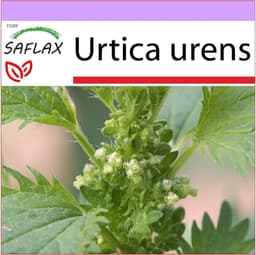
The RHS treats Urtica dioica as a UK native perennial, H7, often 1–1.5 m and about 2 m on fertile soil, with male and female flowers on separate plants. It does not flower in the first year. Urtica urens is small nettle, usually under 60 cm. The weed page calls it an annual killed by frost. The plant profile also heads it annual/biennial and H2. Keep both lines, and plan for return only from seed. SAFLAX dog nettle, 150 seeds at about £4.55, says Urtica urens and annual, which matches. SAFLAX organic says Urtica dioica and annual, which does not. The roots will not become annual because the title did. DAMAVAND PRO and both Buy4seeds rows do say perennial. The label order is on the nettle seeds buying guide.

How far each one spreads

Common nettle walks. The RHS spread is 2.5–4 m, by seed, rhizomes, and stolons, mostly in the top 20 cm. A chopped fragment can regrow, so one plant does not need a partner to thicken. In a small border, use a tub on a hard surface. Small nettle's spread is about 0.1–0.5 m. The risk is seed: about 1,000 on an average plant and up to about 40,000 on a large one. Both sting. SAFLAX says Urtica urens stings more. That is the listing's sentence, not a test. Dead-nettle mimics the look and does not sting.

Which larvae use which plant

Common nettle is the main foodplant. Peacock, red admiral, and comma rely on it most. Small tortoiseshell uses both species. Caterpillars eat leaves, so you do not need a male and a female. A token plant in shade still fails. Sun and patch size are on nettles for butterflies.

What the packet must say

The packet should say Urtica dioica and perennial, or Urtica urens and annual. Nettle alone, as on SemiSauvage at about £4.03, is not a choice. SAFLAX organic says Urtica dioica and annual. That word is the false line. Organic on the title does not repair it. DAMAVAND PRO at about £3.11 says perennial and then says plant an inch deep. You can keep the life cycle and still reject the depth. Choose Urtica dioica for a patch you will contain and for the main butterfly foodplant. Choose Urtica urens when the bed must be clearable and you will stop it seeding. If the title will not say which one it is, do not guess.

Common questions

Which one comes back next year?
Urtica dioica comes back from rhizomes and stolons, and from seed. It is the perennial, H7 on the RHS profile. Urtica urens is the annual on the RHS weed page, killed back by frost, with the plant profile also heading it annual/biennial and H2. Plan for the annual to return only from seed.
Which one walks through the border?
Common nettle. The RHS spread is 2.5–4 m, mostly in the top 20 cm of soil, by seed, rhizomes, and stolons. Small nettle's spread on the plant profile is about 0.1–0.5 m. Its problem is the seed crop, up to about 40,000 seeds on a large plant, not a creeping mat.
Do I need a male and a female plant?
Not for leaves or caterpillars. Urtica dioica is dioecious, so seed needs both sexes, and one plant can still spread by rhizomes. Urtica urens carries male and female flowers on the same plant. Buy one packet for a patch. Do not buy two to make a pair unless you are trying to save seed.
Which one should I sow for butterflies?
Urtica dioica. It is the main foodplant for peacock, red admiral, and comma, and small tortoiseshell uses it too. Urtica urens is also used, especially by small tortoiseshell, and peacock uses it only occasionally. Sun and a real patch still matter more than the packet once the species is right.
Is dog nettle the small one?
On the SAFLAX listing it is. Dog nettle there is Urtica urens, 150 seeds, described as an annual. Other shops can use dog nettle loosely. Read the Latin name. If it says Urtica dioica, it is common nettle whatever the nickname is.
Why does a dioica packet say annual?
Because that card is wrong about the life cycle. SAFLAX organic nettle names Urtica dioica and says annual. The RHS treats common nettle as a perennial. Do not treat the word as botany. Expect the plant to return from the roots if the seed is what the Latin name claims.
Is small nettle milder?
Both sting. The RHS warns about skin, and about dogs, for stinging nettles as a group. SAFLAX says Urtica urens stings more and is more tender. That is sales text on one listing, not a measurement. Choose on life cycle and spread, not on a hope that the annual will be comfortable to weed without gloves.

Related pages

Sources

Public UK sources named below. amazon.co.uk prices, stars and review counts are the figures on these nine listings. Page updated 21 October 2026.

  1. RHS Urtica dioica profile (retrieved 21 October 2026)
  2. RHS stinging nettles (retrieved 21 October 2026)
  3. BSBI Urtica dioica (retrieved 21 October 2026)
  4. Butterfly Conservation peacock (retrieved 21 October 2026)
  5. Butterfly Conservation, sunny tubs and containment (retrieved 21 October 2026)
  6. Garden Organic common nettle (retrieved 21 October 2026)
  7. GOV.UK plant-passport seed list (retrieved 21 October 2026)
  8. NHS insect bites and stings (retrieved 21 October 2026)