Thermostatic mixing valve only hot water: stop use
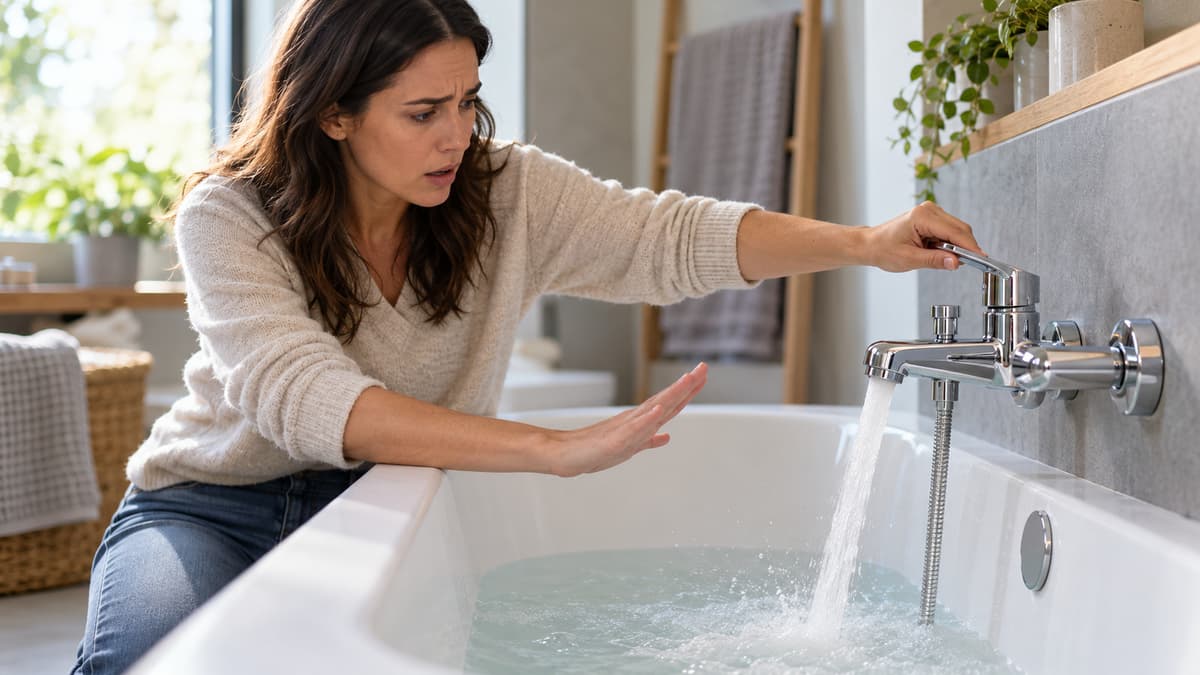
If a thermostatic mixing valve passes only hot water, treat that outlet as a scald risk. A star rating on amazon.co.uk is not a laboratory fail-safe test.
On this page
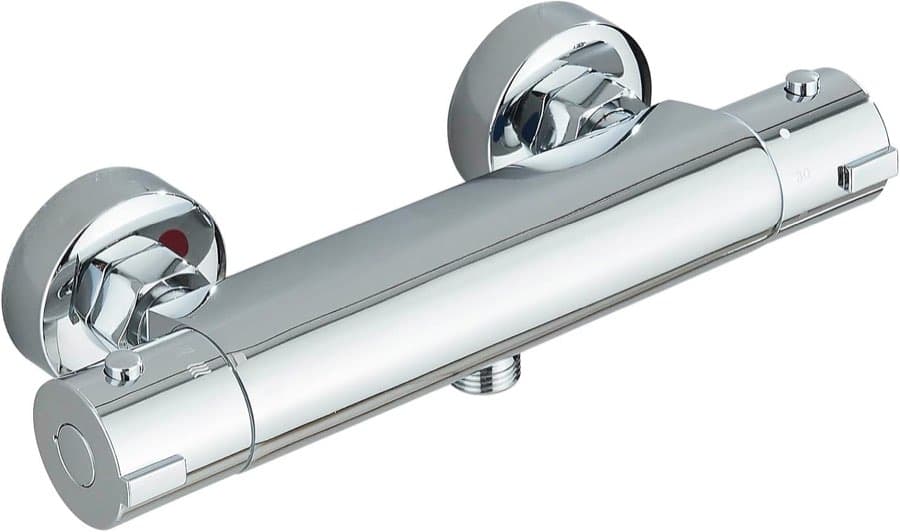
The handle said 30 and the water came out hot enough to snatch your hand back. A thermostatic mixing valve only hot water, or a bath that ignores the number on the dial, is a blend that has stopped blending. The tap still runs, which is why the fault gets lived with. Living with it is how a scald happens while the plumbing still works.
In the review notes behind our thermostatic mixing valve comparison, one UK Coleniny account describes about 70°C from a 30°C setting after repeated failures at 12 to 18 months. A separate Coleniny account says there was no mix at all. Each of those is one person, not a failure rate for the brand. A qualifying purchase through the comparison can earn us a commission, at no extra cost to you. Products Compared has not run a cold-failure test in a lab. The pattern below is the reviews in this set, plus public UK guidance, in October 2026.
In short
Only hot, no mix at all, and a scale that does not match the water are three different complaints. Only hot, such as about 70°C from a 30°C setting, is the one you stop using for bathing and showering. A 4.6-star line does not rule that fault out. Cooling the cylinder is not a repair, and a review that says the hot stopped is the opposite symptom.
Three different complaints
"It is not mixing" covers three faults, and they do not deserve the same response. No blend at all means the outlet never settles between hot and cold. One Coleniny account says exactly that: no mix. The valve may have been wrong from the first run. You still need to know whether the single temperature is lukewarm or stored hot. "No mix" on its own does not tell you.
Only hot means the outlet has moved towards the cylinder. The Coleniny account of about 70°C from a 30°C setting is this fault. The handle still turns. The water does not follow it. That is a scalding problem at a bath or shower.
A scale that does not match the water is the third complaint. A kisimixer account, on an aquarium rather than a bath, describes setting the scale to 35 to obtain about 23. The error in that note runs cold. On a bath, the same disagreement is urgent when the error runs hot. If you cannot measure safely, treat "much hotter than the handle" as only hot, and keep skin out of that bath.
What the reviews in this set say
Coleniny CN607 is the £18.99 inline valve, listed at 4.6 from 87 reviews. Inside that count sits one UK account of about 70°C from a 30°C setting, with repeated failures at 12 to 18 months, and another account of no mix at all. Keep them as two stories. Averaging them into a failure rate would invent a figure the file does not contain.
The Tremax listings, gold at £22.99 and grey at £23.99, share a review pool of 4.3 from 428. That pool includes hot water stopping in under six months, and a failure after six months. "Stopped letting hot water through" is the opposite of passing full hot. Adding the no-hot report to a scald tally hides a supply fault that may sit upstream of the element.
kisimixer KM806, at £16.99 and 4.4 from 80 reviews, includes failure within a week and failure after two months. The times in this set run from a week to a year and a half. There is no single "it dies at six months" clock. A Rankomu comment about no temperature selection after six months is not a UK review, so it stays out. These notes are shoppers, not a sample you can scale to every valve in Britain.
Why full hot is the one you stop
The Health and Safety Executive's scalding guidance is aimed at vulnerable people. Where hot water is stored and distributed hot to control Legionella, above 60°C in the store and 50°C on distribution, baths and showers for those people should have mixing valves so the outlets do not exceed 44°C, and the valves should be monitored. An outlet that has gone to the stored temperature has left that arrangement. A child's bath, or anyone who cannot get out quickly, is where that matters.
HSG274 says a Type 3 valve should fail safe if cold pressure is interrupted, in the healthcare case. That is a scheme valve in a care setting. It is not a measured result for Coleniny, Tremax, kisimixer, or any other listing in this nine. None of them states TMV3. A red button that must be pressed to pass 38°C is a stop on the handle, not a proven shut-off when the cold inlet fails. The TMV2 and TMV3 page separates those scheme names. Full hot is the complaint you do not finish the shower on.
Cooling the boiler or the cylinder, so the failed valve feels less fierce, moves the danger into the store. Legionella control wants that store hot. Stop using the outlet for bathing and showering until the blend is restored or the valve is replaced. That stop is sharper in a care bathroom, where maintenance sits with the service that runs the building.
What a cold-water check is
A cold-water check, in commissioning language, means isolating the cold inlet and seeing whether the outlet shuts down or stays at a safe flow, rather than passing the hot store. Kiwa's Type 2 guidance puts that check with the valve's own instructions. It is a recorded test on a new or recommissioned valve, not a Saturday experiment. If the instructions are missing, you do not invent the sequence, and you do not hold the safety button down to see how hot the valve can go.
Horne's installation note says a failed cold-isolation test at the start is often dirt in that valve. The sentence is manufacturer-specific, and it belongs to commissioning after a poor flush. It does not explain every failure at 12 to 18 months, and it is not a licence to strip an unnamed cartridge. These listings do not include a service diagram. The commissioning page owns the first-day order of work. A valve that has already passed full hot in service is past that page's job. Take it out of use.
On a care bath, stop earlier. Full hot is already the result that matters. The person who maintains that outlet follows the sheet for the specified valve, which may be a Type 3 regime this set does not claim. In an ordinary house, the same stop applies if you cannot isolate both supplies. Forcing a test on a live system is how a fault becomes a flood.
What one review does not prove
Nothing in this set proves a British failure rate. One Coleniny account is one household. The Tremax line about hot water stopping must stay in its own column, because it is the opposite symptom. A one-week failure and an 18-month failure need not become a mean life. A second uncertified body, bought because the stars look calm, repeats the same gap: none of the nine states TMV2 or TMV3.
A burst body is not the story these reviews tell. They do not describe a split casting. They do describe, in the Tremax pool, a knob that came off and a leak, which is a different emergency: water out of the valve, rather than water at the wrong temperature. You can have either, or both. A dry floor does not mean the blend is honest. Deal with a leak by isolating, if you can, and deal with full hot by keeping people out of that outlet.
A 4.6 score sat on the listing that carries the 70°C account. Stars cannot stand in for a Type 3 fail-safe. If the temperature has left the handle behind, stop. Measure only if you can do it without exposing skin, then repair, replace, or hand the job to someone who has the instructions.
Common questions
The water is hotter than the number on the handle. Has it failed?
Is only hot the same fault as only cold?
Can I keep using it if I turn the boiler down?
How soon have reviewers in this set reported failure?
Is a burst body the same problem as a wrong temperature?
Should I test the cold feed myself on a care bath?
Does a 4.6-star valve rule this fault out?

Products Compared publishes British-English buying guides based on amazon.co.uk listings and public UK sources. We do not run a lab and we do not invent test scores.
Related articles
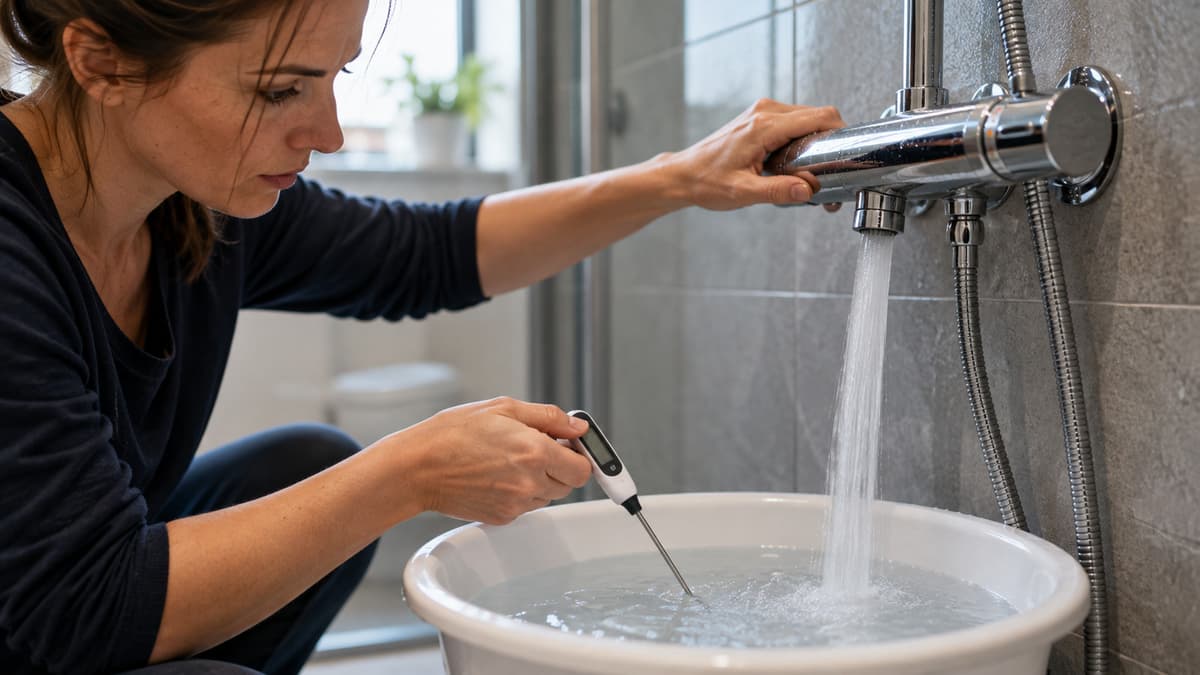
Signs a mixing valve has failed
A wrong scale, a leak and a missing knob are separate from water that has stuck on hot.
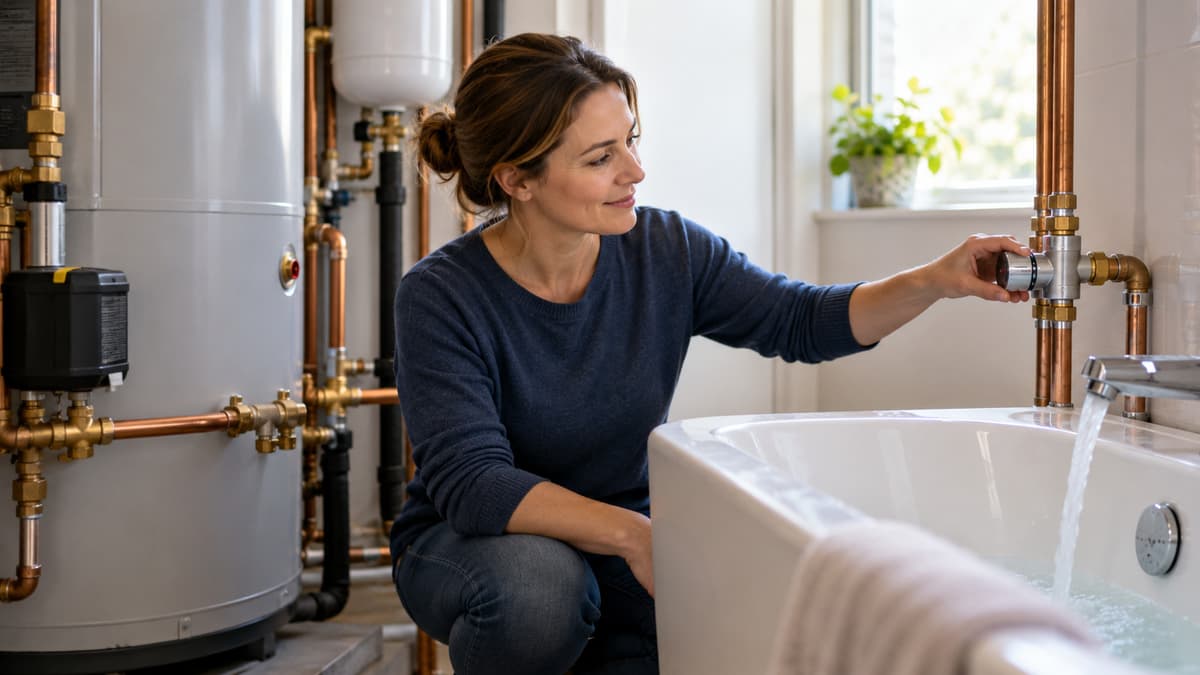
Legionella and blended water
The cylinder stays hot for Legionella control. Cooling the store is not a repair for a failed blend.
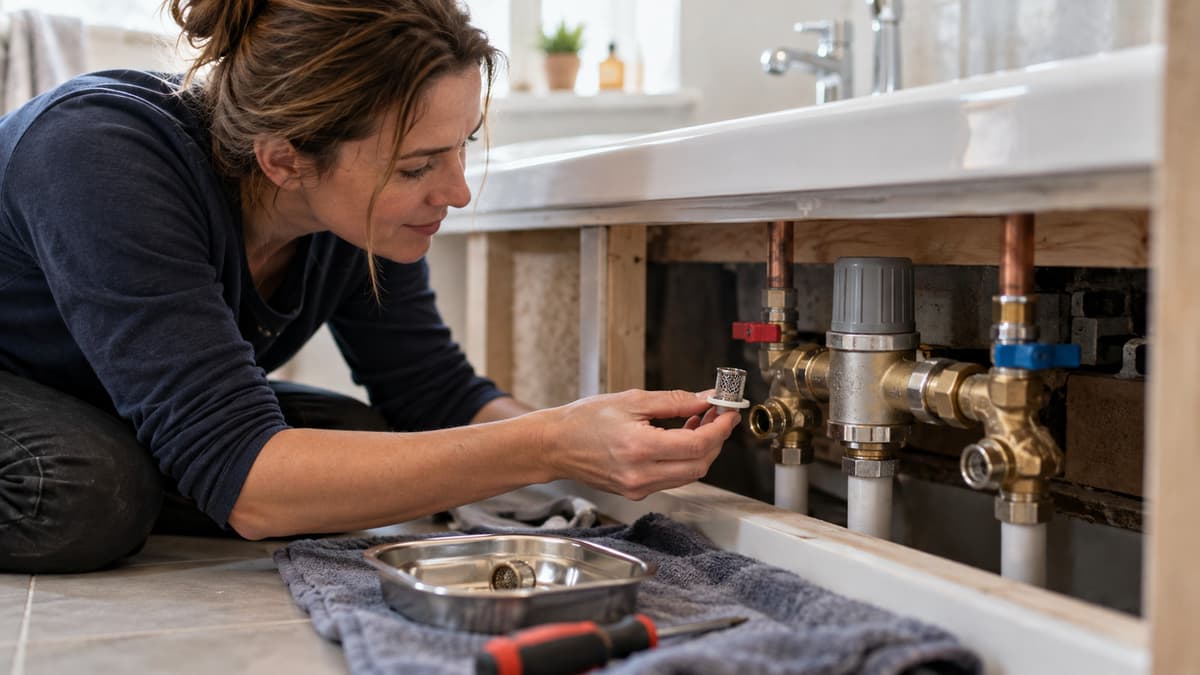
Servicing a domestic mixing valve
A yearly strainer clean is maintenance. It is not a way to live with an outlet that runs full hot.