Independent comparisons. We may earn from shop links. More info

TMV2 vs TMV3

Updated: 16 October 2026

You have seen both names on a quote or a product title, while the amazon.co.uk valves in front of you mention ASSE, CE, BS EN 1074, or a red 38°C button. TMV2 vs TMV3 is a question about two UK schemes, not about which button feels more serious. The Products Compared editorial team wrote this page on 16 October 2026 from NSF, Kiwa, NHS D08 and the specification fields in our [thermostatic mixing valve comparison](/hub/medical-protection/thermostatic-mixing-valve). We did not certify any listing. TMV2 is the domestic scheme and TMV3 is the healthcare scheme. This set of nine states neither. A purchase through those links may earn us a commission at no extra cost to you.

You have seen both names on a quote or a product title, while the amazon.co.uk valves in front of you mention ASSE, CE, BS EN 1074, or a red 38°C button.

Our top picks

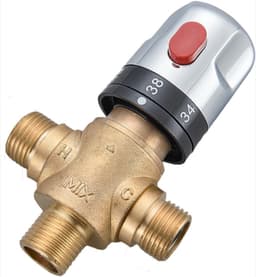
Coleniny Coleniny CN607

Best overall

Coleniny Coleniny CN607
9.2/10about £18.99
TreMax TreMax 739694904447

Alternative

TreMax TreMax 739694904447
8.6/10about £22.99
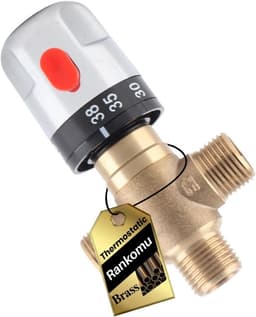
Rankomu Rankomu Rankomufmv79gowcg

Best value

Rankomu Rankomu Rankomufmv79gowcg
8.6/10about £15.99
On this page

What TMV2 is for

NSF describes TMV2 as the domestic scheme, checked against BS EN 1111:2017 and BS EN 1287:2017. Kiwa draws the same line. Approved Document G cites the 1999 editions for a bath blending valve. NSF cites the 2017 editions. The document points at a valve that fails safe and is not easily altered. For a new-dwelling bath in England the cap is 48°C. Which homes that covers is on the bath temperature page. None of the nine prints TMV2. For a basin you can feel, the buying guide is about form and thread.

What TMV3 is for

NSF describes TMV3 as a valve verified to NHS D08 for healthcare, including people who cannot react to heat. HSE HSG274 names Type 3 where vulnerable people use baths or showers and the scalding risk is significant. Reliance, a manufacturer guide, says TMV2 valves stay out of healthcare. D08’s bath maximum is 44°C, with 46°C only under competent supervision. A shower and a washbasin are 41°C. A bidet is 38°C. A hospital, a care-home bath, or a clinic basin used by someone who cannot pull away is this scheme. The nine listings do not state TMV3 or D08.
Coleniny Coleniny CN607

Testsieger

Coleniny Coleniny CN607
9.2/10about £18.99

Group mixing and retesting

Reliance describes one valve per identified healthcare outlet as the TMV3 pattern. A row of ordinary basins can be designed as a group. Calling TMV3 the commercial valve, up to 10 bar, drops the healthcare meaning. Kiwa’s Type 2 guidance talks about a yearly check, within about ±2°C of the commissioned setting. Type 3 is tighter. The steps are on the commissioning page.

Marks on these listings that are not either scheme

Coleniny names ASSE and CSA. Gold Tremax names BS EN 1074 and 0.5 kPa, which is not a credible mains pressure. Grey Tremax names BS, CE and 10 bar. Rankomu names ASSE, NSF and UPC. kisimixer names CE only. Wincal names ASME B16.34 and MSS SP 80. Bohaner, Zamery and GETSHOWERSET name no standard. BS EN 1074 is a different class of standard. A 38°C button describes the handle. It does not show a test house verifying D08 or BS EN 1111:2017.

Which scheme the job needs

Choose TMV2 when the person can feel heat and move away and the paperwork must name BS EN 1111 or BS EN 1287. Choose TMV3 when the person may not react, against D08. Do not treat ASSE, CE, BS EN 1074 or a red button on these nine as either scheme.

Common questions

Is TMV2 the same product as TMV3 with a different sticker?
The schemes verify different duties. TMV2, on NSF’s description, is domestic or similar, against BS EN 1111:2017 and/or BS EN 1287:2017. TMV3 is verification to NHS D08 where people may not react to heat. Reliance’s manufacturer guide keeps TMV2 out of healthcare. The sticker is the visible end of that difference, not a swap you make at the till.
Which scheme is for a house, and which is for a hospital or care home?
TMV2 is the domestic scheme, for a house where people can react to heat. TMV3 is the healthcare scheme against D08, for anyone who cannot react. A hospital, a care home and that kind of clinic outlet sit on the TMV3 side. The house and the ward are different purchases.
Why do some pages cite BS EN 1111:1999 and others cite 2017?
Approved Document G cites the 1999 editions for the bath blending valve. NSF’s TMV2 description cites BS EN 1111:2017 and BS EN 1287:2017. Keep both. The older citation is what the Approved Document printed. The 2017 editions are what the scheme body names now. Neither date turns an ASSE or CE field on these listings into TMV2.
Can one TMV2 feed a row of basins?
Group mixing is discussed for ordinary commercial washrooms. Reliance treats one valve per identified healthcare outlet as the TMV3 pattern. A row of low-risk basins can be designed as a group by someone specifying a scheme valve. A bay of healthcare basins, each with its own user and maximum, wants separate valves and separate records.
Does a red 38°C button make a valve TMV3?
A red button means a handle stop, usually at 38°C, with a higher figure if you press it. TMV3 is a D08 verification, with maxima such as 41°C at a washbasin and 44°C at a bath. The button shows neither those tests nor a cold-water fail volume. Several listings here have a button or a lock. None states TMV3.
Is BS EN 1074 a TMV scheme?
Gold Tremax names BS EN 1074-1 and BS EN 1074-2. That is the text in the field. It is not BS EN 1111, not BS EN 1287, and not D08. Grey Tremax says BS and CE and adds no thermostatic number. NSF’s definitions of TMV2 and TMV3 do not use EN 1074. If the scheme name is what you need, this listing is not where you will find it.
Do any listings in this comparison state either mark?
No. The nine fields name ASSE, CSA, BS EN 1074, BS, CE, NSF, UPC, ASME, MSS, or nothing. TMV2, TMV3, BS EN 1111 and BS EN 1287 do not appear. Rankomu’s UK-safety bullet still does not name those documents. The comparison can sort price and form. It cannot award either scheme.

Related pages

Sources

Public UK sources named for this comparison. Updated 16 October 2026.

  1. NHS England, HTM 04-01 Supplement D08 (2017) (retrieved 16.10.2026)
  2. Approved Document G with 2024 amendments (retrieved 16.10.2026)
  3. Part G FAQ (retrieved 16.10.2026)
  4. The Building and Approved Inspectors (Amendment) Regulations 2009 (retrieved 16.10.2026)
  5. HSE, HSIS6 (retrieved 16.10.2026)
  6. HSE, HSG274 Part 2 (retrieved 16.10.2026)
  7. NSF, TMV2 and TMV3 (retrieved 16.10.2026)
  8. Kiwa, TMV testing (retrieved 16.10.2026)