TMV2 certification marks explained for UK buyers

TMV2 certification marks explained: CE, ASSE, NSF and BS EN 1074 are not BS EN 1111, BS EN 1287 or a D08 healthcare scheme mark on these listings.
On this page
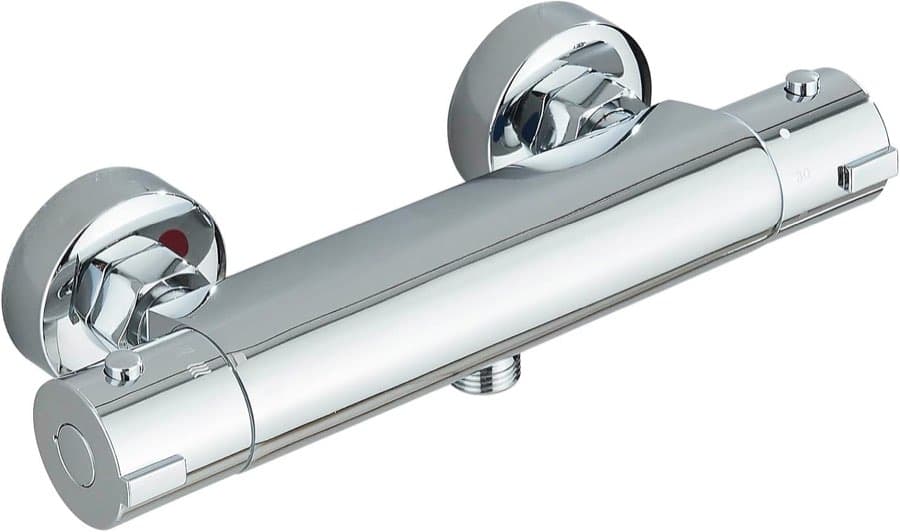
The specification line says CE, or ASSE, or BS EN 1074, and the title says the valve meets UK safety standards. TMV2 certification marks explained against that kind of listing come down to two families of words. TMV2 is BS EN 1111 and/or BS EN 1287. TMV3 is D08. If those strings are missing, the other numbers are not standing in for them.
None of the nine listings in our thermostatic mixing valve comparison states TMV2 or TMV3. A qualifying purchase can earn us a commission, at no extra cost to you. Products Compared has not certified a valve and has not copied the text of a British Standard. The decoder below uses the strings in the saved listings and the scheme names on NSF’s UK page, in October 2026.
In short
The scheme strings are BS EN 1111:2017 and/or BS EN 1287:2017 for TMV2, and D08 for TMV3. Kiwa’s one-line split is that TMV2 is domestic or general and TMV3 is healthcare. On this amazon.co.uk set you will see ASSE, CSA, CE, NSF, UPC, ASME, MSS and BS EN 1074, or no standard at all. Those are not the scheme. A sentence about UK safety standards, with no number, is not the scheme either.
The strings that are the schemes
NSF’s UK certification page is the shopping translation. TMV2 means the valve has been through BS EN 1111:2017 and/or BS EN 1287:2017. TMV3 means D08. Kiwa’s testing note puts TMV2 in domestic or general use and TMV3 in healthcare. You do not need the rest of the scheme paperwork to know what to look for on a product page. You need those names, spelled out, not a relative of them.
BS EN 1111:2017 is the sanitary tapware standard for thermostatic mixing valves, at PN 10. It superseded the 1999 edition and covers the blend at a tap, a single outlet or a small domestic group. That is the family a bath or basin valve has to be in if someone is claiming the high-pressure TMV route. EN 215, the radiator standard, is a different family. The TMV2 and TMV3 page keeps the two schemes apart.
If the listing does not contain 1111, 1287 or D08, stop treating it as scheme-certified. A brass body, a 38°C button and a high star line are not the mark. Absence of the string means you cannot claim the scheme. It does not, by itself, prove the valve will scald.
EN 1074, CE and ASSE
The gold Tremax, at £22.99, names BS EN 1074-1 and BS EN 1074-2. EN 1074 is a water-supply valve series. It is not BS EN 1111, and NSF’s TMV schemes do not use it as TMV2 or TMV3. The listing has printed a real standard about fitness of water-supply valves. A shopper who only checks that a BS number is present will pass this row. A shopper who checks which BS number will not.
CE is the other short string. kisimixer names CE and nothing further. The grey Tremax names BS and CE, again with no TMV number. A CE mark does not identify BS EN 1111:2017, and it does not identify D08. BS with no digits is the same problem in miniature. British Standard is a library. The title of the book is the part you needed.
ASSE and CSA appear on Coleniny. Rankomu adds ASSE, NSF and UPC. Those strings belong to US standards and codes, printed here on amazon.co.uk. UPC on a specification line is not a UK scheme, and ASSE is not TMV2. The buying guide can help you choose a form. It cannot turn ASSE into D08.
A UK standards sentence with no number
Rankomu’s bullet says the valve complies with UK safety standards. The same listing’s specification field is ASSE, NSF and UPC, and it does not name BS EN 1111, BS EN 1287, TMV2 or TMV3. The bullet and the field are not the same sentence. One gestures at the UK. The other prints marks that are not the UK schemes. When a claim and a specification disagree, the number you can look up is the one to keep.
Wincal names ASME B16.34 and MSS SP 80. ASME B16.34 rates valves for pressure and temperature. MSS SP-80 covers bronze gate, globe and check valves. Neither is a bath-scald standard, and neither is TMV2. Specific is not the same as relevant. The reassurance belongs to pressure ratings, not to a blended outlet.
Bohaner, Zamery and GETSHOWERSET name no TMV standard at all. Zamery, the top pick for an exposed shower bar, can state a 38°C lock and still have an empty standards field. GETSHOWERSET can weigh 2.49 kg and cost £179.99 with the same empty field. Price, mass and a safety button do not fill it in. You may not tell a client, a landlord or a care manager that the scheme is printed.
1999 in the Approved Document
Approved Document G still cites BS EN 1111:1999 and BS EN 1287:1999 as an acceptability route for a bath that must be limited. NSF’s scheme page cites the 2017 editions for TMV2. The years differ. The 2017 text has not been declared identical to the 1999 edition. What you can say is that both citations name 1111 and 1287. They do not name ASSE, CE, EN 1074, ASME or a sentence with no number.
The 1999 citation does not rescue a listing that never mentions 1111 or 1287. A valve marked only to a 1999 edition would be a different conversation, about whether that edition still meets the route the Approved Document describes. None of the nine listings cites those standards in either year. The age of the Approved Document does not turn EN 1074 into an acceptable number.
The bath rule applies to the building-regulations case, not every existing house. A retail page that never mentions 1111 or 1287 has not shown that route, in 1999 or in 2017. This set supplies neither year.
A check before you buy
Read the specification field before you read the title. Write down every standard number you can see, then sort the strings into the scheme and everything else.
- Write down every standard number in the specification field, and ignore the title while you do it.
- Look for BS EN 1111, BS EN 1287 or D08. If those words are absent, the listing has not stated TMV2 or TMV3.
- Put CE, ASSE, CSA, NSF, UPC, ASME, MSS and BS EN 1074 in a second column labelled not the scheme. A cell that says only BS goes in that column too.
- Treat “complies with UK safety standards”, where no number follows, as a sentence you cannot check. Ask the seller for the number, or assume you do not have a scheme mark.
Compare the bullet with the specification field when they disagree, as they do on Rankomu. Then decide whether you still want the body for its ports, its stop and its price, knowing the certificate is not in the file. The comparison is the place to see all nine fields together. The basket is the place this check is meant to slow down.
A wrong standard is a product from another document. Buy it only for what that document, and the listing, actually cover. If the room needs a scheme valve, leave the shelf. If the room needs a three-port body and you understand there is no stated TMV2, the listing can still be a listing.
Common questions
The listing says CE. Is it TMV2?
What is BS EN 1074 doing on a mixing valve?
NSF is named on Rankomu. Is that TMV3?
Why does Approved Document G mention 1999 if NSF says 2017?
The listing says it complies with UK safety standards and gives no number. What can I rely on?
Is ASME B16.34 a bath-scald standard?
Which listings in this set name no standard at all?

Products Compared publishes British-English buying guides based on amazon.co.uk listings and public UK sources. We do not run a lab and we do not invent test scores.
Related articles

Mixing valve or radiator valve
EN 215 is the radiator-valve standard. It is another number that does not mean TMV2 or TMV3.
Inline valve or shower mixer
A bar, a concealed valve and an inline body are different shapes. The scheme mark is a separate question.
What a mixing valve costs
Paying £179.99 instead of £12.69 changes the fitting. It does not print a scheme mark the file omitted.