Inline thermostatic mixing valve or shower bar

An inline thermostatic mixing valve or a shower bar can share a results page and be different objects. Compare weight, the 38°C stop and the missing TMV2 mark.
On this page
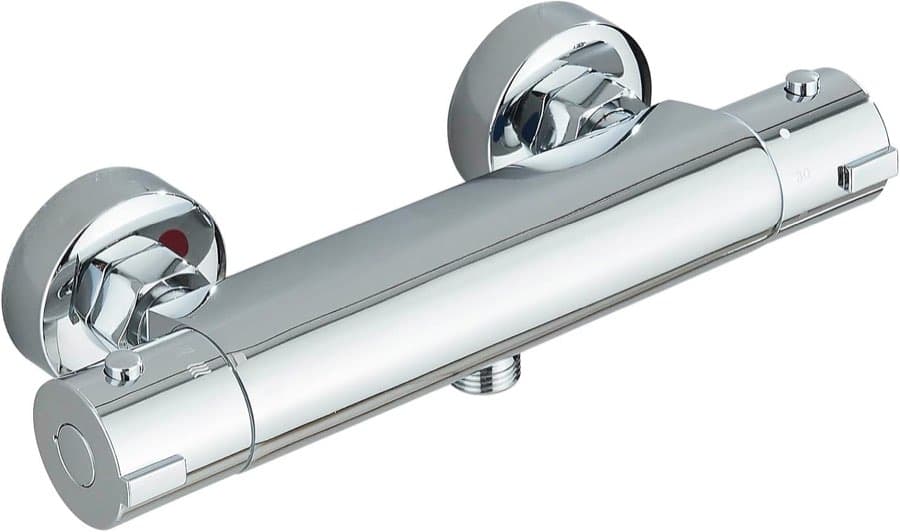
The results page shows a brass body the size of a fist and, two rows later, a chrome bar for the wall. An inline thermostatic mixing valve or a shower bar can share the word thermostatic and still be different objects. One goes in the pipe. One is the control you see in the shower. A third listing in this set is a concealed valve that is neither of those shapes.
Our thermostatic mixing valve comparison keeps seven inline bodies, Zamery’s exposed bar, and one concealed GETSHOWERSET valve. A qualifying purchase can earn us a commission, at no extra cost to you. Products Compared has not fitted them. The forms below are the amazon.co.uk listings checked in October 2026. Thermostatic, on any of them, is not a TMV2 mark.
In short
Seven listings are inline three-port bodies, from Wincal at 190 g to the Tremax valves around 450 g. Zamery at £35.91 is the exposed bar: 1.2 kg, two handles, a stated 38°C lock, and an included line that says shower tap. GETSHOWERSET at £179.99 is the concealed valve: 2.49 kg, no stated 38°C stop, and no review line. None of the three forms states TMV2 or TMV3.
What an inline body is for
An inline body is a three-port fitting for a pipe run. Hot in, cold in, mixed water out, usually with H and C marks so you can put it back the right way round. In this set that form is Coleniny, both Tremax listings, Rankomu, kisimixer, Bohaner and Wincal. Shelf prices run from £12.69 for Wincal to £23.99 for the grey Tremax. You are buying a valve to plumb in, not a bar to screw to the tiles.
Bohaner’s bullet says G1/2, not 3/4 inch. That is a thread limit on the inline body, not a reason to buy the bar, and not a claim about the bar’s thread. Match G1/2 to G1/2 pipe. The buying guide sorts outlet and thread. An inline valve does not become a concealed shower valve because you hide it, and Wincal at 190 g is not a shower bar.
Several inline listings state a 38°C stop or a red button. Coleniny goes to 42°C with the button. Bohaner’s button is described up to about 50°C. Wincal states no stop. A printed stop is not a scheme test. For a basin blend, the inline body is the form that matches the spend, and it stays uncertified unless the specification says otherwise.
What the exposed bar is
Zamery, ASIN B0FPQZQ8K5, is the exposed shower bar in this comparison, and the top pick when you want that wall-mounted form. The listing price is £35.91. The weight is 1.2 kg. There are two handles, and the bullets state a 38°C safety lock, with higher temperatures if you push the button. The included component is “shower tap”. Read that as the bar. A hose, a head or a riser rail is not in the included line. If the photo suggests a full kit, the included line is the fact.
The listing argues with itself on material and on how it is mounted. The material field says stainless steel. The bullets say solid brass. The installation field says single hole. The title says wall mounted. Record the conflict rather than picking the sentence you prefer. Three UK reviews praise value, fitting and a steady temperature, and one text says the temperature stayed steady when another tap opened. The rating is 5.0 from 8 reviews. Eight is a small count. It is not a durability study, and it does not make the bar into a different scheme from the inline bodies.
Buy the bar when you want an exposed shower control on the wall and you have checked what is actually in the box. Buy an inline body when you are cutting into pipework and you do not need a bar at all. Paying £35.91 instead of £16.99 changes the object in your hand. It does not print TMV2 on either of them.
What the concealed valve states
GETSHOWERSET 2WAY-LEDSV-1 is the concealed listing. The price is £179.99. The weight is 2.49 kg. The finish in the short description is brushed gold. The bullets describe water-powered LED knobs, with no batteries claimed, and outlets that can run together. The connection is given as 1/2 inch, type G1/2. A five-year limited support claim is printed. No 38°C stop is printed. No mixed range is printed. The listing has no customer-review line. No TMV standard is named.
That is a shower valve you build into the wall, not an inline body with a cover plate added in the description. The LEDs and the twin outlets are features of this listing. They are not evidence of a cold-water fail-safe, and they are not a substitute for a stop the bullets never mention. If you need a stated 38°C lock, Zamery states one and this concealed valve does not. If you need a scheme mark, neither listing has it. Spend the £179.99 for the concealed form and the features that are written down. A certificate that is absent is not what that price buys.
Hiding a £16 inline valve in a wall does not create this concealed product. You would still have a light three-port body, now harder to service. WaterSafe treats an unreachable mixing valve as a mistake. Choose the listing whose shape you can still reach.
Weight, handles and direction
The masses draw the line if the titles do not. Wincal is 190 g. Most of the other inline bodies sit between 300 g and 460 g. Zamery is 1.2 kg. GETSHOWERSET is 2.49 kg. A valve you can post in a large envelope is not the valve that arrives as a shower assembly. Use the weight when a listing’s title says both “mixer” and “bar” and you cannot tell which photo is the product. The gram figure is dull and, in this set, decisive.
Handles follow the form. Zamery has two. The inline bodies are single valves in the pipe, with a temperature control rather than a pair of wall handles. GETSHOWERSET’s knobs are the LED controls on the concealed plate. More handles are not more safety. A 38°C lock on Zamery is a stated stop. Two handles without that sentence would not be. Count the handles so you know what you are mounting. Then read the stop, which is a separate field.
Hot on the left is a habit, not a finding in this comparison. Reconnect by the H and C marks. Crossing them means the element is fed backwards and the outlet temperature is no longer the thing the handle describes. The inline bodies that state those marks, Coleniny among them, are explicit. A listing that does not show the marks is a reason to look at the casting before you solder, rather than treating left as hot because the last tap in the house was.
The scheme does not follow the shape
NSF’s TMV page is about mixing valves for outlets. A shower valve still needs the scheme if the building needs the scheme. An inline valve needs it on the same terms. BS EN 1111:2017 is the sanitary standard for thermostatic mixing valves, including a single outlet or a small domestic group. It is not awarded because the product is chrome, concealed, or heavier than 2 kg. The TMV2 and TMV3 page says what the scheme strings are. None of the three forms in this comparison prints them.
The choice is the outlet you have, then the certificate you must meet, in that order. A basin pipe wants an inline body, and then a scheme valve if the specification says so, which may mean leaving this shelf. An exposed shower wants a bar only if you want the bar, and Zamery is the one in this set, with the conflicts on material and mounting left visible. A concealed shower wants the concealed listing, read for the stop it does not state. Shape is the first filter. It is not the last.
The comparison puts the nine side by side so the form is visible before the basket. Use it for weight, stop, thread and the standard field. A shared search phrase does not make a £17 body and a £36 bar interchangeable, and £179.99 has not purchased TMV3.
Common questions
Can I hide an inline valve and call it a concealed shower valve?
Does the chrome bar include a riser rail?
Why is the gold concealed valve so much heavier?
Which one has a stated 38°C lock?
Will the inline valve screw onto my shower hose?
Is hot on the left on every product?
If I only need a basin blend, which form is the wrong spend?

Products Compared publishes British-English buying guides based on amazon.co.uk listings and public UK sources. We do not run a lab and we do not invent test scores.
Related articles
What a mixing valve costs
Inline bodies on these listings sit between £12.69 and £23.99. The concealed valve is £179.99.

TMV2 certification marks explained
A chrome bar and a brass body can both be thermostatic. Neither is TMV2 unless the scheme is printed.

Mixing valve or radiator valve
EN 215 is a radiator valve. An inline blender and a shower bar are both mixers, and the radiator valve is not.