Thermostatic mixing valve or radiator valve: two jobs

A thermostatic mixing valve blends hot and cold at a tap. A radiator valve to BS EN 215 only throttles heating water. See which listing belongs on a bath.
On this page
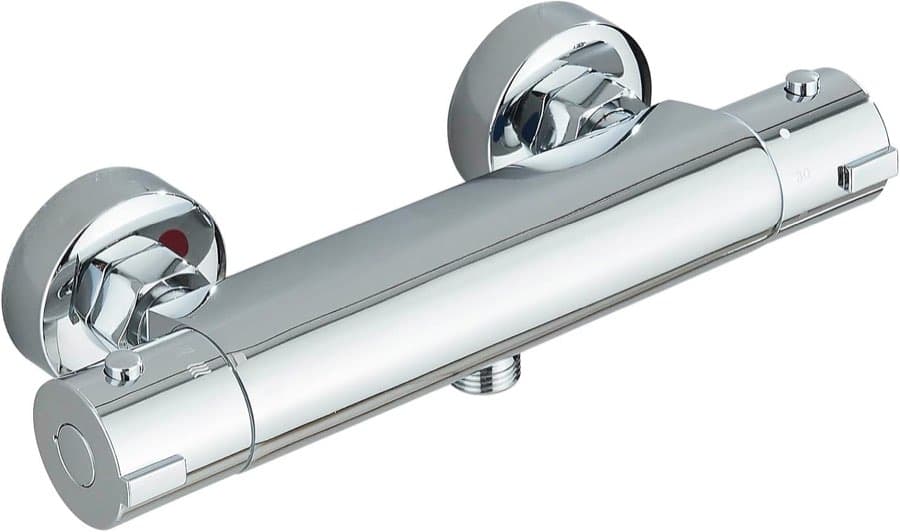
You searched for a thermostatic valve and the basket filled with a towel-rail head. A thermostatic mixing valve or a thermostatic radiator valve can share a results page because they share an adjective. They do not share a job. One blends hot and cold at a tap. The other throttles heating water into a radiator against the temperature of the room.
The nine products kept in our thermostatic mixing valve comparison are mixers or shower mixers. A radiator valve that turned up in the same batch was taken out. A qualifying purchase through the comparison can earn us a commission, at no extra cost to you. Products Compared has not fitted either kind of valve in a lab. The distinction below is the standards and the listing fields, as of October 2026.
In short
A thermostatic radiator valve, to BS EN 215, controls flow into a radiator against room temperature. A thermostatic mixing valve blends hot and cold with an element that senses the mixed water. EN 215, a lockshield, or the words radiator valve mean you are looking at heating. The VANCOCO listing at £27.99 was that heating product, and it is not in the comparison.
Same adjective, different job
Thermostatic only means there is a temperature-sensitive element. On a radiator valve that element watches the air. The room warms up, the head closes, and less heating water enters the panel or the towel rail. The pipe it controls is a single flow. BS EN 215:2019 describes that two-port valve, for radiator service up to 120°C and PN 10. Nothing in that job mixes a cold mains feed with a hot cylinder.
On a mixing valve the element watches the water that is about to leave. HSG274 paragraph 2.74 describes the device as a blend of hot and cold through a temperature-sensitive element. Open the hot port a little more, or the cold port, and the outlet temperature moves. The sensor is in the mix, not on the wall. You can hold both products in one hand and still be holding two mechanisms.
The practical test is which temperature you care about. If the answer is the room, you want the radiator valve, and this comparison is the wrong shelf. If the answer is the water at a bath, basin or shower, you want the blender. Room air at a comfortable 20°C will not pull a 60°C store down to a safe outlet. The sensor has to be in the water path for that to happen.
What EN 215 is telling you
When a listing prints EN 215, or BS EN 215:2019, it is pointing at the radiator standard. BSI’s summary of that standard is requirements and test methods for thermostatic radiator valves. The headline limits you can use without buying the document are two ports, radiator flow, up to 120°C and PN 10. Those numbers are normal for heating water. They are not a statement about blended sanitary water, a 38°C stop, or a cold-water failure.
NSF’s UK page on TMV certification talks about TMV2 and TMV3. It does not need EN 215, because EN 215 is not a mixing-valve scheme. TMV2 is tied to BS EN 1111:2017 and/or BS EN 1287:2017. TMV3 is D08. A towel-rail valve that passes EN 215 has passed a radiator test. It has not joined either scheme. The TMV2 and TMV3 page is where those scheme strings are unpacked. EN 215 does not appear there as a substitute.
Danfoss publishes radiator sensors and valves tested to EN 215. If a brand you know for radiators uses the number, the number lives in that trade. It can still show up on a no-name corner valve, and it means the same thing: this object is for a radiator. EN 215 tells you the product family. Size, finish and a lockshield are radiator questions, not bath questions.
The listing that was removed
VANCOCO, ASIN B0DGGMVZY6, came up in this batch and was removed. The valve-type field said thermostatic radiator valve. The standard named was EN 215. The raw-file price was £27.99, with 4.4 from 97 reviews. It throttles a radiator. It does not blend at a tap. This paragraph is the caution, not a review you should shop from. Putting it back into a mixing-valve comparison would repeat the search mistake the removal was meant to stop.
Valve type, the EN 215 line, and a lockshield in the title or the box are the correct labels for heating. They become a problem only when you needed a blender and treated thermostatic as enough. £27.99 is a shelf figure for that removed listing. It is not a budget line for a bath valve, and it should not be compared with the £12.69 to £179.99 mixer rows as if it were one of them.
The nine that stayed are mixing valves or shower mixers: the inline bodies, Zamery’s exposed bar, and the concealed GETSHOWERSET valve. None states TMV2 or TMV3. An EN 215 head does not fill that gap, and 97 reviews of a radiator valve are not a reason to put that listing back. The buying guide starts from the mixer forms that remain.
What a mixing valve has
A blender has two inlets and one outlet. On the bodies in this set the H and C marks are how you avoid crossing them when you reconnect. A radiator valve works on one pipe, with the lockshield on the return to balance the circuit. The lockshield is not a cold port and it is not a 38°C stop. A box with a lockshield and a head is a set of heating fittings.
A radiator head that sticks leaves a room too hot or too cold. A mixing element that sticks can leave a bath at stored temperature. That second failure is the one HSG274 describes when it talks about blending. EN 215’s 120°C ceiling is the heating water the valve is allowed to see. A radiator valve can meet that standard while the bath stays unprotected.
Shower mixers in this comparison are still mixers. Zamery is the top pick when you want an exposed bar with a 38°C lock, at about £35.91, from eight reviews. GETSHOWERSET is a concealed shower valve. If the listing blends, it stays on the mixer side even when the shape changes. If it cites EN 215, it stays on the radiator side even when the photo is a bathroom rail. The standard and the valve type decide.
How to check the next result
Read the valve-type line before the title. Thermostatic radiator valve, towel rail valve, or corner TRV is heating. Thermostatic mixing valve, with ports marked H and C, is the blender family, and you then still have to read whether anyone has claimed TMV2 or TMV3. The title is where the shared adjective does its damage. The specification field is where the product tells the truth, when the seller has filled it in.
Then read the standard number as a family name. EN 215 means radiator. BS EN 1111 or BS EN 1287, or D08, is the language of mixing-valve schemes. ASSE, CE, ASME and BS EN 1074 are other documents again, and they are not EN 215 either. A page can be the wrong product and, separately, an uncertified mixer. Fix the product family first. A correct radiator valve will not become a bath protector by adding a sentence about UK safety.
Use the comparison for the nine mixers, and stop there. This article does not rank VANCOCO or name a towel-rail head to buy. A cold rail belongs with a lockshield and a TRV, and EN 215 is the number for that invoice. Water on skin belongs with the blender, judged by its ports, its stop and its scheme claim. The adjective was never the specification.
Common questions
Why did a towel-rail valve appear in a mixing-valve search?
What does EN 215 mean on a listing?
Can a radiator valve stop a bath scald?
Is a lockshield part of a TMV?
Are both products called thermostatic for the same reason?
Which listing in this batch was the radiator valve?
What should the valve-type field say if I want a blender?

Products Compared publishes British-English buying guides based on amazon.co.uk listings and public UK sources. We do not run a lab and we do not invent test scores.
Related articles

TMV2 certification marks explained
EN 215 on a listing is a radiator standard. BS EN 1111 and D08 are the mixing-valve schemes.
Inline valve or shower mixer
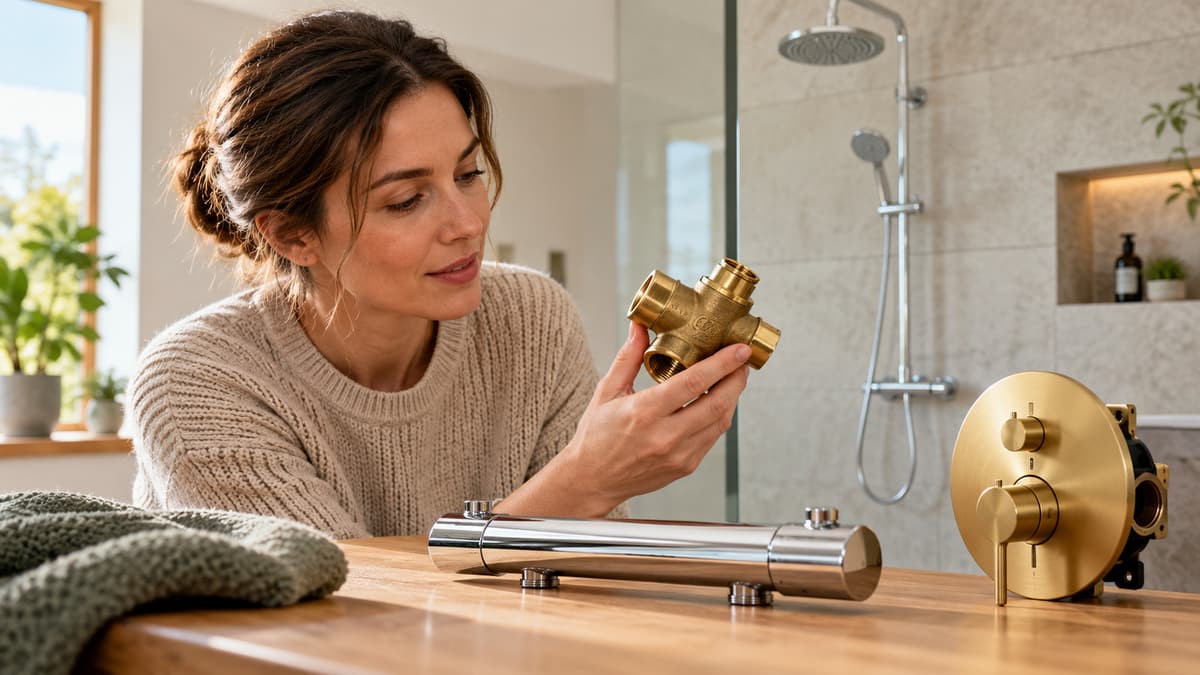
An inline body and a shower bar are both mixers. A corner radiator valve is neither.
What a mixing valve costs
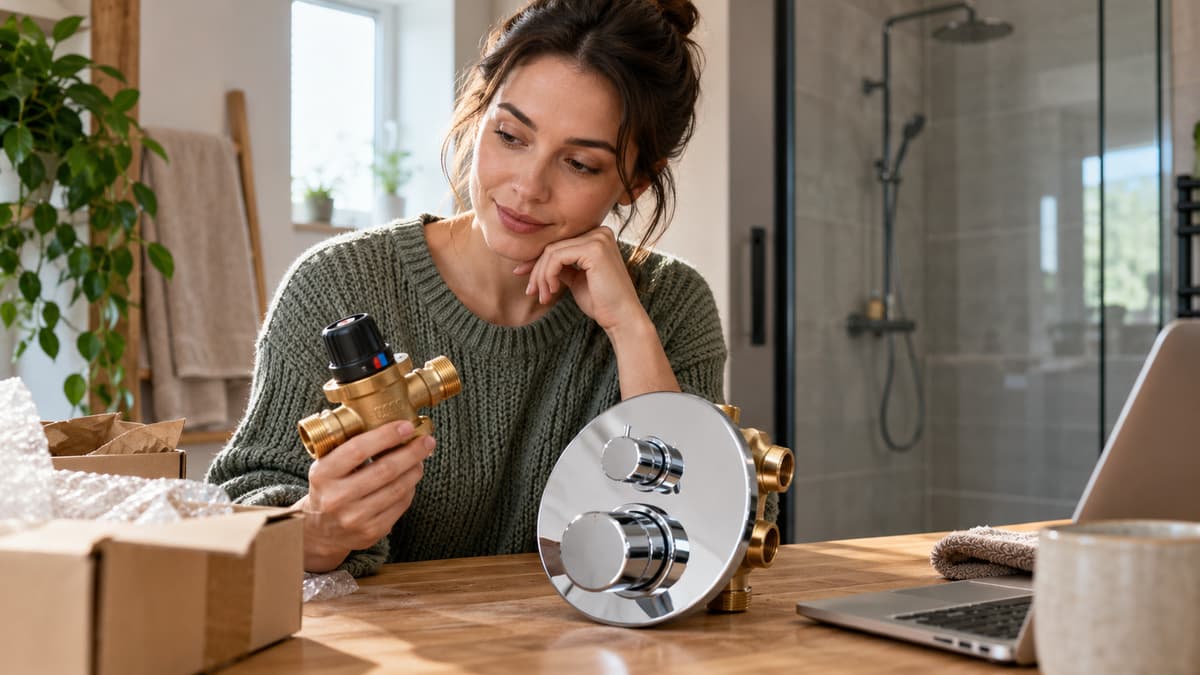
Shelf prices in this set run from £12.69 to £179.99. A £27.99 radiator valve was kept out.