Thermostatic mixing valve not mixing: when to stop
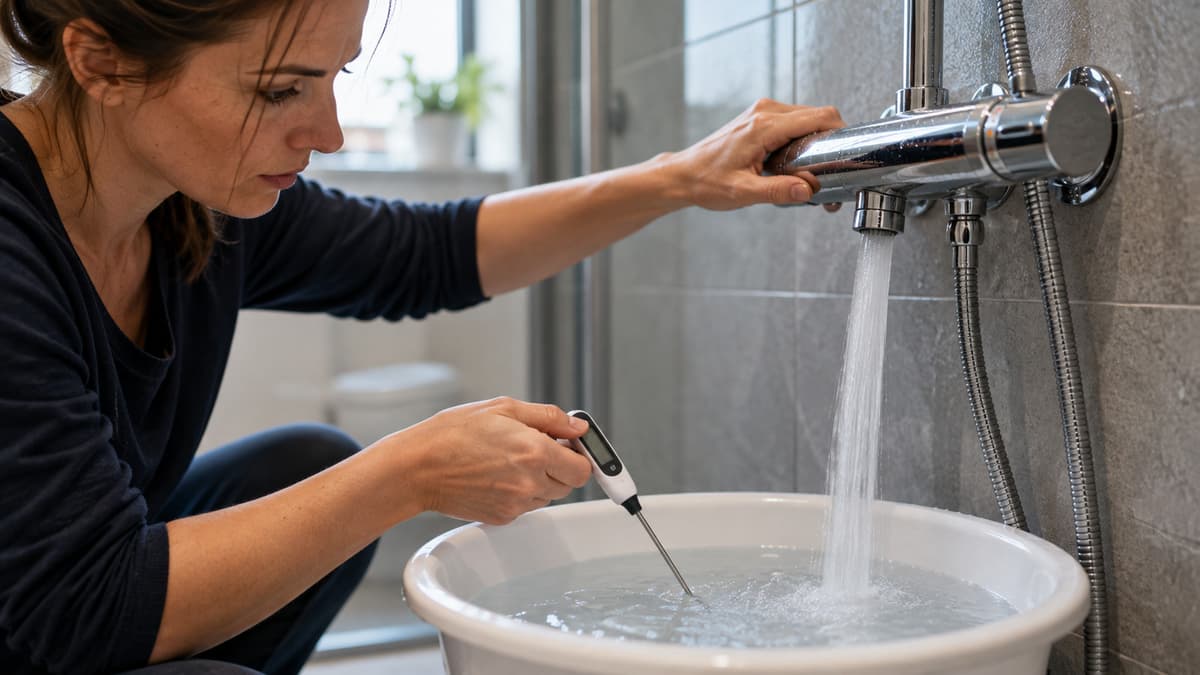
A thermostatic mixing valve not mixing may be a wrong scale, one temperature, or a leak. Water far too hot at a bath is the sign that means you stop.
On this page
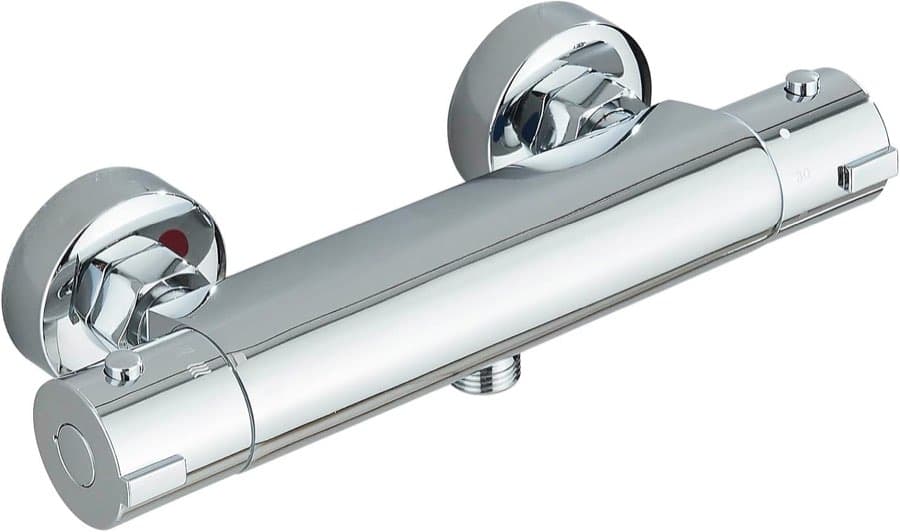
The shower was steady for months, and this week the handle and the water have parted company. A thermostatic mixing valve not mixing can mean a scale that lies, a tap that only runs cold, a leak at the knob, or water that has gone fully hot. Those are different faults. Treating them as one fault is how a scald gets a delay while someone blames limescale.
The review notes behind our thermostatic mixing valve comparison are households, not a lab. One Coleniny account is one person. A qualifying purchase through the comparison can earn us a commission, at no extra cost to you. Products Compared has not failed these valves on a bench. The signs below are the accounts in this set, plus Kiwa’s Type 2 band and HSG274’s split between a strainer and scald protection, in October 2026.
In short
A handle that does not match the water, a tap stuck on one temperature, a valve that died within months, and a leak or a lost knob are four different signs. About 70°C from a 30°C setting is the one that means you stop using the bath or shower. A wrong scale on an aquarium, a noise, or a handful of cheerful reviews are not that emergency. A star rating does not cancel the hot account.
The handle and the water disagree
The number on the handle is a claim. The water is the measurement. A kisimixer account, written about an aquarium, says the scale had to be set to 35 to obtain about 23. The dial and the water disagreed, and the error ran cold. That is a nuisance for a fish tank and a warning about trusting the printing. It is not the same event as a bath that has climbed towards the cylinder.
The hot version is the Coleniny account: about 70°C from a setting of 30°C, after repeated failures at 12 to 18 months. Kiwa’s Type 2 in-service test uses a much smaller gap, about 2°C from the original recorded setting, as the point where more work starts. A household with no commissioning sheet cannot pass or fail that band. It can still notice that 30 and 70 are not two degrees apart.
Measure if you can do it without putting skin in the water. A thermometer in a jug, after the tap has run, is enough to separate a cold-running scale from a scald. If you cannot measure safely, treat water much hotter than the handle as the stop. A bath near stored temperature is a reason to keep people out of it until the blend is restored or the valve is replaced.
It only passes one temperature
Only hot, only cold, and no mix at all are three reports. Coleniny has an account of no mix at all, separate from the 70°C account. The Tremax pool, shared by the gold listing at £22.99 and the grey listing at £23.99, includes a valve that stopped letting hot water through in under six months. That is the opposite of passing full hot. Someone with no hot is cold. Someone at 70°C is at risk. Adding the two stories into one failure hides which morning you are actually having.
Only cold can be the valve and can be the supply. A closed service valve, a failed hot feed, or an element that will not open the hot port can look the same at the outlet. The review does not tell you which. Do not replace the body on the strength of one sentence. It is safer than full hot at a bath, and it is still not a mixer. Look at the hot inlet before you buy a second uncertified body.
If the single temperature is stored hot, stop. If the single temperature is cold, find out whether the hot ever reaches the valve. No blend from day one is a different case from a valve that worked for a year. The commissioning page is the first-day sequence, not the whole answer once the outlet has already chosen one temperature. Full hot, as a scald, is the subject of when a valve passes full hot.
It worked, then stopped
kisimixer, at £16.99 and 4.4 from 80 reviews, includes failure within a week and failure after two months. The Tremax pool includes a failure at six months as well as the hot water that stopped in under six months. Coleniny, at £18.99 and 4.6 from 87, includes the repeated failures at 12 to 18 months. Put on one line, the times run from a week to a year and a half. There is no figure that these valves last two years, and there is no week-one pattern that covers the set.
A quiet start is not evidence the element will stay free. Horne’s note, for that manufacturer, says a failed cold-isolation test at the start is often debris after a poor flush. These boxes have no service diagram. Write down when it stuck, and whether it stuck hot or cold. A Rankomu comment about no temperature selection after six months is not a UK review, so it stays out. The dates that remain are individual shoppers, not a failure rate.
Leaks, knobs and missing parts
The Tremax pool includes a knob that came off and a leak. It is not, by itself, proof the thermostat has seized. A joint can weep while the blend is still honest. A blend can fail in a valve that is dry to the touch. Isolate the supplies if isolation valves are already fitted. If they are not, you are looking at a plumber before a cartridge, because the inline included-components lines in this set do not list isolators.
Missing fittings are a shopping fault. A washer, a connector or a strainer that never arrived will stop the job or start a leak. Check the included line against what is on the bench before you condemn the element. Zamery’s included component is a shower tap, meaning the bar, not a hose, a head and a riser. GETSHOWERSET’s included line is a shower valve. An empty bag is a missing part. A temperature that ignores the handle is a different sentence.
Three cheerful Bohaner texts and three cheerful Zamery texts are too few to declare that leaks do not happen. Zamery, the comparison’s top pick, is 5.0 from 8 reviews. One text says the temperature stayed steady when another tap opened. That single positive does not cancel Coleniny’s 70°C account.
Signs that mean you stop
Stop using the outlet when the water is far hotter than the setting, especially at a bath or shower. About 70°C from 30°C is that sign. HSG274 separates a yearly strainer clean from the job of keeping scald protection working. A seized element is the second job. Descaling a gauze while people are still using the outlet is the wrong order. Take the outlet out of use, then talk about strainers, debris and replacement.
A stiff handle, a noise, or a scale that runs a little cold is maintenance, with a limit. Noise is not a measured case in these reviews. Scale is only implied. A movement of more than about 2°C matters on a Type 2 valve that was commissioned and recorded. None of these listings states TMV2 or TMV3, and the band is not a promise they hold it. The TMV2 and TMV3 page is the scheme distinction. A two-degree drift is extra work. A bath at stored temperature is a stop.
A 4.6 score did not keep the hot account off the Coleniny listing. The comparison shows the nine bodies, the stops they print, and the standards they do not print. Match the repair to the sign. Leak, knob and missing part are containment and completeness. Only cold is a supply or a closed hot port. Full hot is the one you do not finish the wash on.
Common questions
The number on the handle is not the water temperature. Is that failure?
It was fine for months and then stuck. What failed?
Is noise a sign of scale?
It will not pass hot water at all. Is that safer?
The knob came off and it leaked. Is that the thermostat?
How many reviews do I need before I trust that there are no problems?
When is the sign serious enough to stop using the outlet?

Products Compared publishes British-English buying guides based on amazon.co.uk listings and public UK sources. We do not run a lab and we do not invent test scores.
Related articles

When a valve passes full hot
Full hot at a bath is the scald fault. Only cold, a wrong scale and a leak are separate problems.
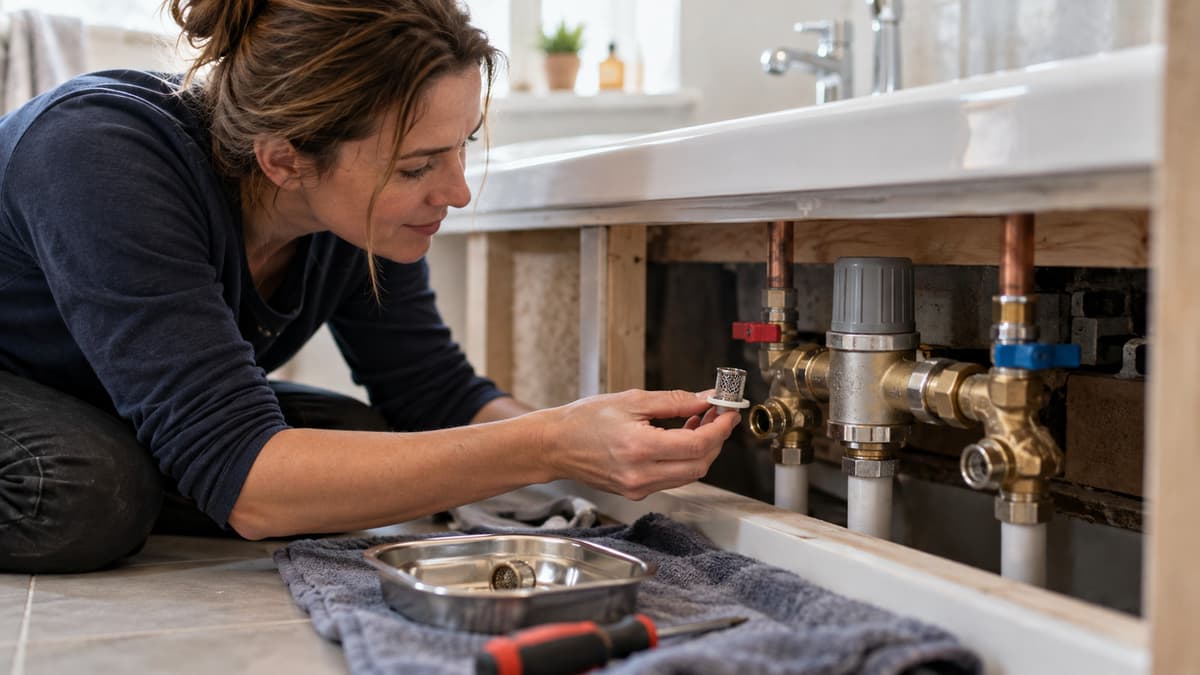
Servicing a domestic mixing valve
A yearly strainer clean is maintenance. It does not explain a knob that came off or water at stored temperature.

TMV2 certification marks explained
A 4.6-star line is not TMV2. The scheme strings are BS EN 1111, BS EN 1287 and D08.