Service a thermostatic mixing valve: the yearly clean
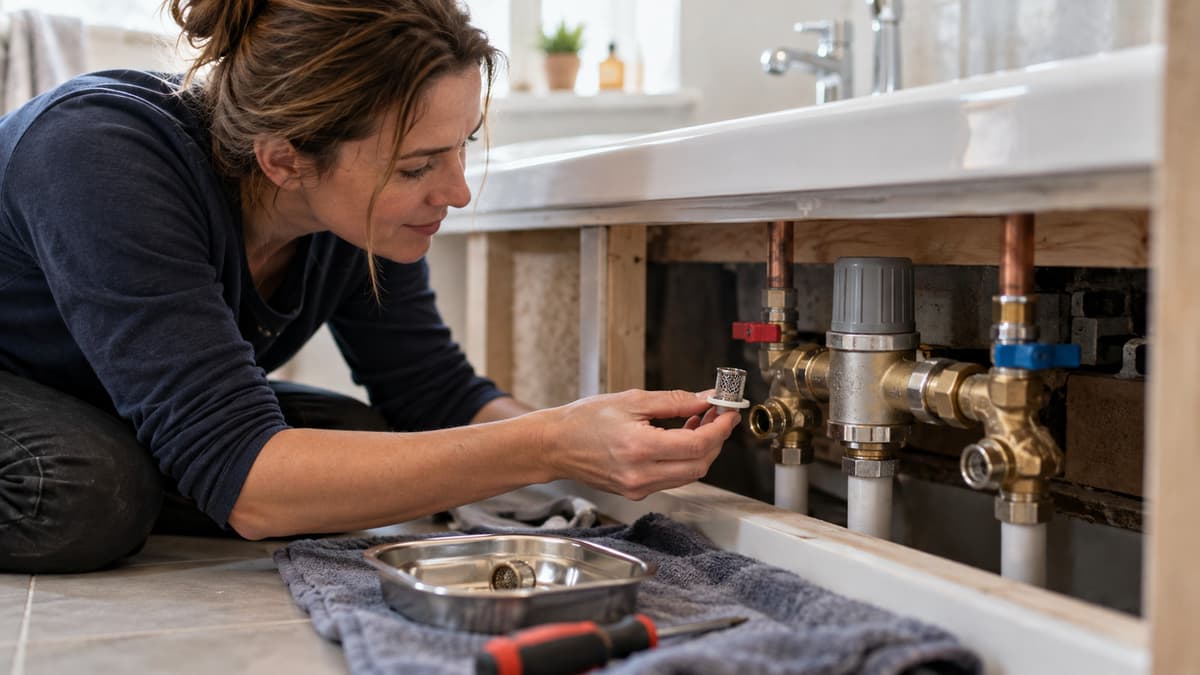
To service a thermostatic mixing valve at home, clean accessible strainers once a year if you can isolate it. That habit is not a care-home test timetable.
On this page
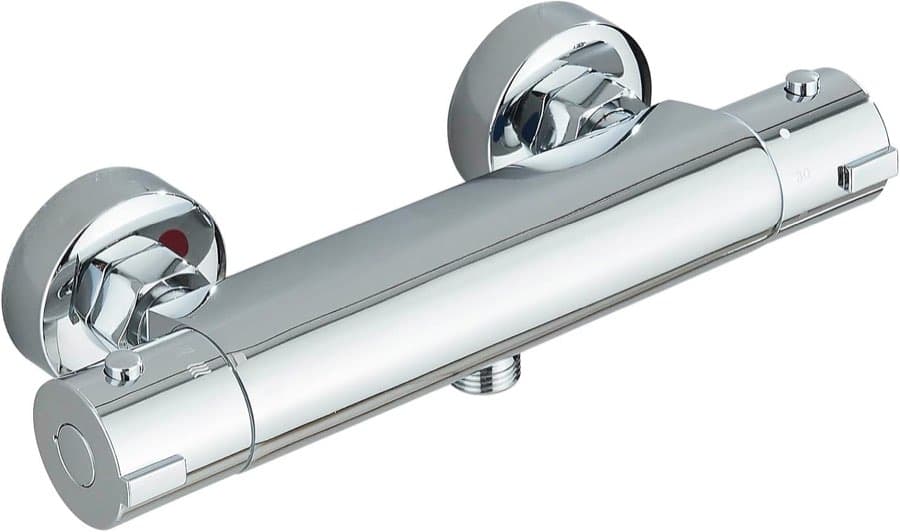
The valve is under the bath, it was fine last spring, and a care-home checklist has made the job look like a six-week test with a signature. To service a thermostatic mixing valve in an ordinary house is a smaller task. You clean the strainers if they exist, you check that the outlet still matches the setting, and you stop when the job needs a diagram the box never contained.
The inline boxes in our thermostatic mixing valve comparison do not list strainers or isolation valves among the included parts. A qualifying purchase can earn us a commission, at no extra cost to you. Products Compared has not serviced these valves. The habit below is HSG274's yearly strainer line and Kiwa's Type 2 notes for a domestic valve, in October 2026. It is not the healthcare calendar.
In short
On an ordinary valve, service means inspecting, cleaning, descaling and disinfecting the strainers at least once a year, and checking that scald protection still matches the manufacturer's instructions. These inline listings do not include strainers or isolators. If you cannot isolate the supplies, you do not start. A care-home interval, and the first commissioning sequence, are different jobs.
What service means at home
HSG274 paragraph 2.165, and the maintenance table beside it, is the sentence to keep. Strainers or filters are inspected, cleaned, descaled and disinfected at least annually, and more often if a risk assessment or the manufacturer says so. In the same breath the guidance says scald protection is maintained by a competent person following the manufacturer's instructions. The screen is one job. The blend staying honest is another. Cleaning the screen does not prove the blend.
For a householder the yearly picture is modest. Isolate if you can. Clean the screens the valve actually has, put them back, and run the outlet to see whether the temperature still agrees with the handle. Write the number down. That is a domestic service, not a Type 3 sheet and not day one. The commissioning page owns the first measured set-up.
WaterSafe's consumer note says the valves need regular servicing, and that hiding them where you cannot reach them is a mistake. A valve in a ceiling void fails this service before you have bought a screwdriver. Taps with a built-in mixing valve are described there as better practice because the blended leg is short. If you cannot see the strainers, do not dismantle a concealed valve. The yearly job is already blocked, and the fix is access.
Strainers and isolation
Kiwa's Type 2 installation note says to fit isolation valves if the maker did not supply them, and it recommends strainers close to the inlets. None of the inline included-components lines in this comparison lists strainers or isolation valves. Zamery's line, the comparison's top pick, is a shower tap and the bar, not a service kit. Expect to add the screens and the isolators, or to find that a previous fitter already did.
Without isolation, do not open the valve. A live body under a bath will empty more of the system than you think. Fitting isolators is a plumbing job if you are not set up to cut pipe. This page has no shop price for the isolator or the strainer. The buying guide is where the forms are sorted. The comparison shows which boxes omit the parts.
When you reconnect, the H and C marks decide whether the service worked. Swap the supplies and the element is fed backwards. The handle can still say 38 while the outlet does something else. Mark the pipes before they come apart. If the body is not marked, identify hot and cold with the supplies isolated and then restored one at a time. Descaling harder will not fix a valve that was put back the wrong way.
Scale and a temperature that has moved
Scale shows up here as implication, not as a map. A Tremax comment about seizure, and a kisimixer account of a scale set to 35 to obtain about 23, are the notes. One hard-water remark is not a map of Britain. These reviews do not give a measured noise case.
Descaling the strainer is not resetting 38°C. If you move the stop, Kiwa's Type 2 note says you test again, on the commissioning sequence, not by defeating a safety button. A domestic clean ends at the screen and a check of the outlet. There is no cartridge diagram in these listings, and a guessed strip-down is how a service becomes a leak.
On a Type 2 valve with a recorded setting, about 2°C is the scheme's trigger for more work. These listings do not state TMV2, so that band is not a promise they hold. A jug and a thermometer, once the pipe has cleared, show whether you are a degree adrift or twenty. Twenty degrees, or water that feels like the cylinder, is no longer a strainer story. Stop using the outlet.
How you know you are finished
You are finished when four things are true. The supplies were isolated before you opened anything. The strainers, if fitted, are back in and the joints are dry. Hot and cold are on the marks. The outlet, once the branch has cleared, sits near the setting you intended, and you have written that temperature down. If you adjusted the stop, record the new figure from a fresh test.
You are not finished when the gauze looks better and the water is still wrong. A bright screen does not restore a seized element. The Coleniny account of about 70°C from a 30°C setting is a visit that must not be signed off with a clean filter. Turn the outlet out of use. Replacing the valve, or handing it to someone with the manufacturer's sheet, is the next step.
A domestic note is not a care log. You do not need a scheme signature for an owner-occupied strainer clean. You do need the number, because next year's check is a comparison. If you never had a commissioning record, today becomes the record. If the maker is silent, do not borrow a cold-isolation test or a disinfection method from another brand. Stop at cleaning what you can see and measuring what comes out.
Jobs that are not this service
The healthcare clock is not this service. Six to eight weeks, then six months, is Reliance's manufacturer timing for TMV3, and Kiwa's Type 3 guidance measures the first checks in weeks. That timetable lives in the article on how often a TMV is checked.
A £16 inline valve does not inherit it, and a care bath does not shrink to a yearly gauze wipe. If the outlet is a care setting, do not service it from this page.
Commissioning is not this service either. Flushing a new install, setting the stop for the first time, and recording the cold-failure check the instructions require is day one. Repeating that sequence every year is how people start defeating safety stops. If you have moved the setting, use the commissioning page for the retest and stop where the instructions stop. If you have not, a strainer clean plus a temperature reading is the yearly shape.
A plumber takes over when isolation is missing, when there is a leak or a knob on the floor, when the water stays far too hot, or when the valve sits in a rented home whose installation is the landlord's to repair. These listings will not show you the cartridge. Opening one anyway is not maintenance. Fit what you can reach, clean what the guidance names, measure the result, and leave the unnamed interior alone.
Common questions
What am I actually cleaning?
The box had no strainers. Do I add them?
Can I service it without isolation valves?
Is descaling the same as resetting 38°C?
How do I know the service worked?
Is this the same timetable as a care home?
When should a plumber take over a domestic valve?

Products Compared publishes British-English buying guides based on amazon.co.uk listings and public UK sources. We do not run a lab and we do not invent test scores.
Related articles
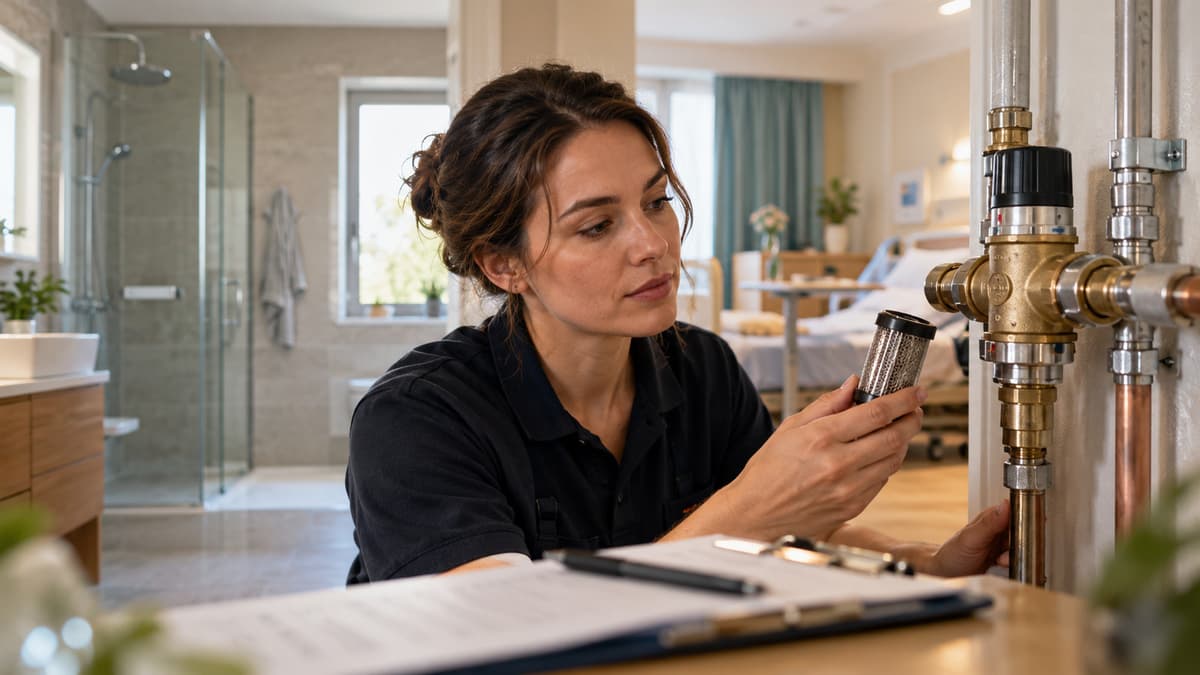
How often to check a TMV
A home recommendation is yearly. Healthcare checks start in weeks. The listing does not choose the clock.
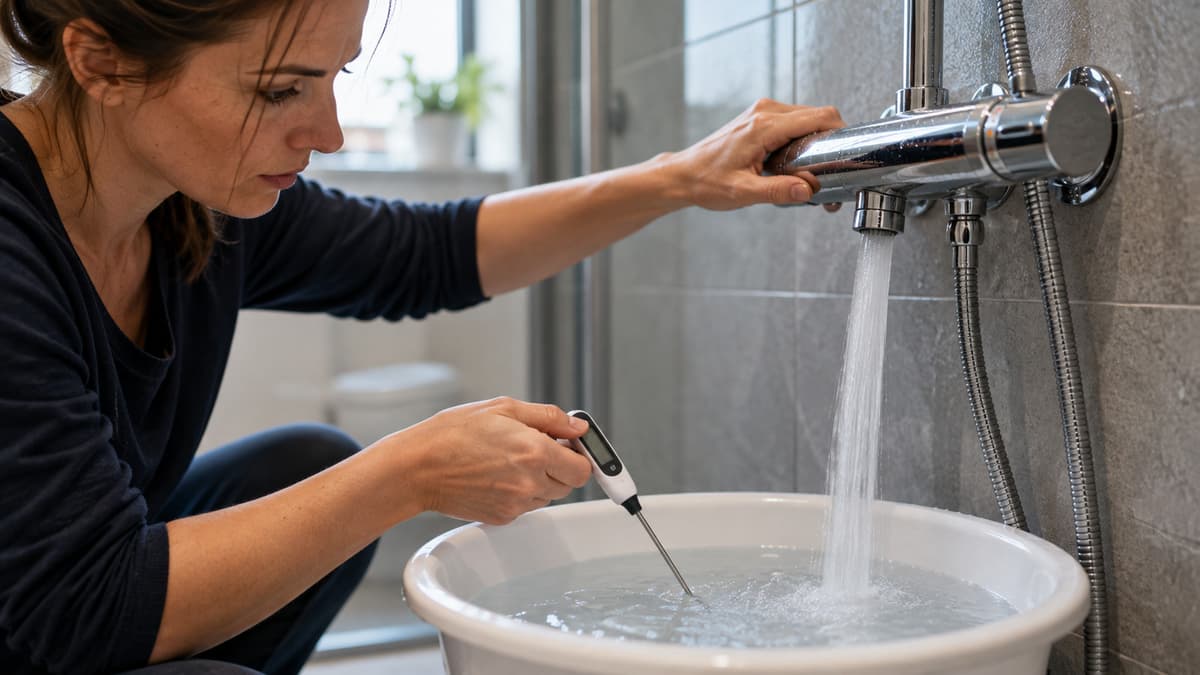
Signs a mixing valve has failed
A wrong scale, a leak and full hot are different faults. A strainer clean does not cover all three.
When a valve passes full hot
Water near stored temperature is a reason to stop using the outlet, not a reason to descale and carry on.