How often to service a TMV: yearly or in weeks
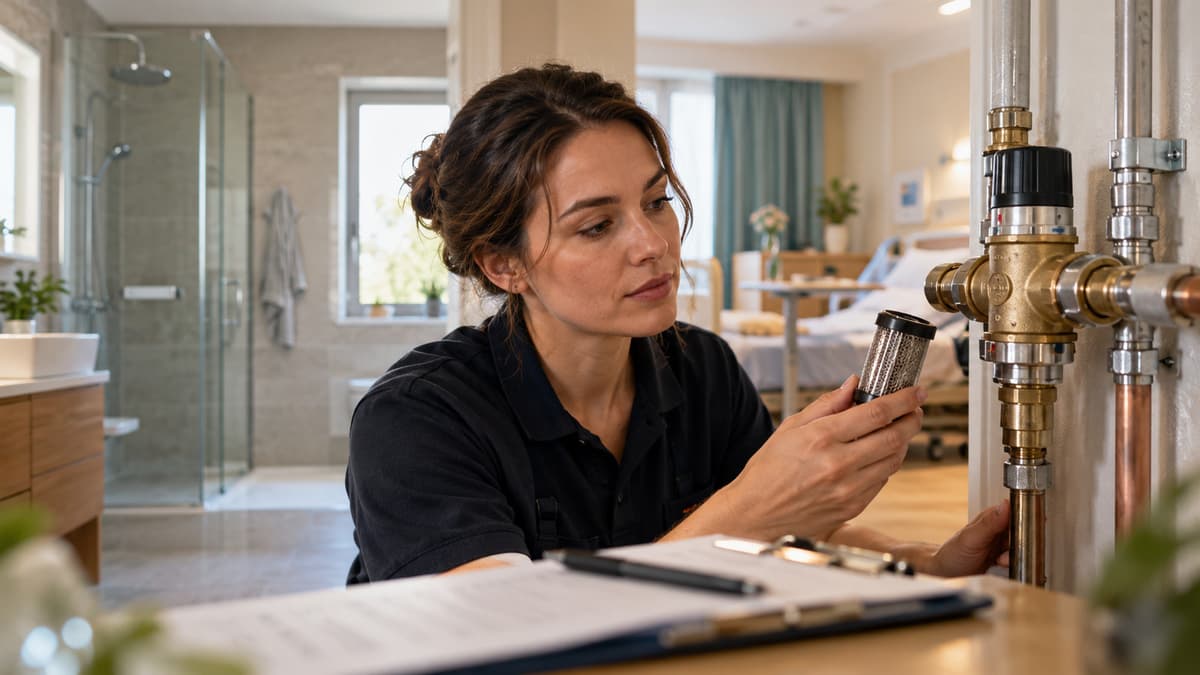
How often to service a TMV depends on the building: yearly at home, weeks in care. Kiwa and HSG274 set the domestic habit. These listings state no scheme.
On this page
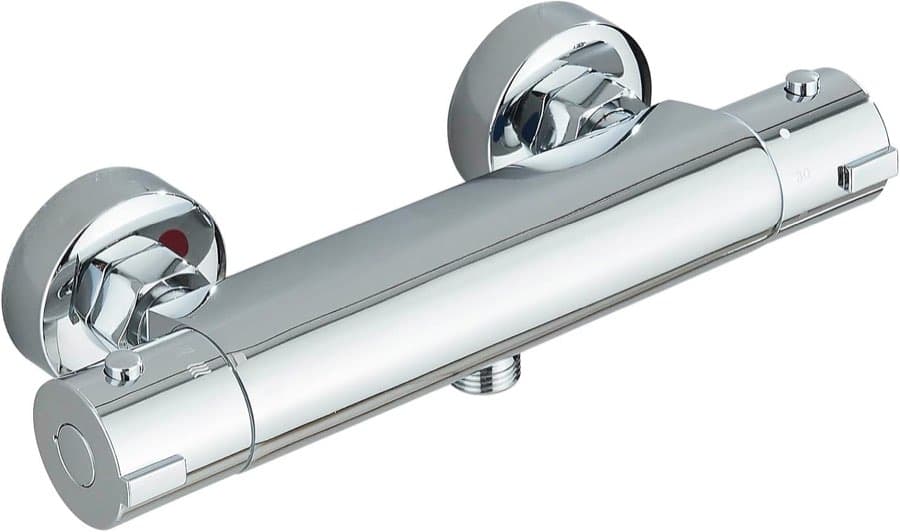
A forum will tell you to service a thermostatic mixing valve every six months, and a care-home log will talk about six to eight weeks. How often to service a TMV is not one number for both rooms. The scheme, and the building, pick the clock. An owner-occupied bathroom and a healthcare outlet are following different pages.
The nine listings in our thermostatic mixing valve comparison do not state TMV2 or TMV3, so the product page cannot tell you which clock you are on. A qualifying purchase through that comparison can earn us a commission, at no extra cost to you. Products Compared has not serviced these valves in a lab. The intervals below are HSG274, Kiwa's January 2022 guidance, and one manufacturer page, written up in October 2026.
In short
At home, Kiwa's Type 2 guidance recommends a yearly in-service check, and HSG274 puts strainer cleaning at least once a year. In healthcare, the first checks after commissioning are measured in weeks, and Reliance's installers' guide says six to eight weeks then six months for TMV3. These amazon.co.uk listings do not state which scheme they are, so they do not choose the calendar for you.
The annual strainer job
HSG274 paragraph 2.165, and the maintenance table that goes with it, is the hygiene line people flatten into a yearly service. Strainers or filters on mixing valves are inspected, cleaned, descaled and disinfected at least once a year. Do it more often when the risk assessment says so, or when the manufacturer's instructions say so. The year is a minimum in that table.
The task is the screen, not a full rebuild. Scale and debris sit in the strainer before they sit in the thermostat. None of the inline boxes in this comparison lists a strainer in the included components, so you may be cleaning a part you had to add, or you may have no screen at all.
Scald protection is the other half of the same paragraph, and it is a different job. A competent person maintains it by following the manufacturer's instructions. A seized element that passes stored hot water is not cleared by calling the visit the annual service. If the bath is already far too hot, the strainer row is the wrong name for the afternoon.
HSG274 is guidance for hot and cold water systems where Legionella control is a duty. The yearly strainer habit matches that table. It is not a private-house statute you can quote at a neighbour who is a month late.
The yearly Type 2 check
Kiwa's Type 2 guidance, January 2022, recommends a yearly in-service check. In an owner-occupied home that recommendation is what it says: a recommendation. In a commercial bathroom, or a bathroom you sublet, the same document treats the check as a duty-of-care point. The flat you live in and the flat you let are not automatically the same sentence, even when the brass body is identical.
The yearly check is a comparison with the day the valve was commissioned. You look at whether the supplies are still the ones you recorded, you measure the mixed water, and you carry out the cold-isolation test the valve's instructions describe. The commissioning page owns that first-day sequence. What belongs here is the calendar after that day: about twelve months, then you look again, sooner if the temperature has already walked off.
Every six months is the number forums use when they have glued the care interval and the domestic interval together. Type 2 guidance does not say six months for an ordinary house. If your manufacturer's sheet says six months for that model, the sheet wins over a forum, and it also wins over a wish to stretch the gap to two years because the tap seems fine.
A yearly comparison needs the original setting. A Sunday fit often has no record. Measure today and write it down so next year has a number. If you never made a starting point, the next check is the day you create one.
Why healthcare timing is shorter
Kiwa's Type 3 guidance, also January 2022, does not start with a date next year. The first checks after commissioning are measured in weeks. After that, the gap depends on whether the mixed temperature has moved. A stable valve can earn a longer interval. A valve that has drifted stays on the short clock. The weeks exist because the people using the outlet may not be able to step back.
Reliance's installers' guide is a manufacturer page, and it should be labelled as one. It gives six to eight weeks, then six months, for TMV3. It is Reliance's timing for TMV3, not HSG274's strainer sentence, and not Kiwa's yearly Type 2 recommendation. When a merchant blog says regulations require every six weeks, ask which document, which scheme, and which building.
Healthcare is also where HSG274 expects distribution to reach 55°C within a minute, against 50°C in other premises, with storage at least at 60°C in both cases. The outlet for a vulnerable person is then held down by the mixing valve, with the HSE scalding note using 44°C as the cap for those baths and showers. That is why the in-service gap is short. A family bathroom does not become that room because you read the care figure first.
A six-to-eight-week check on a care bath is a recorded test by the person who maintains that outlet, not a relative's experiment. Do not import that timetable onto a house valve that has never been claimed as TMV3.
A movement of more than 2 degrees
The Type 2 in-service band is about 2°C either side of the temperature you set and recorded. A movement larger than that is outside the acceptance band. The guidance's response is more work: find out why the mix moved, correct it, and test again. It is not a note that says close enough and a signature. The scheme writers chose that gap as the trigger.
Passing the band is not the same as a listing that prints plus or minus 2°C in a bullet. Rankomu's listing states 38°C plus or minus 2°C as a safety-lock description. Coleniny's bullets also talk about plus or minus 2°C. Those are claims on a product page, not a completed Type 2 in-service test, and not evidence the valve will still be inside the band after a year of your water.
If you do adjust the stop, you retest. Kiwa's Type 2 note treats a change in the setting as a reason to measure the result again, not a tweak you feel with your wrist. The next check compares with the last accepted figure, not with a memory of how the shower used to feel.
A hand is not a two-degree instrument. Measure with a thermometer once the pipe has cleared, without scalding anyone. A gap of ten or twenty degrees is a failed blend, and waiting for the anniversary is the wrong plan.
Why these listings do not set the clock
Open any of the nine amazon.co.uk listings in this comparison and look for TMV2 or TMV3. The fields we kept do not state either scheme. Wincal, Rankomu, Bohaner, kisimixer, Coleniny, both Tremax bodies, Zamery and GETSHOWERSET name other marks, or no TMV standard at all. Without the scheme, you cannot lift a Kiwa interval off the shelf and stick it to the brass. The TMV2 and TMV3 page explains what those names require.
Use the building you actually have. An owner-occupied house: yearly strainer attention from HSG274, and a yearly in-service check as Kiwa's Type 2 recommendation, sooner if the temperature moves. A sublet or commercial bathroom: treat that yearly check as a duty-of-care point and keep a record. A healthcare outlet specified as TMV3: weeks, not a casual year. Reliance's six to eight weeks, then six months, is one labelled manufacturer example.
There is no single UK legal interval behind the word thermostatic. The numbers disagree because the duties differ. Write down which document you are following. An unreachable valve misses every clock on this page, because the interval only works if someone can still reach the strainer and the outlet.
Common questions
Is once a year enough at home?
Why do care homes talk about six to eight weeks?
What is actually cleaned, the strainer or the whole valve?
What if the temperature has moved by more than 2°C?
Do I retest after I adjust the stop?
Does a new cheap valve need the healthcare timetable?
Who is competent to sign a healthcare check?

Products Compared publishes British-English buying guides based on amazon.co.uk listings and public UK sources. We do not run a lab and we do not invent test scores.
Related articles
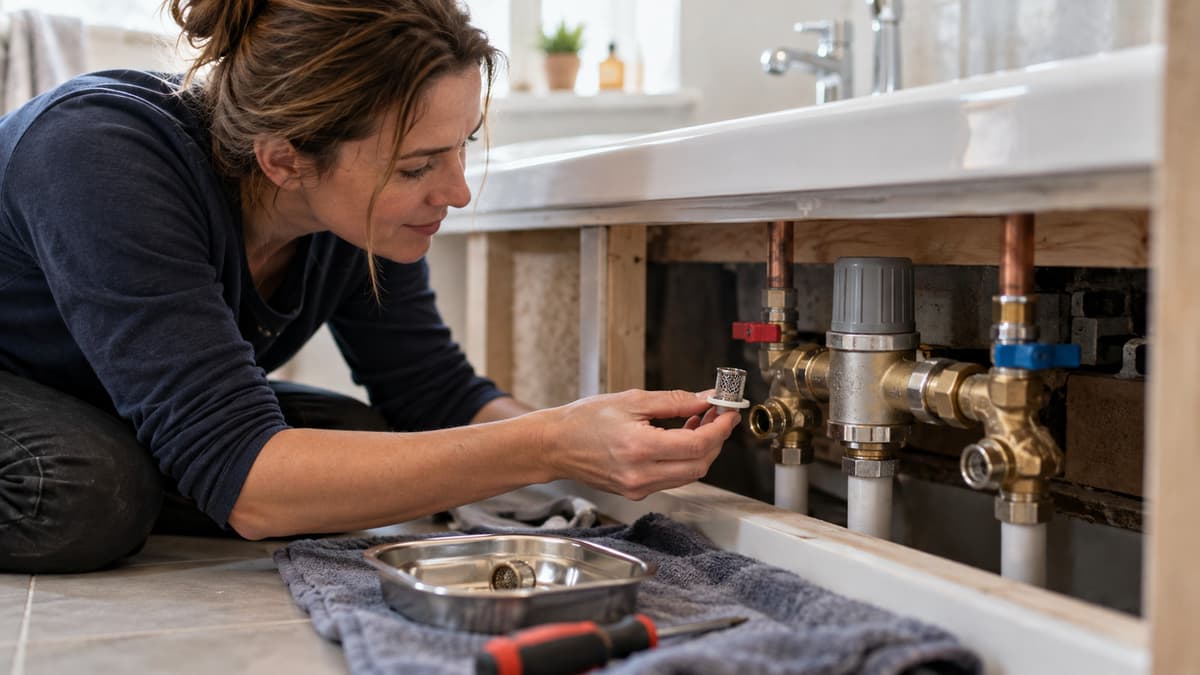
Servicing a domestic mixing valve
The yearly job on an ordinary valve is the strainer and a temperature check, if you can isolate it.
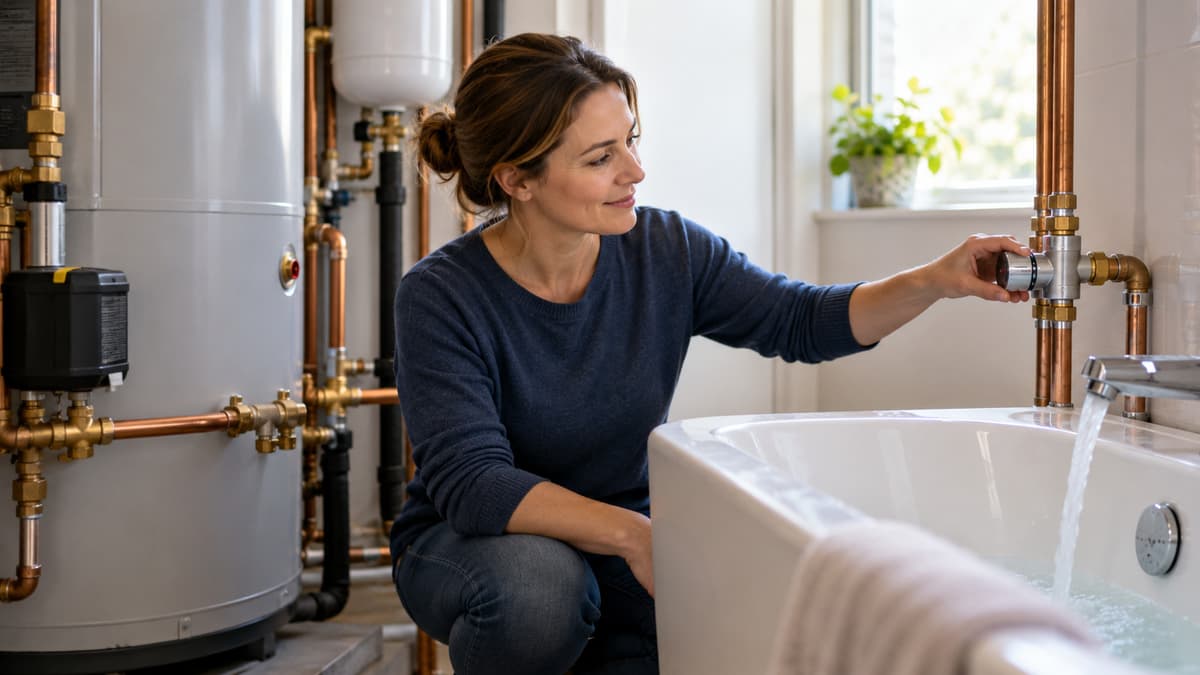
Legionella and blended water
Stored water stays at 60°C or above. The mixing valve is a second device at the outlet, not a cooler cylinder.
Scalds in rented homes
An English repair duty is not the same thing as a care-home test every six to eight weeks.