Landlord hot water scald mixing valve: the repair duty
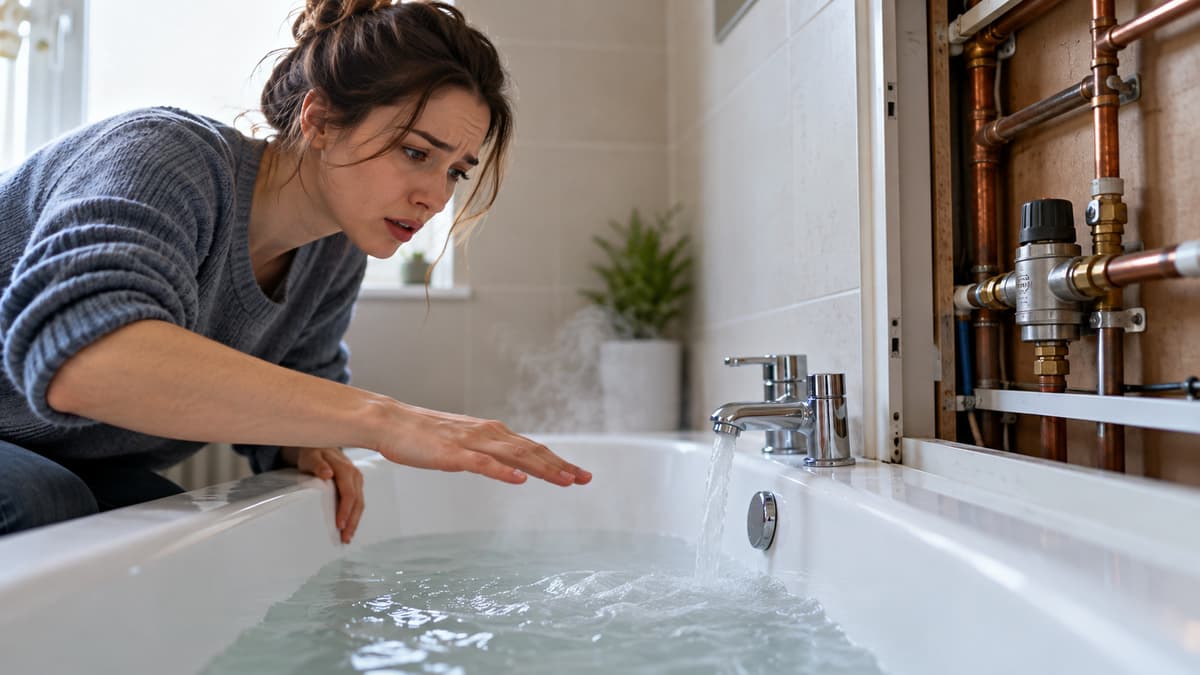
A landlord hot water scald sits under hot surfaces, not excess heat. Section 11 covers repair. Part G does not, alone, order a TMV in every rented bath.
On this page
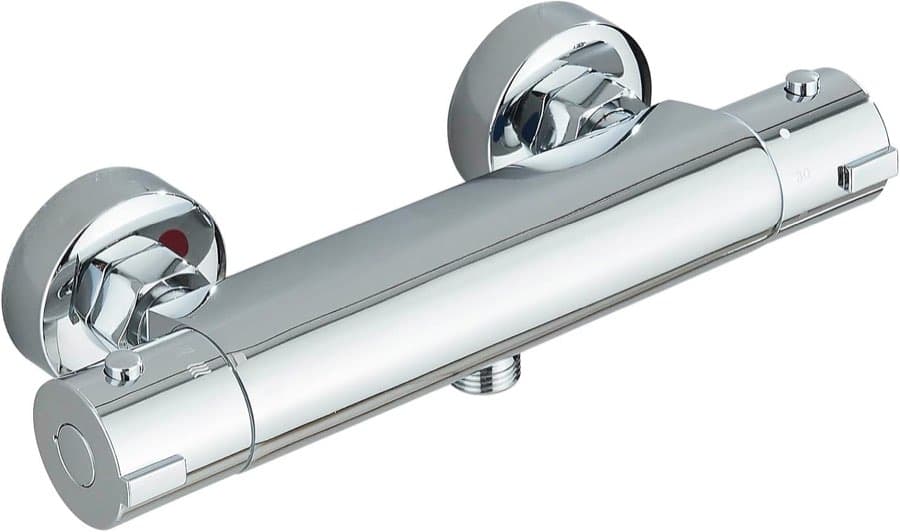
The bath in the rented flat is hot enough to make you afraid of it, and a forum has said the landlord must fit a thermostatic mixing valve because of Part G. A landlord hot water scald and a building-regulations trigger for new dwellings are different problems. The English pages that describe a landlord's repair duty do not say "fit a TMV in every existing bath".
What they do say is that water and hot-water installations are kept in repair, and that a scald is not the same hazard as a hot room. Our thermostatic mixing valve comparison shows what a retail valve is. It is not a notice from the council.
A qualifying purchase can earn us a commission, at no extra cost to you. Products Compared has not inspected a tenancy. The frame below is GOV.UK, Shelter, the Part G FAQ and an HSE sheet, for October 2026.
In short
In the English HHSRS, a scald from hot water sits under flames, hot surfaces and materials. Excess heat is high indoor air temperature. Section 11 of the Landlord and Tenant Act 1985 keeps water and hot-water installations in repair and proper working order. The Part G FAQ places existing homes outside the 48°C trigger, so that rule does not, by itself, order a valve in the home you already rent.
Scald is not excess heat
The mix-up is in the name of the hazard. GOV.UK's landlord guide to the Housing Health and Safety Rating System points to section 11 for installations, and then, later, to excess heat. The checklist temperatures in that excess-heat discussion are room temperatures. Shelter's definition is the same idea in plainer words: excess heat means excessively high indoor air temperature. A bedroom that will not cool down in a heatwave is that hazard. A tap that scalds is not.
Scalds from hot liquids sit under flames, hot surfaces and materials. That is Shelter's placing of the hazard, and it is the name to use when you write to a landlord or a council. Contamination and scalding can both be true of a bad hot-water system. They are still different lines. A lukewarm cylinder is a Legionella conversation. A bath at stored temperature is a surfaces conversation.
Report the thing you can point at. "The bath is dangerously hot when the tap is opened" is a scald. "The flat is too warm in July" is excess heat. Combining them into "excess heat from the water" sends the reader to the wrong checklist. These guides are the English HHSRS material. They are not a statement of Scottish or Northern Irish housing law.
What section 11 covers
Section 11 of the Landlord and Tenant Act 1985, as the GOV.UK HHSRS landlord guide uses it, covers installations for water, sanitation, heating and hot water. The duty described there is to keep them in repair and in proper working order.
How to rent a safe home says the landlord keeps those installations in repair, and it tells tenants to run the hot water and to check that hand-washing is possible. Running the tap is a tenant's look at the installation. It is not a commissioning test of a mixing valve.
Proper working order is about the installation that is there. A hot-water cylinder that does not heat, a leak on the bath feed, or a mixer that was fitted and now passes water far above its setting, are the sort of faults that language can reach.
A house that was let for years with an ordinary bath tap, and no mixing valve, is not described on these pages as an installation that is out of repair merely because a TMV is absent. Absence and disrepair are different facts. Say which one you have.
The guide does not print 44°C or 48°C inside section 11. Those numbers live elsewhere: 44°C for vulnerable outlets where the store is hot, and 48°C for the new-dwelling bath. If a valve is already fitted and the outlet is uncontrolled, that is the disrepair. If no valve was ever there, the pages above do not turn the request into an automatic order.
Part G does not retrofit every bath
The Part G FAQ puts existing homes outside the 48°C trigger. That is the sentence that stops a forum post becoming a legal right. Part G is a building-regulations document for the building work it applies to. A new dwelling's bath is a different specification from the bath in a flat that has been rented for a decade.
The bath temperature page is where the 48°C limit is explained. This article only needs the rental consequence: the FAQ does not, by itself, order a thermostatic mixing valve in the home you already occupy.
A contractor's view that any full refit makes Part G apply is stronger than that FAQ. Treat it as a contractor's view. If building work is being done, the person responsible for building regulations has to say whether the work is notifiable and what the approved document requires. The FAQ's existing-home line is the default this page is allowed to state. It is not a promise that no rented bath will ever be caught by building work.
The comparison's nine listings run from £12.69 to £179.99, and none states TMV2 or TMV3. The buying guide sorts form and thread. It does not convert a shelf price into a landlord's duty.
Care is not an ordinary tenancy
HSE information sheet HSIS6 says the device requirement would not necessarily apply to all private domestic premises. That sentence is the boundary. A private rented house and a care setting are not the same duty because both contain hot water.
In health and social care, where storage is hot against Legionella, baths and showers for vulnerable people are expected to be mixed so the outlet does not exceed 44°C, and the valves are monitored. The monitoring clock is the healthcare clock, measured in weeks after commissioning, not a line in an English assured shorthold.
Do not hand your landlord the care-home interval and call it section 11. Do not hand a care manager section 11 and call it the whole of their duty. Kiwa's Type 2 note describes a yearly in-service check as a duty-of-care point in a sublet bathroom. That is scheme guidance for a Type 2 valve. It is not printed in the GOV.UK repair guide, and it does not apply to a listing that never states TMV2.
Say who uses the bath. A baby or anyone who cannot get out quickly is relevant to the hazard. On these sources it does not create a private right to a named product.
What a tenant can ask for
Ask for the hot-water installation to be put in repair and proper working order, in writing, with the date and what the tap does. If a mixing valve is already there and the water ignores the setting, say that. If the water is simply the cylinder with no blend at all, say that too, and say who baths.
Ask the landlord to answer. If nothing changes, the council's housing or environmental health side can consider the HHSRS. You are asking them to look at a hot-surfaces hazard, not at excess heat, and not at a fine this page has not quoted.
You can ask for a mixing valve. Asking is not a duty the statute has already imposed. If the landlord fits one, yearly attention in a sublet sits with them under Kiwa's duty-of-care point, not as the tenant's strip-down.
Keep the store in view if someone says "just turn it down". HSG274 stores water at least at 60°C and blends at the outlet. The useful request is a controlled outlet and a store that still meets that line.
Common questions
Can I force my landlord to fit a TMV because Part G says 48°C?
Is a scalding tap excess heat?
What must the landlord keep in repair?
Who do I tell if the bath is dangerously hot?
Does this English housing note cover Scotland?
Is a care home the same as a private tenancy?
If the landlord fits a valve, whose job is the yearly check?

Products Compared publishes British-English buying guides based on amazon.co.uk listings and public UK sources. We do not run a lab and we do not invent test scores.
Related articles
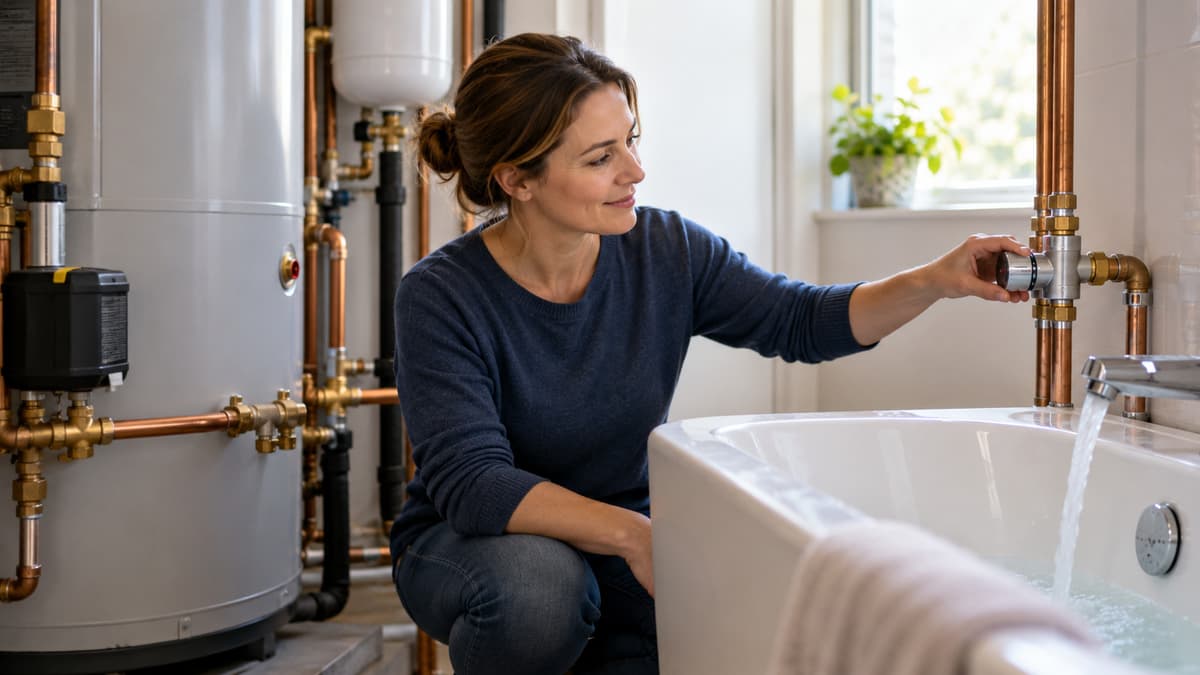
Legionella and blended water
The cylinder stays at 60°C or above. A mixing valve cools the outlet. It does not replace the store.
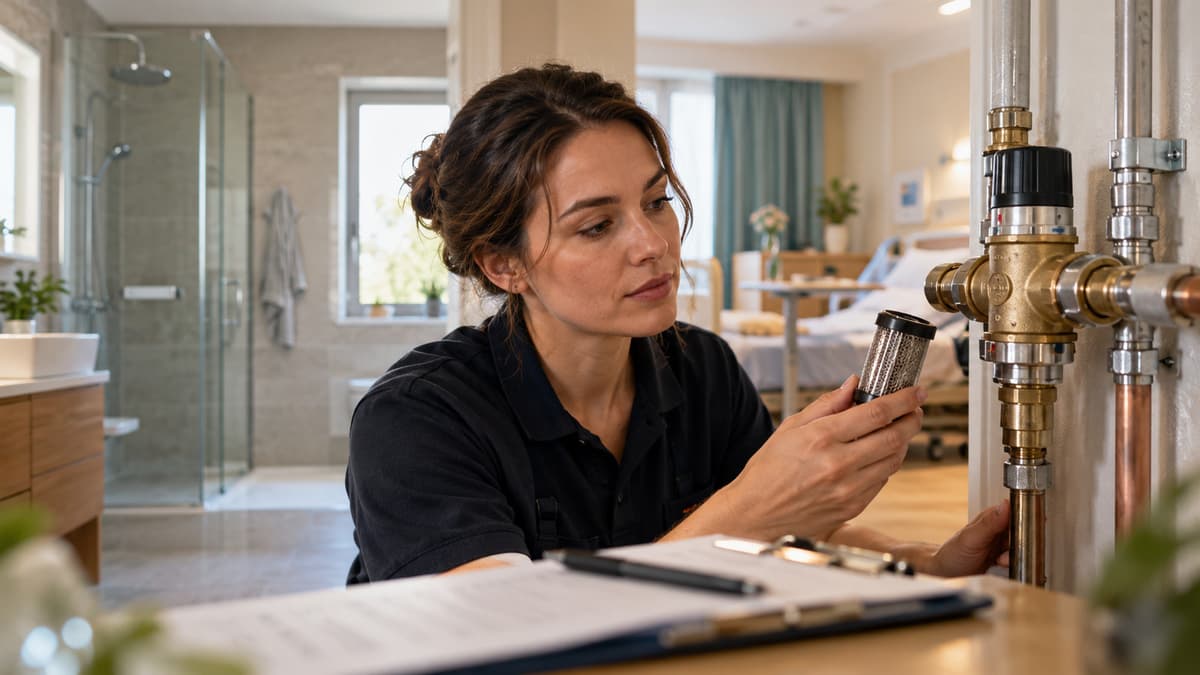
How often to check a TMV
A yearly check is a Type 2 recommendation. In a sublet it is described as a duty of care, not a section 11 sentence.

What a mixing valve costs
A shelf price from £12.69 is the body only. It is not a fitted scheme valve and not a landlord's invoice.