Laser level flashing: the tilt is too steep to mark

A flashing laser level usually means the base is outside a self-levelling window of about four degrees. A locked pendulum can look steady and still be crooked.
On this page

You have the pencil on the wall and the line will not stay still. The tripod foot is against a skirting that is not square. Laser level flashing is the alarm that the tool cannot find level from where you stood it. On most of the twelve amazon.co.uk listings in our cross-line laser comparison the pendulum window is about ±4 degrees. Past it, the line should flash, and a flashing line is not a height you can transfer.
A diode that has failed usually gives you no line at all. The quieter trap is a locked pendulum: the beam sits steady and still follows the case. Homebuilding describes a flash or a beep as the sign the tilt is too steep to self-level. BuildWiz puts a typical window at about four degrees, then a steady line. Grettz tells you to move the support.
Prices, ratings, and degree figures are the amazon.co.uk details stored for that comparison, with the public guides above and GOV.UK where the beam itself matters. Peter F. is the editor for DIY & tools. We did not test these tools in a lab. A qualifying purchase through our links can earn a commission at no extra cost to you.
In short
A flashing line means the base is outside the self-levelling window, so you move the support until the line holds still, and you do not pencil the strobe. A locked pendulum can look calm and still be crooked, which is why the switch position matters before you decide the tool is scrap. No beam at all is a power fault or a failed unit, which is a separate job from the out of level alarm.
A flash means the base is outside the window
You stand the tool roughly upright, free the pendulum, and the weight swings until the beam sits inside the range the maker printed. When the floor, the tripod head, or the bracket is steeper than that range, the pendulum meets its stop and the line flashes. On the DOVOH C2-120G at £49.99 the listing says the line blinks outside ±4 degrees, and manual mode is the separate state that locks the line at an angle. On the Huepar 703CG at £144.32 the line flashes beyond 3.5 degrees. The Nikotek cube at £18.69 flashes past a 4 degree window.
A strobe has no single height. Marking the middle of the blink invents a line the pendulum refused to hold. Do not mark a flashing line. Wait for a steady line, then transfer that. The same refusal covers a plumb dot on the Bosch Professional GCL 2-15, the comparison's top pick at £119.99, which states ±4 degrees, Class 2, IP54, ±0.3 mm/m, and two centred plumb points. The buying guide sorts coverage and locks.
How steep the self-levelling range is
Four degrees is about 70 mm of rise over one metre, because the tangent of 4 degrees is about 0.07. Across a base of about 100 mm the same angle is only about 7 mm from one side of the tool to the other. Three degrees, printed for the SAVSEC SV-Y04CG, is about 52 mm per metre. The Huepar 703CG's 3.5 degrees is about 61 mm per metre. Those millimetre figures are geometry from the printed angles, a rule of thumb for the base, not a second accuracy claim.
The Nikotek kit with the 66 cm tripod, at £29.99, prints 4°±1°. UK reviews notice the flash past about four degrees, call that stand short and wobbly, and move the cube onto a camera tripod. The Bosch GLL 2-10 at £89.95 states self-levelling within ±4 degrees in under four seconds, and ±0.3 mm/m. If that line is still flashing after several seconds, the base is still too steep. The GLL 20-22 G bullets at £154.00 state no window, so you cannot score a flash against a number that page never printed.
A locked pendulum is the other fault
The lock stops the mechanism hammering itself in a bag, and it holds a deliberate slope. In that state the line can be steady and still follow the housing. A pendulum locked laser is why a first setup looks like scrap when the diode is fine. A locked line is not level. Manual mode on the DOVOH listing is that lock.
UK reviews show how easily it stays on. On the £29.99 Nikotek kit, one household thought the tool was faulty until support explained the pendulum lock. On the Huepar green cross with the 100 cm tripod, at £55.99, a UK review says the switch needs two clicks or the tool seems broken, and the bullets say the line blinks past 4 degrees.
The GLL 2-10 fields do not state a pendulum lock, so do not invent one. Check a lock when the listing has one, then check the base. A short fall is the fair use of manual mode: set the angle with a spirit level and a packer, then let the laser carry it. Locking the pendulum only to stop the flash leaves the line following the tripod. The how to use a cross-line laser page is the order: unlock, settle, mark, then lock it for the journey home.
What to do when the laser level keeps flashing
Give the tool a base you could defend with a spirit level before you open a returns page.
- Stand the laser on the firmest head you have, and keep your weight off the tripod. A camera tripod on the 1/4 inch thread is often steadier than a wobbly 66 cm stand.
- Move the lock through its positions, including a second click on Huepar kits where reviews say that click matters. If the listing never mentions a lock, skip this step.
- Wait for the pendulum. The GLL 2-10 listing allows under four seconds inside ±4 degrees. A line that is still flashing after a similar pause is outside the window.
- If it flashes, do not pencil. Shim a leg, move the bracket to a flatter piece of wall, or shift the tool to a tread you have checked.
- Use manual mode only for a slope you have already set another way. A shelf or a socket row needs the pendulum free. A deliberate fall needs it locked, and that locked line does not prove level.
- When the line holds, transfer it, and put a short spirit level on one part of the run before you fix a batten.
If the laser level keeps flashing on a base a spirit level already calls close to level, stop. The lock is still on, or the compensator is not swinging. Do not average the blinks and use that average as your datum.
When the laser has actually failed
Silence is a different fault from a flash. After fresh cells or a full charge, and after every switch position, no beam means there is nothing outside a window to warn you about. UK reviews include a Nikotek that stopped after six months, a DOVOH that would not charge after about five months, a Huepar 703CG replaced within a month, and a GLL 2-10 that stopped after four months. A line that is still flashing has not joined them.
A beam that comes out wrong is the other real fault. One GCL 2-15 was returned because it dazzled and threw two horizontal lines. A steady line, with the lock off, on a base a spirit level calls level, that still climbs away from that spirit level, means you stop. A drop can leave the pendulum and the housing out of agreement. Get a professional for structural marks, and for a dropped tool that no longer matches a spirit level.
The beam is still a laser while you sort this out. GOV.UK, citing BS EN 60825-1, treats Class 2 as visible light from 400 to 700 nm: a brief glance is low risk because you look away, and the beam is not for staring. Do not aim at people, drivers, or aircraft. A printed Class 2 line is not proof the output is under 1 mW, and some products marked Class 2 measure far higher. The DOVOH, the Huepar tripod kit, and the GLL 2-10 state no class in the fields we used. Kit glasses are not certified eyewear. Do not look into the aperture to see why the line is flashing.
Common questions
Does a flashing laser level mean it is broken?
What if the line is steady but the marks look crooked?
How many degrees is the self-levelling window?
How level does the base need to be?
Should I switch to manual mode to stop the flash?
When is it actually a dead laser?
Does a beep mean the same thing as a flash?

Peter F. is the editor for DIY & tools at productscompared.co.uk. Comparisons in this category are checked against amazon.co.uk listings, review evidence and public UK sources.
Related articles
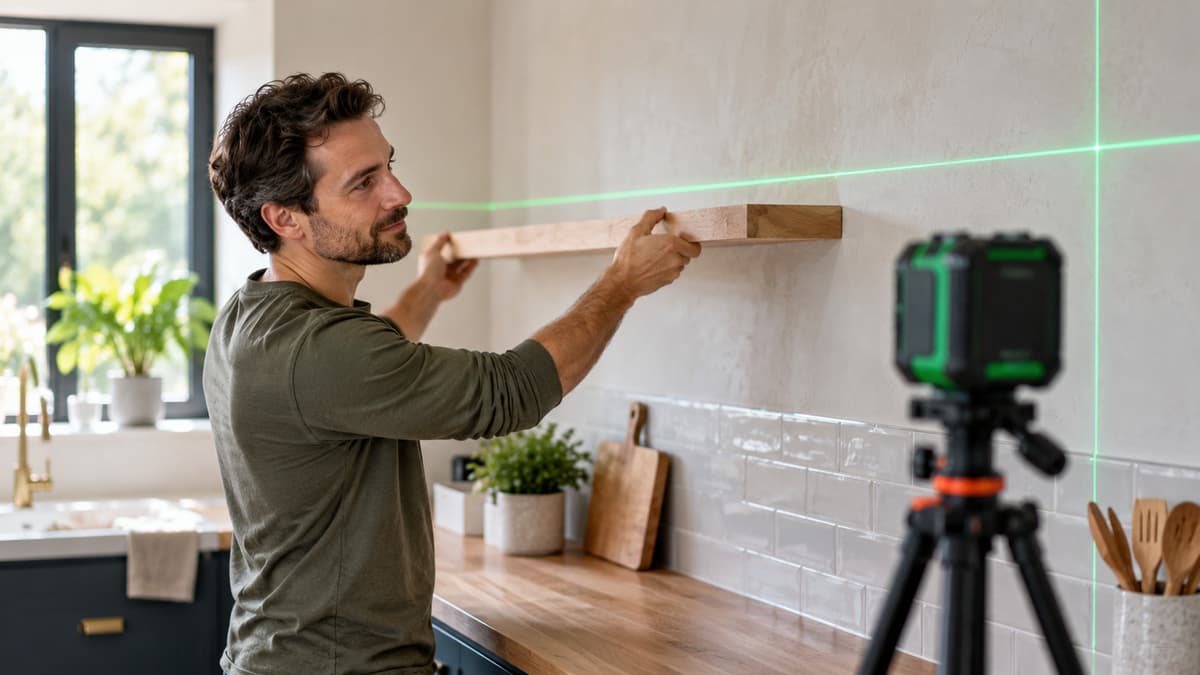
What a laser level costs in the UK
Shelf prices on these amazon.co.uk listings run from about £19 to £154. A flash is a setup question at every one of those prices.
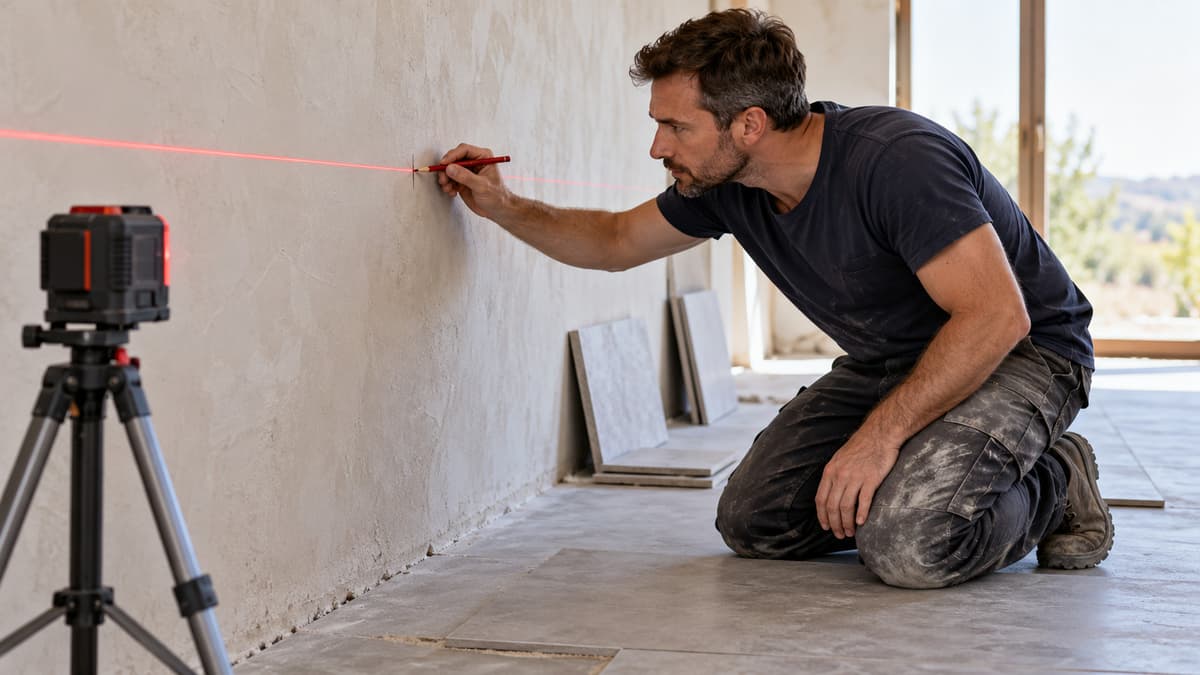
How to check a laser level after a drop
A knock can leave a steady line that no longer matches a spirit level. Check before the next finished mark.
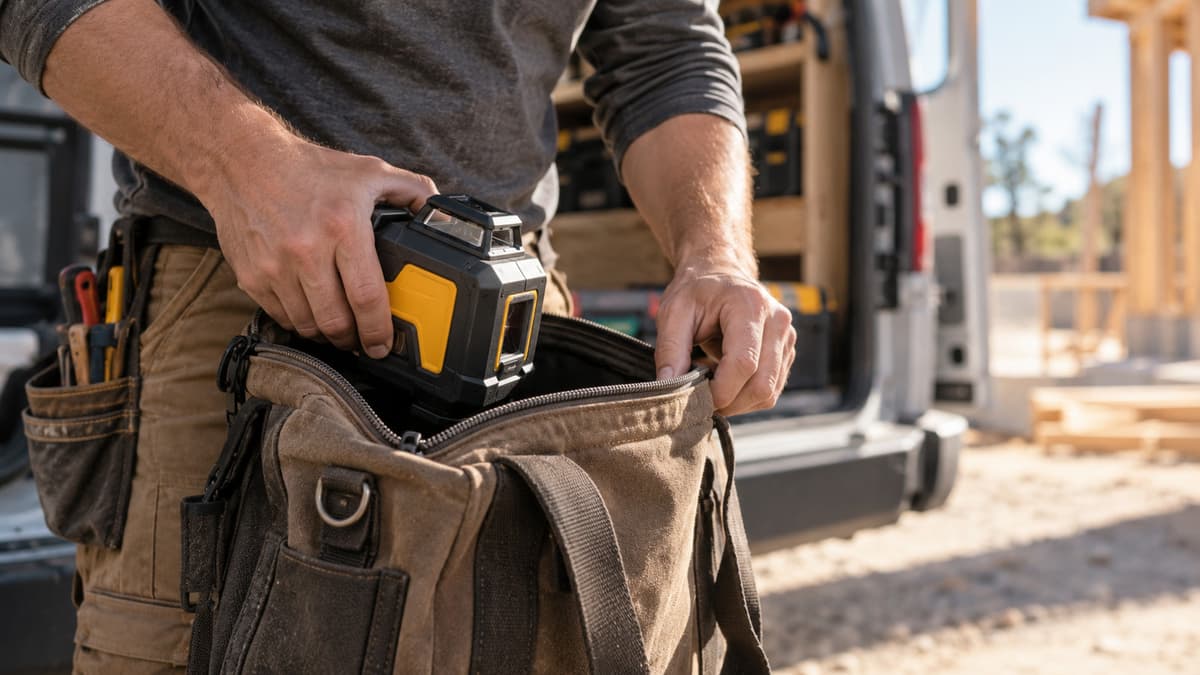
Lock the pendulum before you pack the laser
The lock that protects the pendulum in a bag also holds the line off level if you leave it on.