Laser level tripod height: get the line on your mark

The 66 cm laser tripod in many cheap kits sits too low for a picture rail. Put the beam on the mark, or measure up from a lower line on a stiffer tripod.
On this page

You have the cube on the little tripod from the box, the line is bright, and it is level. It is also sitting across the skirting while the picture rail, the underside of the wall units, or the tile course you care about is much higher up the wall. Laser level tripod height is that gap. The beam is only useful at the height of the laser, and a taller phrase in the product title does not move it.
This note uses the twelve amazon.co.uk listings in our cross line laser comparison. Prices are the GBP shelf prices on those listings. We did not run a lab test. A qualifying purchase through our links can earn us a commission at no extra cost to you.
In short
A laser level tripod is tall enough when the beam meets the mark, or when a stiff lower line lets you measure the same offset up the wall. In this set a 66 cm stand is a repeated complaint for high marks, a 100 cm stand can still flex, and 127 cm is the tallest figure stated. Move the laser until the beam sits on a datum you have already marked, and leave any leg that walks when you touch it out of the job.
The line has to sit on the mark
A cross line laser draws a horizontal line at the height of the tool. Self-levelling, on most of these listings a window of about ±4 degrees, makes that line level. It does not pick the height. If the head is at 66 cm, the level line is at about 66 cm, plus the small gap between the collar and the diode.
BuildWiz's UK guide says you move the laser until the beam sits on the datum you marked. Homebuilding describes a base stand, or your own stand, at the right height. Both are setup advice, not a test of these models. A catalogue height is a column length, so write the height on masking tape. A typical UK worktop is about 900 mm, wall-unit undersides are often nearer 1.35–1.5 m, and a picture rail under a ceiling around 2.4 m is higher again. Those are typical room figures, not measurements from your kitchen.
Unlock the pendulum and mark only a steady line. A flash means the base is outside the window, or the lock is still on. The Huepar 703CG states 3.5 degrees. Unlock, settle, and lock are on the how to use a cross line laser page.
Laser level tripod height in the box
Three stated stand heights show up in the cheaper kits, and one title disagrees with its box list.
The Nikotek NK01GT (B0CXJ6SQFZ) is £29.99 with a 66 cm aluminium tripod, two AA cells, a bag, and a 1/4 inch-20 thread. No numeric accuracy and no laser class are printed in the English fields we used. Against 4.3 from 5,312 ratings, reviews call that tripod too short and wobbly.
The Huepar FC011CGTP kit (B0FZJ9FVVV) is £55.99 with a 35–100 cm tripod and a 1/4 inch quick-release. It is a green 110 degree cross, rated 4.5 from 8,119, and no laser class is stated. Reviewers call the tripod flimsy. A 100 cm column can meet a worktop near 900 mm if the beam leaves near the top, and it stays short of a wall-unit line around 1.35–1.5 m.
The Lusweimi (B0FPBZKFNY) is £34.99 with a 127 cm tripod, also described as a 50 inch maximum, a 1/4 inch-20 thread, and a bubble on the stand. That is the tallest column here. It states Class II, IP54, about 170 g, and ±3 mm over 10 metres. The rating is 4.2 from 92, with only two UK reviews in the saved listing, one written before use, and the warranty bullet states both one year and 24 months.
The RockSeed LV1GT title, at £29.99, mentions a tripod of about 65.6 cm, and the what-you-get bullet does not list one. The SAVSEC at £75.99 includes a mini tripod, and the Huepar 703CG at £144.32 has no tripod. Whether you need one wall or a whole room is a separate choice in the cross line laser buying guide.
A 1/4 inch thread and a camera tripod
A camera tripod on a 1/4 inch-20 socket is the usual way past a short bundle. The Nikotek cube without a stand, at £18.69, states that thread and ships with two AA cells and a bag. The NK01GT, the Huepar 100 cm kit, and the Lusweimi state 1/4 inch as well. The Huepar 703CG also states 5/8 inch-11, the size on many survey poles, and it weighs 1.95 kg. One buyer was caught out by the thread even though both sizes are printed. The box includes no tripod.
Many photo tripods extend past 1.2 m. A centre column wound fully up sways when you walk past. Grettz's note is the limit: a moving support moves the reference. Drop the column and take the height from the legs.
Measuring up from a line that is too low
A short, stiff stand plus a tape uses the laser for level and the tape for height. That works for a rail or a unit line above every tripod you own, as long as the low line stays still.
- Set the stand as high as it will go without the line walking, on a firm floor, clear of the skirting.
- Unlock the pendulum and wait for a steady line. If it flashes, move the feet inside the window, usually about ±4 degrees.
- Mark the beam at two points at least a metre apart, and check both marks sit on that line.
- Measure up from each mark with the same tape and the same reading, and write the offset down.
- Pencil the high marks. If they are not parallel to the laser line, the stand moved or the tape slipped.
- Lock the pendulum before you lift the cube.
Use one offset. An 820 mm rise on the left and 800 mm on the right is a slope the laser cannot see. Plumb dots on the Bosch GCL 2-15, at £119.99, transfer a point up or down. For a tile course around a room, take the offset again at each new setup, on the cross line laser for tiling page.
A flexing stand moves the reference
A 100 cm tripod that bows is a different tool from a 66 cm tripod that is only short. You can measure up from the short one. A leg that shifts the line while you watch is not a reference you can transfer.
With the beam steady on a piece of tape, press the column about as hard as you would to steady yourself, then let go. The line should return to the same edge. If the quick-release plate rocks, the vertical line wanders.
A magnetic bracket does not repair a weak leg. The Huepar 703CG includes one, and reviews call the magnets weak on some mounts. Use it on firm steel at the mark. Plasterboard and a picture rail are not that surface. The Bosch GCL 2-15 RM 1 mount positions the tool and does not add a tall column.
GOV.UK treats Class 2 as visible light that is low risk for a brief glance, because you look away, and not as a beam to stare into. Do not aim at people, drivers, or aircraft. The Lusweimi states Class II. The NK01GT and the Huepar 100 cm kit do not state a class in the fields we used, and a printed Class 2 label is not proof the output is under 1 mW. Kit glasses are not certified eyewear.
A shelf or one tile course is householder work when the line agrees with a spirit level and the stand stays still. Structural marks, a knocked tool that no longer matches a bubble, and outdoor level over tens of metres need someone equipped for that work. If the stand fails the finger test, use a stiffer 1/4 inch tripod, or compare the 127 cm Lusweimi on the cross line laser comparison.
Common questions
Is 66 cm enough for a picture rail?
Will 100 cm reach a kitchen unit line?
What thread do I need for a laser level tripod?
Are magnetic brackets a substitute for tripod height?
Can I measure up from a low laser line?
How tall a tripod do I need?

Peter F. is the editor for DIY & tools at productscompared.co.uk. Comparisons in this category are checked against amazon.co.uk listings, review evidence and public UK sources.
Related articles
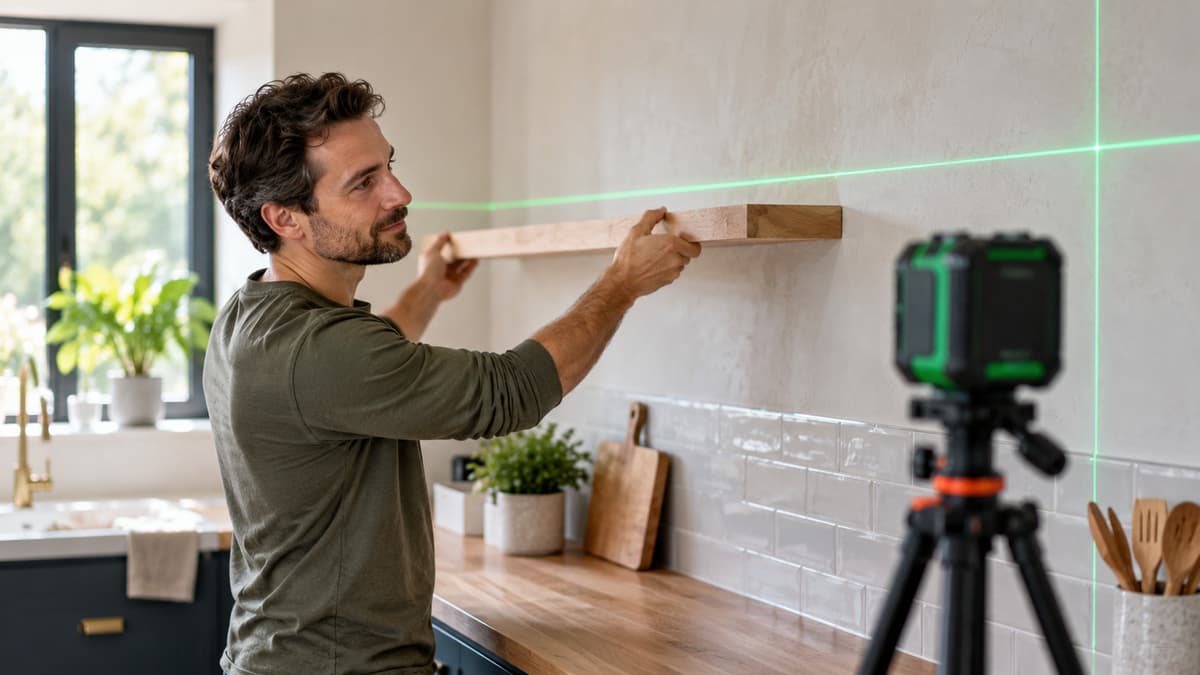
What a laser level costs in the UK
What about £20, £50, and £150 buy on amazon.co.uk, including whether the stand in the box reaches the mark.
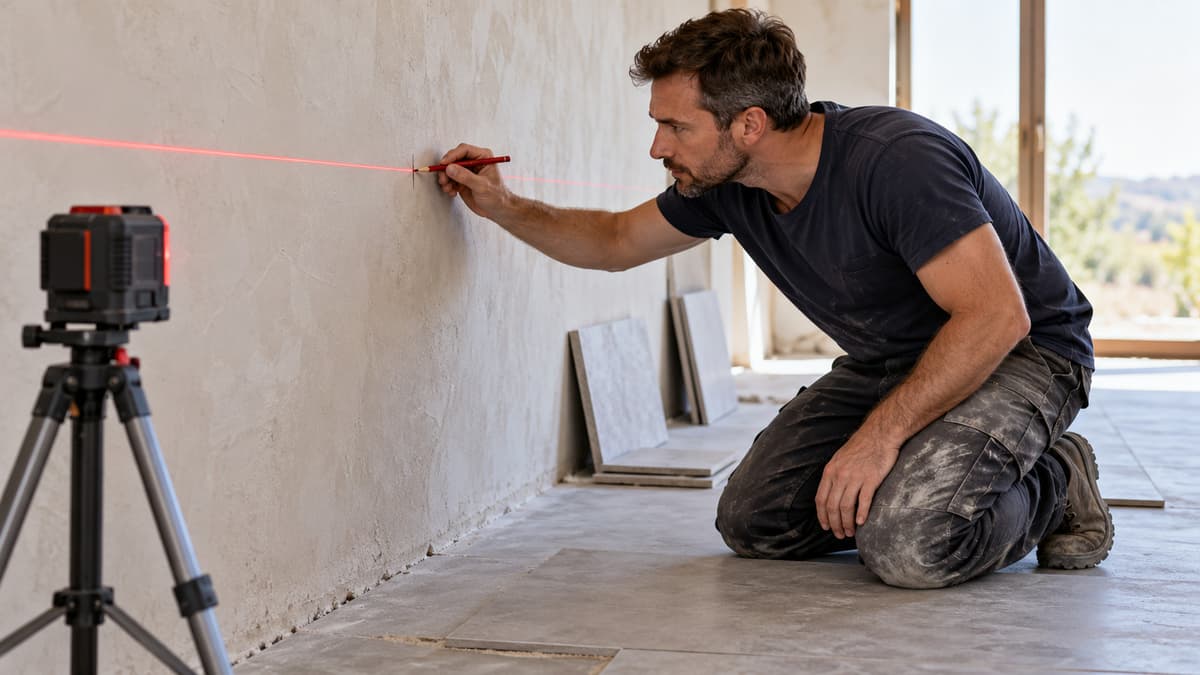
How to check a laser level after a drop
A knock off a wobbly stand can shift the line. How to compare the beam with a spirit level before you mark a finished wall.

Laser level or spirit level
A long bubble is enough for a short check. A laser earns its place when the line has to cross a room at one height.