Aloe vera gel on burns: cool water before the leaf

Cool a fresh burn under cool running water for 20 minutes, then use cling film. Aloe leaf gel is not NHS first aid, and the plant is harmful if eaten.
On this page

The kettle spits, or an afternoon in the garden has left your shoulders hot, and the aloe on the sill looks like a dressing you already own. Aloe vera gel on burns is the phrase in the seller bullet and the habit people repeat without looking up the first-aid page.
Cool the skin first. NHS guidance on burns and scalds is to hold the injury under cool running water for 20 minutes, and to keep creams, oils and butter off it. A snapped leaf is a houseplant. It does not stand in for that half hour.
Peter F. is the editor for DIY & tools. This page was updated in October 2026 from the NHS burns and scalds page, the British Red Cross burns guidance, Cochrane's review of aloe vera for wounds, and the Royal Horticultural Society notes on the plant.
We did not run a gel trial or a skin test in a lab. Where a price or a review count appears, it is the figure on the amazon.co.uk listing. A qualifying purchase through our links can earn us a commission at no extra cost to you.
In short
Cool running water for 20 minutes, then a loose sheet of cling film, is the first aid the NHS describes for a burn or a scald. Keep leaf gel, butter, cream and toothpaste off the skin, and the leaf is harmful if you eat it.
Cool the burn before you touch a leaf
The useful question in the first minute is how long the water has been running. NHS guidance is to cool a burn or scald under cool running water for 20 minutes. The sting often eases after two minutes, which is when the leaf starts to look useful. Stopping there leaves heat in the skin. Leave the pot on the sill, and cool the skin while you call.
The British Red Cross gives the same 20 minutes. Butter, cream and toothpaste stay off a burn. On hot skin they hold heat in and make the injury harder to see. Leaf gel belongs with that list for this first half hour. The NHS tells you to keep creams and oils away until the burn has been cooled and covered.
When the time is up, lay cling film on loosely. Do not wind it around an arm, a leg or a finger, because a tight wrap can tighten as the limb swells. You can lift the film if a clinician asks to see the skin.
Call 999 if the burn is large, deep, on the face, chemical or electrical. Call 111 if you are unsure, including when a child under five is hurt. Follow the call handler if their instructions differ from this page.
What the wound trials actually found
Cochrane looked at aloe vera for acute and chronic wounds, review CD008762, and reported an absence of high-quality evidence. The trials were at high risk of bias. Read that as a gap in what good trials have shown. A product page that says the gel heals skin is not a summary of CD008762. We did not add a private skin test.
A household story about a snapped leaf is not that review. The gap does not make the leaf a proven burn treatment.
The gap also does not mean every small study found the gel useless or harmful. Calling the gel "proven to do nothing" overclaims the review the other way. There is not a high-quality body of evidence that aloe vera gel treats wounds, and no basis for a harsher verdict than Cochrane wrote. For a fresh burn in a UK kitchen, follow the NHS and the British Red Cross.
Why the leaf still appears on shop pages
The habit survives because a plant guide and a shopping title both mention gel. The Royal Horticultural Society's page on houseplants for sunny rooms records a traditional snap-and-squeeze for a mild burn. That is an old habit in a growing guide. It does not say the NHS has approved the leaf. When that page and the first-aid sources disagree, follow the NHS and the British Red Cross.
Seller text on pages such as Carbeth and Prestige Plant has described healing gel. Those lines are marketing on a parcel that contains a live plant. They cite neither Cochrane nor the NHS burns page. On our aloe vera plant comparison the score uses the pot, the stated height, the price in GBP and the amazon.co.uk review line. Healing sentences stay out of that score.
The same RHS page uses a reddish leaf as a cue that the plant wants water. That note is about dry compost, not about your shoulders. The comparison's top pick is Carbeth's 11 cm nursery pot at about £14.99, stated at 25–30 cm, with 4.2 from 1,271 reviews on amazon.co.uk.
A sibling listing shares that review line, so the two counts are one pool. The decorative pot in some photographs is not in the box. None of those facts makes the leaf a medicine. A bullet can record what the seller typed and still be the wrong move when your skin is hot.
Sunburn follows the same first-aid limit
A scald is hot liquid. Sunburn is ultraviolet light, often from lunch outside or a south-facing window. The clock is slower, so people treat sunburn as the case that unlocks the plant. Aloe vera on sunburn is a common way to arrive at this question. The NHS page used here still tells you to keep creams, oils and butter off the injury.
A quick splash, then gel, is the mistake this section is here to stop. Cool the skin for 20 minutes, including a shoulder that only feels tight, then use loose cling film on a small area. Call 111 if you are unsure, and call 999 for a large, deep or facial burn. Seeing the leaf does not show whether the yellow sap has mixed with the clear pulp.
The yellow sap is not a snack
The clear pulp in the middle of a leaf is what people mean by gel. The yellow liquid under the green skin is latex, the bitter sap, and it is a different substance. A snap or a bite mixes the two, so you do not get a neat spoon of clear gel. The yellow sap can irritate skin.
This page stops at that distinction. There is no method here for draining a leaf, scraping the pulp or storing either part in a jar. Do not eat the leaf. The Royal Horticultural Society lists Aloe vera as harmful if eaten, whether you grew the plant or it arrived in a box.
A drink powder is a different product, and it sits outside the sources used here. Swallowing "a little of the clear bit" is still eating the plant. If you are asking whether homegrown aloe vera gel is safe to swallow, the RHS line is that the plant is harmful if eaten.
A toddler or a cat will not separate pulp from latex. The pets page is the place for a bite that has already happened. This article does not offer gel for an animal's mouth or skin. Clear up a broken leaf and keep the pot out of reach.
On how to care for an aloe vera you will find light, compost and the long gaps between waterings. Take one sentence from that page into the kitchen: do not eat the leaf.
Grow it as a houseplant
After the burn is cooled and covered, the pot goes back to being a pot. Aloe vera in this set is a succulent for a bright UK room. Put it where you can water it, and where a child or a pet cannot chew it. The buying guide covers stated height, nursery pots and what the photograph leaves out of the box.
Reddish leaves can be the RHS cue that the compost is dry. Soft brown leaves are a different failure. Neither colour is a supply of dressing. In this comparison the amazon.co.uk shelf prices run from about £12.49 to £18.99. Judge a listing by the pot and the review file, not by a healing line.
If you wanted a treatment, buy nothing from this page. The NHS steps are the ones that still apply in the morning.
Common questions
Can I snap an aloe vera leaf onto a burn?
What does the NHS say to do for a burn instead?
Is there good trial evidence for aloe vera gel on wounds?
Is the yellow stuff in the leaf the gel?
Can I eat an aloe vera leaf from the houseplant?
Is sunburn different from a scald when you have aloe?
A product page says the plant has healing gel. Is that a medical claim?
When should I call 999 or 111 for a burn?

Peter F. is the editor for DIY & tools at productscompared.co.uk. Comparisons in this category are checked against amazon.co.uk listings, review evidence and public UK sources.
Related articles

If a pet chews an aloe vera leaf
What to do after a cat or dog bites a leaf, and why the plant is labelled harmful if eaten.
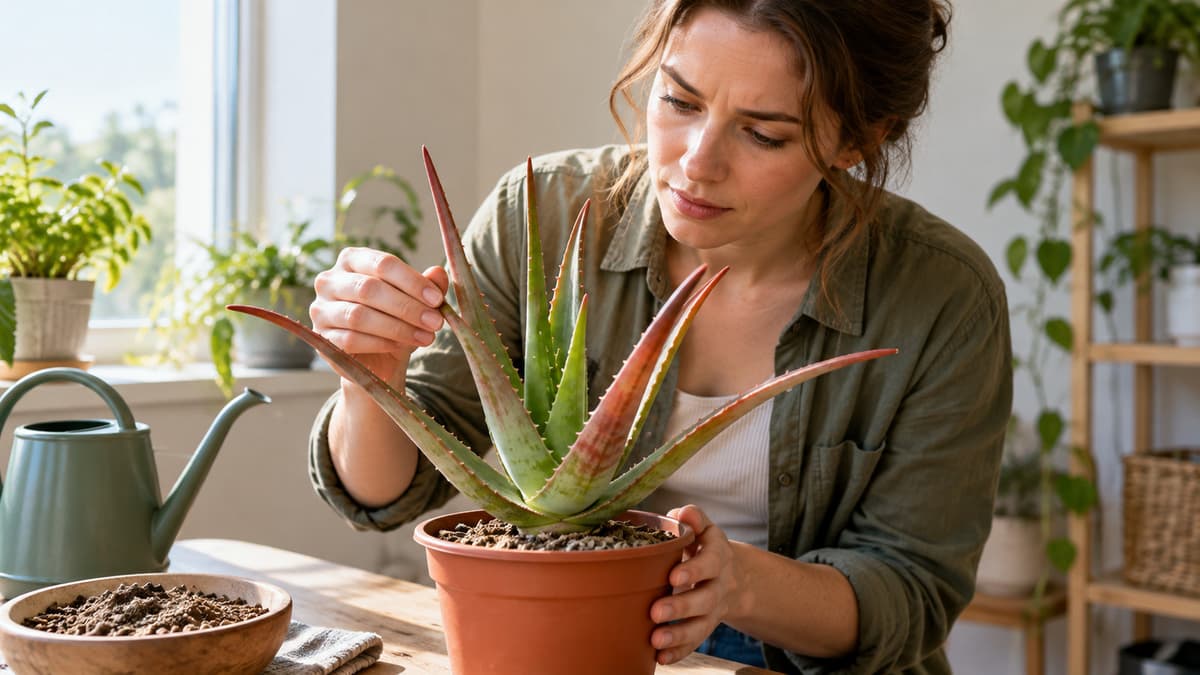
Red aloe vera leaves
A reddish leaf can mean the plant wants water. That is separate from a burn on your skin.
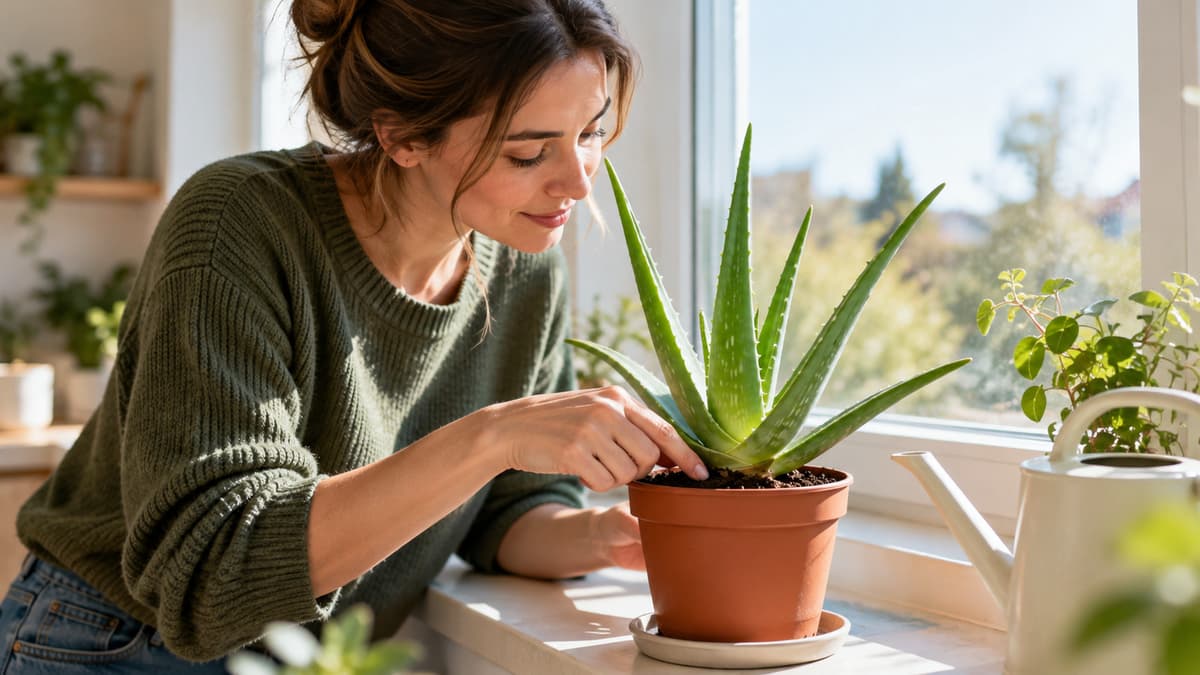
How often to water an aloe vera
How often a windowsill aloe in a heated UK flat needs water, and why a weekly soak rots it.