Is aloe vera poisonous to cats, dogs and children?
You want to know if aloe vera is poisonous to cats, or to a dog, a rabbit or a toddler, and an amazon.co.uk listing has asked "is it pet friendly?" without answering. Aloe vera is labelled harmful if eaten. The [aloe vera plant comparison](/hub/houseplants/aloe-vera-plant) ranks seven live plants for pot, price and reviews. All seven carry the same hazard. Peter F. used the Horticultural Trades Association list and the Royal Horticultural Society species page on 20 October 2026. This page does not give NHS burn advice, and it does not suggest putting gel on skin. A qualifying purchase can earn us a commission at no extra cost to you.
You want to know if aloe vera is poisonous to cats, or to a dog, a rabbit or a toddler, and an amazon.co.uk listing has asked "is it pet friendly?" without answering. Aloe vera is labelled harmful if eaten.
You want to know if aloe vera is poisonous to cats, or to a dog, a rabbit or a toddler, and an amazon.co.uk listing has asked "is it pet friendly?" without answering. Aloe vera is labelled harmful if eaten. The aloe vera plant comparison ranks seven live plants for pot, price and reviews. All seven carry the same hazard. Peter F. used the Horticultural Trades Association list and the Royal Horticultural Society species page on 20 October 2026. This page does not give NHS burn advice, and it does not suggest putting gel on skin. A qualifying purchase can earn us a commission at no extra cost to you.
Our top picks
| Badge | Product | Plants | Gift wrap | Review line | Note | Price | Offer |
|---|---|---|---|---|---|---|---|
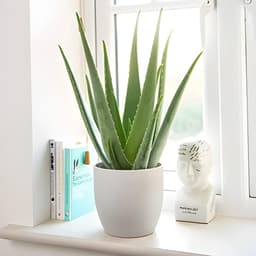
| Best overall |  Carbeth Plants Carbeth Plants (gift wrapped) | 1 | Hessian bag and bow | 4.8 from 29 | 6.5 | about £18.99 | View offer |
 Carbeth Plants Carbeth Plants (11 cm pot) | 1 | No | 4.2 from 1,271 (shared with B08KRPSNTR) | 8.2 | about £14.99 | View offer | |
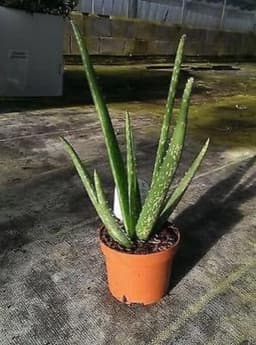
| Best value |  Not stated Aloe vera (35 cm, 10.5 cm pot) | 1 | No | 4.2 from 451 | 7.9 | about £12.49 | View offer |

On this page
The label, not the unanswered FAQ
Cats, dogs and rabbits
If a pet has already eaten some
Where a live plant can still sit
Common questions
Is aloe vera poisonous to cats?
What about dogs?
Are rabbits different?
Is the clear gel the problem, or the yellow sap?
My listing asked “is it pet friendly?”. Is that a yes?
Related pages
Sources
Public UK sources named below. amazon.co.uk prices, stars and review counts on these seven listings are the figures used for this comparison. Page updated 21 October 2026.
- RHS Aloe vera details (retrieved 21 October 2026)
- RHS Aloe guide (retrieved 21 October 2026)
- RHS indoor plants resources (retrieved 21 October 2026)
- HTA harmful plants, 3rd edition (retrieved 21 October 2026)
- NHS burns and scalds (retrieved 21 October 2026)
- Cochrane CD008762, aloe vera for wounds (retrieved 21 October 2026)
- CITES Appendices (retrieved 21 October 2026)
- GOV.UK plant passports (retrieved 21 October 2026)