Independent comparisons. We may earn from shop links. More info

How to care for aloe vera: light, water and winter

Updated: 21 October 2026

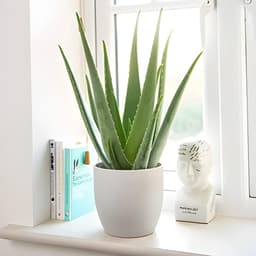
You have just unpacked a live aloe on a windowsill in a heated UK flat, and the compost looks dry from the journey. If you want to know how to care for aloe vera after an amazon.co.uk parcel, it needs a bright room, a pot that drains, and water only when the compost has dried. Wet compost, a shady bathroom or a British frost is the usual failure. Which listing fits a bright room is on the [aloe vera plant comparison](/hub/houseplants/aloe-vera-plant). Peter F. followed Royal Horticultural Society guidance on 20 October 2026. A qualifying purchase can earn us a commission at no extra cost to you.

You have just unpacked a live aloe on a windowsill in a heated UK flat, and the compost looks dry from the journey.

Our top picks

On this page

Light, and a room that is not a bathroom

The RHS lists Aloe vera as H1C, for a heated indoor spot, in full sun, sheltered, on a west or south aspect. In a UK flat that means a south or west window, with the leaves kept off freezing glass. A north window is the wrong room. Several listings print bright indirect light or a partial-shade field. Those are seller lines. The species page wants sun. A bathroom is a poor default. The RHS indoor guidance says the plant dislikes humidity. If that is the only bright glass, ventilate it and keep the pot off the wet sill. A dark loo starves the plant of light.

Water, including the first week after a dry parcel

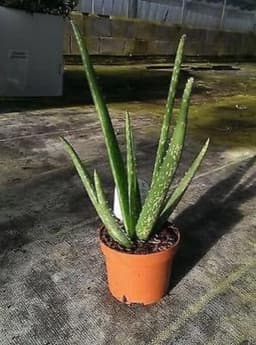
The RHS species page says water moderately in growth and very sparingly in winter. The indoor sheet says water when the compost is dry, and hardly at all in winter. A listing field that only says moderate watering is a seller sentence. A longer note on the gap is in how often to water aloe vera. After a dry parcel, check the compost with a finger. If the rootball is dusty and the leaves are firm, water once, then let it dry. If the crown is soft, brown or mushy, extra water is how the plant fails. There is no honest seven-day calendar. A south room in July dries a small pot faster than a cool January room. Empty the saucer.

Compost, a hole, and the saucer

The species page suggests peat-free cactus compost, or a loam-based compost with added grit. The indoor sheet, for offsets, uses half grit and half peat-free multipurpose. The mix has to shed water. A cover with no hole, filled with ordinary multipurpose and left on a full saucer, fights that advice. If the listing excluded the ceramic pot, repot into a container with a drainage hole, only one size up. Do not feed in winter. Scale insects and mealybugs are the pests the RHS names. Wipe what you can see and isolate the pot.

Winter in a British home

Horticulture.co.uk, quoting grower Les Pearcy, says Aloe vera cannot stay outside through a typical British winter. Bring patio plants in before frost. The RHS says "hardly at all" and "very sparingly", and it does not publish a fixed winter interval. Indoors, keep the plant in the bright room, off freezing glass, and stop feeding. A warm radiator is not a reason to water. Small offsets can stay attached until spring or early summer. The cut is on separating aloe vera pups.

Red leaves and soft leaves are different

The RHS sunny-room guidance says a reddish tint can mean the plant is thirsty. If the leaves are firm and the compost is dry, water once, then return to the dry-and-wait habit. Soft, brown, collapsing leaves point at compost that has stayed wet. Do not answer that with a weekly soak or a mister. The plant dislikes humid air. Cut away only what is already rotten, let the crown dry, and restart in gritty compost. If a pet or a child has chewed a leaf, use the pets page the same day.

Common questions

How often should I water an aloe vera?
The RHS says water moderately in growth and very sparingly in winter, and the indoor sheet says water when the compost is dry and hardly at all in winter. There is no single weekday that fits a UK flat. A south window in July dries a small pot faster than a cool room in January. If the crown is soft, do not soak it.
Can an aloe vera live in a bathroom?
The RHS indoor guidance says the plant dislikes humidity. A steamy bathroom is a poor default, even with a window. A dry south or west room is the better match. If that is your only bright glass, ventilate it and keep the pot off a wet sill. Do not hide the plant in a dark loo.
Does it want a south window or indirect light?
The RHS species page wants full sun, sheltered, on a west or south aspect, and it rates the plant H1C, for a heated indoor spot. Several amazon.co.uk listings in this set say bright indirect light or partial shade. Those lines are seller text. Use the sunny room, and keep leaves off freezing glass.
What compost should I use, and does the pot need a hole?
Use peat-free cactus compost, or a loam-based compost with grit, as the RHS species page suggests. For offsets the indoor sheet uses half grit and half peat-free multipurpose. The pot needs a drainage hole, and you should empty the saucer. A cover with no hole holds water around the roots.
Can it stay on the patio all year?
Horticulture.co.uk says Aloe vera cannot stay outside through a typical British winter. Bring it in before frost. A greenhouse only a few degrees above freezing is, on that site, a place to keep established plants dry. The RHS does not give you a fixed “once a month” winter drink. Water very sparingly, and do not feed in winter.

Related pages

Sources

Public UK sources named below. amazon.co.uk prices, stars and review counts on these seven listings are the figures used for this comparison. Page updated 21 October 2026.

  1. RHS Aloe vera details (retrieved 21 October 2026)
  2. RHS Aloe guide (retrieved 21 October 2026)
  3. RHS indoor plants resources (retrieved 21 October 2026)
  4. HTA harmful plants, 3rd edition (retrieved 21 October 2026)
  5. NHS burns and scalds (retrieved 21 October 2026)
  6. Cochrane CD008762, aloe vera for wounds (retrieved 21 October 2026)
  7. CITES Appendices (retrieved 21 October 2026)
  8. GOV.UK plant passports (retrieved 21 October 2026)