How often to water aloe vera: wait for dry compost
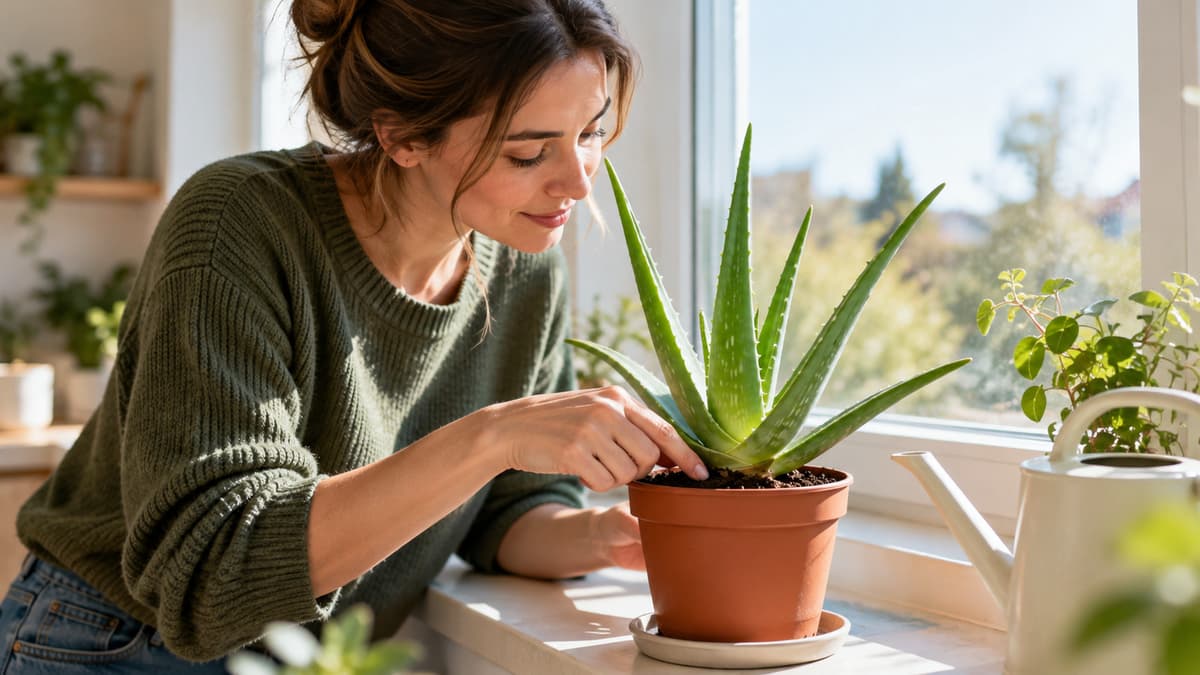
Water aloe vera when the compost is dry, not every week. In a heated UK flat, winter drinks stay sparse, and a dusty parcel gets one careful soak only.
On this page

You have set a Sunday reminder because the listing said the plant likes water, and the compost in the box was already dust. How often to water aloe vera is not a number of times a week. You water when the compost has dried and the leaves are still firm, then you let the pot drain. A dry parcel is a delivery state, not a new habit.
Peter F. is the editor for DIY & tools. These notes are from October 2026. They follow the Royal Horticultural Society on Aloe vera, and the moisture lines on the amazon.co.uk listings in our aloe vera plant comparison. There is no lab trial behind them, and no millilitre dose that fits every pot. If you buy through links on that comparison, a qualifying purchase can earn us a commission at no extra cost to you.
In short
Water an aloe vera when the compost is dry, more freely while it is growing, and very sparingly in winter. Empty the saucer, do not mist, and do not soak a crown that is already soft. A dusty box on arrival gets one careful drink only if the base is firm.
There is no weekly number
The RHS species page says water moderately in growth and very sparingly in winter. The indoor sheet says water when the compost feels dry, and hardly at all in winter. Neither gives you a weekday.
A Sunday alarm treats a cool room and a pot over a radiator as the same job. One can stay damp for a fortnight. The other can be bone dry while you are still pleased that you remembered.
Push a finger into the compost before you fill the can. Cool and clinging means wait, even in July. Thin, flattened leaves plus dry compost get one drink that runs from the drainage hole, then stop. A second pour the same evening, because the surface looks dark, keeps the middle of the pot wet for days.
Late spring is when a dry pot earns that soak. From November into February the plant idles, even if the living room is warm because the heating is on. Room temperature does not put it in season. Light and the rest of the routine are on how to care for aloe vera.
How to tell the compost is dry
The surface lies. A pale top can hide a damp core in a plastic nursery pot, and a dark top can be last week's stain while the lower half has dried. Call it a rule of thumb, not a meter reading.
Push a finger past the dust on top. A couple of centimetres is enough on a small nursery pot, and a little deeper if the pot is wider than the 11 cm Carbeth listing. Cool and sticky means wait. Dry, with nothing stuck to your skin, means you look at the leaves next.
Lift the pot as well. Light now, after it felt heavy last week, means the water has gone. If it is still heavy, the top colour is irrelevant. Thin leaves and compost that is dry further down get one soak, in the sink, until water leaves the hole.
Put the pot back only when it has stopped dripping. If there is no hole, do not water it where it stands. Skip feed in winter, which is the RHS line for this plant. The buying guide is where a listing that omits a real pot is spelled out.
A dry parcel is not a weekly drink
Reviews on the live plants in this set often mention compost in the box and a parched root ball. That is a posting problem after a day or two in a carton, not a reason to water every day. Bent tips from a tight box are a handling scar, not a thirst signal on their own.
Give one careful drink only if the crown is firm. Pour until water runs from the hole, then stop. Thin leaves from a dry journey can take several days to firm. A leaf that yields like a wet cloth cannot take that drink. If the base is already soft, or it smells sour, do not soak it. When the whole base has gone, the best aloe vera plant shortlist is the place to replace it, not another pour.
Soft brown and dry, shrivelled tips are opposite faults. Ideal Home, quoting Graham Smith of LBS Horticulture, separates them, and the longer sort is in why aloe vera leaves turn brown. The decorative pot in the Carbeth photograph is not in the box.
Winter in a heated flat
December is when a weekly habit does the most damage. The RHS line is very sparing, and the indoor sheet says hardly at all. A June-sized drink can sit in a cool room for weeks and rot the roots. You can go a month without watering. The first of the month is not watering day.
A pot above a radiator can dry faster than a pot in an unheated spare room, so you check more often when the heating is on. Checking is not watering. If the compost is still cool and damp, leave it. Do not feed. Fertiliser on a resting succulent does not replace light.
Horticulture.co.uk describes about once a month or less in winter as that site's practice. It is not an RHS interval. A cool spare room and a kitchen over a radiator will not dry on the same clock, so once a month can be too often for a heavy mix in a cool room.
If the pot spent summer outside, bring it in before frost, with the compost already on the dry side. The longer piece is aloe vera through a British winter. A cover pot is the winter trap. A splash that cannot drain pools under the nursery pot for weeks. Lift the inner pot after every drink, and leave the outer container empty.
What the leaves are telling you
Thin, inward-curling leaves together with dry compost mean one draining drink. Thin leaves in compost that is still cool and damp are not a cue to pour. Firm, heavy leaves can wait even when the top of the pot looks pale.
Reddish leaves can mean thirst. The RHS page on houseplants for sunny rooms says a red tint can be a sign the plant needs water. Hard light on a south window can redden a leaf as well, so check the compost before you treat the colour as a drink. The longer split is in red aloe vera leaves.
A mushy leaf low down is the opposite problem. Papery tips on a firm plant can be box damage or a radiator. Soft brown from the base is wet compost. If the base smells sour, or the plant rocks, read aloe vera root rot before you pour. Do not water a collapsing plant to perk it up.
Saucers, mist and the word moderate
An aloe vera does not sit in a saucer. Tip out what remains after the pot has drained, including the puddle in a cover pot. Ten minutes on the draining board is a rule of thumb for an 11 cm pot to stop dripping. The saucer protects the sill. It is not a reservoir you top up.
Do not mist. A spray tells you nothing about the compost, and it is not a humidity trick for a plant that wants a dry gap between drinks. Water held in the crown on a cool evening is a common way rot starts. The response is the finger test, not a spray bottle.
Moderate, on an amazon.co.uk moisture field, is a shop line. Carbeth's 11 cm listing, the top pick in this comparison at £14.99, carries "moderate watering" in that field. The care text on the same listing is closer to the RHS: water sparingly and let the soil dry. Other listings in the set are thinner, or only say water.
Hear "moderate" as "during growth, once the compost is dry", not as a little drink every week of the year. The 4.2 from 1,271 reviews on that page is shared with another Carbeth listing, so it is not two samples. Those reviews describe parcels and plants, not a watering trial. Skip the listing if you need the ceramic pot in the photograph.
Common questions
How many times a week should I water an aloe vera?
Do I water an aloe vera in December?
The compost was dust in the box. Should I soak it?
Can an aloe vera sit in water in the saucer?
Should I mist an aloe vera?
Do red leaves mean thirst, or do soft leaves?
The listing says moderate watering. Which line do I follow?
How do I know the aloe vera compost is dry?

Peter F. is the editor for DIY & tools at productscompared.co.uk. Comparisons in this category are checked against amazon.co.uk listings, review evidence and public UK sources.
Related articles

Why aloe vera leaves turn brown
Soft brown and dry brown are opposite mistakes. Sort the leaf before you add more water.

Aloe vera through a British winter
A heated flat is not a cool spare room. Winter watering stays sparing, and the plant comes indoors before frost.
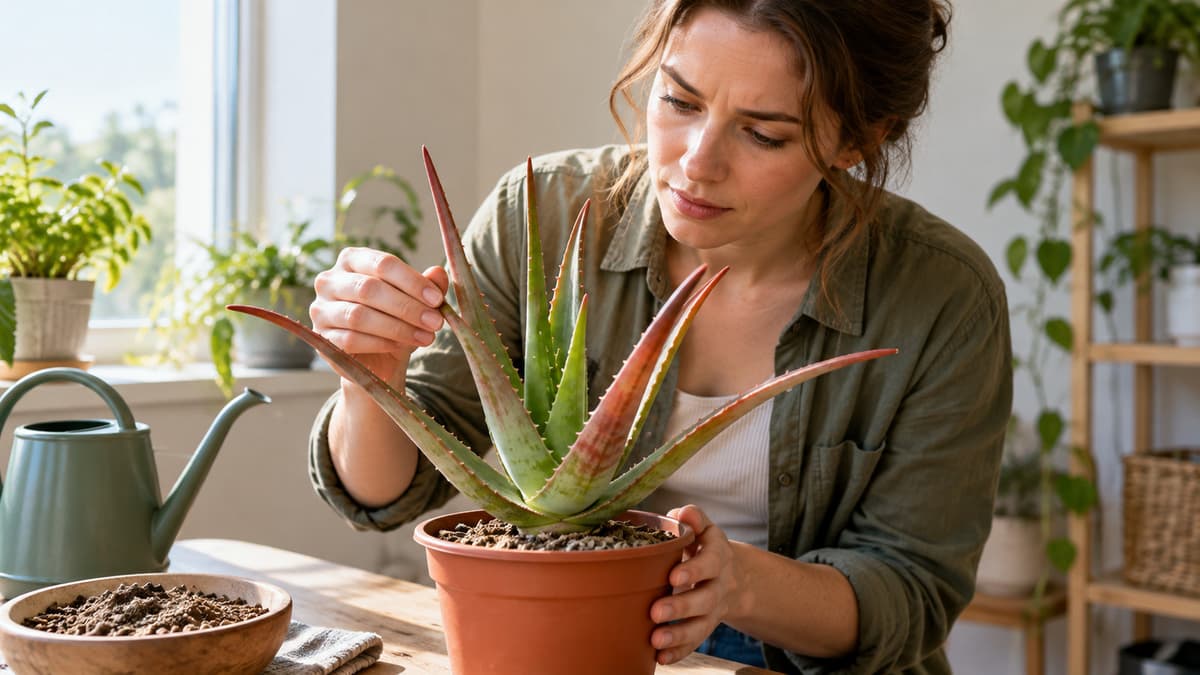
Red aloe vera leaves
A reddish colour can mean the plant is thirsty. Soft brown leaves are a different problem.