Aloe vera winter care UK: bring the pot inside

Bring a patio aloe indoors before the first British frost. Water hardly at all, skip the winter feed, and keep leaves off cold window glass on frosty nights.
On this page

The pot that sat on the patio through August is still outside, and the forecast has a frost in it. That night is what aloe vera winter care UK comes down to. The Royal Horticultural Society rates Aloe vera H1C: a heated indoor place, and the open air only in summer. Bring it in before the air falls to freezing, stand it in a bright room, and stop watering it as if the month were still July.
Peter F. is the editor for DIY & tools. The figures below come from the RHS hardiness key, the RHS pages for Aloe vera, and the overwintering account on Horticulture.co.uk. We did not run a frost trial. Prices are amazon.co.uk shelf prices from this comparison's listings. A qualifying purchase through our links can earn us a commission at no extra cost to you.
In short
Bring the pot indoors before a British frost. Water hardly at all while it is dormant, and leave the feed in the cupboard. Shift the leaves off the glass on a hard night, and do not pour water just because the room feels hot.
What H1C means on a British patio
H1C is the hardiness rating the RHS prints for Aloe vera. On the society's key it is a warm-temperate plant grown with heat, which can go outside in summer through most of the United Kingdom. The key's published band for that summer spell is 5–10°C, and only while days are warm enough for growth. That band describes the summer outing. The species page does not add a separate minimum for your patio pot.
The RHS genus guidance says aloes cannot withstand freezing. Horticulture.co.uk, quoting grower Les Pearcy, says the plant should not stay outdoors in most of the UK. On that page, temperatures should not regularly sit below 10°C, and 5°C is called an absolute minimum. Those numbers belong to that article. Pearcy's greenhouse there is held just above freezing, with the plants kept dry. Use the frost forecast for your own postcode.
Bring it in before frost. If the pot is still on a balcony, a doorstep, or a table in the rain, move it on the day a frost is forecast, not the morning after. One night at or below 0°C can collapse leaves that looked sound at dusk. The room has to stay above freezing as well. A shed, an unheated porch, or a greenhouse you have never checked with a thermometer can still hit 0°C on a clear night.
The RHS species page puts the plant in full sun, sheltered, on a west or south aspect. H1C means outside in summer. From the first frost risk, the heated room is the right place, which is also where the shorter rules on our aloe vera care page send you.
Where to stand the pot
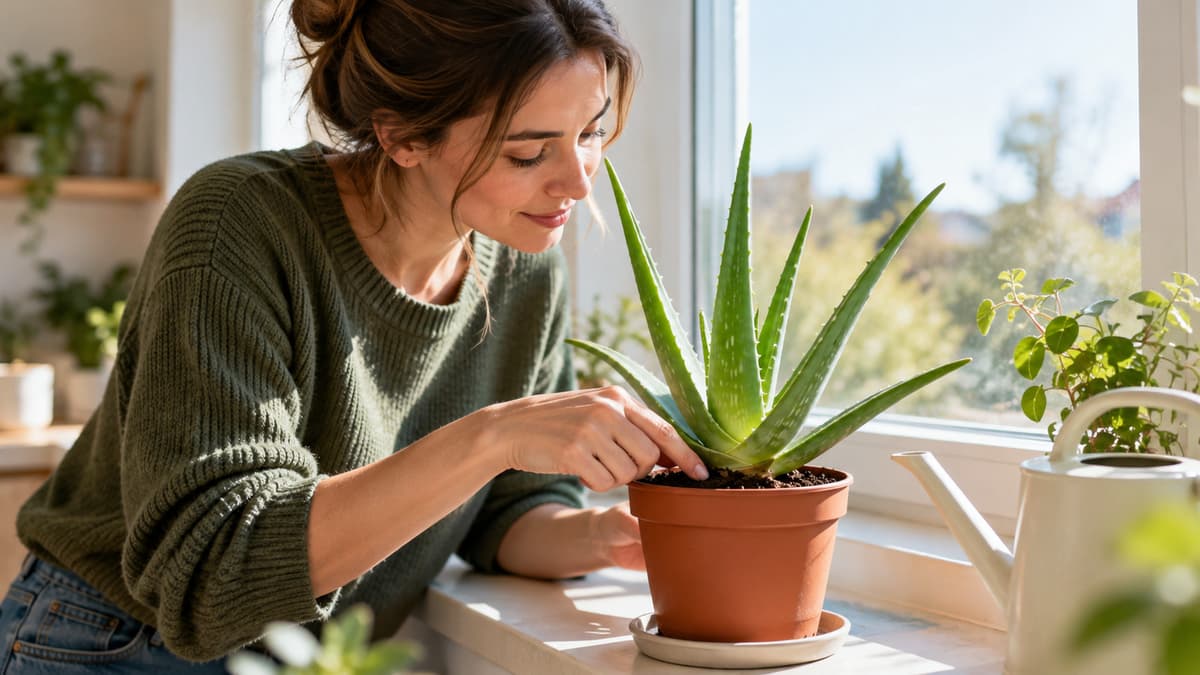
Indoors, use the brightest window you have, usually south or west, and keep the leaves off the glass. Winter sun in Britain is low and weak, so a north-facing hall will not replace the patio. The RHS indoor notes want the plant clear of frost and clear of deep shade. A bright kitchen or living-room sill is the usual spot in a flat.
The pot needs a drainage hole, and you should empty the saucer after any watering. A cover with no hole, still holding September rain, keeps the compost wet for weeks in a cool room. In our aloe vera plant comparison the top pick is the Carbeth Plants listing in an 11 cm nursery pot, stated at 25–30 cm including the pot, at £14.99, with the decorative pot not included. That nursery pot only helps if water can leave it. A cachepot you added in June is a December problem if you forget it is still on.
A greenhouse held just above freezing
A greenhouse works only if you can stop it freezing and keep the compost dry. Horticulture.co.uk describes Pearcy holding the house just above freezing and barely watering established plants. That line is his reported practice, not a promise that an unheated British greenhouse stays there in a hard January. If you cannot read the night temperature, keep the plant in the house. Leave the feed off, and leave pups attached until spring or early summer, as the offsets page explains.
Water and feed until growth starts
The RHS species page says water very sparingly in winter. The indoor sheet says hardly at all, and no feed. A weekly drink that suited July can sit in the crown in January, because a small pot in a cool, dull room stays wet for a fortnight. Glazed and plastic pots dry more slowly than bare terracotta, which the RHS notes, so a plastic nursery pot needs a longer gap. If the leaves are firm and the compost is dry to a finger, wait.
When you do water, give enough to reach the roots and then run out of the hole, and empty the saucer within a few minutes. Skip the mister. Damp air and wet leaves are what the indoor sheet tells you to avoid. Horticulture.co.uk's "about once a month" is that site's rule of thumb for a dry greenhouse, not an RHS calendar date. A south room over a radiator may dry faster than a spare bedroom at 12°C. The compost decides.
Feed stays in the cupboard until growth returns. The species page suggests a liquid feed monthly from May to August, and the indoor sheet stretches that from April to September. A December dose pushes soft growth the plant cannot support in weak light. Stop when you bring the pot in, and start again only when you see new growth inside that window. If April is still cold and the plant has not moved, wait.
Cold glass and a warm radiator
A sunny window is the right aspect and a cold surface after dark. On a clear night the pane is colder than the middle of the room, even when the thermostat feels comfortable. Leaves pressed to the glass take that chill. Shift the pot back a few centimetres, or onto a nearby table, when frost is forecast, and put it back in the light next morning.
The RHS indoor sheet says aloes can tolerate a radiator and that they dislike humidity, so dry central heating is more acceptable than bathroom steam. Warm air is not a reason to water. A leaf tip can look dry while November's drink is still in the compost. Feel the mix. If it is damp, or if the leaves stay firm, leave the can alone. Draw the curtain behind the pot so the plant stays on the room side, rather than trapped against the glass.
If frost has already caught the patio plant, look before you water. Soft, translucent, collapsed tissue is cold damage, and another soak will not firm it. Where the centre is still solid and the compost is dry, keep the plant indoors and dry, and give it time. Where the whole crown is mush and the pot smells sour, replacing it is a choice on the comparison. Soft brown from rot and dry brown from thirst are separate problems. The winter error is water poured onto a damaged, wet crown.
When it can go back outside
Take the pot out only after frost has finished where you live, and only when days are warm enough for growth. There is no single United Kingdom date. A coastal garden in the south-west often turns earlier than a garden inland in Scotland. The H1C key allows summer outdoors in that 5–10°C band while days promote growth. A bright March afternoon with another frost in the forecast is not that season.
Ease the move over several days: a few hours outside in the middle of the day, then back indoors. Keep water light until you see growth, and keep feed inside the May-to-August window on the species page, or April to September on the indoor sheet if the plant is actually growing. A mature aloe can flower, but a parcel plant around 25 cm including its pot is not something you bought for a winter spike. One seller field mentions bloom through the year. That is listing text. If you are replacing a plant the frost finished, the buying guide is where you check height, pot, and how many plants are in the box.
Common questions
Can an aloe vera stay on the patio until spring?
How cold is too cold for an aloe vera?
Do I water an aloe vera in January?
Should I feed an aloe vera in winter?
Is a sunny window too cold for an aloe at night?
Can an aloe vera sit by a radiator?
When can an aloe vera go back outside in the UK?
Will an aloe vera flower indoors in winter?

Peter F. is the editor for DIY & tools at productscompared.co.uk. Comparisons in this category are checked against amazon.co.uk listings, review evidence and public UK sources.
Related articles
How often to water an aloe vera
A weekly drink rots an aloe in a heated flat. Check the compost, and treat a dry delivery as a one-off, not a calendar.

Why aloe vera leaves turn brown
Soft brown and dry brown are opposite mistakes. Sort the leaf before you add water or move the pot into deeper shade.
Aloe vera root rot
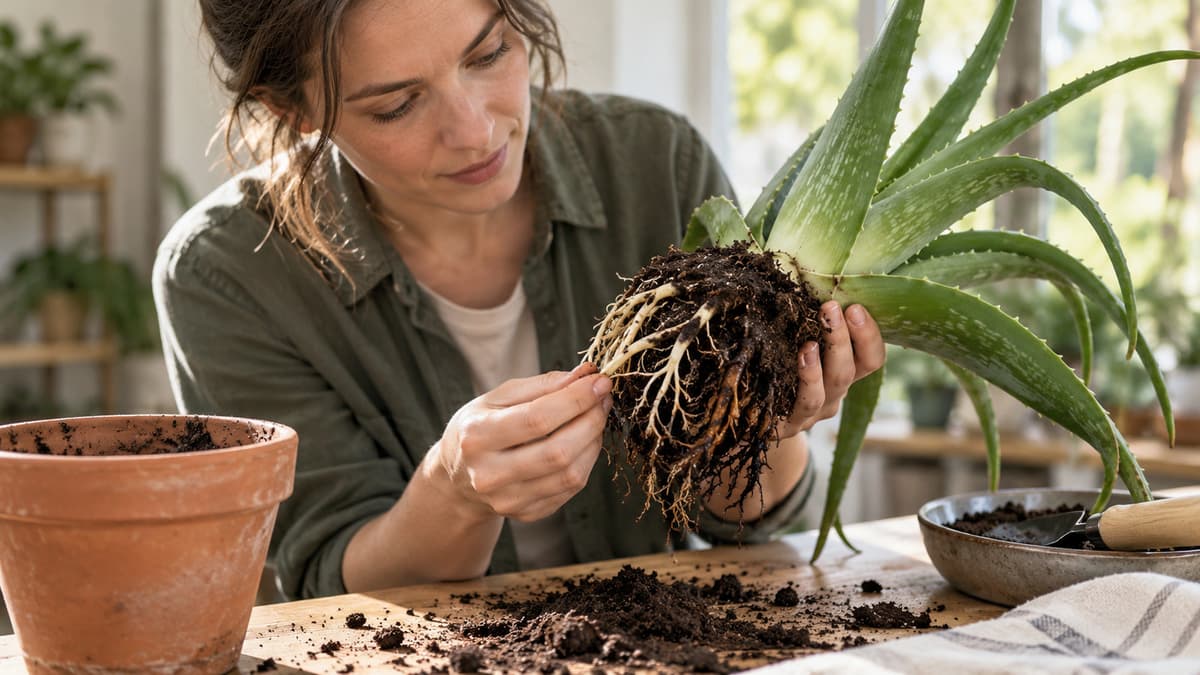
More water makes a sour winter pot worse. Check the roots when leaves go soft after a soak, and stop pouring.