Aloe vera root rot: check the roots before you water
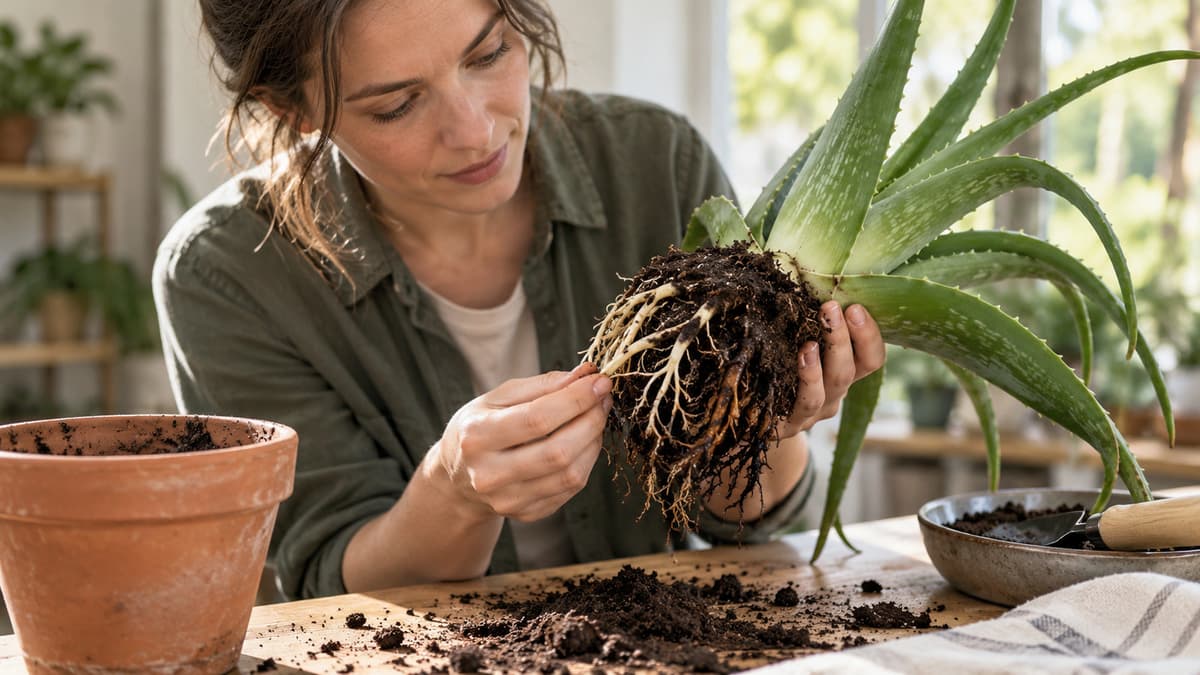
Soft, slumped leaves and wet compost can mean aloe vera root rot. Unpot, read the roots, and see when another drink or a shed spray will not save the crown.
On this page

You pick up the pot because the leaves have slumped, and the compost is still cold and wet from the last watering. The plant looks as if it wants a drink. Aloe vera root rot is the check you run when an aloe wilts in compost that has not dried, and the useful move is to stop watering and look at the roots. Soft brown leaves belong on the brown leaves article, which sorts a dry crisp leaf from a wet collapse.
The Royal Horticultural Society describes waterlogging as a shortage of oxygen at the roots. Leaves can yellow and soften at the base while the plant still looks thirsty, and the roots can turn dark and sour. Ideal Home, quoting Julian Palphramand, treats dark, soft roots and a musty smell as root rot.
In short
Aloe vera root rot shows up as a plant that wilts in wet compost, often with a sour smell and a soft, yellowing base. Firm white or cream roots can be kept, and dark, squashy roots come off with a clean blade once the cut has dried. If the whole crown is mush, replace the plant. Another drink will not rebuild tissue that has already collapsed.
Wet compost and a thirsty look
The leaves flop, thin, and can yellow. On a waterlogged plant the compost is cool, it sticks to your finger, and it may already smell sour. The RHS waterlogging advice describes a plant that looks thirsty, with yellow soft tissue at the leaf bases. An aloe vera wilting but soil wet sits in that pattern.
Watering now feeds the failure. The species page says these plants dislike compost that stays continuously wet, and the indoor guidance says water when the compost is dry, and hardly at all in winter. In a cool British room in January the mix can stay damp for a fortnight, while the plant is barely growing. Summer on a south window dries a small pot much faster. Dry compost and firm leaves, then water.
A nursery pot inside a decorative cover hides a puddle until you lift the inner pot, and a full saucer does the same. Peat-heavy multipurpose holds water for days. The care page is the ongoing habit: a bright room, water when dry, and an empty saucer.
A reddish tint on firm leaves and dry compost can mean thirst, and that plant gets a normal drink. A sour smell with a mushy base means you take the plant out today, because a week of waiting lets the rot move into the crown.
What you should see on the roots
Spread newspaper, put on gloves, and tip the rootball out sideways. Brush the wet compost off with your fingers. A long rinse under the tap soaks the tissue you are trying to dry. The healthy picture on the RHS waterlogging root check is white or cream and firm. Those roots resist a gentle squeeze.
The bad picture is dark, soft, and smelly. The RHS waterlogging page describes roots that have gone blue-black, with a sour smell. Outer roots can be black and slimy while a few inner roots are still cream, and that mixed rootball is worth keeping in part.
Overwatered aloe roots often fail from the outside in, from the finest roots to the tissue where the leaves join. An aloe vera mushy base is that last stage. Leaves can still look green further up, so press the base. If it gives, the rot is already above the compost line. Succulent root rot is that same soft collapse.
Wear gloves: the RHS says the plant is harmful if eaten, the sap can irritate skin, and the leaf edges are serrated. Wash the knife afterwards, and keep the bare plant away from a child or a pet.
Stop, cut the mush, let the cut dry
Stop watering the moment you suspect the rot, including the day you unpot. A clean blade takes off every root that squashes or smears, back to tissue that is firm and pale. If the mush has climbed into the leaf bases, take those leaves too, until what is left feels solid. Scraps stay on the newspaper. A blunt pull often rips into the firm centre, so the knife is the kinder tool.
Leave that cut to dry before it meets damp compost. BBC Gardeners' World allows a couple of days for a pup's cut to callus. Thrive, on succulent offsets including aloe, gives one to seven days and says not to soak the pot. A wet wound in wet mix rots again. Set the plant on dry newspaper in a bright, airy room, out of frost and out of a steamy bathroom. The cut should look dull and dry. A week on a hot radiator can shrivel a small plant.
Pot only what is still a plant. A crown that holds together, with a short stub of firm tissue, can go into a small pot of gritty mix. Firm pups can come off by the method on the offsets page. A parent that is mush all the way through goes in the bin, and the old pot gets a wash.
Mix from the bag is often damp already, so wait until it has dried, then water sparingly and empty the saucer the same hour. Skip feed. The species page feeds monthly from May to August, and a plant just out of a sour pot is the wrong candidate. In winter, water hardly at all and do not feed.
A gritty mix and a hole
The mix has to shed water or the rot returns on the next watering. The RHS species page suggests peat-free cactus compost, or a loam-based compost with added grit. For offsets, the indoor sheet uses half grit and half peat-free multipurpose. Ordinary peat-heavy compost, unmixed, is the material that stayed wet the first time. A layer of stones in a pot with no hole does not drain. It raises the waterline.
Choose a pot one step on from the rootball you have left, with a drainage hole. A much larger bowl leaves a wet collar around a small crown. Bare terracotta dries faster than glazed ceramic or plastic, which the RHS notes for a sunny room. A plastic nursery pot still works if you empty the cover.
The Carbeth Plants listing in our aloe vera comparison, the top pick at £14.99, arrives in an 11 cm nursery pot, and the decorative pot in the photographs is not in the box. A qualifying purchase can earn us a commission at no extra cost to you.
A south or west window, the RHS placement for this H1C plant, helps the mix dry. A bathroom adds humidity the plant dislikes. Keep leaves off freezing glass. H1C means a heated indoor spot through a British winter, with the patio only in summer. After the restart, the compost should dry between waterings and the base should stay firm. A base that softens again in the first fortnight means the cut met damp mix too soon, or the pot is holding water.
What this article will not promise
Some US pages, and at least one UK plant app, put a recovery rate next to advice on how to save aloe vera root rot. That percentage is not an RHS figure, and this article will not repeat it. A crown with firm tissue and a dry cut has a chance in a gritty pot that drains. A crown that is already a smear does not. You can do the check carefully and still lose the plant, because the rot may have reached the centre before you noticed the smell.
A fungicide from the shed is the other false comfort. The RHS aloe page does not list a chemical cure. It lists drainage, compost that dries between waterings, and a dislike of wet mix, shade, and humid air.
If the old plant is finished, the buying guide is for a replacement, judged by stated height, whether a decorative pot is included, and the amazon.co.uk review line. A weekly habit stays on the watering article. Gel and burns stay off this URL. Today's job is smaller: stop the water, look at the roots, cut to firm tissue, and give that cut a dry surface and a pot that empties.
Common questions
The leaves droop but the compost is wet. Is the aloe thirsty?
What do rotten aloe vera roots look like?
Should I water a wilting aloe to perk it up?
Can I cut the roots back?
What compost goes back in the pot?
Is a smell enough to unpot the aloe?
When is aloe vera root rot past saving?
Will a fungicide from the shed fix it?

Peter F. is the editor for DIY & tools at productscompared.co.uk. Comparisons in this category are checked against amazon.co.uk listings, review evidence and public UK sources.
Related articles

Why aloe vera leaves turn brown
Soft brown and dry brown are opposite mistakes. Sort the leaf before you decide the roots are gone.
How often to water an aloe vera
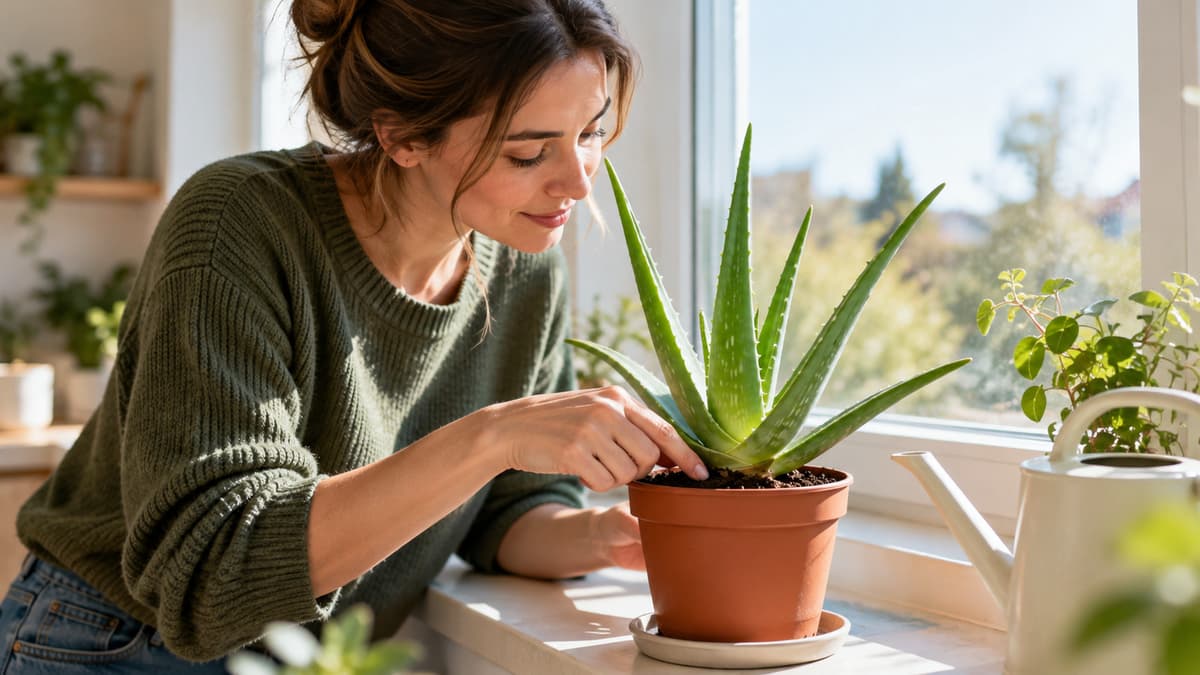
A weekly soak rots a windowsill aloe. Water when the compost has dried, and hardly at all in winter.
Repotting an aloe vera
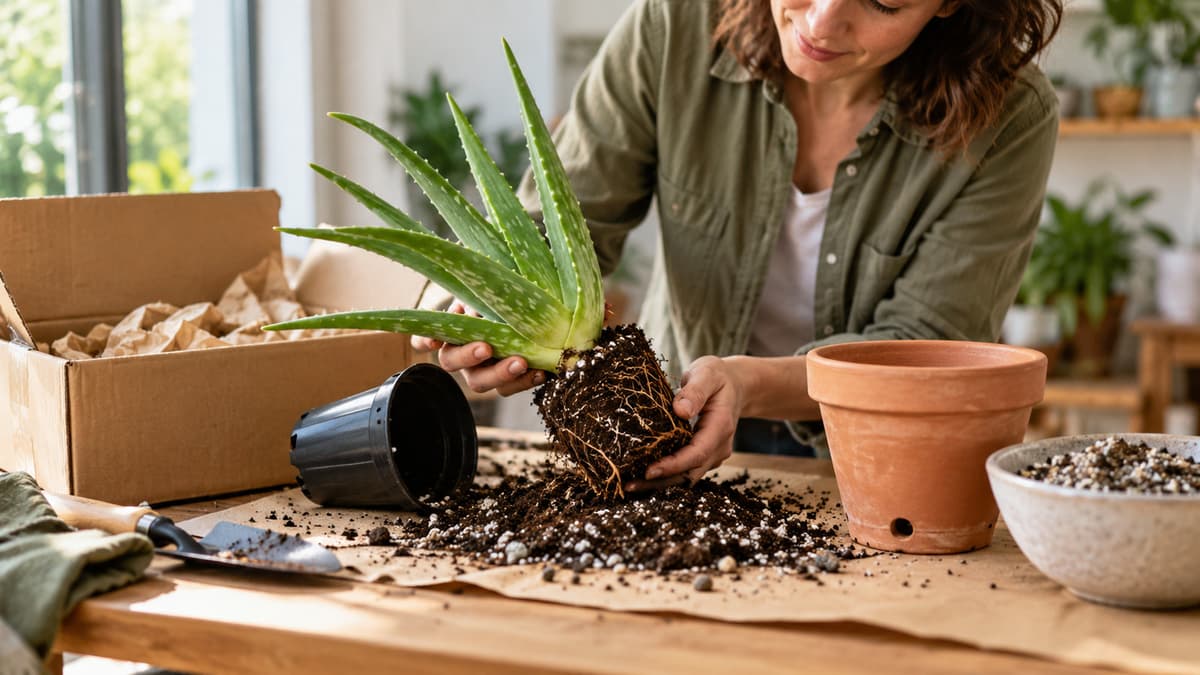
A nursery pot with no hole, or a cover full of water, keeps the compost wet around the roots.