Repot aloe vera: a hole, grit and a modest pot
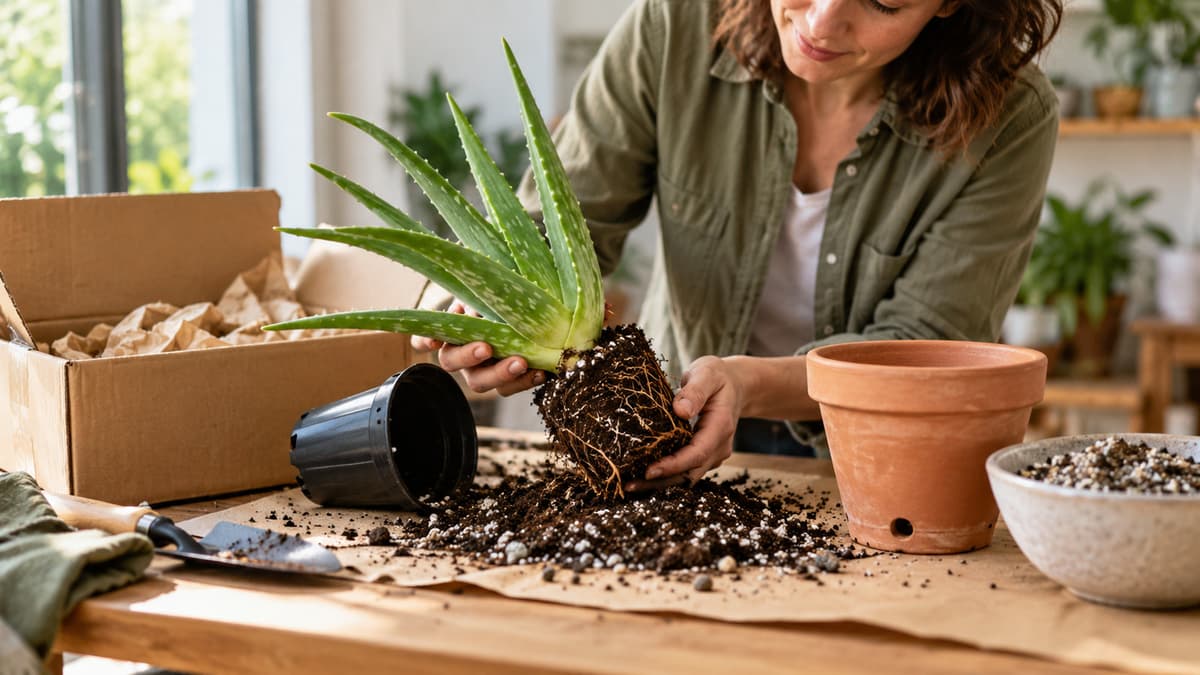
How to repot an aloe vera after a spilled parcel: use a pot with a hole, cactus compost or grit, and a cover you empty so the roots do not sit in water.
On this page

The box is open, the compost is across the cardboard, and the aloe is on its side in a pot the size of a yoghurt carton. That is a common amazon.co.uk arrival in this set, and it is the moment to repot aloe vera. You need a container with a drainage hole, a mix that sheds water, and a pot only a step wider than the roots you can see.
Leave a sound nursery pot alone when the compost is still in it and water can leave the base. Move the plant the same day when the roots are bare, the pot is cracked, or the listing never included a pot. A cover around a holed inner pot is fine until you water into it and never tip it out.
These notes are from Peter F. in October 2026. They follow the Royal Horticultural Society on Aloe vera, plus the pot lines on the amazon.co.uk listings in our aloe vera plant comparison. There is no lab trial of compost brands. If you buy through links on that comparison, a qualifying purchase can earn us a commission at no extra cost to you.
In short
Repot an aloe vera when the compost has left the pot, the pot has no hole, or the listing sent plants without containers. Use peat-free cactus compost or a gritty mix, one size up from the rootball, and empty any cover pot after watering. Skip the settling drink if the base is already soft.
When the parcel has already emptied the pot
Reviews on the live plants in this comparison often mention soil in the box, a smashed small pot, or a rootball so dry it has come loose. Get the roots into a holed pot today. A bowl three times wider than the plant leaves spare compost that stays wet.
Check three things first. Is a pot still there, with a hole? Is the compost holding the roots, or is it crumbs on the cardboard? Is the crown firm, or does the base yield and smell sour? A firm plant in Carbeth's intact 11 cm nursery pot, at £14.99, can stay put. The decorative pot in the photograph is excluded. The buying guide says which rows include a nursery pot and which leave you with a bare plant.
The two-plant listing states that pots are not included, so you need two holed containers the same day. Wear gloves: the leaf edges cut, the sap can irritate skin, and the RHS treats Aloe vera as harmful if eaten. A spilled January parcel does not wait for spring. Pot it, then keep water spare.
The mix and the hole
The RHS species page allows peat-free cactus compost, or loam-based compost with grit. The indoor sheet, for an offset, uses half horticultural grit and half peat-free multipurpose. Either mix suits a whole plant. Ordinary houseplant compost on its own stays wet at the stem. If that bag is all you have, mix it half and half with horticultural grit.
Mix the grit through the bag. A scatter on top leaves the roots in the wet layer. Crocus, beside the RHS, says the compost should drain freely and the plant should not sit in water. A blocked hole, or a cup with none, keeps gritty mix wet. Stones in a sealed pot leave compost above a reservoir. If you cannot see a clear gap, treat it as no hole.
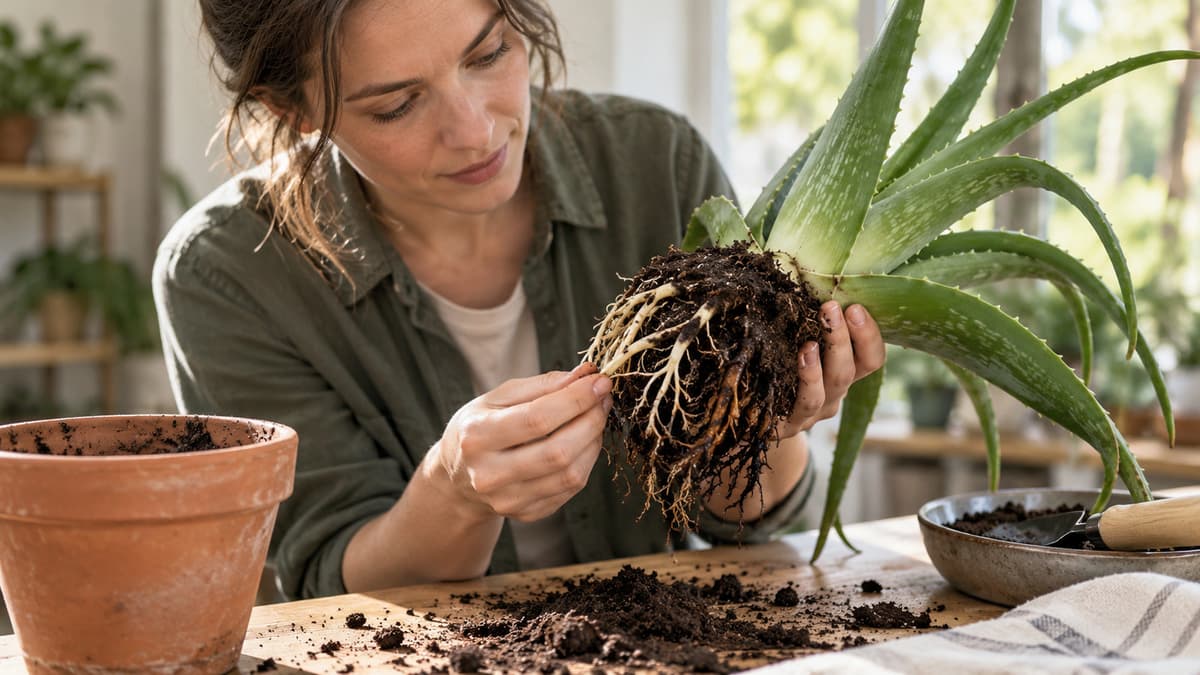
Shake off courier compost that has fallen apart. Keep firm, pale roots. Trim only black or slimy tissue with a clean blade, and let a wet cut dry before you bury it. When the crown is still solid, the sequence is short.
- Choose a pot with a drainage hole, one size up from the rootball.
- Fill it with peat-free cactus compost, or half grit and half peat-free multipurpose, so the leaves sit above the surface.
- Water once, if the base is firm, until water leaves the hole.
- Empty the saucer or cover before the plant goes back to a bright spot.
- Skip feed on the day you repot, and skip it after sour compost.
If the base is soft, stop before that drink. The RHS indoor sheet waters an offset to settle sound compost. A collapsing crown continues in aloe vera root rot.
Cover pots and saucers
Carbeth's 11 cm listing, the top pick at £14.99, states an 11 cm nursery pot and excludes the decorative pot. Sit that pot inside a cover you already own. The cover can be solid. Lift the inner pot after watering, because water from the hole pools there until you tip it.
Ten minutes on a draining board is a rule of thumb for a pot around that 11 cm size. Overnight in a closed cover is a puddle. A saucer protects the paintwork and is a poor reservoir.
If the cover has no hole, drop a holed pot inside it. Gravel does not replace that hole. Tip a heavy outer pot into the sink before the inner pot goes back. Later drinks follow how often to water an aloe vera. Compost packed around the nursery pot buries the hole.
Plastic, glazed, or bare terracotta
The RHS sunny-room note prefers glazed or recycled plastic to unglazed terracotta, because bare clay dries very fast in hot sun. On a south sill in July an unglazed pot can pull water out of a gritty mix in a few days.
Through a British autumn and winter a plastic pot and a full glazed cover keep compost damp for a fortnight. Wait longer between drinks than you would with bare clay. Punch out a clay disc before the compost goes in, or it plugs the base. A wet clay pot is heavier, and a top-heavy aloe tips on a narrow sill. Feel the mix with a finger if a radiator sits under the window.
A modest step up from the nursery pot
There is no fixed add-2-cm rule. Take one step up from the rootball. Carbeth's six-pack is £16.99 for six plants in 5.5 cm pots. The £12.49 listing is titled around a 10.5 cm pot, and Carbeth's single plant arrives in an 11 cm pot. The new pot follows the roots, not the height in the title.
Roots circling a 5.5 cm pot earn the next nursery size, still with a hole and the gritty mix. Six plants want six pots. A shared trough stays wet between them. Reviews on that six-pack include a smashed pot and dry plants, so repot the damaged ones on the day.
Have two holed pots ready when the listing excludes them. One planter for both plants leaves a wet moat in a January flat. A pup is a different job, in propagating aloe vera from pups. The RHS times that split for spring or early summer. A courier-damaged parent can be repotted in any month. Pulling pups off a plant unpacked in December wounds both when water should already be scarce.
Aftercare that belongs on the care page
The repot ends when the pot has drained and the cover is empty. Light, feed and the next drink live on the care guide. A firm plant gets one settling drink, then a gap until the new compost has dried. A soft plant gets no drink until the crown is firm.
Keep it in bright light, off a freezing pane, and away from a mister. A south or west window suits a British flat. Deep shade stretches the plant, and extra water will not fix the light.
Skip fertiliser on repotting day. The species page suggests a monthly feed from May to August, and the indoor sheet says April to September. Winter sits outside both. New compost is enough until you see growth.
Give the leaves a few days. A dry journey leaves them thinner, and a drink every evening means the new mix never dries. Tissue like a wet cloth belongs with the root-rot check. Who the £14.99 plant suits, against the £12.49 title or the six small pots, is on the best aloe vera plant page. A repot does not turn a 5.5 cm plant into the 25–30 cm plant another listing described.
Common questions
Do I repot an aloe vera on the day it arrives?
What compost should I use when I repot an aloe vera?
Is terracotta or plastic better for an aloe vera?
Does a cover pot need a hole if the nursery pot has one?
How much bigger should the new aloe vera pot be?
The six tiny pots look root-bound. Do they need the same mix?
Should I water an aloe vera straight after repotting?
Can I use ordinary houseplant compost for an aloe vera?

Peter F. is the editor for DIY & tools at productscompared.co.uk. Comparisons in this category are checked against amazon.co.uk listings, review evidence and public UK sources.
Related articles

Propagating aloe vera from pups
When to split an offset, and why a six-pack of nursery plants is not a set of pups you cut apart.
Aloe vera root rot
Sour compost and a soft base need a root check before you water a newly potted plant.
How often to water an aloe vera
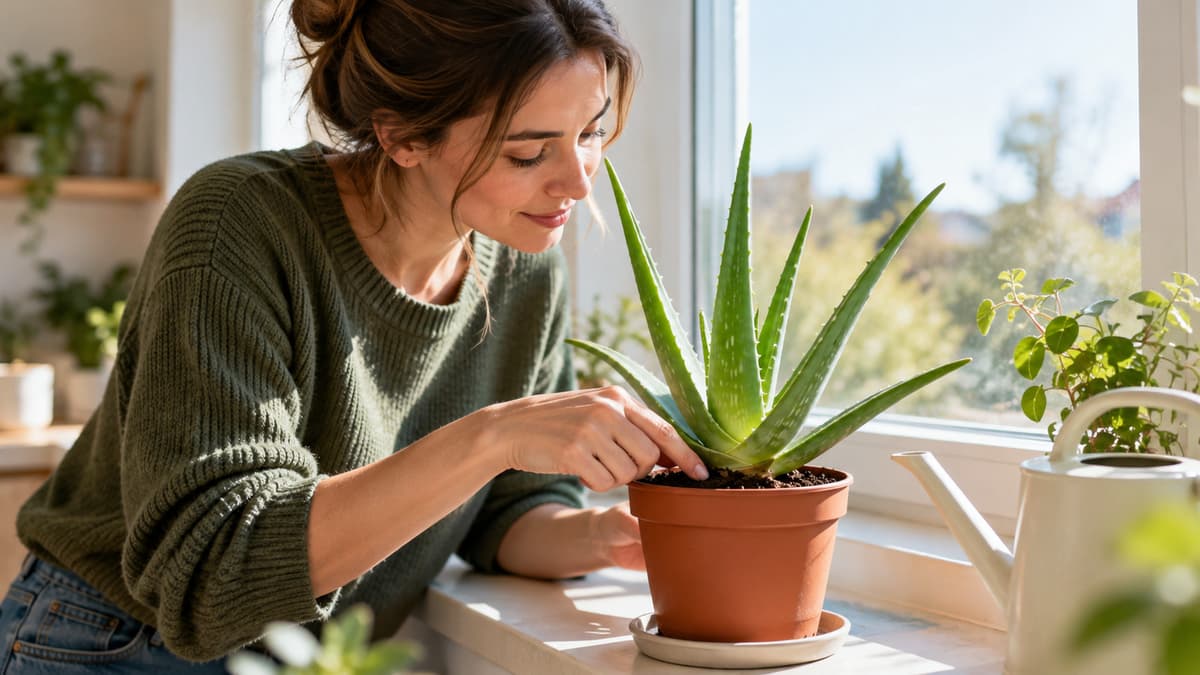
After the pot drains, the next drink waits for dry compost. A weekly soak keeps the new mix wet.