Aloe vera leaves turning brown: sort it before watering

Soft, mushy brown means the compost is too wet. Crisp brown tips mean thirst. Sort the leaf before you water, and check the roots if the base smells sour.
On this page

You pick up the pot because one leaf has gone the colour of a tea stain, and the watering can is already in your other hand. Aloe vera leaves turning brown are a sorting job before they are a shopping job. Press the middle of the leaf. Soft tissue and compost that is still dark and cool mean the plant has had too much water. A thin leaf, a crisp tip, and compost that has shrunk from the rim mean it has had too little.
Those two browns come from opposite mistakes, and another splash this evening will push the soft one further downhill. A tip folded flat in a small delivery box is a third pattern, closer to a courier crease than to rot. This page is from Peter F., editor for DIY & tools, updated in October 2026.
We used the Royal Horticultural Society's aloe guidance, Ideal Home's reports of advice from Graham Smith MCIHort and from Julian Palphramand at British Garden Centres, and the amazon.co.uk listings in our aloe comparison. We did not run a lab trial. If you buy through a link on this page, a qualifying purchase can earn us a commission at no extra cost to you.
In short
Press the leaf before you water. Soft brown with damp compost means you stop and let the pot dry. Dry, thin leaves and brown tips mean one thorough drink, kept off the crown; a sour smell or a mushy base means you look at the roots, and a crease from the carton is not rot.
Sort the brown before you water
The useful test takes about ten seconds. Support the leaf and press the middle with a fingertip. Soft, limp tissue that stays dented points to water the roots have not used.
A leaf that feels papery, with a brown tip that snaps, points to drought. Julian Palphramand of British Garden Centres, quoted by Ideal Home, draws the same line: soft limp leaves against dry crispy leaves. Graham Smith MCIHort, also quoted there, ties soft or mushy brown to overwatering and shrivelled tips to a plant left too dry.
Soft brown leaves, folding in your hand, are a wet problem even when the surface looks dusty. A wet nursery pot feels heavy, and a dry one feels light. Leaving an underwatered aloe in dust for another fortnight is the mistake the other way.
The RHS says aloes dislike wet compost, shade and frost. If the only change is red on firm leaves, read red aloe vera leaves before you soak for the colour. Moderate watering on a listing, including the Carbeth 11 cm plant, is a shop label, not a reading of today's compost.
Soft leaves and wet compost
Stop watering when the leaves are soft and the compost is wet. Empty the saucer or the cover pot. If the nursery pot sits in a sleeve with no hole, lift the plant out so the sides can dry. Ideal Home treats soft limp growth as the sign the can has been too generous. Another drink will not firm a mushy leaf.
Put the plant on the brightest windowsill. The RHS lists shade beside wet compost. Keep it off glass that drops to a hard frost. As a rule of thumb, a small plastic pot on a bright autumn sill can dry in several days, while a plant stuck in a large ceramic cover can stay soggy for a fortnight.
That gap is not an RHS timer. A weekly splash is how an overwatered aloe stays soft. The longer rhythm is on the aloe vera care page.
A translucent leaf will stay brown. If leaves are soft where they meet the compost, or the pot smells sour, use the RHS waterlogging symptom: soft bases and dark, sour roots. That page is about flooded gardens, so leave the trench advice there.
The inspection continues in aloe vera root rot. Cut only a clearly rotten leaf. Sterilise the blade, as Ideal Home's quoted adviser says, let the cut dry, and keep the mister off the wound.
Dry, thin leaves and brown tips
A thirsty aloe looks underfilled. The leaves go thin, they wrinkle along their length, and the brown tips turn crisp. Graham Smith's advice, as Ideal Home reports it, is one drink, kept off the crown.
Water until it runs from the drainage holes, then tip the saucer. If the compost is a hard plug and water races down the gap, stand the pot in a bowl until the compost darkens, then lift it out. That soak is a rule of thumb for a dried plug, not an RHS timer.
Skip the mister. Wet tips do not refill dry roots, and they leave the crown damp. Then wait until the compost has dried well down. In a warm room the gap can be a couple of weeks in summer and much longer from late autumn.
Let the compost be the clock. If the leaves are still thin a few days later, the water may have run down the side rather than through the root ball. The fuller habit is in how often to water an aloe vera.
Brown tips can stay brown after the leaf plumps up. Leaves that stay thin sometimes mean the roots died after an earlier soaking. Soft tissue at the base sends you to the root check. Do not answer a dry parcel by keeping the saucer full for a fortnight.
Damage that happened in the parcel
A tip bent at a sharp angle, with a pale crease, often happened in the box. Leaf tips bent in transit follow a different pattern from a soft brown base, and a drink leaves them snapped. Reviewers of the Carbeth listings on amazon.co.uk often mention tips folded by a tight carton, and compost spilled or bone dry. Brown tips after delivery can be that crease, or simple drying, which is the one drink above.
The Carbeth 11 cm listing, our top pick, is £14.99 for one plant in an 11 cm nursery pot, stated at 25–30 cm, with 4.2 from 1,271 reviews. That count is shared with a second Carbeth listing. The decorative pot in the photos is not in the box.
Photograph the plant in the open box before you tidy compost or snip anything. The Consumer Rights Act 2015 places faulty goods, including courier damage, with the retailer up to delivery. Which? says you take damaged post up with the seller. A 14-day change of mind often does not apply to perishable plants.
Give the one drink, off the crown, only if the compost is dry and the leaves are still firm. Moderate watering on the listing has not diagnosed your pot. A plant that is already mushy in the carton, with a sour smell, may have travelled wet, and extra water makes it worse. A tip that browns three weeks later is not a courier problem. Frost, which the RHS says aloes dislike, can mark a plant left against a frozen pane.
When to look at the roots
Tip the plant out when the smell is sour, the base is soft, or thin leaves refuse to plump after a real soak. Do it over newspaper. Healthy roots are pale and hold the compost. The RHS links waterlogged, soft leaf bases with roots that are dark and sour.
Pale, firm roots can go back into compost that is then allowed to dry. Dark roots that smear in your fingers cannot. Do not reuse that mix, and do not sit the pot in a cover full of the water you poured away.
If the outer leaves are soft and the centre is firm, cut only the rotten tissue with a clean blade and let the wounds dry before fresh peat-free cactus compost. Another drink is how a saveable plant becomes a finished one.
The plant is finished when the centre pulls away and nothing firm is left to pot. If it arrived like that, use the photos and speak to the seller before you reorder. If it died after wet weeks at home, a new plant fails unless the cover drains.
The aloe vera comparison lists the heights, pots and review lines. Who the top pick suits is on the best aloe vera plant page. A dry tip on a firm plant is not that purchase.
Common questions
Are soft brown leaves different from dry brown tips?
Are bent tips in the box the same as rot?
Should I cut brown leaves off an aloe?
Is brown the same as red on an aloe leaf?
The compost smells sour. What should I do?
Can I save an aloe that is mushy at the base?
Did moderate watering on the listing cause the brown leaves?
When should I give up and buy another plant?

Peter F. is the editor for DIY & tools at productscompared.co.uk. Comparisons in this category are checked against amazon.co.uk listings, review evidence and public UK sources.
Related articles
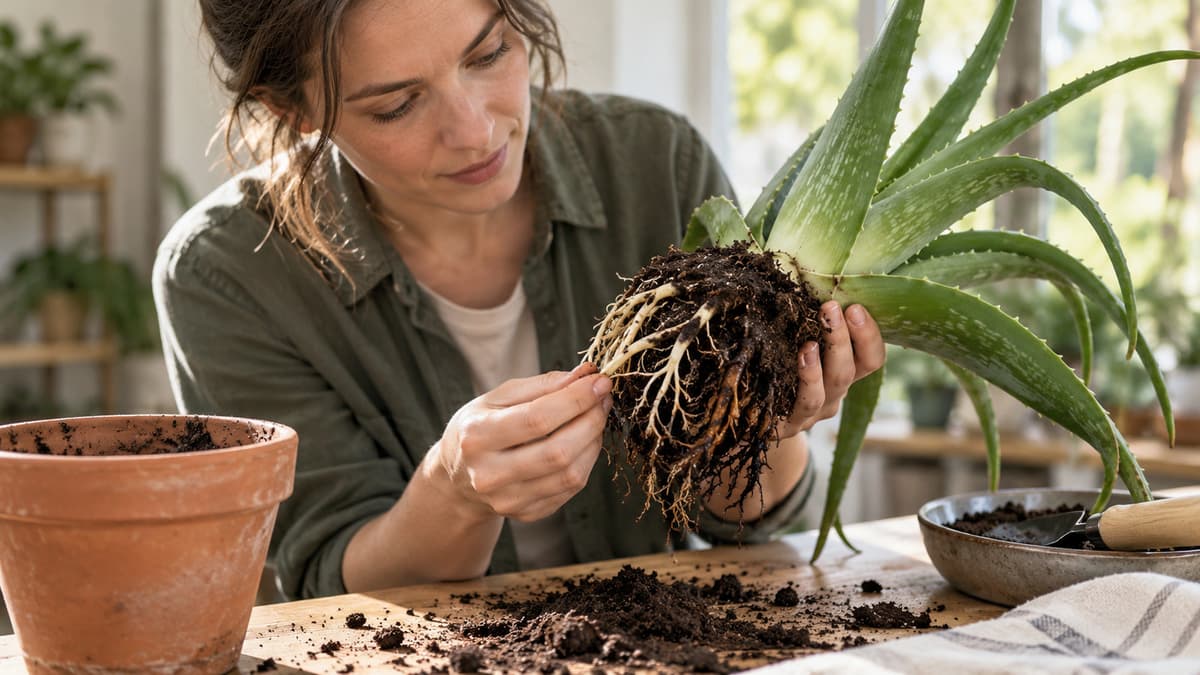
Aloe vera root rot
Sour compost and a soft base need a root check before you water again or replace the plant.

How often to water an aloe vera
A weekly drink rots a windowsill aloe. How dry compost differs from a schedule that is too keen.
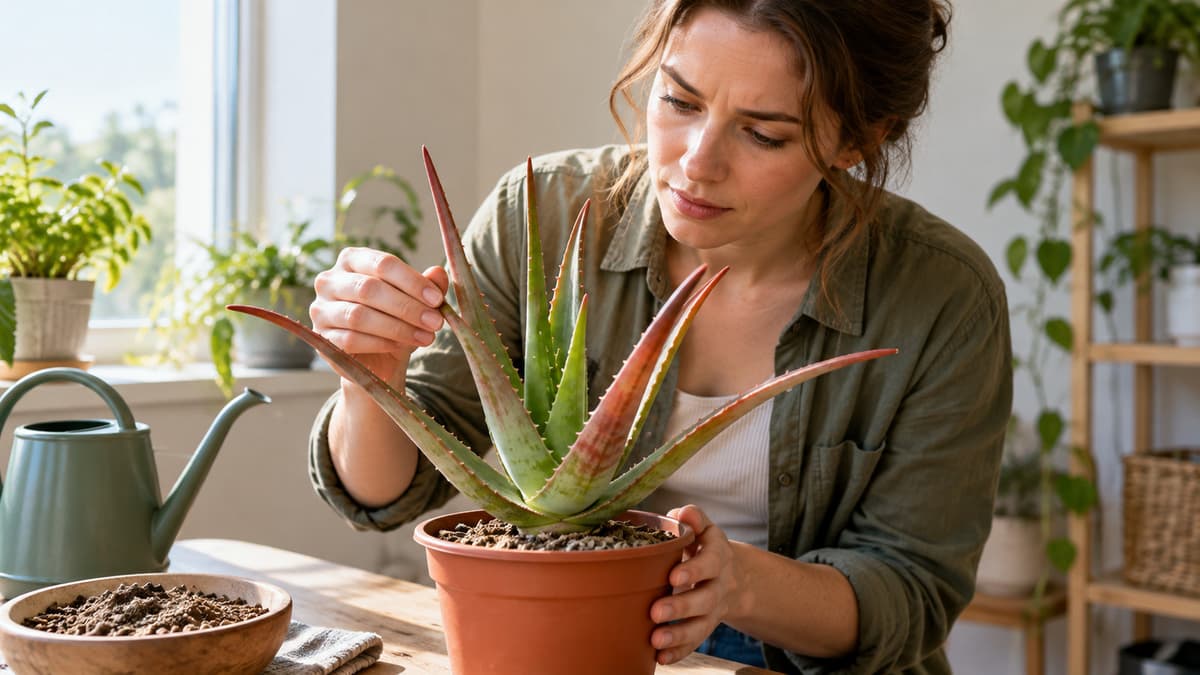
Red aloe vera leaves
Red or bronze leaves are a different cue from brown, usually thirst or strong sun on a firm plant.