Aloe vera leaves turning red: check water first
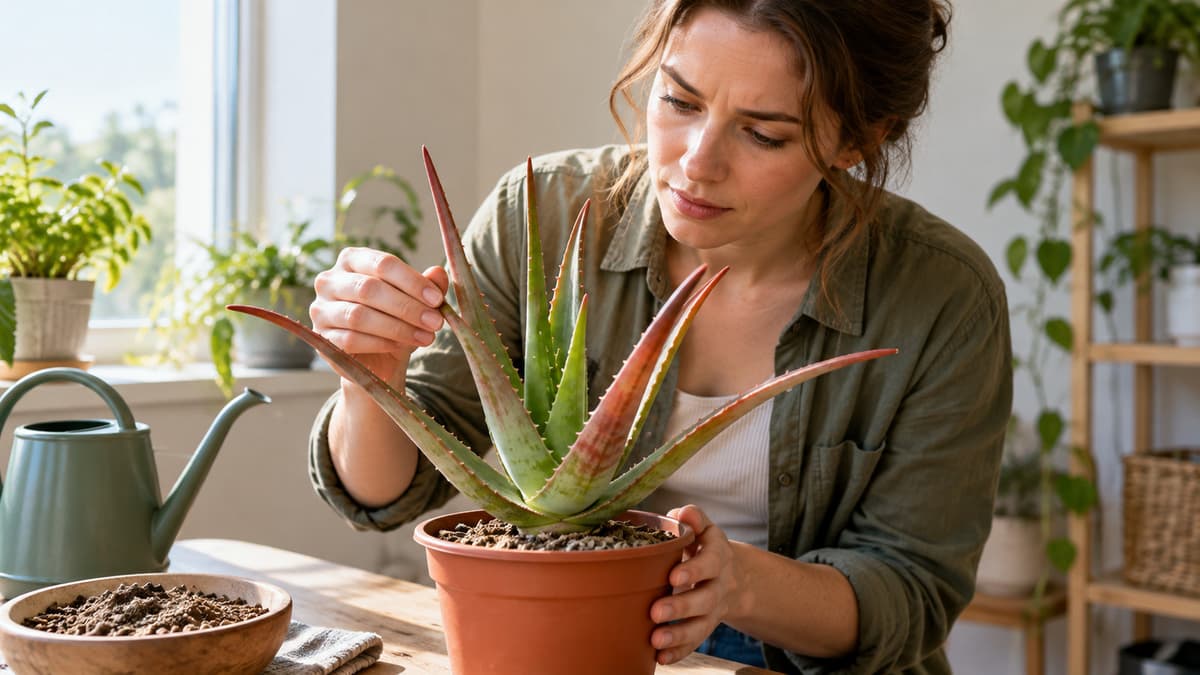
Firm red aloe vera leaves often need water, the RHS says. Soft brown is a different fault. Feel the leaf and the compost before you move the pot into shade.
On this page

You moved the pot off the south-facing sill because the leaves went red, and a forum post called that sunburn. The plant is still red in a dimmer corner, and the compost is dust. Aloe vera leaves turning red are often a water cue, not an order to hide the plant.
The Royal Horticultural Society says that if an aloe in a sunny room turns reddish, it needs more water. That is one cue, not a diagnosis from a photograph. Press a leaf. Firm and dry: water once and let the pot drain. Soft: stop. Water on a soft crown is how a colour change becomes rot.
These notes are from Peter F. in October 2026. They follow the Royal Horticultural Society on Aloe vera in sunny rooms and on the species page, plus the brown-leaf split reported by Ideal Home. There is no lab trial behind them. If you buy through links on our aloe vera plant comparison, a qualifying purchase can earn us a commission at no extra cost to you.
In short
A reddish aloe vera in a sunny room can need water when the leaf is still firm and the compost is dry. Water once, drain the pot, and leave it in bright light. Soft brown is a different fault. A bathroom adds the shade and humidity this plant dislikes.
What the RHS means by red
Read the reddish line as a prompt to check the pot, not as a verdict on every bronze leaf in Britain. The species page lists full sun, and a west- or south-facing position. Red and sun can sit together. The colour is not proof that the sun is the thing to remove.
Forums call it sunburn and send the pot to a north-facing shelf or a steamy bathroom. A firm red blush, on compost that has shrunk from an 11 cm pot, fits the thirst cue. A leaf that squashes under your thumb does not. If your finger comes out cool and sticky, do not pour again because the blush is still there.
A shop moisture field will not settle it. Carbeth's 11 cm listing, the top pick at £14.99, prints moderate watering. That is a catalogue filter, not a finger in your compost. The 4.2 from 1,271 amazon.co.uk reviews is shared with another Carbeth listing, so it is one pool, and those reviews describe parcels, not a trial of red leaves.
Feel the leaf before you move the pot
Colour is what you noticed. Texture chooses the next step. A firm leaf springs back when you pinch it near the middle, not at a dried tip. A soft leaf stays dented or slumps where it meets the compost. Press before you move the pot off the window.
Firm, dry, and red
Dry compost does not cling, the surface can look pale, and an 11 cm nursery pot feels light. Firm leaf, dry compost, and a red or bronze cast is the case for one drink. Water until it runs from the drainage hole, and keep the stream off the crown. Water held where the leaves overlap, on a cool evening, is a common start for rot.
Stand the pot until it stops dripping. Ten minutes is a rule of thumb for an 11 cm pot, not a timer from the RHS. Empty the saucer and any decorative cover. The cover in the Carbeth photograph is not in the box, and a cover with no hole holds the drink against the base. Do not pour again the next morning. The later rhythm, including a sparse British winter, is on how often to water an aloe vera.
Soft, or wet, and a bit red
A soft leaf with a reddish tint is not the thirst cue in another coat. People pour because the colour matches a post about sun stress, and the base is already collapsing. Stop. Ideal Home treats soft brown as overwatering and dry, crispy tips as underwatering. If the tissue gives under your thumb, the red cast does not overrule the feel.
If the compost smells sour, or the plant rocks in the pot, the next read is aloe vera root rot, not another soak. The split between mushy brown and crisp tips is why aloe vera leaves turn brown. Compost that is still damp belongs with the wait, even if the leaf is only slightly red. Feel the whole leaf, not only the coloured tip.
Sun without turning the room into shade
Aloe vera wants full sun, on a west- or south-facing spot. A south window in late June can scorch a leaf pressed against the glass. A south window in November is often the only bright place in the flat. Hiding the plant from both, because the leaves went red in March, throws away that light.
The forum mistake is a full retreat: hallway, north room, or bathroom, on the theory that red means too much sun. The RHS groups shade with the conditions this plant dislikes, and it dislikes humidity too. A bathroom after a shower is shade, damp air, and often a sill with no drainage. That does not answer a thirst cue.
In July, move an 11 cm pot back along the same sill so the leaves are not flattened on hot glass. The other end of a bright window is the limit. The landing is the wrong move. Carbeth's listing says partial shade and bright indirect light. The RHS species page says full sun. We did not run a light trial. For a firm red plant, follow the brighter line and the water check.
When the colour is not this problem
Soft brown, a mushy base, and a sour smell are the wet fault. Dry brown tips are the dry fault Ideal Home separates from that. A tip bent in the carton is journey damage. Brown on soft tissue belongs on the brown-leaf page, not under a sunburn label.
A plant sold only as aloe may be another species. Some carry a bronze tone as part of how they grow, without being the thirst cue written for Aloe vera. The listings in this comparison are sold as Aloe vera. We will not draw a stress-colour chart for hybrids, or for a label that stopped at the word aloe.
A plant that sat on a south sill after a dark box can blush while the nursery compost is still damp. Do not water into compost that is already wet. Feed will not clear a red leaf. Skip it in a slow winter, and skip it on a soft plant. Light, pot, and the gap between drinks sit on how to care for aloe vera.
After the drink, and where to read next
Give the firm, dry, red plant one thorough watering, off the crown, and put it back on the bright sill. Look again after several days. Check firmness and whether the compost has started to dry. The RHS publishes no date for green. Some plants keep a bronze edge in hard south light and stay firm. Moving the pot into shade to chase pure green trades a cosmetic cast for low light.
If the leaf softens after that drink, you watered a plant that was not in the thirst case, or the pot could not drain. Tip out any cover and read the brown-leaf page. If the base smells sour, read the root-rot page. Another pour is not the correction.
Replace the plant only when the centre has gone, not because the leaves are red. When the crown has collapsed and the roots are dark and sour, stated height and what the box contains are on the buying guide. The Carbeth 11 cm plant is stated at 25–30 cm and £14.99, and the decorative pot in the photo is not included. Reviews often mention spilled compost and bent tips. Those are parcel facts, not a prediction about red leaves.
Common questions
Is red on an aloe vera sunburn?
The leaves are red and still hard. Should I water?
The leaves are red and soft. Is that the same answer?
Should I move a red aloe out of the sun completely?
Is a bronze colour normal on aloes that are not Aloe vera?
Will red aloe vera leaves go green again?
Should I feed a plant with red leaves?
Is red the same as brown tips from the post?

Peter F. is the editor for DIY & tools at productscompared.co.uk. Comparisons in this category are checked against amazon.co.uk listings, review evidence and public UK sources.
Related articles
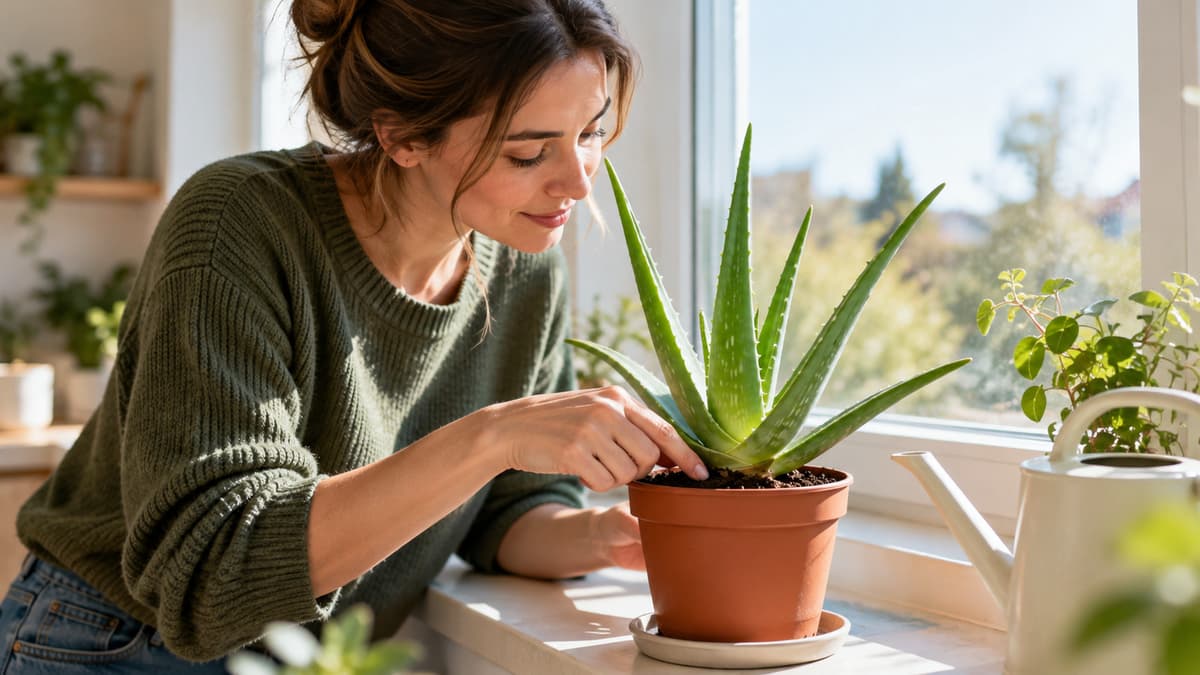
How often to water an aloe vera
Water when the compost is dry, not every week. A soft crown is the opposite of a red, firm leaf.

Why aloe vera leaves turn brown
Soft brown and dry brown tips are a different sort from a red blush on a leaf that is still firm.
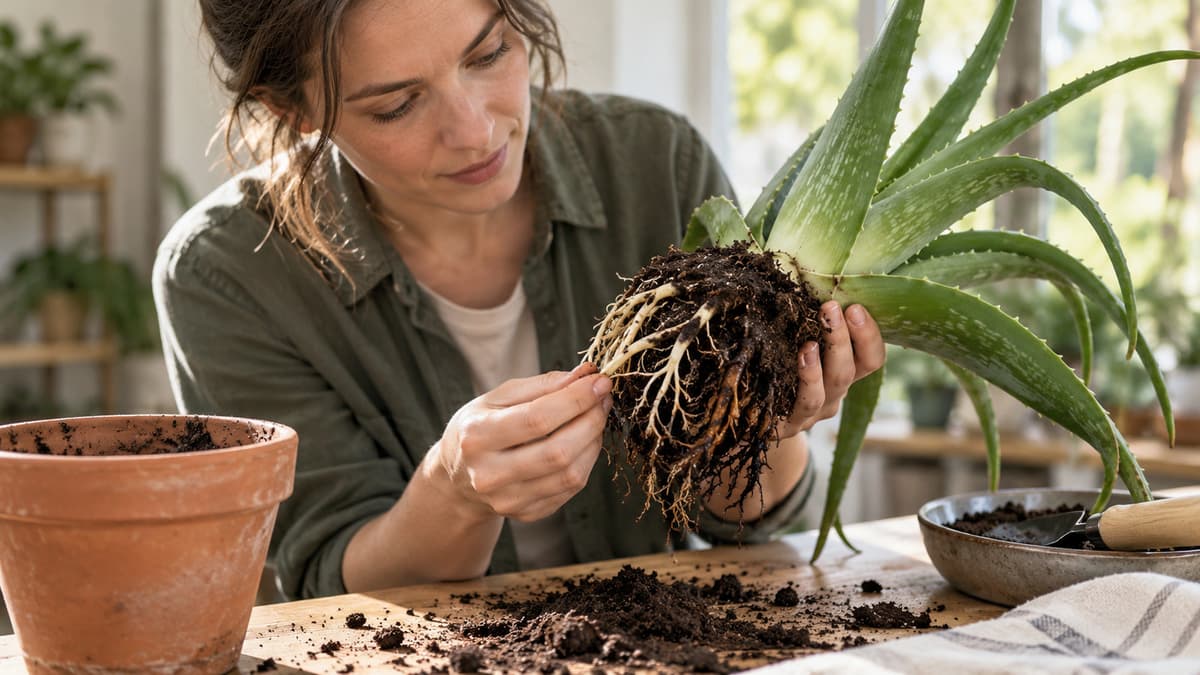
Aloe vera root rot
A soft base and sour compost need a root check. Another drink will not firm a collapsing crown.