Independent comparisons. We may earn from shop links. More info

How to assemble a wooden garden shed

Updated: 22 October 2026

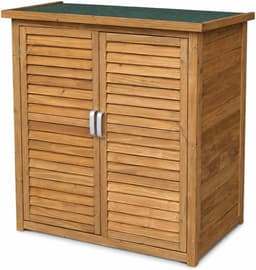
The first screws are tempting while the walls of a flat-pack fir cabinet are still loose. How to assemble a wooden garden shed is the order that keeps those screws from splitting the timber and racking the doors. Level the base, dry-fit the panels so they meet, pilot-drill, then fix. A walk-in uses the same order at a larger scale. The cabinets in the [wooden garden shed comparison](/hub/garden-supplies/garden-shed-wood) crack when a driver goes in before the box is square. Peter F. read those amazon.co.uk listings and the public UK pages named below, and did not run a timber test. A qualifying purchase can earn us a commission at no extra cost to you.

The first screws are tempting while the walls of a flat-pack fir cabinet are still loose. How to assemble a wooden garden shed is the order that keeps those screws from splitting the timber and racking the doors.

Our top picks

On this page

Level the base before the first screw

A door that will not close is often the base, not the hinges. Forest Garden’s shed instructions ask for a base within 15 mm of level, and they raise the shed about 50 mm off the ground, because a twist in the floor becomes a racked opening once the walls are fixed. Those figures belong to their sheds. On a fir cabinet the same lean pulls the stile off the catch. Set the floor or the bottom frame on the slabs or bearers and measure both diagonals before any wall screw goes in. If the diagonals differ, shim or shift the base until they match. If the spot is still undecided, height and boundary rules sit on wooden shed base and planning.

Dry-fit, then pilot holes

Forest Garden’s assembly tips say to align every wall before any panel is screwed to the floor, and their installing guide fixes the walls to each other before they are fixed down. Their PDF leaves out pre-drilled holes because timber moves. On the fir cabinets here, buyers report missing pilot holes and split timber. On B0D5VKH95K one build took about three hours and still left cracks, so this is not a short job. Clamp the joint, drill, then drive until the head is flush and stop. The cuts you have just opened need a first coat, and that belongs on treat a wooden garden shed.

Roof board and felt

Offer the roof up only after the walls are square and fixed to each other. On B07NBYTW6W reviewers struggled to align the roof board, which is when a cabinet goes out of true if the last screws bite while the board is still skewed. If asphalt or felt is already stuck flat to that board, leave it. Several of these cabinets arrive that way, so peeling a sound factory sheet is the wrong default. Felt a shed roof when the sheet is missing, loose, or torn. Forest Garden start at the low edge so each upper sheet overlaps the one below.

When you stop and get help

Stop when the instructions are missing, a structural piece arrives split, or you cannot level the base. On B0DKF7Z477 one box arrived with no instructions, and guessing the order on thin fir is how panels crack. A fitter is the sensible call when the ground will not come level, or when a walk-in roof is above a comfortable reach. If you are still choosing a carcass, width, depth, and the door belong on the wooden garden shed buying guide.

Common questions

Can you build these cabinets alone?
Forest Garden recommend two people, and several cabinet reviews on amazon.co.uk say the same once the roof and the doors are in play. You can manage a small fir cupboard alone if every joint is clamped and you drill a pilot before you drive. A door that racks while you are holding it is the moment to wait. Alone is a poor plan for a walk-in, where the panels are heavier.
What tools do you need if the holes are not drilled?
You need a spirit level, a tape, a drill with bits around 2.5–3 mm for a 4 mm thread, a driver, and clamps or a second person. Pre-drill fir cabinet walls even when the leaflet looks complete, because Forest Garden omit factory holes on the grounds that timber moves. Use the fixings in your box. Do not turn their screw lengths into a shopping list for a different cabinet.
What order stops the doors twisting?
Level the base, stand the walls so they meet, fix the walls to each other, then fix that square box to the floor. Check both diagonals of the door opening before the roof board goes on. A panel screwed down while the opposite wall is still loose is how the opening racks and the shed door will not close. Fit the hinges after that square is locked.
How big should a pilot hole be?
Forest Garden’s installing guide puts the pilot 1–1.5 mm under the thread, so a 4 mm screw wants a hole about 2.5–3 mm. Drill a clearance hole through the near piece so the screw pulls the joint tight instead of splitting both boards. Drive until the head is flush, then stop. Overtightening cracks thin fir about as readily as skipping the pilot.
What if the felt is already on the roof board?
Leave a factory asphalt or felt sheet that is stuck flat and intact. A new layer is for a bare board, or for felt that is loose or torn. If you cover a bare roof, start at the low edge and overlap. B&Q’s method uses about 50 mm at the eaves and about 75 mm at the gable. Do not tack through a single layer that faces the rain.
What if a panel arrives split?
A structural panel that is split in the box is a reason to stop and take it up with the seller under the Consumer Rights Act 2015. Photograph the damage before you assemble around it. A light scuff is not a cracked stile or a split floor board. If that piece holds the opening square, wait for a replacement rather than gluing it and carrying on.
Where does the first coat of preserver fit in the day?
After the cuts and the pilot holes, and before the cabinet sits out through a wet week, the bare end grain wants a coat. The order of preserver, end grain, and felt edges is on the treatment page, not in the screw sequence. Do not coat a panel you may still return because it arrived split. Get the box square first, then treat the cuts you have actually made.

Related pages

Sources

Public UK sources for this comparison. Prices, stars and review counts are the amazon.co.uk listings in this set. Page updated 22 October 2026.

  1. Class E, Town and Country Planning Order 2015 (retrieved 22 October 2026)
  2. Planning Portal: outbuildings (retrieved 22 October 2026)
  3. Building Regulations 2010, Schedule 2 (retrieved 22 October 2026)
  4. LABC: outbuildings and building regulations (retrieved 22 October 2026)
  5. Edinburgh Council: sheds and ancillary buildings (retrieved 22 October 2026)
  6. BS 8417:2024, preservation of wood (retrieved 22 October 2026)
  7. Wood Protection Association: Use Class 3 (retrieved 22 October 2026)
  8. Consumer Rights Act 2015, section 9 (retrieved 22 October 2026)