Outdoor tap double check valve: indoors after 1999
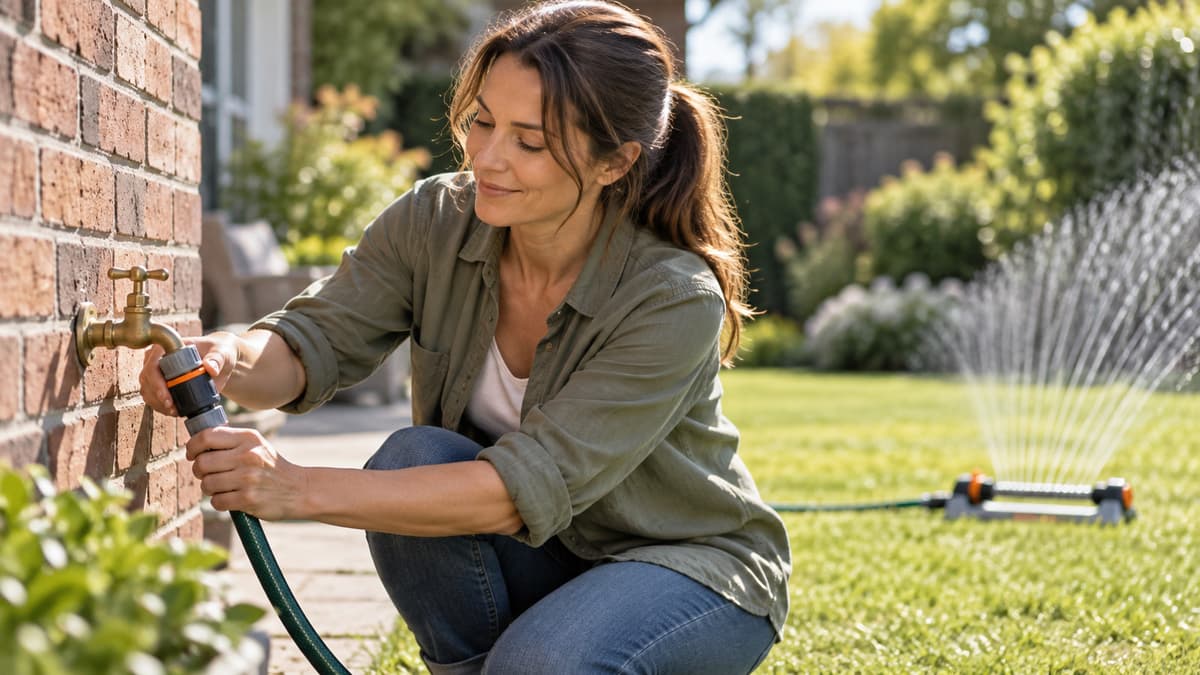
A garden hose is typically fluid category 3. The double check valve belongs indoors on taps fitted after June 1999. The sprinkler head is not that valve.
On this page

You have fitted a new head, the hose clicks on, and you assume the outdoor tap double check valve came in the box. It did not. None of the portable sprinklers in this hub’s comparison includes a double check valve. The head only throws water. The protection against dirty water travelling back into the house sits on the supply to the tap.
This page is from the Products Compared editorial team. We read Water Regs UK’s notes on hose union taps, type HUK1 and freezing, plus the WRAS note IRN R060, in October 2026. We did not inspect your pipework, and we are not telling you to fit a valve yourself. Amazon links are affiliate links.
In short
A typical domestic garden hose is fluid category 3, and a double check valve is the usual protection. On taps installed after 30 June 1999 that valve belongs inside the building, not in the sprinkler and not as an unprotected fitting on a frosty wall. A hose left in a butt can be drawn back if the mains pressure drops. A ban is a separate rule. If you cannot see a lawful valve, call a plumber. Do not take the tap apart.
The sprinkler is not the protection
The products in our sprinkler comparison are hosepipe heads: oscillating bars and rotating arms. The top pick, the Kärcher OS 5.320 SV at £36.00, has ground forks, a splash guard and a pre-filter. A pre-filter keeps grit out of the nozzles. It is not a double check valve, and it does not sit on the drinking-water side of the tap. The same is true of every other listing in that set. The box will talk about area, pressure and a hose connection. It will not claim to be the backflow device for your house.
People mix the two because both parts are near the outdoor tap. The valve is a fitting that should already have been decided when the tap was installed. Buying a new bar does not refresh that decision. If the instructions show a click fitting and a cleaning pin, that is maintenance of the head. It is not a water-fittings diagram.
A leak at the joint is a different fault again. Water on your shoes means a washer or a loose connector. It does not tell you whether a check valve exists indoors. Use the how to use page for the head. Use this page for the supply.
Look indoors before you assume the fitting was skipped. On a house with a utility room or a kitchen on the other side of that wall, the valve is often a small brass or plastic body on the pipe that feeds the outside tap, with an isolating valve nearby. You are looking, not adjusting. After 30 June 1999, a valve you can only find outside is the arrangement to ask a plumber about.
Category 3 and a double check valve
Water Regs UK classes a typical domestic garden hose as fluid category 3. The risk is water that has left the mains, sat in a hose, and might return. A double check valve is the usual protection named for that hose union. Two check elements in series are there so a single failed seal is not the only barrier.
A tap sold as type HUK1 has a double check valve built into the tap itself. Water Regs UK says that arrangement is only lawful if the tap was installed before 1 July 1999. After that date, the valve for a category 3 hose tap is inside the building. The date is the hinge. An old tap that has always been there is not the same case as a tap a fitter put on the wall in the last twenty-five years. If you do not know the date, do not decide from the colour of the handle.
We are not quoting the Water Supply (Water Fittings) Regulations 1999 in full. The public notes on waterregsuk.co.uk are the account a householder can read. A sprinkler listing is not that document.
Inside the house, not on a frosty wall
The reason the valve moved indoors is freezing. Water Regs UK says a fitting outside the thermal envelope of the building, or installed shallower than 750 mm, needs protection against freezing. Insulation can delay a freeze. It is not described as a substitute for putting the category 3 valve inside. A valve screwed to the outside tap, exposed to a January night, is the arrangement the later rule is trying to avoid.
Seasonal kit should be isolated and drained. That includes the hose and the head, not only a buried pipe. Leave the sprinkler in the garage, and do not assume foam on an outdoor body makes a modern outdoor valve acceptable. Depth and the thermal envelope are the tests in that freezing note.
Pressure is the side effect people notice in summer. Arrow Valves, in an industry tutorial, warns that some double check valves drop up to about 0.5 bar at a flow of 3 metres per second. That is their example. We did not measure 0.5 bar across any head in the comparison. If your rectangle looks short, a lawful valve may be part of the reason, together with the tap and the bore of the hose. Removing the valve to “get the distance back” is the wrong repair. The distance on the box was a maximum, often at 4 bar, not a promise at the pressure left after a lawful fitting.
A hose left in a butt or a bucket
The ordinary mistake is the hose end left under water. You finish watering, the head is still attached, and you drop the end into the water butt so the patio stays dry. If the mains pressure falls, that butt can feed the hose backwards. A pond or a bucket used to weigh the hose does the same job. The sprinkler does not break that path. Take the end out of the water when you stop.
A butt is still worth having for the can. Anglian’s garden advice treats the butt as the store that fills a can, which is a different point from backflow. Store the water. Do not connect the mains hose as a permanent dip pipe. If you fill the butt from the tap, the outlet should break away from the stored water rather than sit in it. That is a fittings layout. It is not a setting on the oscillating bar.
Children’s paddling water and a dog bowl are the same family of risk if the hose is submerged. The volume is smaller. The direction of travel, if pressure drops, is the same. A timer on the tap does not change the category of the hose. It stops the run when the clock ends. It does not stop stored water moving backwards, and it is not a double check valve. When you pack the sprinkler away, break the hose off the tap or at least lift every end clear of standing water.
What this page will not tell you to fit
We will not give you a sequence for opening the tap, cutting pipe, or choosing a valve from a catalogue. WRAS installation requirement note IRN R060 sets out options where an existing outdoor tap has no protection. Read it as an installation requirement. It is not a basket. The person who applies it is a plumber who works to the water fittings rules, not the person who has just unboxed a sprinkler.
If you rent, the tap is usually the landlord’s fitting. Ask before anyone works on it. If you own the house and you cannot find a valve indoors, or you can see only an old body on the outside wall, stop there. Tell the plumber the tap’s approximate age if you know it, and say the hose is used on a sprinkler and sometimes near a butt. Do not dismantle the tap to “check for a flap”.
A hosepipe ban is not solved by any of this. A lawful valve keeps the supply safer. It does not authorise a banned use. Check the live notice, then the ban page. Frost on the head is a third topic: drain the seasonal run, and do not treat lagging as a reason to leave a modern valve outdoors.
Common questions
Does the sprinkler stop dirty water going back into the house?
What is a double check valve?
My outdoor tap already has a valve. Is that enough?
Why do people say the valve should be indoors?
What if the hose end sits in a water butt?
Will a check valve cut the pressure my sprinkler needs?
Who do I call if I cannot find a valve?
Is this the same as a hosepipe ban?

Peter F. is the editor for DIY & tools at productscompared.co.uk. Comparisons in this category are checked against amazon.co.uk listings, review evidence and public UK sources.
Related articles
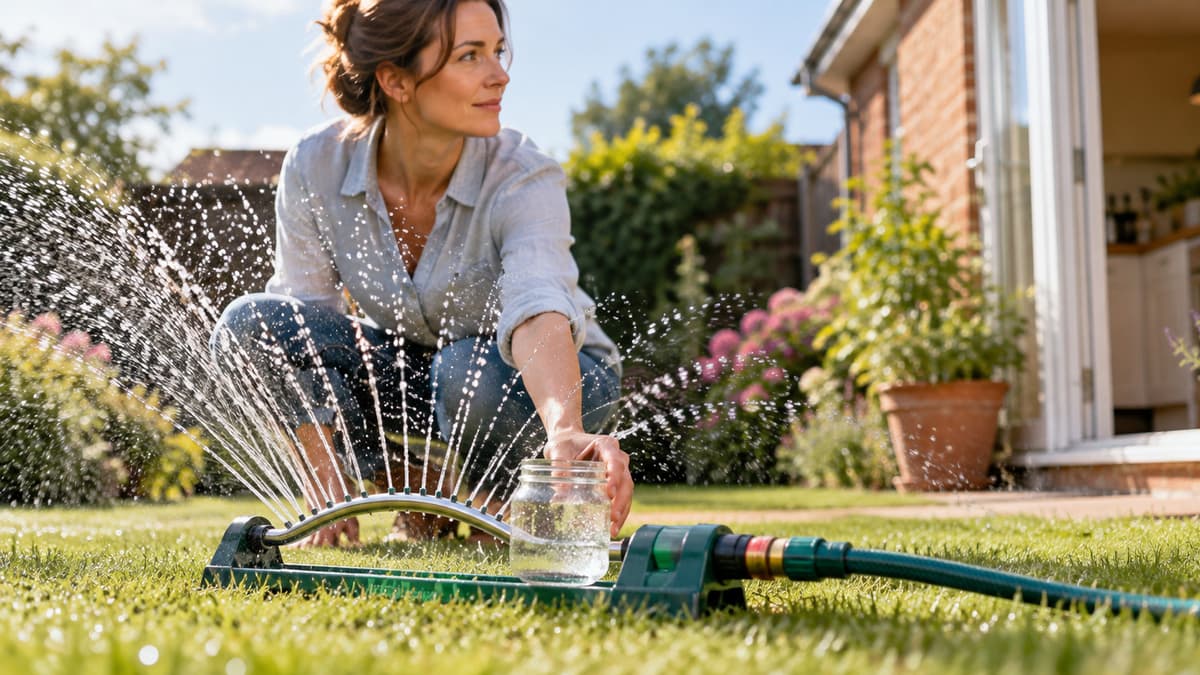
How much water a garden sprinkler uses
The RHS compares an hour of sprinkler use with two days for a family of four. The head is not a small can.
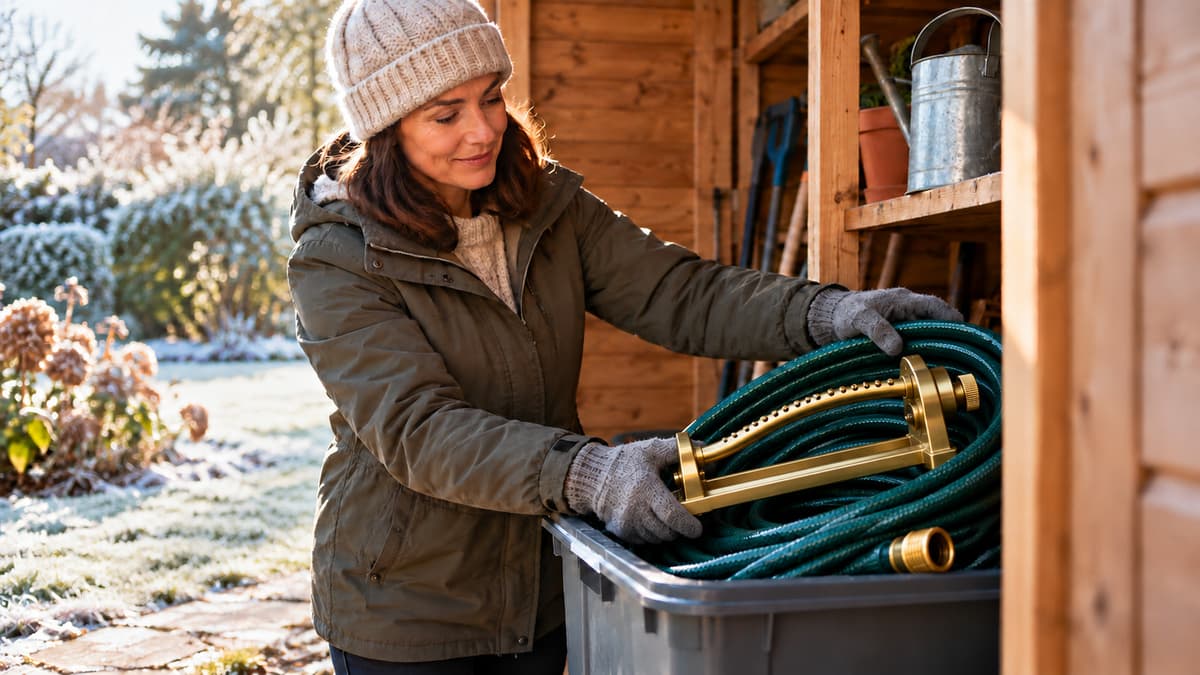
Frost and a garden sprinkler
A fitting outside the thermal envelope can freeze. Drain seasonal irrigation before a cold snap.
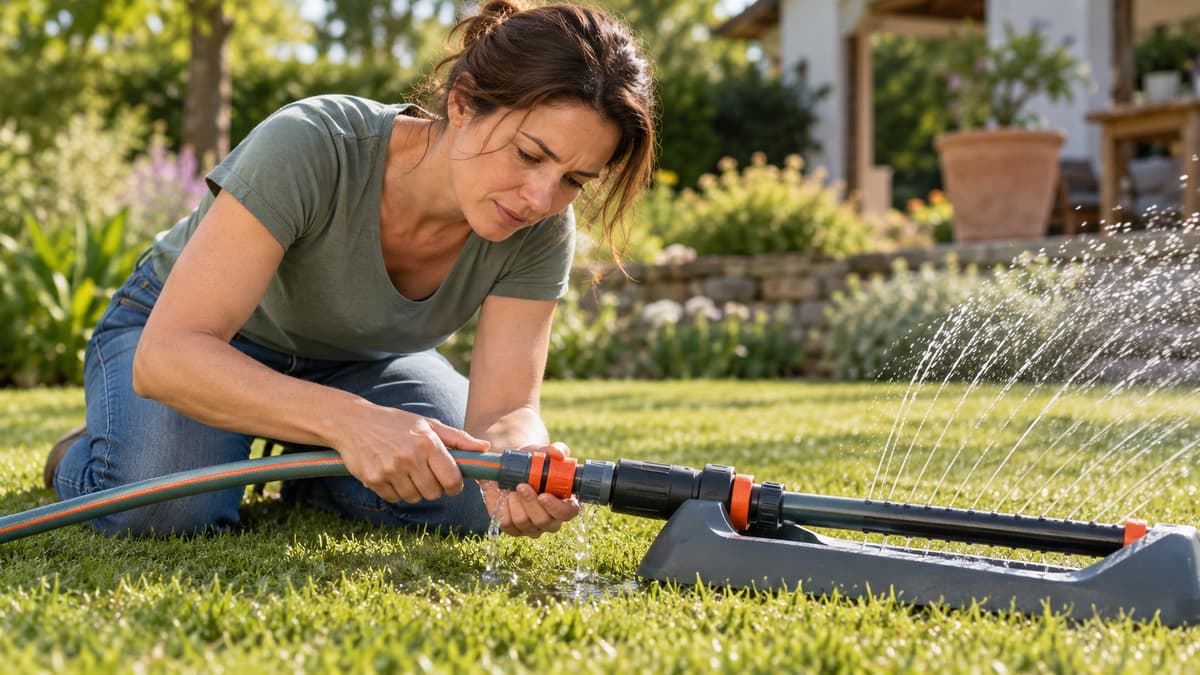
When the sprinkler joint leaks
A weep at the connector is a washer or a loose joint. It is not a sign the check valve is missing.