Store a Garden Sprinkler Over Winter Without Damage
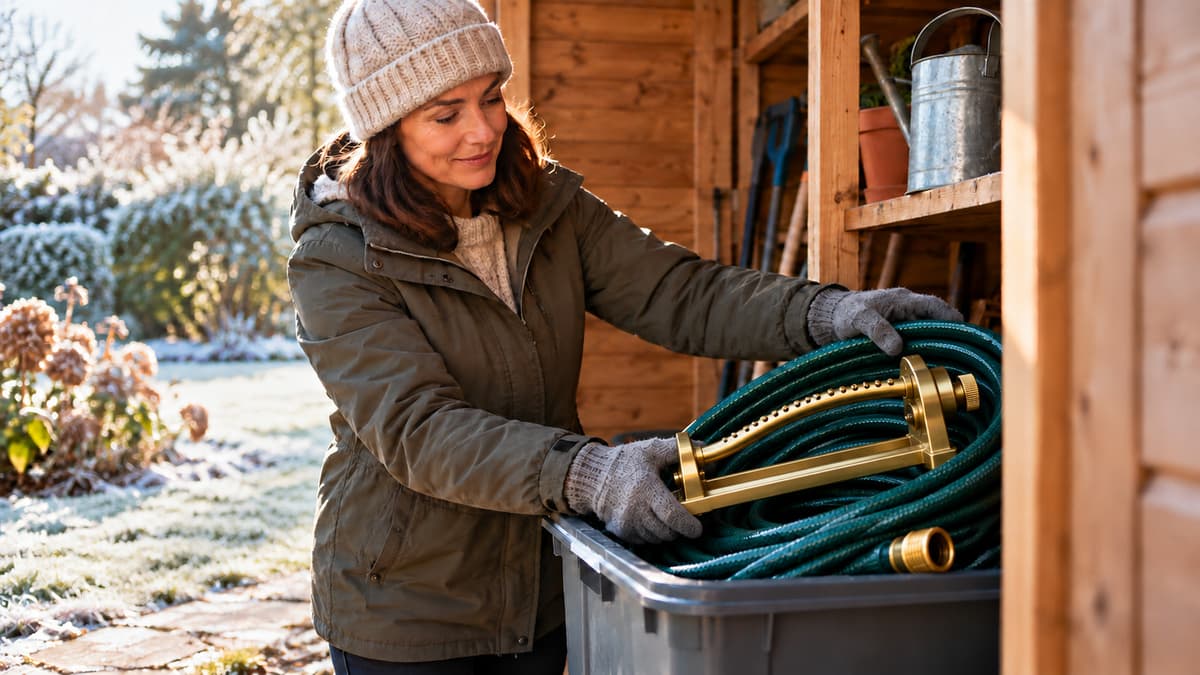
Learn how to drain and store a garden sprinkler over winter, protect your hosepipe and outside tap, and avoid frost damage to valves and fittings safely.
On this page

The first hard frost often arrives after the lawn-watering season has quietly ended, leaving a sprinkler, a full hosepipe and several connectors still attached to the outside tap. To store a garden sprinkler over winter, disconnect the entire portable setup, drain each part and put the plastic head and hose under cover. That routine also gives you a chance to protect the tap and check valve, which can be more vulnerable than the sprinkler nozzles themselves.
In short
Take the sprinkler off the hose, remove the hose from the tap and let all three components drain before frost. Store the sprinkler and loosely coiled hose in a shed or garage, then isolate and drain the outdoor pipe if your plumbing provides a suitable indoor valve. Insulation can delay freezing, but it is not a substitute for removing trapped water.
Disconnect, drain and store the whole setup
Start with the water turned off, then disconnect the sprinkler from the hose and the hose from the outside tap. Leaving a hose connected can retain water around the tap fitting and creates a potential backflow route. WaterSafe advises gardeners to disconnect and drain hoses, store them away and protect outside taps as colder weather approaches.
Lay the hose out with one end lower than the other and walk it from the high end so water leaves through the open lower connector. You do not need to stamp on the hose; the aim is to remove the standing water that can freeze and expand. Take off spray guns, timers, splitters and quick connectors, hold each fitting opening-down, and let loose water escape if its instructions allow this. A timer or powered accessory may have its own battery and storage steps, so use that manual.
Coil the drained hose in broad loops. Tight bends, or a heavy object left on top, can flatten or split a section that only shows when you pressurise it in spring. A wall hanger or dry shelf keeps the coil off the floor; avoid a single sharp hook. Gravity drainage cannot prove that every chamber inside a timer, pump or complex fitting is empty. If a component has drain plugs or a specified storage position, follow the manufacturer's instructions.
Protect the outside tap and its check valve
After the hose is removed, look at what remains outdoors. A tap body, short external pipe and exposed check valve can all hold water. Water Regs UK guidance explains that fittings outside the building's thermal envelope need protection, and that seasonal pipework should be capable of being isolated and drained.
If you have a clearly identified indoor isolating valve for the outside supply, close it before severe cold, then open the outside tap and drain that section. Do not close a random stopcock because a guide named that spot. Afterwards, close the outside tap as directed and fit a weatherproof cover if appropriate. Lag exposed pipe with material made for outdoor pipework. Insulation slows heat loss; it does not guarantee protection through a long freeze.
A check valve stops contaminated water travelling back from the hose towards the wholesome supply, but an outdoor one can fail when retained water freezes. Backflow protection and frost protection are separate jobs. Do not remove, bypass or modify a check valve to make drainage easier. If you cannot identify the isolator, the outside section will not drain, or an exposed valve already looks cracked, ask an approved plumber. Our guide to the outdoor tap check valve explains why its position matters.
Store the sprinkler head dry and supported
Turn the disconnected head through the positions that let water leave naturally. An oscillating bar may drain through its inlet and jets when tilted; a rotating or spike sprinkler can have different passages. Shake it gently. Do not strike it on the ground or poke wire into the nozzles. Wipe off soil and surface water, then air-dry the head before it goes in a box or on a shelf. A wet head in a sealed bag keeps damp around the seals. Keep the inlet free of grit, and leave any filter or washer in its fitting.
Store it where tools will not crush it. A frost-free cupboard is useful, but a dry shed or garage is normally enough for a drained plastic head. It needs to be empty, out of the weather and protected from impact. Check the connector too: a distorted washer, cut O-ring or cracked collar may explain a summer leak. Replace only compatible parts, and do not smear on an unspecified oil or grease. If the joint leaked before storage, use the sprinkler hose-joint checklist before buying a new head. Do not open a sealed oscillating gearbox to chase a few drops.
Treat frost-proof claims carefully
A product described as frost-protected is not permission to leave the complete watering setup connected all winter. The claim may apply only to the sprinkler body under defined conditions, not to the hose, tap, timer, connector or an exposed check valve. It also does not mean that trapped water can never damage a part.
Gardena's international page for the Aqua S says the sprinkler has frost protection. The checked amazon.co.uk listing does not repeat that sentence, and its warranty wording is not the same as the international page. Do not blend those sources into a promise about every UK listing or every Gardena model. If you own an Aqua S, follow the instructions with that product and the current UK documentation. Draining and sheltering it is still a low-effort precaution. If you own another model, do not borrow the Aqua S wording.
The Kärcher OS 5.320 SV, featured here at £36.00, had a 4.5 rating from 2,322 reviews on the checked UK listing. Those details help with shopping. They are not a frost test and not a winter-storage guarantee. Compare its lawn-watering features with other portable garden sprinklers, then follow the care instructions for the unit you buy. Products Compared used the supplied listing information and public guidance; we did not run a laboratory frost test. Prices, ratings and claims can change.
Buried systems are a different winter job
A hose-end sprinkler on the lawn is not a buried irrigation installation. You can lift the portable head, disconnect the hose and let gravity do most of the work. Underground pipework can hold water in low points, zones, solenoid valves, pop-up bodies and pumps after the visible outlet looks dry. Some installed systems use automatic or manual drain valves. Gardena's UK information for its buried system discusses drain valves and a stated operating condition; that is not a method for a portable oscillating bar.
Compressed-air blow-out belongs to some buried systems. It is not an upgrade for a £36 portable sprinkler, and an arbitrary pressure can damage plastic parts. Never copy a compressor setting from a forum or another brand. Without design documents, ask a competent irrigation professional to identify the zones and drainage method. A water-butt pump needs the same caution: removing the delivery hose does not empty the housing. Follow that pump's manual, including electrical isolation. A porous soaker hose may be stored differently. That does not mean a spray head or an ordinary closed-wall hose can stay full of water outdoors.
Reconnect carefully when spring returns
Check the stored equipment on a mild day, before the lawn needs water urgently. Inspect the tap, valve and pipe for movement, cracks or staining. If you isolated the supply, close the outside outlet first and reopen the isolating valve slowly, watching the accessible run for leaks. Reconnect the hose by hand unless the fitting instructions call for tools. Pressurise the empty hose gradually, with no sprinkler attached, and look for drips at the tap connector and both hose ends.
Attach the sprinkler only after that check. Set it on a stable patch of lawn, turn the water up slowly and stand clear while the mechanism fills. A brief uneven spray can be air leaving the bar. Continuing leaks, a stationary oscillator or water from a split casing need investigation. Check local watering restrictions before use, including any hosepipe ban. Winter storage does not override a temporary-use restriction. If the sprinkler works normally, move it by the base rather than dragging it by the hose.
Common questions
Should I bring my garden sprinkler inside for winter?
How do I drain a hosepipe before frost?
Does an outside tap cover stop freezing?
Can an outdoor check valve split in frost?
Is the Gardena Aqua S frost-proof?
Do I need an air compressor to winterise a garden sprinkler?
Can I leave a water-butt pump outside in winter?
Is winterising a buried sprinkler system the same job?

Peter F. is the editor for DIY & tools at productscompared.co.uk. Comparisons in this category are checked against amazon.co.uk listings, review evidence and public UK sources.
Related articles
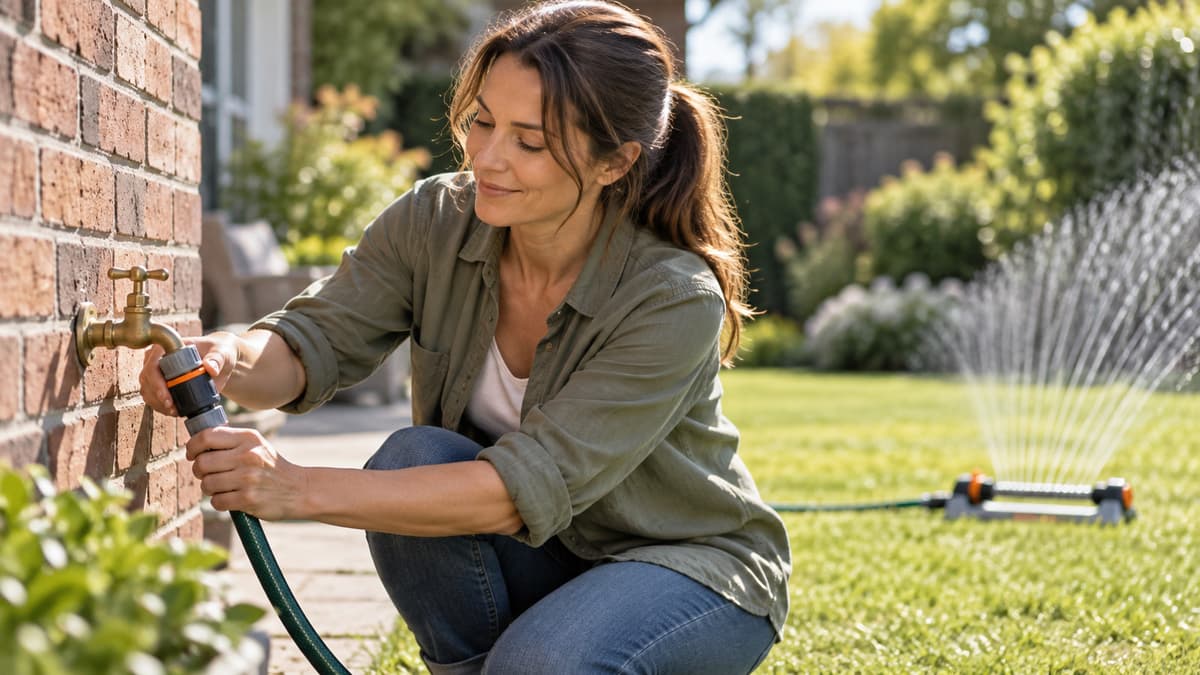
The check valve on an outdoor tap
Understand why a hose connection needs backflow protection and why an exposed valve can be vulnerable to frost.
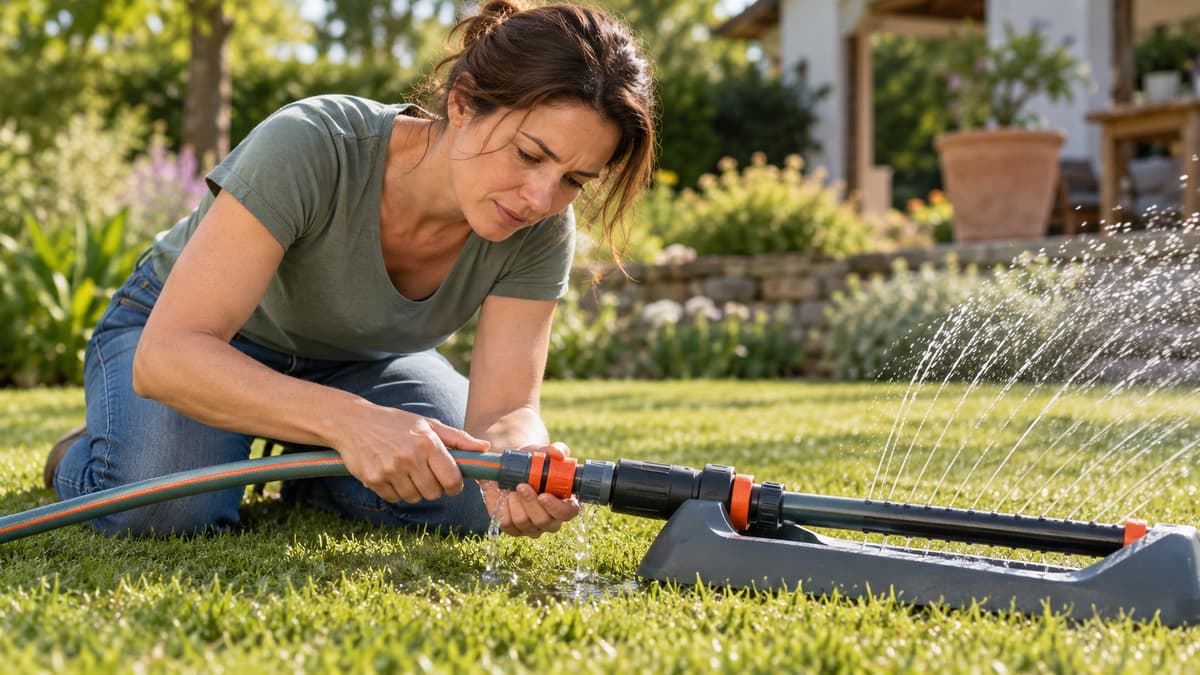
When the sprinkler joint leaks
Trace drips at a hose connector to a washer, O-ring or loose fitting before blaming the sprinkler.

Sand in a garden sprinkler
Learn what grit can do to an oscillating mechanism and when cleaning will not restore normal movement.