How much water does a garden sprinkler use an hour
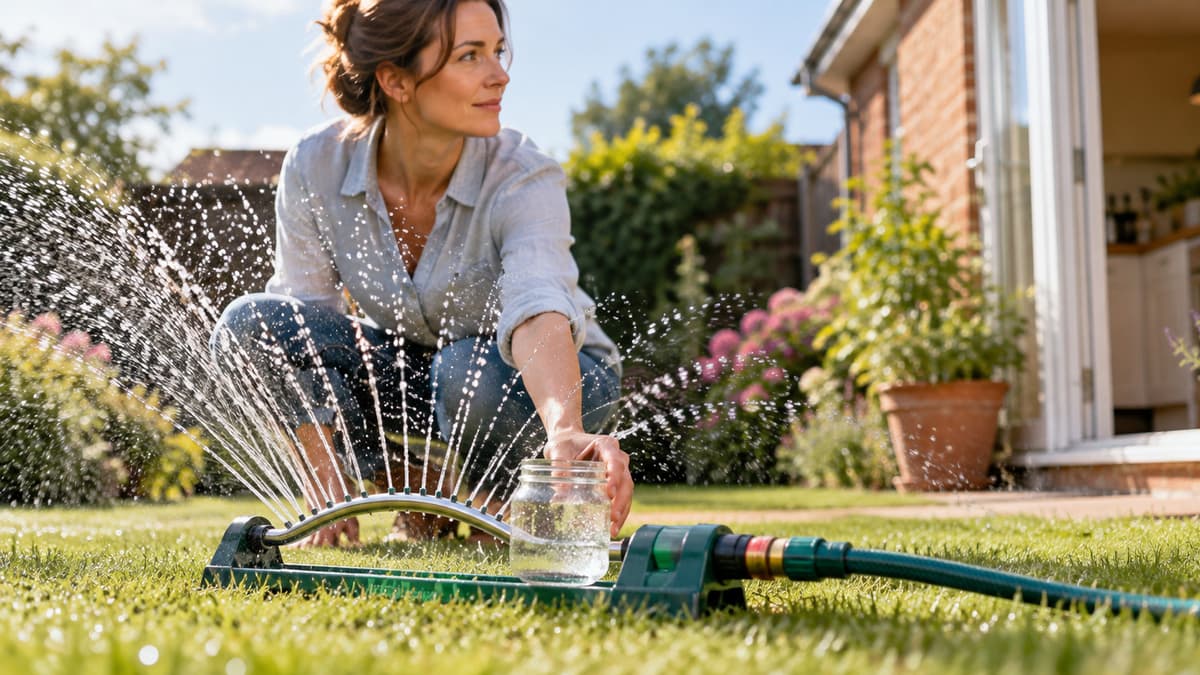
The RHS compares an hour of sprinkler use with two days for a family of four. A hose’s 150 litres is a different claim, and your meter needs your tariff.
On this page

You are about to leave a head running while you make tea, and the question how much water does a garden sprinkler use is the one that should stop you. The Royal Horticultural Society does not give you a litre total for that hour. It gives you a scale: an hour with a hose or a sprinkler can supply a family of four for two days.
This page is from the Products Compared editorial team. We compared portable hosepipe sprinklers on amazon.co.uk in October 2026. We did not meter a head in a lab, and we do not print a national price per hour. Links to Amazon are affiliate links.
In short
An hour of sprinkler use is the high-use end of garden watering. The RHS compares it with two days of water for a family of four, and does not print litres. Anglian Water’s figure of about 150 litres is for a hose, not a licence to treat a sprinkler as a small tool. If a ban is on, the notice wins. If you still water new grass, stop at about 13 mm in a jam jar.
The only comparison the RHS prints
The RHS garden watering pages put the sprinkler on the cons list for a reason. One hour can match what a family of four uses over two days. Janet Manning’s line on the RHS water-use pages says the same thing about a hose or a sprinkler. The point of the sentence is the scale, before evaporation and runoff take a share of whatever left the tap.
That comparison is also a warning about the lawn. The same RHS material says not to water an established lawn. If the grass is established, the hour you are about to run is the use the charity is asking you to skip. New turf and a newly sown patch are the narrow case, and only when a hose is allowed.
A watering can is the small tool in that picture. Anglian Water says a hose uses about five times a can, and that a water butt fills a can many times over. A sprinkler is not a can you have automated. It is the fitting people forget.
Why 1,000 litres and 150 litres differ
You will see “as high as 1,000 litres an hour” in a home-interest article, attributed to a conversation with Anglian Water, sometimes next to a bath count and a price of about £1.50 to £2. That 1,000 litres is not printed on Anglian’s garden page as we read it. The garden page says a hose uses about 150 litres, “the same as two baths”. The sprinkler FAQ says sprinklers use “large volumes”. It does not give a litre figure.
Those are different claims. One hundred and fifty litres is attached to a hose. “Large volumes” is attached to a sprinkler, without a number you can multiply. A magazine’s 1,000 litres is hearsay inside that article. We do not promote it to Anglian’s current figure, and we do not print £1.50 an hour as this site’s price.
Listing flow rates do not close the gap. In our sprinkler set, Gardena’s Aqua S prints a maximum of 12 litres per minute. That is a maximum on the listing, at the pressure the maker states, not an hour we measured on a household tap. Twelve litres a minute, if the tap actually delivered it for sixty minutes, would be 720 litres. Do not treat 720 as your bill.
Kärcher’s OS 5.320 SV, the top pick in that set at £36.00 with 4.5 from 2,322 amazon.co.uk reviews, prints up to 320 m² in a bullet and 320 litres per minute on the flow attribute. Those two 320s are not one claim, and neither is a consumption figure to multiply by sixty. One review in that file reached about half the stated area. Area on the box is not litres through the meter.
A meter needs your tariff
A metered home pays for volume. The rate is on your bill, in pence per cubic metre, and it is not the same in every region or on every tariff. One cubic metre is 1,000 litres. That conversion only helps after you have a litre total you trust. We do not have a single hour-total we are willing to stamp on every head in the set.
So the honest sum is the one you can do at home. Read the volumetric rate. Time the run. If you have a flow you can defend, from your own meter’s advance rather than from a box, then the cubic metres are that advance. Wastewater charges, if your company bills them on the metered volume, can sit on top of the supply rate. That is another line on your bill, not a figure we invent here.
The Kärcher at £36.00 and a £6.99 rotating head can both empty a butt’s worth of mains water if you leave them. Price of the plastic is not the price of the hour. Unmetered homes still have a supply that a ban can restrict. The absence of a meter is not permission.
If you want a figure you can defend, read the meter, run the head for a timed ten minutes, and read it again. The difference is your flow on that tap, that hose and that afternoon. Multiply by six only if you really mean to leave it for the hour. The meter advance is the only litre total this page will stand behind for your house.
The jam jar, if you still run one
If you still have a reason to water, put a straight-sided jam jar in the spray and stop at about 13 mm. That depth is the RHS marker used for new grass, and the digest we worked from ties it to new grass only when a hose is allowed. It is not a target for an established lawn that has gone brown.
Set the jar where the grass is, not on the path where the pattern is heaviest, or you will switch off early and leave the far edge dry. If the head walks or the bar barely reaches, move the jar rather than adding another half hour. Evaporation on a hot afternoon, and runoff onto paving, mean some of the water never reaches the roots. The RHS flags both. A puddle on the patio is not proof the lawn had 13 mm.
A can is the alternative when the patch is small. Anglian’s five-times line is the reason a can feels slow and a sprinkler feels easy. Slow is the point on a metered supply. Our how to use page is about setting the head, not about beating a ban with a shorter cycle.
A ban beats the litre debate
Check the live notice before you argue about litres. Anglian’s sprinkler FAQ has said there are no restrictions and that customers would be told if a ban returned. A Water UK FAQ snapshot has listed Anglian among companies with bans. Do not fold those into one sentence. One is a company FAQ. The other is a snapshot that can be newer or older than the page you have open. Your postcode’s current notice is the document that counts.
A temporary use ban and a drought order are not the same instrument, and exemptions for new turf are specific. Read them. A “water saving” nozzle, a timer, or a head that claims a modest flow does not create an exemption. The hosepipe ban page is the one to open before any tip about running a sprinkler more carefully. Careful use of a banned fitting is still use.
None of the heads in the comparison is a fire sprinkler, and none of them includes the backflow valve on the outdoor tap. Water use and the check valve are separate problems. If the hose end can sit in a butt, that is a fittings question, not a litre question.
Common questions
How many litres does a sprinkler use in an hour?
Is that the same as a family of four for two days?
What will a sprinkler add on a meter?
Is a hose’s 150 litres the same as a sprinkler?
How do I know when to turn it off?
Does a short run use only a little?
Is this allowed if a ban is on?
Which head in the comparison uses less?

Peter F. is the editor for DIY & tools at productscompared.co.uk. Comparisons in this category are checked against amazon.co.uk listings, review evidence and public UK sources.
Related articles
The check valve on an outdoor tap
A sprinkler head does not stop water from a butt being drawn back into the house. The valve sits on the supply.

Leave a brown established lawn
RHS advice is not to water an established lawn that has browned. A sprinkler hour does not reverse that.
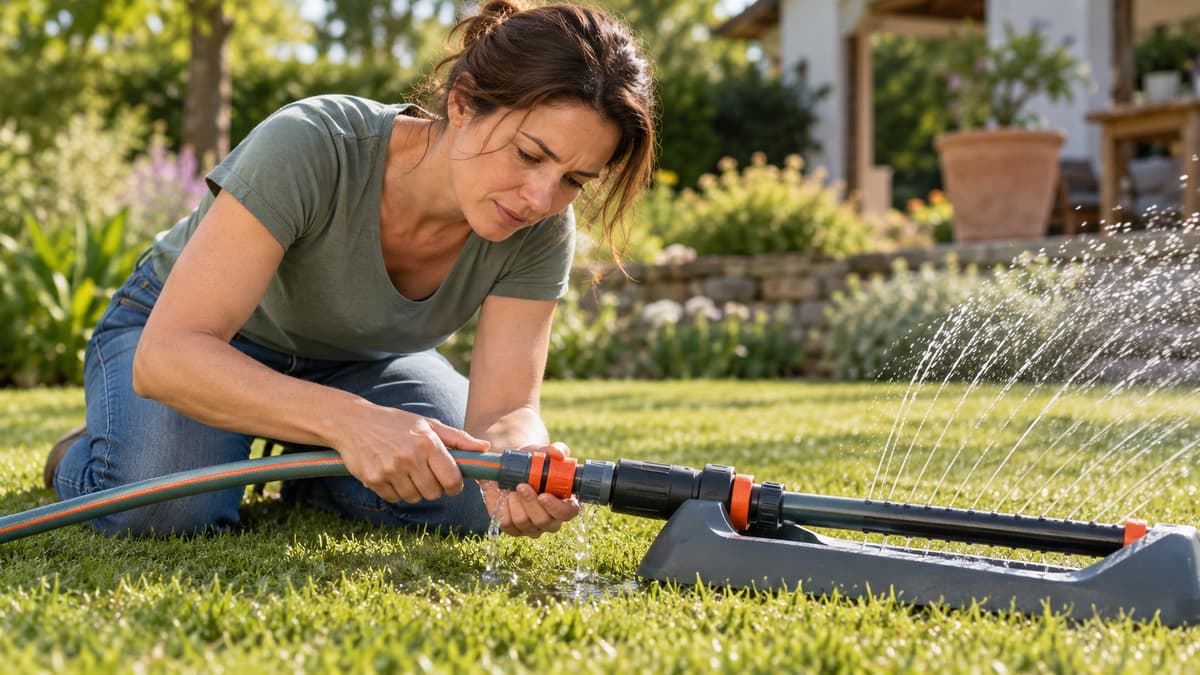
When the sprinkler joint leaks
A weep at the click fitting is often a washer or a loose connector, before you blame the nozzles.