Independent comparisons. We may earn from shop links. More info

How to fit a fluted dowel pin: bit, depth and glue

Updated: 22 October 2026

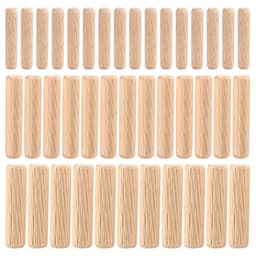
You already have a fluted wooden pin and a drill, and you are making a new glued joint. How to fit a fluted dowel pin comes down to the bit, the depth, a film of glue, and a clamp. A shallow hole, or a hole filled solid with glue, stops the faces meeting. Prices are on the [heavy duty dowels comparison](/hub/screws-and-accessories/heavy-duty-dowels). Peter F. is the DIY & tools editor. No lab joint was broken. A qualifying purchase can earn a commission at no extra cost to you.

You already have a fluted wooden pin and a drill, and you are making a new glued joint. How to fit a fluted dowel pin comes down to the bit, the depth, a film of glue, and a clamp.

Our top picks

On this page

Bit size for a fluted pin

Wonkee Donkee pairs a fluted pin with a bit of the same diameter. An 8 mm pin takes an 8 mm brad-point bit. The spur scores the rim before the centre cuts, which matters in chipboard, where a twist bit can wander. A plain pin buried at both ends may take about 1 mm of clearance. Do not give a fluted pin that extra millimetre. Mark both pieces from the same face and drill square. None of the packs includes a bit. If a dry pin rattles in a same-size hole, the pin is small for that bit. Two UK reviews of PanBeiQi say about 0.5 mm undersize. Which pack states which diameter is on the wooden dowel pins buying guide.

How deep to drill

Measure the depth stop from the spurs of the brad-point bit, not from the tip. If you set it from the tip, the hole is short and the pin stands proud. Furnica puts an 8 × 30 mm pin about 17 mm into the edge and about 15 mm into the face, with about 2 mm as a glue pocket. For an 8 × 40 mm pin in 18 mm board, the same note puts about 15 mm in the face and about 27 mm in the edge. You cannot split a 40 mm pin in half inside an 18 mm face. A 10 mm pin in a thin edge is the size most likely to blow the face. Drill a scrap first and push a pin in dry.

Glue on the wall, then clamp

None of the ten packs includes glue. Ureka points at D2 or D3 indoors, and D4 where the joint stays wet. BS EN 204 classifies the adhesive, not the pin. Under a sink, use D4 and take the open time from the bottle. Put a film on the wall of the hole and a wipe on the pin. Do not fill the hole solid. Clamp until a thin bead shows. The pin does not pull the boards together. If a pin starts to snap, stop. One UK review says the Xatgiouy pins break very easily.

When this method is the wrong job

This sequence is a new hole and a wooden pin that should stay glued. ZenithQuest and Shentu locate boards you will open, and they still need a bolt or a clip. That choice is on the wooden dowel or steel alignment pin page. A stripped hinge thread wants InnoHHustle’s 8.5 mm polypropylene insert, not a screw driven into the end of a wooden pin. Call a joiner for a stair, a bed rail, a soaked frame, or hinges that have already torn the chipboard. One shelf in 18 mm board is the job this method is for. A stub already flush with the face is a repair, on the flat-pack dowel repair page.

Common questions

Do I drill the hole the same size as a fluted pin?
Yes for a fluted pin. Use a brad-point bit of the same nominal diameter, so an 8 mm pin takes an 8 mm bit. Wonkee Donkee reserves about 1 mm of extra diameter for a plain pin buried at both ends. If the dry fit already rattles in a same-size hole, the pin is undersize for that bit. Two PanBeiQi reviews describe about 0.5 mm of that slack.
How deep for 8 × 30 mm, and how deep for 8 × 40 mm in 18 mm board?
Treat them as two layouts. For an 8 × 30 mm pin, Furnica uses about 17 mm in the edge and about 15 mm in the face, with about 2 mm as a glue pocket. For an 8 × 40 mm pin in 18 mm board, the same publisher uses about 15 mm in the face and about 27 mm in the edge. Set the depth stop from the spurs, not the tip. Half of a 40 mm pin will not fit in an 18 mm face.
Is D3 the right bottle for a kitchen cabinet?
D3 is the usual interior bottle when the joint might see a short spell of damp, which covers most kitchen carcasses away from a leak. Ureka puts D2 or D3 on a normal interior joint, and D4 on a joint that stays wet or lives outdoors with a coating. BS EN 204 classifies the glue, not the dowel. Under a sink, D4 is the safer reading. The bottle you open still governs the open time.
Do I clamp, or does the pin clamp itself?
Clamp. A dowel locates the two pieces and gives the glue a surface. It does not draw the faces together. Clamp until the faces meet and a thin bead appears, then leave the clamp on for the time the bottle states. If the faces will not meet, the hole is short, the pin is long, or the hole is full of glue. Forcing the clamp then bows the board.
When should I stop and call a joiner?
Call a joiner for a stair, a bed rail, a frame that stays wet outside, or several kitchen hinges that have already torn the board. Those joints can injure someone if a practice hole is wrong. A first shelf in 18 mm board, drilled with a stop and clamped until the faces meet, is within this method. Paid on-site fitting is a professional job as well.

Related pages

Sources

Public UK sources from the research digest, used for this page in October 2026. Prices, stars and review counts are from the ten amazon.co.uk listings. BS EN 204 classes the glue, not the pin. A listing claim is not a laboratory result.

  1. Wonkee Donkee — drilling a hole for a dowel (retrieved 22 October 2026)
  2. Furnica — installing 8 mm wooden dowels (retrieved 22 October 2026)
  3. BSI BS EN 204:2016 (retrieved 22 October 2026)
  4. Ureka — D1, D2, D3 and D4 wood adhesives (retrieved 22 October 2026)
  5. SCF Hardware — wooden beech dowels (retrieved 22 October 2026)
  6. Station Road Baseboards — alignment dowels (retrieved 22 October 2026)
  7. UK Workshop — cabinet hinge repair (retrieved 22 October 2026)
  8. Consumer Rights Act 2015 (retrieved 22 October 2026)