Replace a broken flat-pack dowel by matching the stub
A chair, a cabinet or a door has a wooden pin that has snapped or gone loose, and you are matching the stub rather than designing a new joint. Replace a broken flat-pack dowel by identifying the remnant first. A cam bolt, a metal push-fit pin and a hinge-hole insert are different spares. The ten GBP prices are on the [heavy duty dowels comparison](/hub/screws-and-accessories/heavy-duty-dowels). Peter F., DIY & tools editor, used public UK repair notes and those listings. No joint was tested in a lab. A qualifying purchase can earn a commission at no extra cost to you.
A chair, a cabinet or a door has a wooden pin that has snapped or gone loose, and you are matching the stub rather than designing a new joint. Replace a broken flat-pack dowel by identifying the remnant first.
A chair, a cabinet or a door has a wooden pin that has snapped or gone loose, and you are matching the stub rather than designing a new joint. Replace a broken flat-pack dowel by identifying the remnant first. A cam bolt, a metal push-fit pin and a hinge-hole insert are different spares. The ten GBP prices are on the heavy duty dowels comparison. Peter F., DIY & tools editor, used public UK repair notes and those listings. No joint was tested in a lab. A qualifying purchase can earn a commission at no extra cost to you.
Our top picks
| Badge | Product | Sizes stated | Pieces | Review line | Note | Price | Offer |
|---|---|---|---|---|---|---|---|
| Best overall |  ZEONHAK ZEONHAK 1,000 pins, 8 × 40 mm | 8 × 40 mm only | 1,000 | 4.6 from 13 | 7.9 | about £15.99 | View offer |
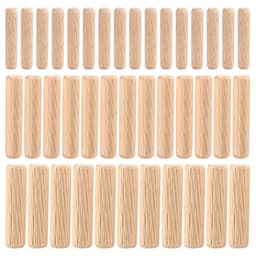
 PanBeiQi PanBeiQi 90 mixed wooden pins | 6 × 30, 8 × 40 and 10 × 40 mm. Split not stated | 90 | 4.4 from 3,255 | 9.0 | about £4.49 | View offer | |
| Alternative |  ShiFaKa ShiFaKa 225 mixed wooden pins | Counts printed, including 70 of 6 × 30 mm and 15 of 8 × 40 mm | 225 | 4.2 from 36 | 7.7 | about £7.99 | View offer |


On this page
Wooden pin, cam, or hinge screw
Measure, then pick a listed size
Drill the stub out and glue the new pin
When the board is the problem
Common questions
How do I tell a wooden dowel from a cam bolt?
What do I measure on the broken stub?
How do I get a flush stub out without ovalising the hole?
Which pack matches 6 mm, and which matches 8 mm?
Is a plastic hinge insert the repair for a snapped wooden pin?
Related pages
Sources
Public UK sources from the research digest, used for this page in October 2026. Prices, stars and review counts are from the ten amazon.co.uk listings. BS EN 204 classes the glue, not the pin. A listing claim is not a laboratory result.
- Wonkee Donkee — drilling a hole for a dowel (retrieved 22 October 2026)
- Furnica — installing 8 mm wooden dowels (retrieved 22 October 2026)
- BSI BS EN 204:2016 (retrieved 22 October 2026)
- Ureka — D1, D2, D3 and D4 wood adhesives (retrieved 22 October 2026)
- SCF Hardware — wooden beech dowels (retrieved 22 October 2026)
- Station Road Baseboards — alignment dowels (retrieved 22 October 2026)
- UK Workshop — cabinet hinge repair (retrieved 22 October 2026)
- Consumer Rights Act 2015 (retrieved 22 October 2026)