Independent comparisons. We may earn from shop links. More info

Water based vs oil based floor varnish

Updated: 23 October 2026

You are stood in a hallway of pale oak blocks, and someone in the house remembers a varnish that smelled for days and turned the pine doors the colour of honey. Water based vs oil based floor varnish is that choice: a clearer, lower-odour film you can often walk on sooner, or a solvent film that ambers and needs the windows open longer. This page is the chemistry and the colour. It is not a litre calculator, and it is not a sanding guide. The six tins and their prices are on the [parquet varnish comparison](/hub/paints-and-varnishes/parquet-varnish). Peter F. used UK merchant explanations, SI 2012/1715, and the Sadolin and Bona sheets on 21 October 2026. We did not run a yellowing test. A qualifying purchase can earn a commission at no extra cost to you.

You are stood in a hallway of pale oak blocks, and someone in the house remembers a varnish that smelled for days and turned the pine doors the colour of honey.

Our top picks

On this page

Colour and smell

Oil-based polyurethane, in the way UK flooring merchants describe it, wets the grain with a warm amber and keeps a stronger smell while the solvents leave. Water-based polyurethane stays closer to the colour of the bare oak, smells less, and is usually ready for careful feet sooner. Flooring First’s guide puts that split in plain words: oil-based ambers and smells longer; water-based stays clearer, with lower odour, and often needs more coats. That is a merchant explanation, not a laboratory table, and it is not a test of the six amazon.co.uk tins in this comparison. On a pale oak parquet floor the amber is the decision you will see every morning. A solvent film can make new blocks look like the old yellowed ones you just sanded off. If that warmth is what you want, because the floor sits next to honey-coloured doors, a solvent varnish can be the look. You then have to ventilate a product that the law allows to carry a much higher solvent load. If you want the oak to stay pale, and you want the room back without a weekend of smell, the water-based film is the one these sheets are written for. The limit is the same either way: neither chemistry is a promise that the floor will not mark, and neither is non-slip because it is matt. Water-based is not automatically the weaker film. Merchants often say you may need an extra coat compared with a traditional oil varnish, which is a build question, not a verdict that the cured water-based lacquer fails in a hallway. Bona sells Mega as a one-component lacquer for heavy domestic and light commercial wear, and sells a separate traffic lacquer for heavier commercial wear. That split is inside water-borne professional systems. It is not water-based loses to oil. A cheap sealer that stays soft, which is what some Rustins reviews describe, is a drying complaint about that tin, not proof that every water-based floor varnish is fragile. Recoat times stay on how to varnish parquet.

What the UK VOC cap allows

The number that matters is on the label, and the legal ceiling is in the VOC in Paints, Varnishes and Vehicle Refinishing Products Regulations 2012 (SI 2012/1715). For one-pack performance coatings, the category that includes wood floor coatings, and for two-pack floor coatings, the cap is 140 grams per litre if the product is water-borne and 500 grams per litre if it is solvent-borne, ready to use. The label has to show the subcategory, the limit, and the product’s maximum. A solvent floor varnish is not illegal because 500 is higher than 140. It is a different category with a higher ceiling, which is why the smell and the ventilation are part of the choice. Sadolin’s own PDF for the polyurethane floor varnish describes a water-based polyurethane acrylic and prints a maximum of 36 grams per litre on that sheet. Another Crown sheet for the same kind of product prints 27 grams per litre. Both sit under the 140 gram water-borne line. If you are holding a tin, the figure printed on that tin beats either PDF. Do not average them, and do not copy 36 grams per litre onto a Bona or Rustins can that does not say it. Bona Mega’s data sheet is a water-borne lacquer. The GB safety data sheet is not classified under UK CLP. That is not a non-toxic claim. The same sheet warns that 2,4,7,9-tetramethyldec-5-yne-4,7-diol may cause an allergic reaction, and the 5 litre Mega listing on amazon.co.uk repeats an allergy line for that substance. Low odour and not classified still mean you ventilate, you keep the tin off skin if you react to paints, and you read the label. A US Bona article makes the same general contrast, faster dry and less ambering for water-based polyurethane. Use it only as a maker’s general remark. It is not a UK price and not a review of these ASINs.

Where the saved products sit

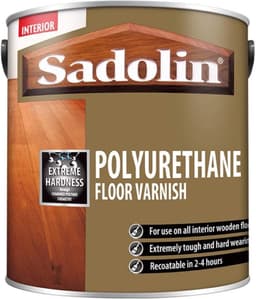
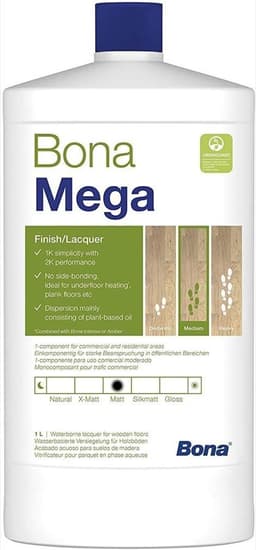
None of the six saved amazon.co.uk files describes the tin as an oil-based polyurethane. You cannot pick a solvent floor varnish from this comparison, because we did not keep one. The recommendation that follows is conditional: for a pale oak floor in a lived-in room, buy the water-based floor product whose sheet you can read, and accept that a warmer solvent look means a different tin from a different shelf. Sadolin Polyurethane Floor Varnish satin, 2.5 litres at £44.99, is the domestic water-based tin with the largest review file, 4.6 from 418. The listing excludes laminate and states up to 15 square metres per litre. Reviewers who mention colour in the pot say it looks white and dries clear, which fits a water-based dispersion and worries people who expected a solvent varnish to look like tea. Many of those reviews are doors and skirtings, so the star line is not a yellowing trial on parquet. Underfloor heating is not stated. Bona Mega is water-borne on the data sheet. The 1 litre matt listing, £30.42, 4.6 from 74 reviews, states 8 to 10 square metres per litre and names underfloor heating. That is the top pick in the set for a small floor, with the limit that one litre is not a whole flat and the uses line also mentions furniture and cladding. The 5 litre Mega can does not repeat the heating line, and the title and the finish field disagree on sheen. Mega Evo’s bullets claim non-yellowing and no primer. That is listing text on a 1 litre tin at £33.99 with 4.7 from four reviews and no written comments. Non-yellowing on a bullet is not a five-year window test. Rustins satin floor sealer, £17.96, names parquet and does not, in the saved spec line, say oil-based or water-based. Do not invent a chemistry for it. What the reviews do say is that some floors stayed tacky for about 15 to 24 hours and some dried glossier than satin. Traffic GO is a 2K parquet lacquer at £206.64 with no star line in the file. A two-pack floor coating has its own row in the VOC rules, still 140 grams per litre if water-borne and 500 if solvent-borne. The saved listing does not print a VOC figure, so you do not get to guess which row it sits in. If you specifically want the amber of an oil-based floor varnish, this set will not sell it to you. Ventilate that future tin, expect the higher legal ceiling, and do not thin a water-based Sadolin in the hope it will turn honey coloured. It will not, and the sheet says not to thin it. Litres for the room you actually have are on the parquet varnish buying guide, once the chemistry is settled.

Common questions

Will oil-based varnish turn the oak yellow?
Merchant guides say oil-based polyurethane ambers as it cures, so pale oak shifts warmer, towards the honey colour people associate with old varnish. Water-based floor varnish is sold to keep that shift smaller. We did not measure the colour change on these ASINs. If the doors in the room are already amber and you want the floor to match them, the solvent look may be what you want. If you have just sanded the yellow off, a water-based film is the closer match to the bare wood.
Does water-based varnish smell less?
Yes, compared with a traditional solvent varnish, in the way flooring merchants and the makers describe it. Sadolin and Bona Mega are water-based products with shorter odour than white-spirit varnishes. Less smell is not no smell, and it is not non-toxic. Keep the room ventilated while you coat, and take the allergy line on Bona Mega seriously if you react to paint additives. A cold, closed room makes any finish linger.
Is water-based floor varnish weaker?
Not as a rule. You may need more coats to build the same thickness, which is what merchant guides say about water-based polyurethane. Bona still rates Mega for heavy domestic wear and points heavier commercial floors at a traffic lacquer, which is a different water-borne system, not a return to oil. A tin that stays tacky, as some Rustins reviews report, is a problem with that application or that batch, not a verdict on every water-based sealer.
What VOC number should be on the tin?
The label should show the VOC subcategory, the legal limit, and the product’s maximum content, under SI 2012/1715. For these floor coatings the ceilings are 140 grams per litre water-borne and 500 grams per litre solvent-borne. Sadolin’s PDF prints 36 grams per litre, and another Crown sheet prints 27. Use whichever figure is on the tin you bought. Do not copy that number onto a listing that leaves VOC blank.
Are the tins in this comparison water-based?
Sadolin’s sheet says water-based polyurethane acrylic. Bona Mega’s data sheet says water-borne. Mega Evo’s bullets claim non-yellowing, which is the water-based sales line, on a file that does not print the word oil-based. Rustins and Traffic GO are not described as oil-based in the saved amazon.co.uk files, and they are not described as a named solvent varnish either. There is no oil-based floor varnish ASIN in this set to score against them.
Why does Sadolin look white in the tin?
Reviewers say the liquid looks white or milky and dries clear. That is a common look for a water-based dispersion, and it is not, by itself, a sign the varnish has failed. Stir it as the sheet says, and coat a board if you want to see the dried colour before the floor. Do not add white spirit to clear the haze. The sheet says not to thin it, and white spirit belongs to solvent products, not to this tin.
Is low odour the same as non-toxic?
No. Low odour describes the smell compared with a solvent varnish. Non-toxic would be a health claim these files do not support, and this page will not make it. Bona Mega can be unclassified under UK CLP and still carry an allergy warning for 2,4,7,9-tetramethyldec-5-yne-4,7-diol. Keep the tin off children’s hands, ventilate, and follow the label. A matt sheen is also not a non-slip test.

Related pages

Sources

Public sources from the research digest, last checked on 21 October 2026. Shelf prices and star lines are the amazon.co.uk figures in the display file. The price band is this set, not a market average. No listing was lab-tested.

  1. SI 2012/1715, VOC in paints and varnishes (retrieved 21 October 2026)
  2. HSE: wood dust (retrieved 21 October 2026)
  3. Sadolin Polyurethane Floor Varnish product sheet (retrieved 21 October 2026)
  4. Bona Mega technical data sheet (retrieved 21 October 2026)
  5. Bona Mega safety data sheet, United Kingdom (retrieved 21 October 2026)
  6. Bona Traffic GO technical data sheet (retrieved 21 October 2026)
  7. Consumer Rights Act 2015, section 9 (retrieved 21 October 2026)
  8. amazon.co.uk listings B0733GY8F4, B07H9LR41W, B004M996MS, B00CZ9ZOT6, B0D1KBRSJX and B0CKKB67XZ (retrieved 21 October 2026)