Independent comparisons. We may earn from shop links. More info

How to varnish parquet without a tacky floor

Updated: 23 October 2026

You have cleared one room, the blocks look dull, and you want to open a tin tonight. How to varnish parquet comes down to a bare, dust-free floor, thin coats inside that tin’s temperature window, and a week before the rugs go back unless your own sheet says otherwise. This page is the method. It does not rank the six tins. Prices and which can to buy are on the [parquet varnish comparison](/hub/paints-and-varnishes/parquet-varnish). Peter F. used the Sadolin and Bona Mega sheets, HSE dust pages, and the saved amazon.co.uk reviews on 21 October 2026. We did not sand a room. A qualifying purchase can earn a commission at no extra cost to you.

You have cleared one room, the blocks look dull, and you want to open a tin tonight.

Our top picks

On this page

Before the tin is opened

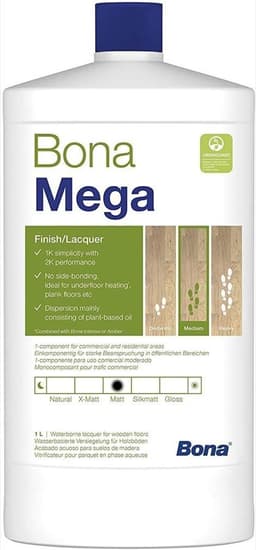
The floor has to be a sound wood block floor, not laminate, and not a film of wax. Bona Mega’s data sheet is written for bare wood, with a Bona primer before the lacquer. The 1 litre Mega listing on amazon.co.uk does not say no primer. That sentence is on Mega Evo only, and it does not travel. If you cannot tell whether the old shine is lacquer or wax, stop. Varnish over wax is a common way to get a film that never keys. Which system and how many litres you need are on the parquet varnish buying guide. Dust is the other failure you make before the first stroke. Sanding oak produces hardwood dust. The Health and Safety Executive’s wood-dust limits are written for workers: a workplace exposure limit of 3 mg/m³ for hardwood dust as an eight-hour average, with extraction, and respiratory protection of FFP3 class for powered sanding at work. A householder is not inside that enforcement regime. You are still making the same dust in a lived-in room. Open windows, keep other people and pets out, and do not sand with a vacuum that blows fine dust back into the air. Vacuum, then tack the floor with a cloth that does not leave lint, and wait until you can no longer see motes in a torch beam. A coat laid on yesterday’s dust dries with a grit you will feel in socks. Temperature is on the sheet, and the two sheets in this set do not match. Sadolin wants the air around 8 to 25°C and says do not thin the varnish. Bona Mega wants at least 13°C. A cold box room in a British winter can sit under both of those floors. If the room is below the number on your tin, wait. Do not add water or solvent to help it flow. A thick coat in a cold room is also how a sealer stays tacky overnight.

Coats and the denib

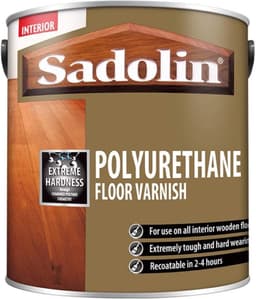
Keep each maker’s clock separate. Sadolin’s sheet says touch dry in about 1 to 2 hours, recoat in about 2 to 4 hours, no heavy traffic for 24 hours, and seven days before rugs and heavy furniture. Bona Mega’s sheet says about 2 to 3 hours between coats, light use after about 8 hours, and cover the floor after about 7 days, after a primer on bare wood. Those are not one timetable. If you are holding Sadolin, you do not borrow Bona’s 8 hours. If you are holding Mega, you do not borrow Sadolin’s 2 to 4 hour recoat and call it the same product. Plan on more than one coat. Sadolin’s logic is a three-coat domestic system. Bona’s homeowner method is primer, then topcoats, with a light sand between the lacquer coats so the next film has a key. That light sand is what floor finishers call a denib. It is a scuff, not a return to bare wood. You are knocking off nibs and giving the next coat a tooth. Vacuum and tack again before the next coat, or you seal the dust in. Contractor articles quote grit sequences such as 40, then 60, then 120. Those are their practice. They are not a British Standard, and this page will not pretend they are. Work in thin coats along the grain, keeping a wet edge so you do not park a fat line in the middle of the room. A 12 square metre hall at 10 square metres per litre needs about 1.2 litres a coat before waste. Pouring the whole litre into one corner and spreading it thin later is how you get a ridge that skins while the middle stays soft. If the tin is Sadolin and it looks milky white as you pour, that matches what reviewers describe. They say it dries clear. It is not, by itself, a sign the batch is off. Cut in the edges with a brush and roll or pad the field with a tool the sheet allows. Do not leave a roller loaded with varnish sitting in the sun on the window board between coats.

Feet, rugs and a tacky floor

Walking and furnishing are different clocks, and they belong to the tin you opened. On Sadolin, heavy traffic waits 24 hours and rugs wait seven days. On Bona Mega, light use is about 8 hours and covering the floor is about 7 days. Socks for a careful crossing are not the same as dragging a sofa, and a rug at day three can mark a film that feels dry to the hand. Dogs, chairs with unprotected feet, and a doormat full of grit are the usual scars in the first week. Lift them until the cover time on your sheet has passed. A film that is still sticky the next day is not a cue for another coat. Adding varnish onto a wet film traps the soft layer. Rustins reviewers are the pattern to remember: several said the floor stayed tacky for about 15 to 24 hours, longer than they expected from the tin. Cold air, a thick coat, poor ventilation and coating over contamination all stretch a published dry time. If you are still inside the sheet’s window, leave it alone, keep the room warm enough for that product, and keep dust off it. If it is still tacky well past the time the sheet allows, stop. Do not sand a soft film, and do not feed it with oil. Contact the seller. The Consumer Rights Act 2015 expects the goods to match the description, which includes drying in the way the instructions describe, but that is a complaint route, not a home chemistry fix. The white liquid in a Sadolin tin frightens people who expected a clear honey colour. Reviewers who mention it say the dried film is clear. That report is not a promise for every batch, and it is not a reason to stir in a solvent. If the tin has separated into a skin and a watery layer, or it smells sharply of rot rather than the usual low odour, do not coat the floor to find out. Decant a spoonful onto a board first.

When you should not do this yourself

Call a floor contractor when the blocks are loose, cupped or springy, when you can see bitumen or a black adhesive in the joints, or when the old finish might be wax and you cannot identify it. A whole flat, a stair, and a floor over heating that has never been commissioned are the same kind of stop. You can learn the roller on a box room. You should not learn dust control and block repairs on a landlord’s hallway or a flight of stairs, where a missed nosing is a fall. Hardwood dust is the other reason to hand the sander over. If you do not have extraction that actually catches the fine dust, and people with asthma live in the house, a day with a hired belt sander is a poor experiment. The HSE pages are aimed at workplaces, and they still describe the hazard you are creating. A decorator who already owns the machine and the vacuum is often cheaper than a floor you have to resand because the first coat went on dusty. If the floor is sound, bare and at the temperature on the tin, you can coat one room. Follow that tin’s recoat and that tin’s rug delay. If pipes or mats sit under the blocks, read varnish parquet over underfloor heating before you switch anything on.

Common questions

Do I have to sand to bare wood?
Bona Mega’s data sheet is written for bare wood plus a Bona primer. If the existing film is an unknown wax, sanding through it, or not coating at all, is safer than varnishing on top. A sound floor lacquer of a type your new tin says it can overcoat is a different case, and only the instructions in that tin decide it. This set does not give you one overcoat rule for every old shine. When the blocks themselves are loose, sanding is not the first job.
How many coats of floor varnish?
Sadolin’s domestic system is three coats, with a recoat window of about 2 to 4 hours, and you do not thin it. Bona Mega is a primer and then lacquer coats, about 2 to 3 hours apart, with a light denib between the lacquer coats. Do not blend those two clocks into a single number. A very worn hallway may want the extra coat the sheet allows. A single thick coat is the mistake that stays soft.
When can I walk on a newly varnished floor?
Use the sheet for the tin you opened. Sadolin says no heavy traffic for 24 hours. Bona Mega says light use after about 8 hours. Socks across a dry-looking patch are still not furniture, dogs or a rug. If you used Rustins, reviews often describe tackiness into the next day, so the optimistic time on a different brand’s tin is the wrong guide.
When can rugs go back?
Sadolin says seven days before rugs and heavy furniture. Bona Mega says you can cover the floor after about 7 days. Those are close, and they are still each maker’s line, not a shared law. A rug earlier than that can print the backing into a film that feels dry. Keep grit, chair legs and the dog’s path off the floor for the same period.
The liquid is white. Is the varnish off?
On Sadolin, reviewers often say the tin looks white or milky and the film dries clear. That matches a water-based floor varnish, and it is not by itself a failed batch. Stir as the sheet tells you, and test a spoonful on a board if you are unsure. Do not thin it to make it look clear in the pot. A skin, a watery split or a bad smell is a reason to stop, not to coat the room.
It is still sticky the next day. What now?
Leave it. Do not add another coat onto a soft film, and do not sand it while it is tacky. Check that the room is inside the temperature on your tin and that the coat was thin. Rustins reviews include floors that stayed tacky for about 15 to 24 hours. If the sheet’s own window has clearly passed and the floor is still grabbing socks, stop and speak to the seller rather than experimenting with oils or thinners.
When should a sander or a floor contractor take over?
When blocks are loose or cupped, when the adhesive might be bitumen, when the old finish might be wax, or when the area is a whole flat or a stair. Also hand it over if underfloor heating has not been commissioned, or if you cannot control hardwood dust in a house where someone has asthma. One sound room at the right temperature is a fair DIY job. A floor you cannot identify is not.

Related pages

Sources

Public sources from the research digest, last checked on 21 October 2026. Shelf prices and star lines are the amazon.co.uk figures in the display file. The price band is this set, not a market average. No listing was lab-tested.

  1. SI 2012/1715, VOC in paints and varnishes (retrieved 21 October 2026)
  2. HSE: wood dust (retrieved 21 October 2026)
  3. Sadolin Polyurethane Floor Varnish product sheet (retrieved 21 October 2026)
  4. Bona Mega technical data sheet (retrieved 21 October 2026)
  5. Bona Mega safety data sheet, United Kingdom (retrieved 21 October 2026)
  6. Bona Traffic GO technical data sheet (retrieved 21 October 2026)
  7. Consumer Rights Act 2015, section 9 (retrieved 21 October 2026)
  8. amazon.co.uk listings B0733GY8F4, B07H9LR41W, B004M996MS, B00CZ9ZOT6, B0D1KBRSJX and B0CKKB67XZ (retrieved 21 October 2026)