Independent comparisons. We may earn from shop links. More info

How to apply yacht varnish without borrowing the wrong timetable

Updated: October 2026

Knowing how to apply yacht varnish starts with the instructions on your own tin. Rustins, Ronseal, Sadolin and Epifanes specify different thinning ratios and recoating times, so a generic “next coat tomorrow” rule can leave one product under-cured and waste a good weather window for another. This guide covers preparation, thin coats, temperature and common failures for wood above the waterline. If you have not chosen a product, start with our [boat varnish comparison](/hub/paints-and-varnishes/boat-varnish). The products were not lab-tested; the figures below come from manufacturer sheets and captured UK listing information.

Knowing how to apply yacht varnish starts with the instructions on your own tin.

Our top picks

On this page

Prepare dry wood, including oily teak

Start by confirming that the job is actually suitable for varnish. The timber should be sound, dry, clean and free from loose old coating. Scrape or sand failing film back to a firm edge, following the maker’s preparation and dust-control advice, then remove dust before opening the tin. Coating over rot, trapped moisture or a milky old film hides the problem rather than repairing it. Existing varnish must also be compatible. Epifanes Clear Varnish can go over sound existing one- and two-component varnish within its system guidance, but its sheet says not to apply it directly over epoxy. If you cannot identify a hard old coating, ask the manufacturer or a boatyard before sanding through it or adding another chemistry. The buying guide explains this compatibility decision. Teak and similar hardwoods carry natural oil at the surface. Practical Boat Owner’s guidance is to remove that surface oil with the appropriate solvent before the thinned first coat; otherwise adhesion can suffer. Do not assume that Deks Olje D2 goes straight onto bare teak: it is the finishing stage after Deks Olje D1. Stir varnish thoroughly rather than shaking it, especially with satin, where the flattening material can settle.

Thin the first coat only as that maker directs

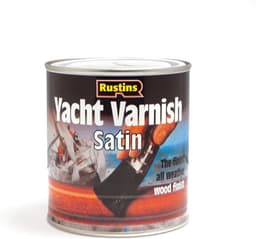
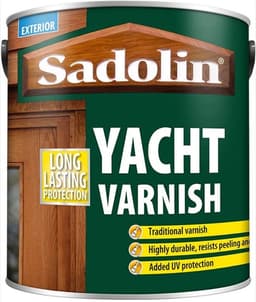
On new wood, a thinned first coat helps some one-pack products wet the surface, but the percentage is product-specific. Rustins instructs you to thin the first coat on new wood with 25% white spirit, then apply three coats in total. That 25% figure belongs to Rustins; it is not a general yacht-varnish ratio. Ronseal’s retail steps say to stir, test a patch, apply two or three coats and wait eight hours between them. A separate Brewers-carried Ronseal sheet specifies 15% white spirit for the first coat on bare wood. These two sources should not be averaged or turned into an invented 20% instruction. Sadolin specifies three coats on new joinery and two or three on previously coated timber. Epifanes says its clear varnish may be thinned by about 10% with the maker’s brush thinner if it pulls during brushing, but its system and substrate instructions still govern the first build. Owatrol D2 follows D1 and its amazon.co.uk listing says no sanding between coats. Apply controlled, thin coats. One heavy coat is more likely to skin, sag or remain soft underneath.

Use each brand’s hours and weather limits

Rustins gives about 12 hours between coats and says not to apply below 10°C or in high humidity; its preferred range is about 15–25°C. Ronseal specifies eight hours between coats and application above 10°C. Sadolin may be touch dry in 4–6 hours but gives a 16–24-hour recoating time, which is the number that matters before the next coat. Touch-dry does not mean ready to sand or recoat. Epifanes illustrates how sharply temperature changes the clock. Its sheet gives 24 hours at 20°C but 40 hours at 10°C. Avoid direct sun and strong wind while the film is wet, because the surface can change faster than the coating underneath. Damp wood and humid air can cause bloom, a cloudy or milky appearance in the film. Do not bury the fault under another coat. Solvent vapour is another reason to plan the weather and ventilation. HSE identifies vapour as the acute risk with solvent-borne coatings; brushing outside is different from spraying in an enclosed cabin. Rustins labels its varnish flammable.

Stop when the job needs a yard

Call a boatyard or suitable professional when timber is rotten, the work is below the waterline, or the existing epoxy or two-pack system cannot be identified. A fishing vessel’s interior may also fall under specific Maritime and Coastguard Agency guidance rather than an ordinary leisure-boat DIY decision. The above-waterline guide sets out where this type of varnish stops. Do not pour leftover varnish, thinners or brush wash into a drain, onto the ground or into the sea. Keep them in suitable closed containers and use your council’s household waste route; local acceptance arrangements differ.

Common questions

Do I thin the first coat with white spirit?
Only when the matching product instructions tell you to. Rustins specifies 25% white spirit on new wood, while a Ronseal trade sheet gives 15% for its bare-wood first coat. Epifanes names its own brush thinner when the varnish pulls. Do not transfer one brand’s percentage to another tin.
How many coats of yacht varnish do I need?
Rustins specifies three coats, Ronseal says two or three, and Sadolin gives three coats on new joinery. End grain or weathered timber may need more within the maker’s system. Deks Olje D2 guidance varies by page and requires D1 first, so use the current UK instructions rather than inventing one universal coat count.
How long should I wait between coats?
Use the recoat time, not simply the touch-dry time. Ronseal gives eight hours, Rustins about 12 hours, Sadolin 16–24 hours and Epifanes 24 hours at 20°C. Epifanes extends to 40 hours at 10°C, demonstrating why temperature and brand must stay attached to every number.
Why has the varnish turned cloudy?
Bloom commonly points to moisture or unsuitable humidity affecting the film. Applying to damp wood, working as the evening cools or recoating too soon can contribute. Stop adding coats, allow the film the time and conditions stated by the maker, and consult its technical support before sanding or stripping a persistent cloudy layer.
When should a professional take over?
Use a yard for rotten or structurally damaged timber, underwater coating work, an unidentified two-pack or epoxy system, or regulated commercial-vessel interiors. Those are system or repair decisions, not simply brushing technique. A professional should also investigate a coating that repeatedly fails despite correct preparation and weather.

Related pages

Sources

Public UK sources and maker sheets used for the limits on this page. Prices, stars and review counts are from the amazon.co.uk listings. We did not run a lab test.

  1. SI 2012/1715 Schedule 2 — VOC limits (retrieved 17 October 2026)
  2. HSE — Coatings and solvent vapour (retrieved 17 October 2026)
  3. GOV.UK — Hazardous waste disposal (retrieved 17 October 2026)
  4. Rustins yacht varnish product data sheet, February 2018 (retrieved 17 October 2026)
  5. Ronseal — Yacht varnish (retrieved 17 October 2026)
  6. Sadolin yacht varnish technical sheet (retrieved 17 October 2026)
  7. Epifanes — Clear varnish with UV filter (retrieved 17 October 2026)
  8. Owatrol — Deks Olje D2 (retrieved 17 October 2026)