Independent comparisons. We may earn from shop links. More info

Yacht varnish: gloss or satin for your wood?

Updated: October 2026

Choosing yacht varnish in gloss or satin is partly about appearance, but the practical decision is whether you can live with reflected light, amber colour and the way a satin product must be mixed. Gloss gives traditional wet-looking brightwork and dominates the nine tins in our [boat varnish comparison](/hub/paints-and-varnishes/boat-varnish). Satin reduces glare, yet some Rustins buyers report that their satin dried glossy after sediment settled in the tin. Neither sheen makes an unsuitable surface safe: both are still varnish films for specified exterior or above-waterline wood, not automatic deck or immersion coatings.

Choosing yacht varnish in gloss or satin is partly about appearance, but the practical decision is whether you can live with reflected light, amber colour and the way a satin product must be mixed.

Our top picks

On this page

Choose gloss outside and satin for lower glare

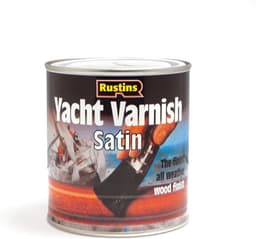
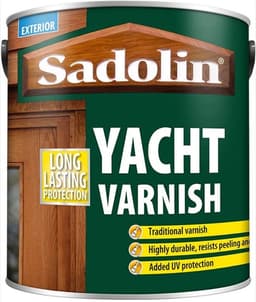
Gloss is the conventional finish for exterior brightwork because it gives the deep, reflective appearance many owners expect on rails, trim and tillers. In this set, Ronseal’s 1-litre and 250 ml tins, Sadolin 750 ml, Epifanes Clear Varnish and Owatrol Deks Olje D2 all state gloss. Epifanes goes further and calls its finish high gloss. Satin is useful when full shine would be distracting or out of character. Rustins offers a 1-litre clear satin yacht varnish, while Ronseal’s 500 ml exterior yacht varnish is also labelled satin. This can suit a door, interior joinery covered by the product’s use statement, or trim where you want a quieter mid-sheen. However, satin is not inherently tougher, more waterproof or safer underfoot than gloss. For traditional exterior brightwork, choose gloss unless you have a clear reason to reduce shine. Choose satin when lower glare is the actual goal and you are prepared to stir thoroughly and test the result. If the bigger question is which surface and pack suit the job, use the boat varnish buying guide before deciding on sheen.

Clear still changes the colour

Clear varnish is transparent, not necessarily water-white. Solvent-borne yacht varnish can deepen grain and add warmth, particularly on pale timber. Sadolin’s information describes a light golden effect on light wood, while Epifanes is an amber transparent varnish. That colour can look rich on mahogany or teak but unexpectedly yellow on pale pine or painted decorative work. Ronseal tells users to test a patch because its clear varnish may darken the wood. Sadolin is formulated without colour pigment, yet it still says the final appearance depends on the timber species and any previous coating. Apply a sample using the planned coat build, not one quick brush stroke. If maintaining a pale, water-white look is essential, the phrase “clear yacht varnish” is not enough evidence that this product family will deliver it.

Why satin can dry glossier than expected

Satin varnish uses flattening material to scatter light and reduce reflection. That material can settle to the bottom while the tin stands, leaving a glossier liquid near the top. Stirring must lift and distribute the deposit through the varnish; a few turns at the surface may not be enough. Shaking is a poor substitute because it can introduce bubbles without properly loosening dense sediment. The Rustins 1-litre satin review file contains both sides of this problem. Some buyers describe lumps or a thick settled layer that needed prolonged stirring, and more than one says the product dried like gloss. Other buyers liked the resulting mid-sheen. Those reports do not prove every tin is mislabelled, but they are a practical reason to stir from the bottom and coat a test piece before applying it to a prominent surface. Do not invent a gloss-to-satin mixing ratio or combine products unless the manufacturer confirms compatibility. If a properly stirred test patch remains much glossier than the label suggests, stop before coating the whole piece.

Read the exact finish on each listing

The gloss group is reasonably clear but not flawless. Ronseal’s 1-litre tin says gloss, although one bullet contains a satin-like model code; its actual model and part number are RSLYVG1L. The 250 ml Ronseal also says gloss. Sadolin states clear gloss, Epifanes states clear high gloss, and Deks Olje D2 is a gloss oil varnish used after D1. Rustins 500 ml is titled “Gloss Clear”, but its finish cell says “Gloss, Satin”, probably describing more than one option rather than resolving the received variant. Check that the tin itself matches the gloss title. The satin group contains Rustins 1 litre and Ronseal 500 ml. Ronseal’s captured review text duplicates the gloss 1-litre block, so it should not be used as a separate body of evidence for satin performance. Rustins has its own review text, including the sediment and unexpected-gloss reports.

Common questions

Is gloss or satin better for exterior brightwork?
Gloss is the conventional choice for exterior brightwork when you want depth and a reflective, traditional finish. Satin reduces glare but needs thorough stirring and may show inconsistent sheen if the flattening material has settled. Neither sheen changes the waterline, deck or compatibility restrictions printed for the chosen product.
Will clear yacht varnish leave pine unchanged?
No such promise follows from the word “clear”. Transparent yacht varnish can deepen grain and add an amber or golden tone, especially on pale timber. Ronseal recommends a patch test, Sadolin says the result depends on the wood and previous coating, and Epifanes describes an amber transparent finish. Test the complete coat build.
Why did my satin varnish dry glossy?
The flattening material may have settled and remained at the bottom of the tin, leaving the upper varnish glossier. Stir slowly and thoroughly from the bottom until deposits are distributed, then test a patch and let it cure. Rustins reviews include both difficult sediment and glossy results, although other buyers achieved a mid-sheen.
Can I mix gloss and satin?
Do not assume that two tins can be mixed simply because they share a brand or solvent. Forum users discuss gloss build coats followed by a compatible satin final coat, but that is not a universal mixing instruction. Ask the manufacturer about the exact products and avoid improvised ratios that could affect curing or sheen.
Is Epifanes Clear Varnish water-white?
No. It is a transparent amber high-gloss varnish with a UV filter, so “clear” means that the grain remains visible rather than that the film has no colour. Test it on pale wood before coating a prominent area, and remember that its sheet limits use to suitable surfaces above the waterline.

Related pages

Sources

Public UK sources and maker sheets used for the limits on this page. Prices, stars and review counts are from the amazon.co.uk listings. We did not run a lab test.

  1. SI 2012/1715 Schedule 2 — VOC limits (retrieved 17 October 2026)
  2. HSE — Coatings and solvent vapour (retrieved 17 October 2026)
  3. GOV.UK — Hazardous waste disposal (retrieved 17 October 2026)
  4. Rustins yacht varnish product data sheet, February 2018 (retrieved 17 October 2026)
  5. Ronseal — Yacht varnish (retrieved 17 October 2026)
  6. Sadolin yacht varnish technical sheet (retrieved 17 October 2026)
  7. Epifanes — Clear varnish with UV filter (retrieved 17 October 2026)
  8. Owatrol — Deks Olje D2 (retrieved 17 October 2026)