Independent comparisons. We may earn from shop links. More info

Best boat varnish for a door, tiller or brightwork job

Updated: October 2026

The best boat varnish is the one that matches a named surface, not simply the tin with the highest star average. A 250 ml gloss can be right for a tiller and wasteful for a door; an expensive brightwork system can be wrong on a deck you walk on. We compared nine [boat varnish listings](/hub/paints-and-varnishes/boat-varnish) from amazon.co.uk using their stated finish, pack, coverage, use, price and review evidence. We did not run a lab test, and there is no universal winner. The useful answer is who should buy each credible option, and who should leave it on the shelf.

The best boat varnish is the one that matches a named surface, not simply the tin with the highest star average.

Our top picks

On this page

What “best” means in this comparison

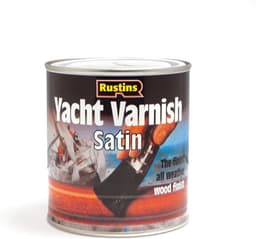
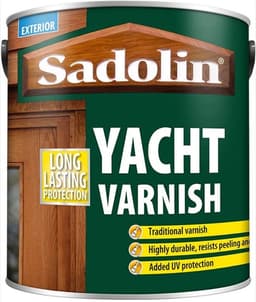
Our top pick overall is Rustins Yacht Varnish Clear Satin in the 1-litre tin, but only for a suitable satin job. It combines 12.5 m²-per-litre stated coverage, UV and marine-condition claims, a £23.13 captured price and 4.5 stars from 886 reviews. The limitation is important: several buyers said the satin dried glossy, while others reported sediment that required determined stirring. Buy it for a larger door, window or above-waterline brightwork job when you can stir thoroughly and patch-test the sheen; skip it if a reliably low sheen is non-negotiable. The best-value choice in this set is Sadolin Yacht Varnish Clear Gloss, 750 ml. At a captured £15, it states 13 m² per litre and names UV additives, which is a strong pack-to-price combination for exterior joinery. Its 4.5 stars come from only 43 reviews, and the listing does not state a water-resistance test or above-waterline use. Buy it for a cost-conscious door or window job supported by the technical sheet; skip it if you need an explicit marine-use statement on the listing. The buying guide explains how place, timber and the old coating should take priority over price.

For a door, bench or short rail

Ronseal Yacht Varnish Gloss in the 1-litre tin is the practical large-job alternative. It costs £25 in the captured file, states 16 m² per litre and describes a highly water-repellent formula for exterior wood such as boats or outdoor furniture. Its headline rating is 4.5 from 1,242 reviews, but the captured review block is duplicated on the 500 ml satin listing. The 250 ml Ronseal gloss is the better-defined choice for a tiller or isolated repair. At £12.62 it states UV protection, waterproofing and 16 m² per litre, with 4.5 stars from 324 reviews. Buy it when 250 ml avoids a mostly unused tin; skip it for a door or long rail requiring several coats.

For specialist brightwork and tropical hardwood

Epifanes Clear High Gloss Varnish is the specialist option for traditional brightwork above the waterline. Its listing names a UV filter, bare wood and sound existing varnish, while its 4.6 stars from 202 reviews are the highest average here. The transparent film is amber rather than water-white, and the technical sheet says not to apply it directly over epoxy. At £34.99 for 500 ml with no numeric coverage rate on the listing, it is not the budget choice. Buy it when you want a high-gloss brightwork finish and accept the colour and preparation; skip it for a walked-on deck, direct epoxy or a £15 project. Owatrol Deks Olje D2 is a different proposition: a gloss oil varnish applied after Deks Olje D1. The £41.49 litre states 10–12 m² coverage and includes tropical hardwood such as teak, ipe and mahogany. The cost and work of D1 must be included, and Owatrol warns that D2 is slippery when wet. Buy it for D1-treated hardwood above the waterline; skip it if you want one tin or need an underfoot finish. The above-waterline guide explains why neither product belongs on an immersed hull or walked-on deck.

Why stars and product names are not enough

International Boat Varnish, 375 ml, illustrates the danger of ranking by title. It costs £15.61 and shows 4.4 stars from 31 reviews, but the captured page has no bullets, finish, coverage, UV claim or stated use. Buy it only after the current label or manufacturer’s sheet answers those gaps; skip it when you need to plan coverage or confirm a finish before ordering. Review count measures the available evidence, not compatibility with your surface.

Common questions

Which boat varnish is the top pick?
Rustins Clear Satin, 1 litre, is our top pick because it combines a useful pack, 12.5 m²-per-litre stated coverage, marine and UV claims, and a substantial review base. It is not a universal winner: recurring comments about glossiness and sediment mean you should stir it thoroughly and test the sheen before committing.
Which option is best value?
Sadolin Clear Gloss, 750 ml, offers the strongest captured price-to-pack balance at £15, with 13 m²-per-litre stated coverage and UV additives. Its evidence base is only 43 reviews, and the listing is stronger on exterior joinery than marine use. Best value therefore means a suitable joinery job, not the cheapest answer for every boat surface.
Should I buy Epifanes or Ronseal?
Choose Epifanes for specialist amber high-gloss brightwork above the waterline when its UV filter and system compatibility justify the price. Choose Ronseal for lower-cost exterior wood where a stated 16 m²-per-litre rate and smaller or larger pack is more useful. Neither answer overrides restrictions on decks, immersion or direct epoxy application.
Is Deks Olje D2 a normal one-tin varnish?
No. D2 is the glossy finishing stage used after Deks Olje D1, so its £41.49 shelf price is not the whole system cost. It makes sense for suitable hardwood already treated with D1. It is a poor choice if you do not want the base product or if the finished surface will be walked on.
Which tin suits a small tiller?
The 250 ml Ronseal gloss is the clearest small-pack match in this set because the listing states UV protection, waterproofing and 16 m² per litre. International’s 375 ml tin is also compact, but its captured page omits finish, coverage and UV information. A tiller is still an above-waterline job; inspect and repair damaged timber first.

Related pages

Sources

Public UK sources and maker sheets used for the limits on this page. Prices, stars and review counts are from the amazon.co.uk listings. We did not run a lab test.

  1. SI 2012/1715 Schedule 2 — VOC limits (retrieved 17 October 2026)
  2. HSE — Coatings and solvent vapour (retrieved 17 October 2026)
  3. GOV.UK — Hazardous waste disposal (retrieved 17 October 2026)
  4. Rustins yacht varnish product data sheet, February 2018 (retrieved 17 October 2026)
  5. Ronseal — Yacht varnish (retrieved 17 October 2026)
  6. Sadolin yacht varnish technical sheet (retrieved 17 October 2026)
  7. Epifanes — Clear varnish with UV filter (retrieved 17 October 2026)
  8. Owatrol — Deks Olje D2 (retrieved 17 October 2026)