Independent comparisons. We may earn from shop links. More info

Yacht varnish above the waterline: where the coating stops

Updated: October 2026

You are holding a tin beside a hull, toe rail or deck, and the phrase “yacht varnish” makes the product sound suitable for the whole boat. It is not. Yacht varnish above the waterline protects specified wood exposed to weather, but ordinary clear varnish is not a substitute for an immersed-hull system or a safe coating underfoot. Our [boat varnish comparison](/hub/paints-and-varnishes/boat-varnish) includes tins for brightwork and exterior joinery; it does not grant below-waterline approval to every product carrying a marine name. The manufacturer’s stated field of use decides the boundary.

You are holding a tin beside a hull, toe rail or deck, and the phrase “yacht varnish” makes the product sound suitable for the whole boat. It is not.

Our top picks

On this page

What “above the waterline” means on a product sheet

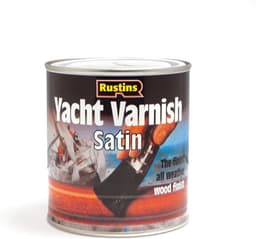
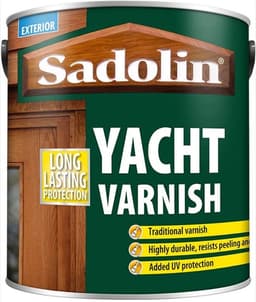
Above the waterline means parts of the boat that are not continuously immersed: rails, trim, tillers and other brightwork can fall into this group when the product also suits their timber and existing coating. Rain, spray and brief wetting are not the same exposure as a moored hull remaining underwater. A varnish may be described as weather-resistant or water-repellent without being designed for continuous immersion. Two listings in this comparison state the boundary clearly. Epifanes Clear High Gloss Varnish is for bare wood and sound existing varnish, inside and outside above the waterline. Its technical sheet also says not to apply it directly over epoxy. Owatrol Deks Olje D2 names marine applications above the waterline, but only after Deks Olje D1; it is a system rather than a stand-alone coat over bare wood. Sadolin’s sheet rules out constant immersion, while its captured amazon.co.uk listing talks about exterior joinery and UV additives. Ronseal describes smooth exterior wood such as doors and windows and says its formula is water repellent. If your job is a door or rail that is clearly in scope, the buying guide can help with type and pack size.

An immersed hull needs antifouling, not varnish

The underwater part of a hull faces continuous wetting and biological growth. Antifouling products are formulated and regulated for that job, with hard, eroding and foul-release systems among the choices described by UK boating sources. Clear yacht varnish does not replace them. A glossy wood film that tolerates spray above the line should not be extended down the hull because the name sounds marine. A short splash on a tiller or rail is still different from weeks of immersion, but it does not create a blanket permission either. The chosen varnish must state a relevant exterior or marine use, and its coating must be intact. Repair the timber and coating system rather than relying on another surface coat. Epifanes excludes direct application over epoxy even though it allows certain sound existing varnishes. Do not use a star rating, the word “waterproof” in a retail bullet or BS EN 71-3 as an underwater approval. Follow the current antifoul label rather than transferring disposal advice from a clear wood finish.

Keep gloss varnish off surfaces you walk on

The second boundary is underfoot. Ronseal’s UK product page says its yacht varnish is not suitable for decking. That statement covers the intended use of the product page even though the captured 1-litre and 500 ml amazon.co.uk bullets focus on water repellency and do not repeat the decking line. Smooth exterior doors and windows are named uses; garden decking is not. Owatrol is more specific about Deks Olje D2: the maker warns that the gloss finish is slippery when wet and should not be used on walked-on decks. D1 may be used in parts of the wider system where its own instructions permit, but that does not make a D2 gloss topcoat safe underfoot. Do not assume a yacht-varnish label overrides a manufacturer’s decking exclusion, on a boat deck or on garden decking. The gloss-or-satin guide helps with appearance on suitable surfaces; satin by itself does not turn an ordinary varnish into a non-slip floor finish.

Know when this is no longer a DIY varnish job

Rotten timber needs diagnosis and repair before coating. Soft wood, open joints or persistent black staining cannot be solved by sealing the visible surface. Work below the waterline likewise needs a compatible hull system, not an improvised extension of brightwork varnish. Call a boatyard when structure, immersion or an unidentified two-pack or epoxy coating is involved. For in-scope rails, tillers and trim, use the maker’s preparation, coat count and clock. Rustins, Ronseal, Sadolin and Epifanes all give different timings, which our application guide keeps separate. Leftover varnish and white spirit should go through your council’s accepted household-waste route, not into a drain or the sea.

Common questions

Can yacht varnish go below the waterline?
Do not assume so. The products covered here are exterior or above-waterline varnishes, and Sadolin rules out constant immersion. An immersed hull normally needs a specified underwater coating such as an appropriate antifouling system. If timber below the waterline is exposed or damaged, ask a boatyard to identify the repair and coating system.
Can I use Ronseal yacht varnish on decking?
Ronseal’s UK product page says its yacht varnish is not suitable for decking, even though some captured listing bullets describe it as water repellent. Use a product specifically designed for walked-on decking instead. The same distinction matters on a boat deck: water resistance does not establish safe slip performance underfoot.
Can Deks Olje D2 go on a boat deck?
Owatrol describes D2 as a gloss finish above the waterline and warns that it is slippery when wet, so it should not be used on surfaces people walk on. It also requires Deks Olje D1 first. Suitable rails or brightwork are a different use from a horizontal deck.
Is antifouling a type of varnish?
No. Antifouling is a separate immersed-hull coating category intended to manage fouling, with hard, eroding and other systems available. Some formulations are biocidal and carry their own application and waste controls. Clear yacht varnish protects suitable visible wood above the waterline; it does not perform the same job.
Which listings explicitly say above the waterline?
Epifanes Clear High Gloss Varnish and Owatrol Deks Olje D2 explicitly state above-waterline use in the captured evidence. Other tins may name marine woodwork or water repellency without printing that phrase. Treat the omission as a reason to check the current sheet, never as automatic approval for immersion.

Related pages

Sources

Public UK sources and maker sheets used for the limits on this page. Prices, stars and review counts are from the amazon.co.uk listings. We did not run a lab test.

  1. SI 2012/1715 Schedule 2 — VOC limits (retrieved 17 October 2026)
  2. HSE — Coatings and solvent vapour (retrieved 17 October 2026)
  3. GOV.UK — Hazardous waste disposal (retrieved 17 October 2026)
  4. Rustins yacht varnish product data sheet, February 2018 (retrieved 17 October 2026)
  5. Ronseal — Yacht varnish (retrieved 17 October 2026)
  6. Sadolin yacht varnish technical sheet (retrieved 17 October 2026)
  7. Epifanes — Clear varnish with UV filter (retrieved 17 October 2026)
  8. Owatrol — Deks Olje D2 (retrieved 17 October 2026)