Steel stab vest or soft armour: what weight tells you

Steel stab vest or soft armour? Steel-layer listings here weigh 1.9 to 3.5 kg, a soft shirt about 0.5 kg. The material is not the certificate.
On this page
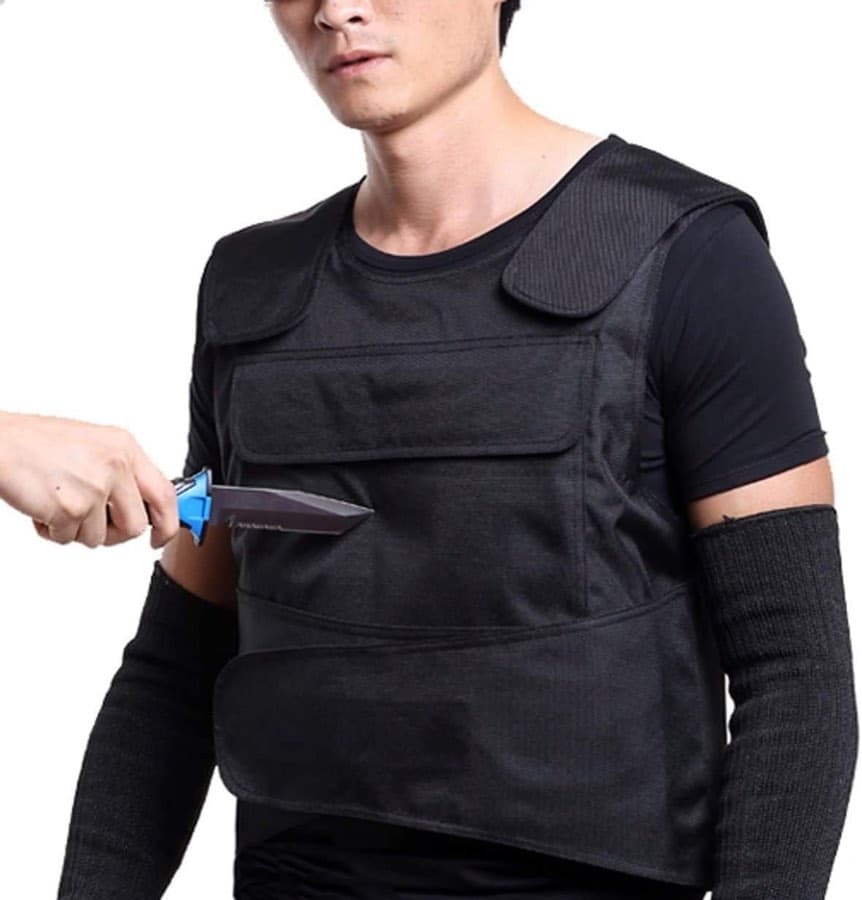
You open two listings side by side. One is a steel-layer carrier that the seller puts at 3.5 kg. The other is a soft concealed shirt at about half a kilo for £89. The difference in weight looks like the difference in safety, and it is easy to decide which way that points before you have read a word of either page.
In short
A steel stab vest or soft armour is a question about wear, and the material does not answer the question of protection. In our 15 October 2026 amazon.co.uk capture the steel-claim listings run from about 1.9 kg to 3.5 kg, the soft shirt claims about 0.5 kg, and none of them shows a KR label. Choose on the certificate for the exact model first, then on weight, heat and fit.
What NPSA says the constructions were
The National Protective Security Authority describes stab armour in three historical constructions in its guidance for security officers. Early armour used interlocking metal plates. Mail followed, worn with a textile layer. Laminated fabric came later. The guidance makes a general point that matters more than the history: higher protection tends to add weight and stiffness, whatever the construction.
That is a useful frame because it explains why a listing that says steel feels like a heavy answer, and a listing that says soft feels like a light one. Plates are heavy. Laminates can be lighter than mail, and also less flexible. None of the three is automatically the safe one, and the guidance does not rank them by safety. It describes how armour was built and what each choice cost the person wearing it.
Steel-layer claims in this Amazon file
In our capture, three lookalike carriers claim a manganese-steel layer, and they give the same weight: 1.93 kg. Three listings at an identical figure usually means one factory and three brand names, which is worth knowing when you are comparing reviews, because the reviews belong to different pages but may describe one product. The stab-protection vest comparison lists each one with its price and what it prints.
The soft shirt, and how thin the evidence is
The £89 listing is a soft concealed shirt. The bullets give about 0.6 kg, the details say 500 g, and the fabric is named as MT800. Those two figures are close enough that the listing reads as consistent, which already puts it ahead of FiveFire on that one point.
Everything else is thin. There are four ratings. There is one review that calls the shirt comfortable for an 8 to 13 hour shift, which is the most useful sentence on the page for anyone who wears armour at work, and it is one person. The listing shows no KR label in our capture. A fabric name such as MT800 describes a material, and a material is not a test result.
This is also where the Home Office guidance is useful. It tells you to wear armour close to the body, which favours a soft shirt in practice, and it makes clear that the material does not replace the label. Both points can be true at once. A soft shirt may be the one you can wear for ten hours, and it still needs the paperwork. Our buying guide lists the four things to ask a seller for.
Specialist soft steel is a third thing
Specialist retailers sell something called soft steel, and it is easy to mistake it for the steel in the cheap carriers. It is not the same product class. One specialist page describes a certified covert soft-steel vest at about 2.1 kg in a large, 7 to 9 mm thick, and says it bends but is stiffer than aramid.
Read that carefully. It is the seller's description, and it sits at roughly the weight of the lookalike trio at 1.93 kg. The difference is the word certified. Weight alone puts the two in the same place, and the paperwork is what separates them. That makes the comparison uncomfortable for a cheap steel listing: if a certified vest weighs about the same as an uncertified one, the weight tells you nothing about which is which.
Comfort from the reviews, not from the metal
Material does not decide comfort. How the carrier is cut, how stiff it is and how long you wear it decide comfort, and reviews are the only place in this file where you can see that.
FiveFire reviewers describe heat and bulk. They say it has no sides, and they say it is hard to bend. Those three points tell you more about a day in the vest than the steel claim does. Heat builds when a stiff layered panel sits against your torso. Bulk shows through a shirt, which is a problem if you wanted a covert vest in the first place. A carrier that does not bend is awkward when you sit, drive or climb into a vehicle. Our guide to wearing a stab vest covers fit and layering in more detail.
The soft shirt has one comfort review, and it is positive: comfortable for an 8 to 13 hour shift. Because it is one review, it counts as a lead and not a finding. A covert vest is meant to be worn under clothing, and for that job heat and a snug fit matter over a long shift. The reasonable conclusion is narrow. On the evidence in this file, the soft shirt is more likely to suit long wear, and the steel carrier is more likely to be hot and bulky. That is a comparison of wear, and it is not a lab score.
There is a sensible counter-argument. A heavier, stiffer vest may be what the risk calls for, and discomfort is a fair price for it. That is a decision for a risk assessment, and not for a listing. If you wear armour for work, our guide to stab protection for security work explains where that decision belongs.
A practical check before you choose
Work through these in order, because the first one makes the rest matter.
- Ask for the level and the standard. Look for KR1 or KR2 on the listing and on the label, not only in a title. Our explainer on what KR1 and KR2 mean sets out the two levels, and it is worth reading before you message a seller, because a vague question gets a vague answer.
- Ask for the certificate for the exact model. Evidence for a sister product is not evidence for yours.
- Compare the weight on the page with the weight in the details. If they disagree, as FiveFire's do, assume you cannot rely on either.
- Read the reviews for heat, bulk and fit. Those words matter more than the material name.
- Ask about side cover. If the listing does not claim it, assume it is not there.
If a seller cannot answer the first two, the third to fifth do not rescue the purchase. The best vest on comfort is still a guess if nothing shows what it was tested against. Keep the answers, because a reply that names a standard and a model is something you can check, and a reply that says it is fully certified without naming either is not. If you are still undecided after that, the stab-protection vest comparison lets you set price, weight claim and rating side by side.
Common questions
Are the cheap stab vests on amazon.co.uk made of steel?
Why do reviewers say the steel vest is hot?
Is the £89 soft shirt more comfortable?
Does soft mean certified?
What does soft steel mean on specialist sites?
Which of these gives side cover?
Is a heavier vest safer?

Products Compared publishes British-English buying guides based on amazon.co.uk listings and public UK sources. We do not run a lab and we do not invent test scores.
Related articles
KR1 KR2 body armour: what the UK knife levels mean
The two UK knife levels, what the label has to carry, and why a number in a title is not a certificate.

24 joule stab vest: why 24J is not a certificate
A test-energy figure can describe a claim, but it does not identify the tested model or prove certification.

Covert stab vest under a shirt: what fit can and cannot do
Fit, heat and a long shift: what changes when armour has to disappear under everyday clothing.