24 joule stab vest: why 24J is not a certificate

A 24 joule stab vest title repeats the KR1 E1 energy. It also leaves out the label, the test house, and the model a certificate has to name for that vest.
On this page
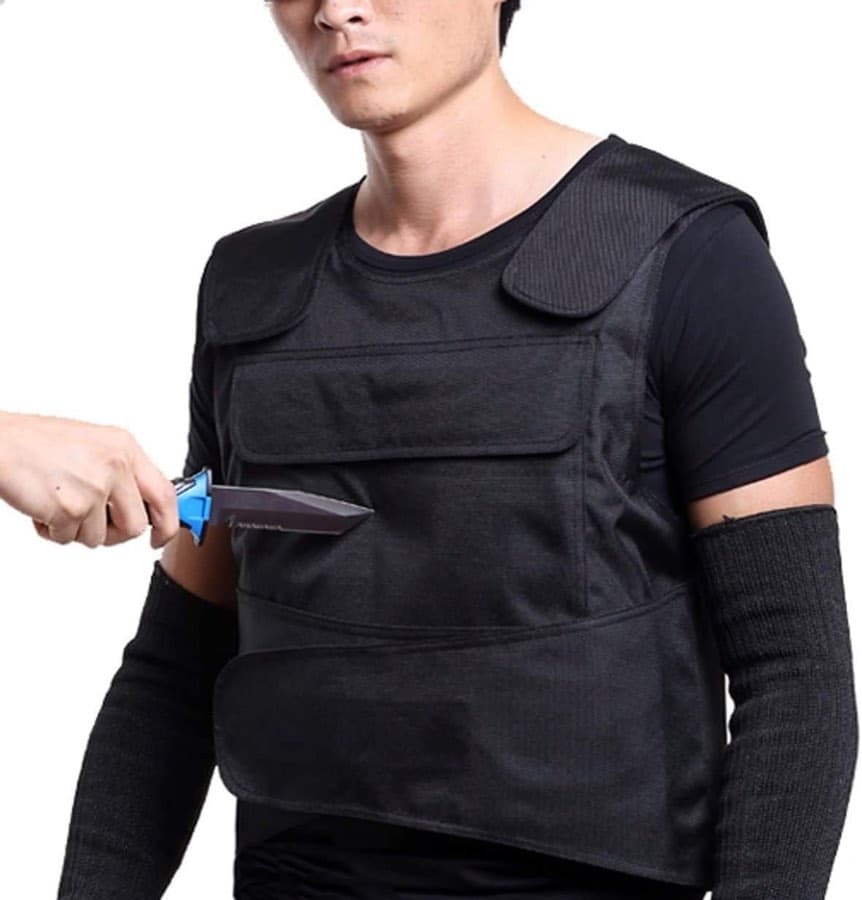
You have an amazon.co.uk tab open on a black vest at about £27, and the title leads with 24J. The price is low enough that it feels like a decision you could make before a shift tonight. The number looks exact, as if a laboratory had already signed the page. A 24 joule stab vest claim is using the KR1 E1 energy from the 2017 Home Office guidance.
A certificate names the model, the test house, and a reference you can match to the label. The four listings in our 15 October 2026 capture print 24J. None of them shows that certificate.
In short
Twenty-four joules is the KR1 E1 knife-test energy in CAST 039/17. It describes a test condition. It becomes evidence for a particular vest only when a certificate names that model and the label carries the level, a serial, and a test-house reference. Four amazon.co.uk listings in this comparison use 24J. None of them shows a certificate number, so this article leaves all four as title claims.
Where the number 24 comes from
The figure 24 comes from the 2017 Home Office body-armour guidance, CAST 039/17. In that guidance, 24 joules is the E1 energy for the knife-resistance level KR1. E1 is one point inside a laboratory method. The joule is a unit of energy, so the number belongs to a controlled strike with a defined striker.
Sellers put 24J in amazon.co.uk titles because the number is short and it echoes a real UK standard. A shopper can read a 24J stab vest title and take it to mean the vest has passed KR1. KR1 is the name of the level, and the energy is one setting inside the test for that level.
This article will not turn the laboratory method into a home trial. A listing that prints 24J has not shown that the method was run on the item for sale. For the level names on their own, read what KR1 and KR2 mean. For these vests, start with the stab-protection vest comparison and keep every 24J line as a claim until a report reference is in front of you.
What else a KR1 label carries
A certification label, as the Home Office material describes it, includes the protection level, a serial, and a test-house reference. CAST 012/17 is the guidance this article uses for those contents on certified panels. The level tells you which test is being claimed. The serial ties that panel to a record. The test-house reference tells you who assessed it, so you can ask for that report rather than stopping at a slogan.
The stab vest buying guide puts the checks in order: what you need the vest to do, then whether this listing has the paperwork. A certificate describes samples assessed under the method, in the condition in which they were submitted. A panel you have cut, soaked, or damaged is a different object, and a level speaks only to the threat that level names. Follow the maker’s instructions for fit and storage once the references match.
The four listings that say 24J
Our comparison file, read on amazon.co.uk and priced in GBP, contains four listings that print 24J. None of them shows a certificate number. Products Compared did not send any of these vests to a laboratory, so these ASINs stay listing claims here.
The capture prices are £27.49, £25.99, £27.89, and £47.99. Shelf prices move after a capture like this one. What the pages shared on 15 October 2026 was the missing certificate number.
The three steel carriers around £26
Three of the four are near-duplicate steel-layer carriers with empty review blocks. They share a listed weight of 1.93 kg, listed dimensions of 50 x 50 x 2 cm, and a 24J claim for a manganese-steel layer over the chest, back, and key side areas. Hook-and-loop at the shoulders and waist is the fit detail. Covert wear is unstated, and no test house or KR level is named on any of the three.
The FiveFire listing at £47.99
FiveFire B073X2RS54 is the listing with a review history: £47.99, and 4.3 from 118 ratings. The bullets claim 24 joules from five layers of high-tungsten steel, each stated at 0.7 mm, and the listing states a panel of 10 by 12 inches, a waist of 31 to 52 inches, a pocket of 25 by 30 cm, and a protected area of 0.3 square metres. They say the steel disc is not in the pocket, and that the vest will not stop bullets. Side cover is absent from the bullets, and reviewers mention no side or neck cover.
In this comparison, FiveFire is the best value if you want a 24J claim with a wide review sample and you accept the missing disc, the missing side cover, and the missing certificate. That judgement is about price and ratings, and it is not a finding that the vest passed KR1. The best stab-protection vests page can set it beside the other shortlisted claims.
Home tests in the reviews
A few reviewers on the FiveFire page describe trying a blade and say it did not go through. That is a personal account, and it is not a Home Office test. A laboratory assessment uses a defined striker, a set energy, and a recorded result from a test house, which a review does not show. This article does not describe a way to strike a vest at home.
The other three listings have empty review blocks. An empty block means there are no comments to read, so there is no silent pass hiding further down the page. The FiveFire comments also fail to point one way.
The question to send the seller
Send one message before you pay, and put the ASIN in the subject line so the reply stays on that page. Ask for the certificate or the test report rather than another copy of the bullets. Put the four facts below in the same reply.
- Ask which published standard and which level the document uses, and whether that level is KR1 or a different mark.
- Ask for the test-house name and the report reference exactly as they appear on the certificate.
- Ask for the model or part number the document covers, and set it next to the part number on the listing you are buying.
- Ask for a photograph of the label on the panel they will ship, showing the level, the serial, and the test-house reference.
Lay the four pages side by side in the stab-protection vest comparison, and use the buying guide while that gap is still open. Prices here are amazon.co.uk shelf prices from 15 October 2026, in GBP, and they can change. If you buy through our links, a qualifying purchase can earn us a commission at no extra cost to you.
Common questions
Is 24J the same as a KR1 certificate?
Which listings in this comparison say 24J?
What else should a KR1 certificate show?
Does the FiveFire 24 joule line include the steel disc?
Can a reviewer’s home test replace a laboratory?
What should I ask the seller for?
Does a cheaper 24J listing have weaker evidence?

Products Compared publishes British-English buying guides based on amazon.co.uk listings and public UK sources. We do not run a lab and we do not invent test scores.
Related articles
KR1 KR2 body armour: what the UK knife levels mean
KR1 uses 24 joules as its E1 energy. The level still needs a label and a certificate that name your model.

Slash resistant vs stab proof: three different tests
Slash, stab, and spike are different tests. A single word in a title does not carry the other two.

Steel stab vest or soft armour: what weight tells you
A steel sheet and a soft panel solve different problems. Weight on the listing is a clue you still have to check.