Independent comparisons. We may earn from shop links. More info

How to wear a stab vest

Updated: October 2026

You are about to fasten a vest for a door shift, or you have just taken one out of the packet and you are not sure which face should touch your shirt. How to wear a stab vest is a fit and orientation problem: the marked body side inward, the panel close to your torso, no hard object underneath, and a cover you stop using if it is cut, wet inside, or already struck. Our [stab protection vest comparison](/hub/hearing-protection/stab-protection-vest) holds the listings and the pound prices on amazon.co.uk. Wearing a vest correctly does not create a certificate the product page never showed. If you buy through our links, a qualifying purchase can earn us a commission at no extra cost to you.

You are about to fasten a vest for a door shift, or you have just taken one out of the packet and you are not sure which face should touch your shirt.

Our top picks

On this page

Read the label before you put it on

On a certified panel, the side that faces your body is the side the label names. Home Office guidance, published as CAST 039/17, tells you to wear that marked orientation, keep the armour close to the body, and fasten it so the panel stays over the region it was tested for. Wording you may see includes BODY SIDE and THIS SIDE TO BE WORN AGAINST THE BODY. The label rules in CAST 012/17 expect the phrase THIS SIDE TO THE BODY at least 10 mm high on a certified panel, together with a test-house reference. If you turn the panel round, you are no longer wearing the face the test assumed. Read that marking in proper light before the shift, not in a doorway once the straps are tight. Extended coverage, such as a side wing, is only fully tested inside the marked area, so cloth printed outside that mark is not extra protection. If an employer issued the vest, their competent person should confirm the size and the fastenings. A private purchase does not include that check.

Close to the body, and nothing hard underneath

Wear the panel close to your torso, for example over a cotton shirt, so it cannot swing off the area it is meant to cover. A thick hoodie under the carrier pushes the panel outward and can open a gap when you lean or reach. Keep metal buttons, press studs, and pin badges off the layer that touches the panel, because a hard object trapped underneath can injure you even when the outer panel holds. Fasten the straps so the panel stays put when you raise your arms, sit down, and turn. Firm is not the same as tight enough to restrict breathing. A FiveFire review in this comparison describes a vest that felt hot, bulky, and hard to bend, with straps tight enough to affect breathing, and with no side or neck cover. If you cannot take a normal breath, or you cannot bend to pick something up, loosen the straps. If the only comfortable setting lets the panel slide, this cut is wrong for a long shift. Heat belongs in the same check. One soft-shirt listing was called comfortable for an 8 to 13 hour shift, though another review rejected it, and only four ratings were captured. One comment is not a heat test.

Coverage stops at the panel

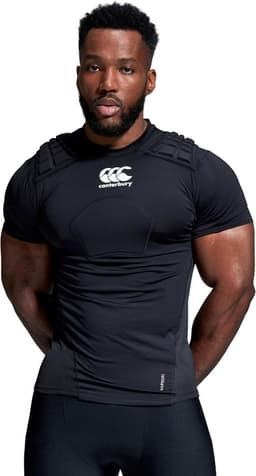
A front-and-back vest leaves your sides and your neck outside the panel. Turning your torso does not drag a chest plate round onto your ribs. If the work needs side cover, the vest has to have side panels, and those panels have to be fitted rather than left in the bag. Coverage gaps are a property of the garment, not something a tighter strap will close. You can wear a covert vest under a shirt when the cut is thin enough and the straps lie flat. Try it under the shirt you actually work in, then sit, reach up, and look in a mirror. A vest that disappears in a product photo can still print a hard edge at the collar. A rugby protector is a different garment, and its padding tells you nothing about which face of a stab panel goes against your body. Wash only what the maker's own sheet allows.

After the shift: flat or hung, then look for damage

Store the vest by hanging it from the shoulders, or lay the panels flat. Keep it out of direct sunlight, away from heat sources, and out of excessive humidity. The Home Office text used here does not give a universal five-year life, so do not invent an expiry date the label never printed. Before the next use, check the carrier fastenings, then the waterproof cover for cuts or punctures. A damaged cover can let fluid in. Do not tape a slit and carry on, and do not stitch it up at the kitchen table. Send that panel back rather than repairing it at home. The same stop applies after a strike, and if the inside is wet because the cover has split: take the vest out of service until the supplier has dealt with it.

If the vest has no label

Several listings in this comparison do not show a body-side label on the pages we captured. Official guidance assumes a certified, labelled panel. When that label is missing, do not guess which face touches your body, and do not give the vest a level such as KR1 because it sits close and the straps are tight. If there is no maker's sheet either, feel and stiffness cannot tell you the orientation or the test level. An empty pocket is the same kind of gap: a carrier shipped without its disc has nothing to orientate. The Products Compared editorial team did not run a knife test or a lab trial. The points above come from Home Office guidance for certified armour, read against amazon.co.uk listing details and a small set of reviews, on 15 October 2026.

Common questions

Which side of a stab vest goes against the body?
The side named on the label. Look for BODY SIDE or THIS SIDE TO BE WORN AGAINST THE BODY. If you cannot find that marking, do not guess the face from the colour of the cloth.
What can I wear underneath a stab vest?
A thin layer, such as a cotton shirt, so the panel stays close to your torso. Leave metal buttons, press studs, and badges off that layer.
How tight should stab vest straps be?
Firmly enough that the panel stays over its intended area when you lift your arms, sit, and turn, but not so tight that you cannot breathe normally or bend.
Does a stab vest cover my neck and sides?
Only if those panels are actually fitted. A front-and-back carrier leaves the ribs and the neck outside the plate.
Where should I store a stab vest after a shift?
Hang it from the shoulders or lay the panels flat, away from direct sunlight, heat, and excessive humidity.
What if the cover is cut, or there is no body-side label?
Stop. A cut or punctured cover can let fluid in, and tape is not a repair. With no label and no maker's sheet, do not guess the face or invent a KR1 rating.

Related pages

Sources

Public UK guidance and standards sources used for this comparison; last accessed 15 October 2026.

  1. CAST 039/17 Home Office Body Armour Standard guidance (retrieved 15.10.2026)
  2. CAST 012/17 Home Office Body Armour Standard (retrieved 15.10.2026)
  3. NPSA body armour for civilian security staff (retrieved 15.10.2026)
  4. NPSA body armour for security officers guidance (retrieved 15.10.2026)
  5. HSE personal protective equipment overview (retrieved 15.10.2026)
  6. HSE violence at work: the law (retrieved 15.10.2026)
  7. CAST 008/18 slash-resistant materials standard (retrieved 15.10.2026)
  8. World Rugby body padding specifications (retrieved 15.10.2026)
  9. BS EN 1621-2:2014 motorcyclists' back protectors (retrieved 15.10.2026)
  10. Consumer Rights Act 2015, section 11 (retrieved 15.10.2026)