Independent comparisons. We may earn from shop links. More info

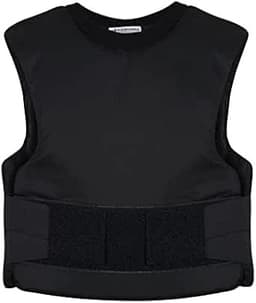
Stab vest for security work UK

Updated: October 2026

You are on a door this weekend, or you manage the people who are, and someone has sent a vest that claims it will stop a knife. The search that follows is stab vest for security work UK, and it usually starts from the shift rather than from a written threat. The National Protective Security Authority treats body armour as personal protective equipment and the last line of defence, only for the threat and the body area it was accredited for. It is not a guarantee against a knife, a slash, or a bullet. If the assessment says armour is required, the employer provides it. Our [stab protection vest comparison](/hub/hearing-protection/stab-protection-vest) sets out the amazon.co.uk listings we read. This page is the work case those listings cannot close. Products Compared read public UK guidance and those listings on 15 October 2026, with no laboratory test of any panel.

You are on a door this weekend, or you manage the people who are, and someone has sent a vest that claims it will stop a knife.

Our top picks

On this page

Work risk is assessed before anyone opens Amazon

NPSA's guidance for civilian security staff starts before the basket. Body armour sits at the end of the hierarchy of controls. How people get in, how many of you are on the door, whether you can call for help, and when you refuse a customer all come before a panel against your ribs. Armour is PPE for what remains. It does not make the entrance safe by itself. Write the threat before you write a size. NPSA groups the attacks that matter here as stab or spike, slash, and ballistic. A vest named for one of those is not a substitute for the others. Knife levels in the Home Office scheme allow limited penetration. Spike levels are described as no penetration. If the picture at the venue is unclear, managers should talk to local police rather than copy a bestseller. The Health and Safety at Work etc. Act 1974 can apply to work-related violence. HSE's page for police officers shows the same order: assess, use other controls first, then PPE. Use it as an illustration of the sequence, not as a statute for a pub door team. Buying a vest does not create a requirement the assessment did not.

PPE is free when it is required

If the assessment says body armour is needed, you should not be funding it from the shift. HSE's guide to the selection and use of PPE says that where PPE is required, the employer provides it free of charge, in a size that fits, with training on its limits. The employer maintains and stores it. You report defects. Section 9 of the Health and Safety at Work etc. Act 1974 is the duty not to charge for PPE the law requires. From 6 April 2022 that duty also covers limb (b) workers, people working under a contract for service rather than as employees. A retailer, Keltic, has taken the view that selling an uncertified vest is not itself illegal, while the employer must still arrange adequate protection. The duty you can put in front of a manager is HSE's, not a product page. Buying your own leaves you holding a panel the employer has not chosen and may not replace after a strike. Ask whether armour is required before you pay.

What NPSA tells a security manager to specify

NPSA's note on body armour for civilian security staff is a specification, not a shopping list. Choose an accredited level that matches the threat you wrote down. Covert armour goes under clothing. Overt armour can be a visible deterrent, though a vest in plain sight can also change how a confrontation starts. If the paperwork is unclear, ask NPSA whether a design is accredited. The word security in a title is not that answer. Coverage is the limit you can point at. Armour protects part of the torso. It does not, in any practical design, cover the head, the neck, and the limbs. A slash across a forearm sits outside the panel even when the level matches the assessment. Armour is never 100 per cent bullet, stab, or slash proof, so a line that says the vest stops a knife overclaims what those levels describe. Weight is the trade-off at 01:00. A higher level usually means a stiffer, heavier carrier. That can suit a spike or firearm threat, and be wrong for a slash risk if the vest is so bulky that people stop wearing it by the second hour.

An SIA line in a review is not a certificate

An SIA licence is a licence for a person. GOV.UK describes it as the permission to do licensable guarding, including frontline door supervision and security guarding, after a qualification. It does not certify a vest, a plate, or a brand. A Vielrosse review mentions an SIA team; that is a job description and does not accredit the listing. If an amazon.co.uk page shows no Home Office test reference, the review count cannot fill the gap. Stars are a comfort note, not a certificate for a risk assessment. Whether contract security at a venue must hold an SIA door licence depends on the contract and on whether the work is licensable. The PPE question is separate: if the assessment requires armour, the employer pays whether or not a badge is on the lanyard.

What these listings can and cannot support

None of the amazon.co.uk pages in this comparison that mention security or door work showed a Home Office test reference in the capture we used. FiveFire at £47.99 had no certificate. A soft shirt at £89 had one comment from a long shift and one rejection. SafeGuard at £325 had a single review and used US level wording. Read those notes for comfort over a shift, not as test reports. Price is not a protection level. After a strike, or when a panel is cut, creased, or soaked, stop wearing it and report the defect. Do not stab, shoot, or slash a vest to see what it does. The commission on a purchase does not add a test reference the listing does not show.

Common questions

Should I buy my own vest for a door shift?
If the written assessment says body armour is required, no. HSE expects the employer to supply that PPE free of charge, in a size that fits, with training on the limits. If the assessment does not require armour, paying privately does not turn a listing into required kit.
Does an SIA licence mean the vest is approved?
No. An SIA licence authorises a person to carry out licensable work such as door supervision. It is not a product mark. Look for the threat level and a Home Office test reference if armour is actually required.
What threat should the manager write down first?
The threat, not the brand: stab or spike, slash, or ballistic. NPSA tells civilian security managers to match an accredited level to that threat.
What if the vest is damaged on shift?
Stop using it and report the defect. Follow the maker's replacement rule or the employer's. A cut, a hard crease, or a strike is enough reason to take it out of service, even if the label is intact.

Related pages

Sources

Public UK guidance and standards sources used for this comparison; last accessed 15 October 2026.

  1. CAST 039/17 Home Office Body Armour Standard guidance (retrieved 15.10.2026)
  2. CAST 012/17 Home Office Body Armour Standard (retrieved 15.10.2026)
  3. NPSA body armour for civilian security staff (retrieved 15.10.2026)
  4. NPSA body armour for security officers guidance (retrieved 15.10.2026)
  5. HSE personal protective equipment overview (retrieved 15.10.2026)
  6. HSE violence at work: the law (retrieved 15.10.2026)
  7. CAST 008/18 slash-resistant materials standard (retrieved 15.10.2026)
  8. World Rugby body padding specifications (retrieved 15.10.2026)
  9. BS EN 1621-2:2014 motorcyclists' back protectors (retrieved 15.10.2026)
  10. Consumer Rights Act 2015, section 11 (retrieved 15.10.2026)