Bleach on patio slabs: grass, clothes and the label

Bleach on patio slabs can kill grass and mark clothes, even under sheeting. A biodegradable line is a listing claim. Read the pictogram on the bottle.
On this page

The slabs under the washing line have gone green in the shade, the watering can is already by the step, and the only bottle under the sink is thin bleach. Bleach on patio slabs looks decisive in the first minute, because the film pales while the stone is wet.
Leave that kitchen bottle where it is. These sources give no patio dose for household bleach, and UK reviews of the chlorine restorer in this set record dead grass and bleached clothes.
Household bleach, a chlorine-smelling outdoor restorer and an acid cleaner are three different products. The Products Compared editorial team read the amazon.co.uk listings in this set on 15 October 2026, with the Health and Safety Executive, London Stone and Pavingexpert. There is no laboratory test on this page. A qualifying purchase through a comparison link can earn us a commission at no extra cost to you.
In short
Keep household bleach off the flags unless the bottle in your hand is labelled for that stone and that job. Stone King, the 2 litre outdoor restorer here, draws UK reviews that record a chlorine smell, dead grass under sheeting and bleached clothes. Acid rust on Indian sandstone is a separate stain, a pH 7 kitchen cleaner is a bleach-free worktop mop, and a biodegradable line is a listing claim you should treat as a claim.
Bleach, acid and a neutral mop are three products
Household bleach is the thin liquid sold for cloths and sinks. These sources give no dilution, dwell or coverage for pouring it on patio slabs. London Stone's patio guide warns about acids and vinegar, and it publishes no bleach mix for flags. Whether household bleach is safe on Indian sandstone stops at that gap.
A chlorine patio cleaner, in the language of buyers, is the outdoor bottle whose reviews mention that smell. Stone King, 2 litres, ASIN B08S3J6B47, was £29.99 on amazon.co.uk on 15 October 2026, rated 4.6 from 100 reviews. The listing calls it acid-free and aims it at gravestones, ornaments, algae and black lichen.
UK reviews still report a chlorine or bleach smell. The listing gives no square-metre rate for a terrace. The stone cleaner comparison keeps that can with the outdoor job, separate from a kitchen mop.
Acid marks the stone by another path. Pavingexpert ties hydrochloric patio cleaner, often called brick acid, to rust stains on Indian sandstone, and treats the iron colour as often permanent. A bleach wash leaves that rust in the slab.
The neutral mop is HG's kitchen top cleaner, three 500 ml bottles, ASIN B00E5BXO4O, at £18.31 on the same day, rated 4.5 from 123 reviews, with pH 7.0 on the listing. It is bleach-free, and the pack is the wrong volume for a patio.
What UK buyers reported around ornaments and grass
UK reviews praise the clean on neglected marble memorials, and the same reviews record grass and other plants dying, including plants under sheeting. Bleach on marble, where those memorials come up, is a comment on the stone face. Biodegradable on the listing has no plant-safety test in these sources.
Sheeting feels like control, and the reviews say the plants died anyway. Two litres is a large volume for one bird bath, and runoff from the plinth reaches the lawn. A rinse carries it further into the border. The tin does not list that outcome as a feature of the clean.
Flags spread that can across more joints. Film and algae on slabs are the subject of the patio and paving guide. If the grass matters, leave the cap on. A 4.6 from 100 rates the clean on amazon.co.uk, and it says nothing about lawns that survived.
Clothes, smell and a missing sprayer
UK reviews of Stone King mention a chlorine or bleach smell, and clothes that come up pale where the liquid landed. A cuff, a knee, a cushion or a T-shirt used as a rag is enough. These sources give no way to bring the dye back. Move fabric before you break the seal, including cushions and anything still on the washing line.
Reviews also describe a bottle with no sprayer. Buyers decant 2 litres into a sprayer they already own, and the plume goes wide of a small ornament, onto slabs, soil and legs. Gloves, eye protection and hazard text on the pack belong to the pour.
Use this sequence, and stop if the label on your bottle asks for more protection.
- Move clothes, cushions and toys indoors, clear of the splash.
- Read the pictogram, then wear the gloves and eye protection the panel names.
- Keep the liquid on the ornament or the one flag you mean to treat, and stop at the lawn.
- Rinse tools with clean water away from the beds, and judge the stone only once it is dry.
The label: corrosive pictogram or exclamation mark
The bottle in your hand outranks this page. Under GB CLP, as the Health and Safety Executive explains for cleaning products, H318 uses the corrosive pictogram because it means serious eye damage. H319 uses the exclamation mark because it means eye irritation. Both warn the eyes, at different severity.
This page copied no full label from these ASINs, so the diamond on your pack is the warning that counts, even when a listing photo crops it out.
HSE detergents guidance is the labelling frame for detergent products. It covers what a pack must declare about the contents. It gives no permission to dose household bleach on sandstone, and it supplies no patio rate that London Stone left unpublished.
A green panel or the word biodegradable can sit on the same front as a corrosive mark. When the words and the pictogram pull apart, follow the pictogram. The line that binds you is the tin you opened.
The buying guide separates liquids, washer heads and abrasives before a second chemical follows the first. Acid-free on the Stone King listing speaks to acid. It is silent on eyes, clothes and the lawn.
A biocide claim is not a moss licence
Green paving is often algae, lichen and moss in one joint, and UK biocides rules split those claims. HSE guidance on the Control of Pesticides Regulations puts algae, lichen, mould and mildew with surface biocides, and a moss claim with plant protection products.
A surface biocide is a poor stand-in for a moss licence. Kitchen bleach remains a cleaning product. These sources do not make it an authorised moss killer, and they still give it no patio dose to borrow.
Stone King's listing points the liquid at algae and black lichen on gravestones and ornaments. That is a surface-growth line. No biocide authorisation number was confirmed for any ASIN in this comparison. If your bottle prints a number, the pack wins. This article has not checked a fresh label against the HSE registers.
If the stone is a memorial you do not own, or a churchyard stone, stop. A garden biocide line does not settle the rules for that place.
Indoor stone, where bleach is the wrong habit
A black slate hearth collects ash and a grey water mark. The outdoor can is a poor next step, even when it seemed to shift the green on the flags. Indoor stone is a mop.
HG's bathroom cleaner, 500 ml, ASIN B00BEXHYK6, was £7.70 on amazon.co.uk on 15 October 2026, rated 4.2 from 336 reviews. Buyers report white streaks on black slate. That residue comes from the bathroom liquid, so change the mop and rinse as the tin says. Adding bleach brings a chlorine hazard indoors.
The HG kitchen top cleaner at pH 7.0 is the bleach-free match, sold as 500 ml bottles in a pack of three. Test one corner, follow the printed dose, and judge the slate when it is dry. Keep the 2 litre restorer outside, away from the rug and the hearth.
These sources give no household-bleach method for a marble hearth, and none for bleach on sandstone flags. Vinegar and a bathroom descaler etch marble, limestone and travertine. Some Stone King reviews liked an outdoor clean on neglected marble memorials. A hearth is a different job. If an earlier acid has dulled the marble, stop.
Common questions
Can I pour bleach on patio slabs?
Will bleach kill the grass around the flags?
Does biodegradable mean it is safe for plants?
Is bleach the same as an acid cleaner?
Will it bleach my clothes?
Can I use it on a black slate hearth?
Do I need gloves?
Is a kitchen stone cleaner a bleach?

Products Compared publishes British-English buying guides based on amazon.co.uk listings and public UK sources. We do not run a lab and we do not invent test scores.
Related articles

Acid on Indian sandstone
Hydrochloric patio cleaner can rust-stain Kandla and other Indian sandstone, and the iron mark often stays.
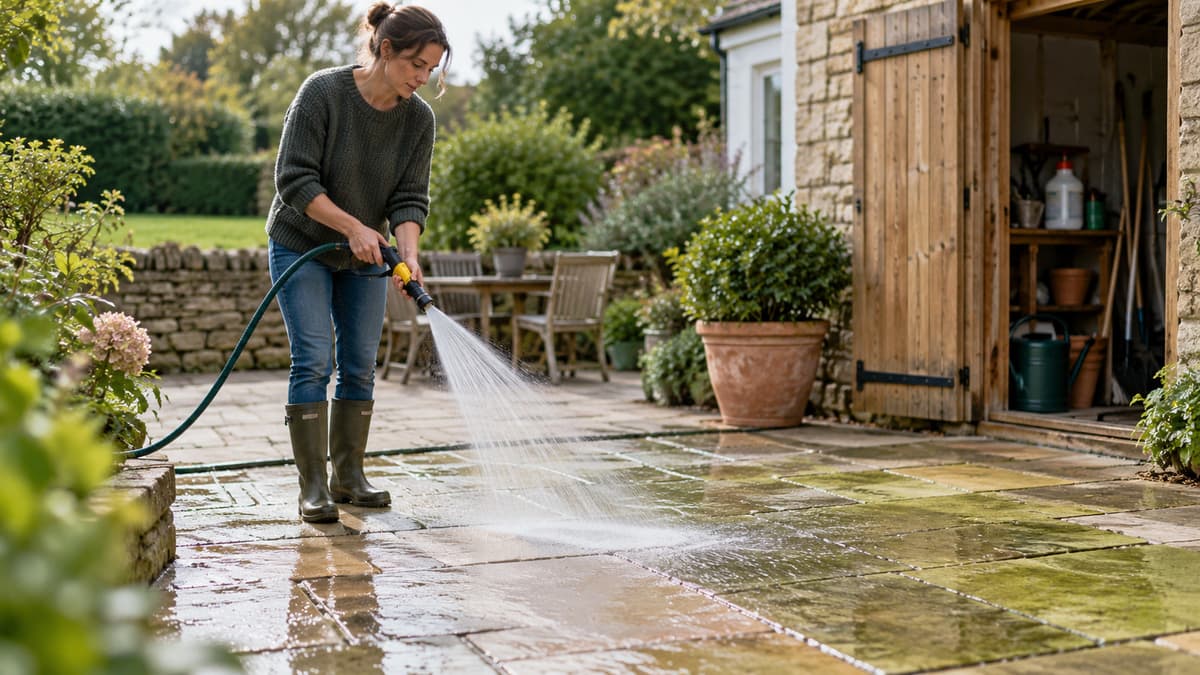
How to clean a sandstone patio
Sweep, name the mark, and wash from a distance. Keep hydrochloric acid off Kandla, Raj, Camel and Autumn Brown.
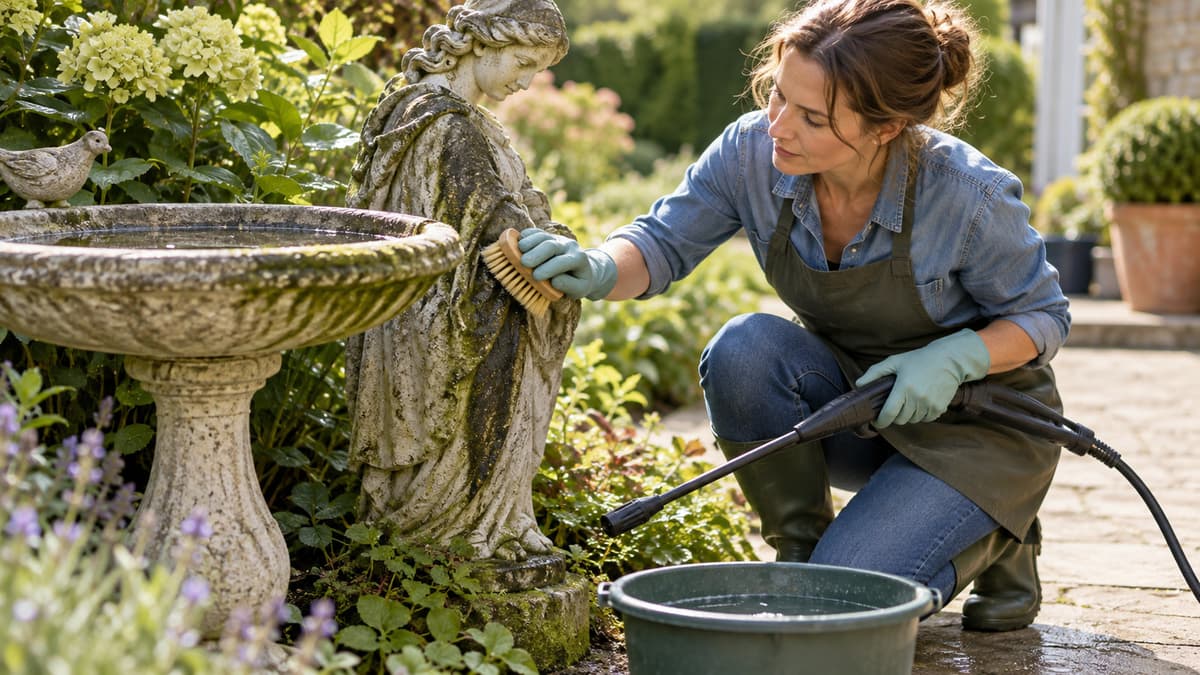
Algae on garden ornaments
A bird bath or statue needs a small labelled clean. A patio lance and a floor mop are the wrong tools.