Clean algae off garden ornaments: a soft brush first
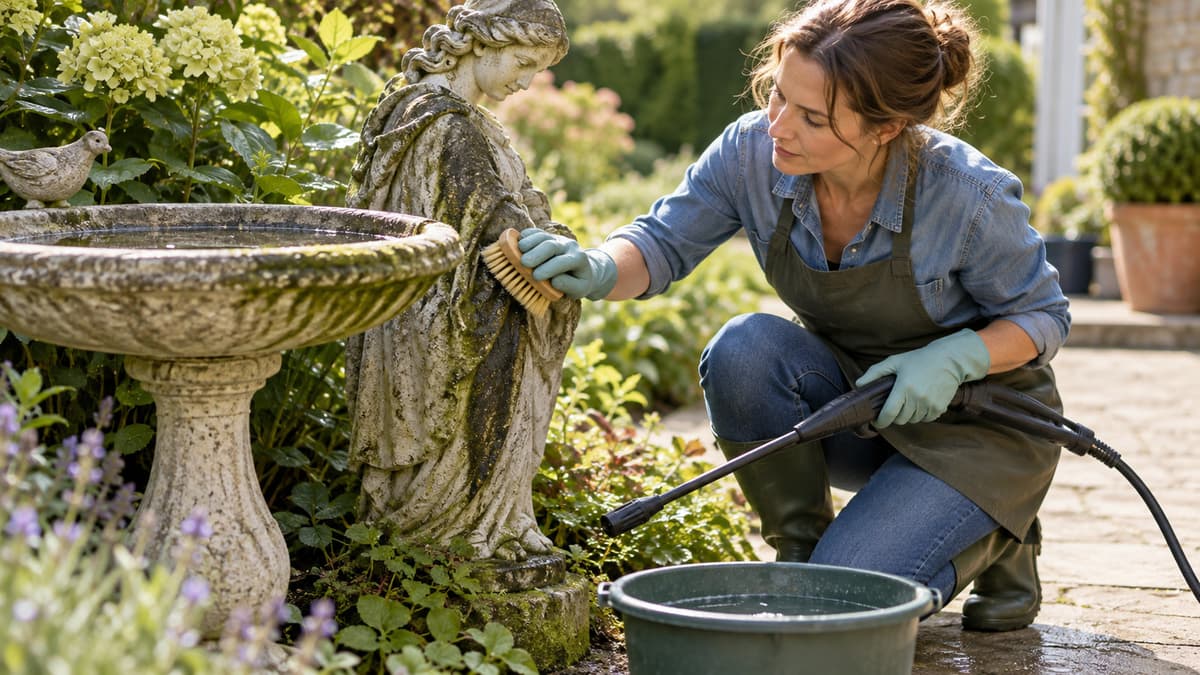
Green film on a statue or bird bath lifts with a soft brush and water. A patio lance chips detail, and an ornament restorer can kill plants beside the pot.
On this page

The bowl of the bird bath has a green ring, the statue's cloak has filled in dark, and the lance from the patio is already in your hand. To clean algae off garden ornaments you work at the scale of the object: a hollow, a joint, and the plants pressed against the plinth. A soft brush and water come first. A pressure-washer lance is a poor fit for a small casting.
Products Compared took the price and the rating from the amazon.co.uk listing for Stone King 2 L, ASIN B08S3J6B47: £29.99, with 4.6 from 100 ratings, in the 15 October 2026 reading for this stone cleaner set. The public notes beside it are London Stone on patio stone, Floorseal on black spot, the Health and Safety Executive on surface biocides, Lithofin on acid-sensitive stone, and Historic England on monuments. There was no laboratory test on your statue. A purchase through a comparison link may earn us a commission at no extra cost to you.
In short
Green film on a bird bath, pot or statue is a small-object job. Brush it with water and judge a dry patch before you open a bottle. Stone King 2 L is the top pick in this comparison for a garden ornament you can move away from the plants. The listing says acid-free, about 15 minutes and no scrubbing. UK reviews also report dead plants, bleached clothes and no sprayer in the box. A churchyard memorial follows Historic England and Church of England advice, which overrides a garden clean.
Green film on a small object
A green garden statue collects film where water sits: under a brim, inside a fold, along the lip of a bird bath. A bird bath has a hollow that holds the wash, a joint where the bowl meets the stem, and leaves or hostas close enough to catch whatever runs off. You can clean a bird bath only when the dirty water has a path that misses the crown of the plant beside it.
London Stone's patio guidance is written for flags. A lance that would only frost a flag can take an edge off a casting in one pause, because the fan cannot sit square on a curve. The same guide carries an acid warning for natural stone. A mix sold to revive a tired patio is a poor liquid to pour into a bowl you then tip out by hand.
Algae on terracotta shows the same film on a softer, thirstier surface. A pot pulls the green into the rim and the saucer, and the saucer overflows onto the border. As a rule of thumb, spend about ten minutes looking once the piece is wet from a watering can. On a statue the jet hits one point, the hollow fills, and the overflow hits the bed. Let the piece dry the same day.
Brush and water before any bottle
How to clean a stone garden ornament without a pressure washer is a soft brush, clean water, and a patch you can afford to get wrong. Stand the piece where the runoff misses the border, or turn a pot on the path. Wet the back of the plinth, or the side of the pot that faces the fence, in case the colour shifts. Wet stone always looks kinder than it will look at noon the next day.
Work the film out of the crease and leave the crest of the carving alone. Empty a bird bath away from the plants, then the rim, then the stem. Terracotta wants the brush damp. A dry bristle sheds the face of a soft pot. As a rule of thumb, give the water about twenty minutes and look again.
Floorseal separates a green film from black lichen, and lichen may not brush off. A harder pass leaves a pale scar around a spot that is still there. If the dry patch shows that scar, stop. Keep pumice for toilets or grills, and keep it off a statue, a pot rim and a bird bath bowl. If the stone goes sandy, or the colour jumps, stay on water and a soft brush.
The ornament restorer in this comparison
Stone King 2 L is the top pick for a garden ornament in this set, if you can keep plants and clothes out of the liquid. On the amazon.co.uk listing it was £29.99, with 4.6 from 100 ratings, ASIN B08S3J6B47. The listing aims it at gravestones and ornaments, and says it is acid-free, with about 15 minutes and no scrubbing. Those are listing claims, not a trial on your marble, cast stone or terracotta.
UK reviews praise cleaner marble ornaments. They also report dead plants, bleached clothes and no sprayer in the box. The missing sprayer means you pour, or you decant into a sprayer you already own. Open the bottle only after water has done what it can, on a hidden patch, and only on a garden ornament.
The stone cleaner comparison is where this 2 litre bottle sits beside indoor stone liquids, a pressure-washer head and abrasives. The best-of page places it as the ornament and gravestone restorer, with the plant and clothes reports beside the stars. The how to use guide covers order of work once a bottle is chosen, and the label on the pack in your hand still wins if a listing bullet differs.
A patio cleaner on a statue is the scale error in liquid form. If the label names paving and stays silent on ornaments, leave it for the flags. The Health and Safety Executive's COPR rules cover surface biocides used against algae, lichen, mould and mildew on masonry. This page did not look up an authorisation number for Stone King, so the 4.6 is a review score from the UK listing.
Plants, clothes and runoff
UK reviews report dead plants and bleached clothes. A bird bath or a pot usually stands in the planting, so the runoff path is a few centimetres, from the plinth into the nearest crown. Tip the bowl on a path, or into a bucket you empty to a drain, and keep that water out of a pond.
With no sprayer in the box, the container or a jug is the nozzle. Wear kit you can spoil, and wear gloves. The same reviews treat this as a strong liquid beside the acid-free line on the listing.
A plastic sheet under the ornament was not part of the evidence gathered here, so a cover stays an untested hope. If the piece is too heavy to move, a bare patch in the border is a possible result.
Terracotta saucers overflow before the pot looks wet through. Lift the saucer, work on the path, and return the pot only when it has stopped dripping. Rinse with clean water, then give it a dry-down.
Black spots and marble need a slower decision
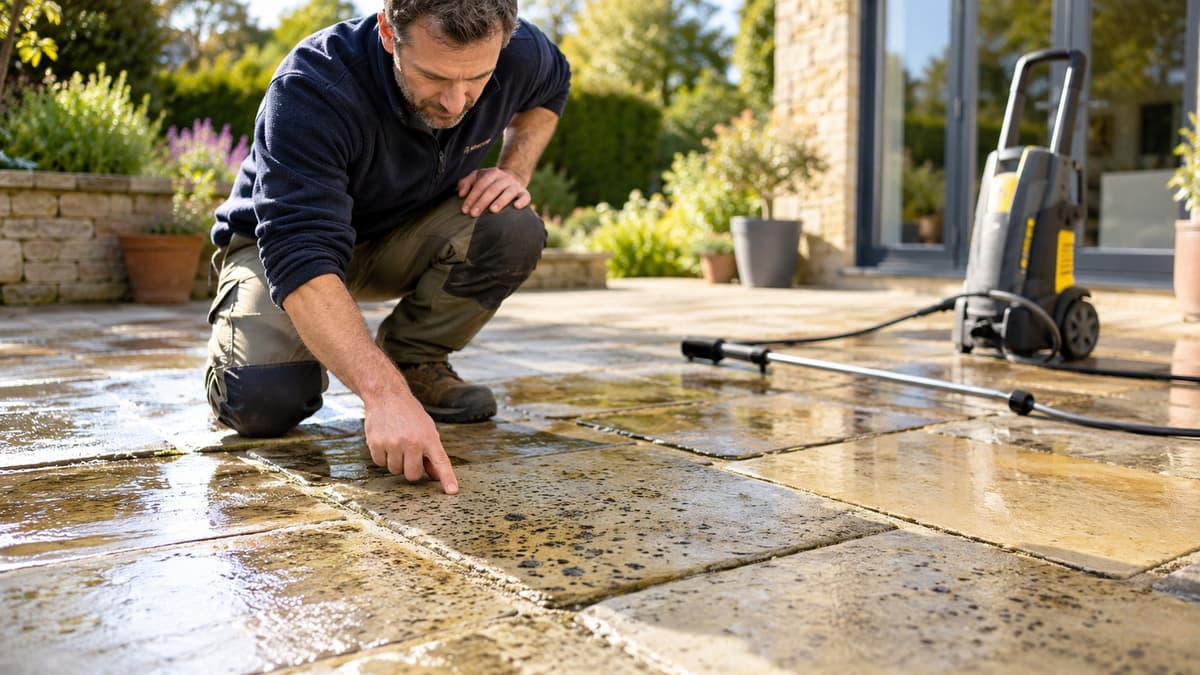
Green algae and black lichen are different growths. Floorseal's account of black spot is the dark material seated in the stone. The film can lift with a brush. The dots often remain, and brushing harder cuts a halo on a curve. Leave lichen that will not move, or test one small patch with a product whose label names that growth, and judge the patch when it is dry.
Marble on an ornament
Lithofin lists marble as acid-sensitive, so keep vinegar off the piece, including a kitchen mix you might use on a path. The acid-free line on the Stone King listing is a claim about that bottle. If your hidden patch looks etched once it is dry, stop and leave the remaining film. A patio acid mixed for flags is the wrong bottle on this stone.
Memorials are a different rule
A headstone in a churchyard or cemetery follows a different rule from a statue you bought for the border. Historic England's advice on monuments is the mildest method when the piece is a memorial, and that advice, with Church of England guidance, overrides a garden clean. The rule follows the place and the purpose of the stone.
Stone King is listed for gravestones and ornaments. A listing line is a product description, not permission. If you look after a family memorial, leave the restorer in the shed and read Historic England and Church of England advice before a brush touches an inscription.
Common questions
How do I clean algae off a garden statue?
Can I jet wash a bird bath?
Will a gravestone restorer work on an ornament?
Will it kill the plants beside the pot?
Is green algae the same as black spot?
Can I use pumice on a statue?
What if the ornament is marble?
How is a garden ornament different from a headstone?

Products Compared publishes British-English buying guides based on amazon.co.uk listings and public UK sources. We do not run a lab and we do not invent test scores.
Related articles

Cleaning a gravestone in Britain
A churchyard memorial follows conservation advice. A garden restorer is the wrong next step on a headstone.

Bleach on garden stone
Household bleach on garden stone harms plants and clothes. A mild line on the label does not cancel that record.
Black spots on patio slabs
Dark dots that remain after the green film has gone are often lichen. A closer jet marks the stone and leaves the spots.